The Complete Jewelry Organizer Box Plastic Buying Guide
Discover how to choose the perfect jewelry organizer box plastic. Learn about acrylic grades, anti-tarnish features, and drawer tolerances.

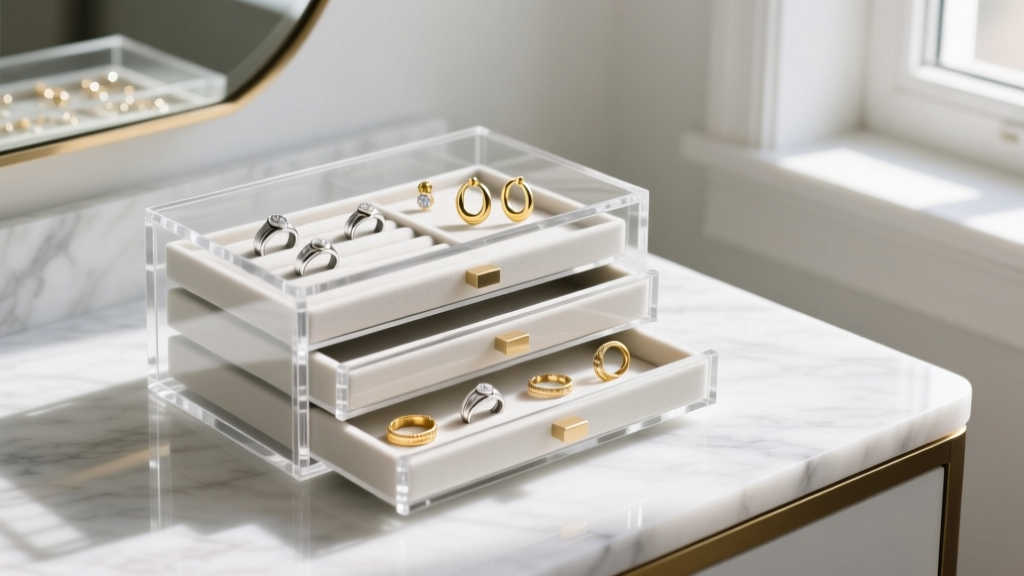
When searching for the ultimate storage solution, the modern jewelry organizer box plastic market offers a dizzying array of options. However, not all polymers are created equal. While wood and leather often dominate luxury discussions, high-grade synthetic storage provides unmatched visibility, modularity, and moisture resistance. The challenge lies in distinguishing between museum-grade acrylics and cheap, off-gassing polymers that can actively damage your precious metals and gemstones.
This comprehensive buying guide breaks down the material science, structural engineering, and anti-tarnish properties you must evaluate before investing in synthetic storage. Whether you are storing delicate 22-gauge gold wire rings or heavy sterling silver statement pieces, understanding these specifics will ensure your collection remains pristine.
Why Material Grade Matters: Cast Acrylic vs. Cheap PVC
The term 'plastic' is a massive oversimplification. In the realm of premium storage, you are primarily looking for Polymethyl Methacrylate (PMMA), commonly known as cast acrylic or Lucite. According to conservation standards outlined by the Jewelers of America, inert, non-porous materials are essential for long-term metal preservation.
The Danger of Plasticizers
Cheap jewelry boxes are frequently manufactured from Polyvinyl Chloride (PVC) or low-grade Polystyrene (PS). To make PVC flexible and moldable, manufacturers add phthalates and other chemical plasticizers. Over time, these chemicals off-gas, releasing sulfur compounds and acidic vapors into the enclosed space. If you store sterling silver in a cheap PVC box, this off-gassing accelerates silver sulfide formation, causing rapid, severe tarnishing that is difficult to polish out of intricate settings.
Optical Clarity and UV Resistance
Cast acrylic (PMMA) is inherently UV-stable and optically pure. It will not yellow when exposed to ambient bedroom light, ensuring your diamonds and colored gemstones are always displayed with true color rendering. Extruded acrylic is a mid-tier alternative; it is cheaper but more prone to internal stress cracking and slight optical distortion over time.
Critical Structural Features to Evaluate
Beyond the chemical composition of the polymer, the physical engineering of the box dictates its daily usability and lifespan. A poorly engineered acrylic box will bind, crack, and fail within months.
Drawer Track Tolerances and Glides
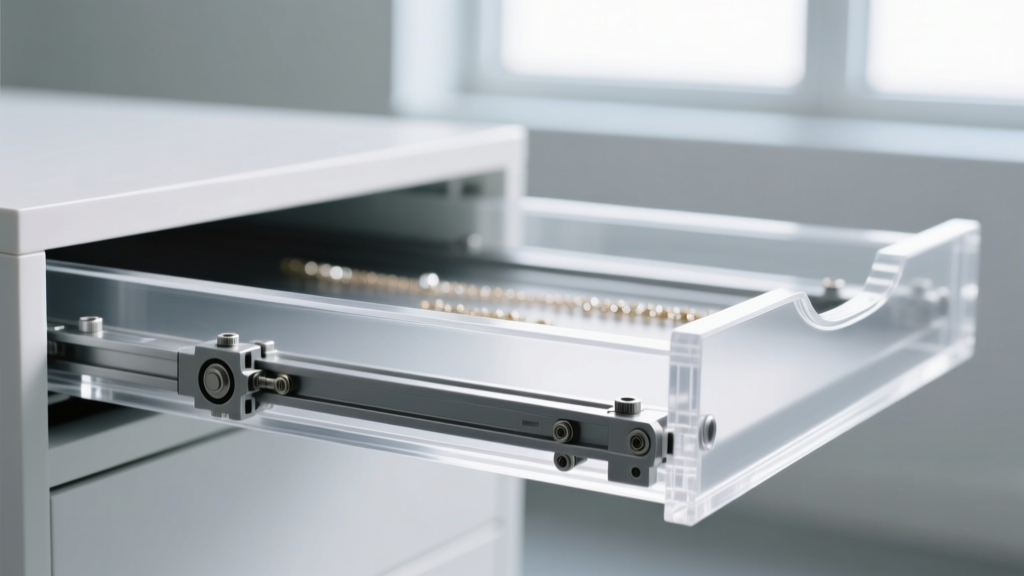
The most common failure point in synthetic storage is the drawer mechanism. Budget injection-molded boxes rely on friction-fit plastic rails with tolerances exceeding 3mm. This causes drawers to wobble, bind, and eventually crack at the stress points. Premium organizers utilize CNC-routed tracks with sub-millimeter tolerances. Look for boxes that feature integrated silicone glide pads or micro-ball-bearing inserts, which ensure smooth operation even when the drawer is loaded with heavy metal pieces like solid gold chains or large gemstone pendants.
Modularity and Stackability Mechanics
If you plan to expand your storage, stackability is crucial. However, simply stacking flat boxes leads to sliding and scratching. High-end modular systems feature interlocking machined grooves (often with a 2mm depth) and recessed anti-slip silicone feet. This ensures that when you pull a middle drawer, the entire tower remains structurally sound and anchored to the vanity surface.
The Tarnish Factor: Do Plastic Boxes Damage Silver?
A common misconception is that plastic inherently causes tarnish. In reality, bare, unlined cast acrylic is completely inert and will not react with silver, gold, or platinum. The Gemological Institute of America (GIA) recommends storing jewelry in dry, chemically neutral environments to prevent degradation.
The danger arises from trapped humidity and secondary linings. Because acrylic is entirely non-porous, it creates an airtight seal. If you place a slightly damp silver ring into a sealed acrylic drawer, the trapped moisture will cause localized oxidation. To combat this, premium acrylic boxes include dedicated, ventilated silica gel desiccant compartments.
Polymer Comparison Chart
| Polymer Type | Common Trade Names | UV Resistance | Off-Gassing Risk | Verdict for Fine Jewelry |
|---|---|---|---|---|
| PMMA (Acrylic) | Lucite, Plexiglas | Excellent | None | Highly Recommended |
| Polycarbonate | Lexan | Good (with coating) | Low | Acceptable (Heavy Duty) |
| Polystyrene (PS) | Styrene | Poor (Yellows) | Low | Budget / Costume Only |
| PVC | Vinyl | Poor | High (Phthalates) | Avoid Completely |
Pricing Tiers: What You Actually Get
Understanding the pricing landscape helps you identify when you are paying for genuine material quality versus mere brand markup.
- Budget Tier ($12 - $25): Typically made from injection-molded Polystyrene or thin extruded acrylic. Drawers lack individual stops and will pull completely out, spilling contents. Edges are often sharp and unfinished.
- Mid-Tier ($30 - $65): Features thicker extruded acrylic with flame-polished edges. Drawers include basic plastic stoppers. Linings, if present, are usually synthetic felt which may contain trace acidic dyes.
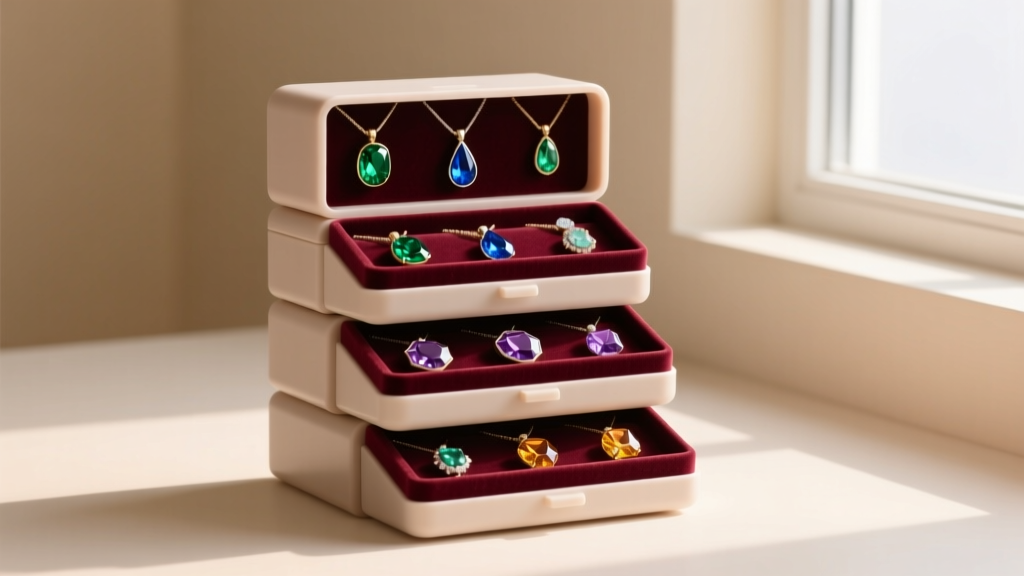
- Premium Tier ($75 - $150+): Constructed from heavy-gauge cast acrylic (4mm to 6mm thickness). Features CNC-machined interlocking joints, silicone drawer bumpers, and PAT (Photographic Activity Test) certified anti-tarnish velvet linings. Hardware includes rust-proof stainless steel drawer pulls.
Proper Maintenance and Cleaning Protocols
Acrylic is softer than glass and highly susceptible to micro-scratches and chemical crazing. Never clean your acrylic jewelry organizer with standard glass cleaners like Windex. The ammonia and harsh alcohols in these products will break down the polymer chains, causing a cloudy, fractured appearance known as crazing.
Instead, use a dedicated acrylic cleaner (such as Novus 1) or a simple mixture of distilled water and a drop of mild dish soap. Always wipe with a clean, lint-free microfiber cloth, moving in gentle, circular motions rather than aggressive back-and-forth strokes. By maintaining the optical clarity of the plastic, you ensure your jewelry remains visible, reducing the likelihood of forgotten pieces tarnishing in the back of a drawer.
Final Verdict
Choosing the right synthetic storage requires looking past the initial price tag. By prioritizing cast acrylic (PMMA), demanding precise drawer tolerances, and ensuring proper moisture control, you can secure a storage system that rivals traditional wood and leather in both functionality and protective capability. Your fine jewelry deserves an environment that is as engineered and precise as the pieces themselves.


