Meaningful Jewelry for Her: The Ultimate Metal Comparison Guide
Discover how to choose meaningful jewelry for her by comparing metal properties, alloy grades, and durability for a lifelong heirloom gift.

Why the Substrate Matters for Heirloom Jewelry
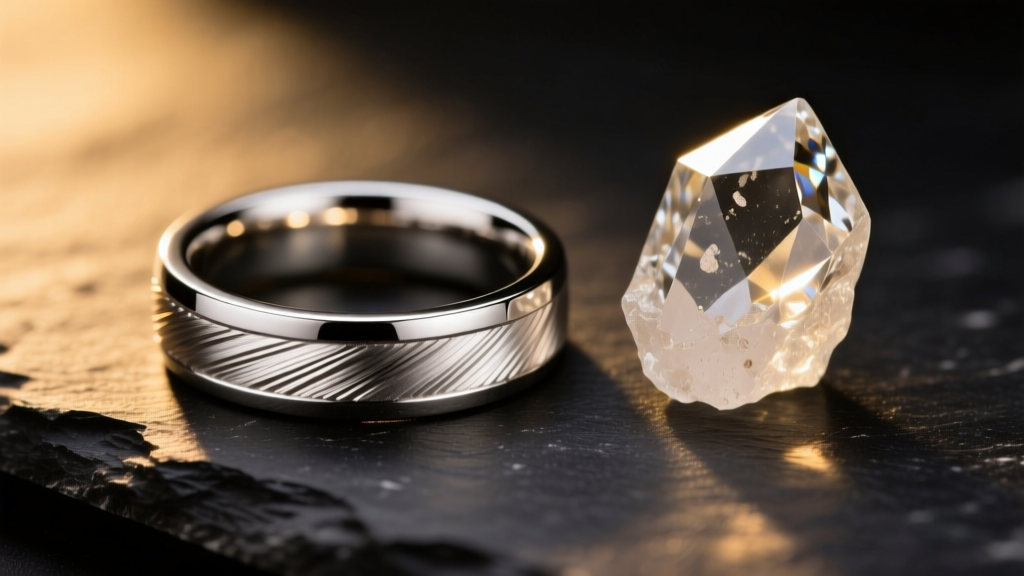
When selecting meaningful jewelry for her, the emotional weight of the design is only half the equation. The physical substrate—the metal and gemstones that form the piece—dictates whether that meaningful gift will survive as a pristine heirloom or degrade into a damaged keepsake within a decade. True expertise in jewelry gifting requires looking beyond the aesthetic and understanding the metallurgical properties, alloy compositions, and failure modes of the materials you are presenting.
A meaningful gift is inherently tied to longevity. Whether it is a custom-engraved anniversary band, a birthstone pendant, or a coordinates bracelet, the material must withstand the biochemical realities of human skin, environmental oxidization, and daily mechanical impact. This guide breaks down the exact properties of precious and alternative metals to help you make an informed, expert-level decision.
Decoding Gold Alloys: 14k vs. 18k for Daily Wear
Gold in its pure state (24k) is far too malleable for daily wear jewelry, scoring a mere 25 on the Vickers Hardness scale (HV). To create meaningful jewelry for her that withstands daily life, gold must be alloyed with metals like copper, silver, zinc, and palladium. The karat system dictates the ratio of pure gold to these strengthening alloys.
The 18k Gold Standard (75% Pure Gold)
18k gold offers a rich, saturated color and a Vickers hardness of approximately 125 HV. Because it is softer and more malleable than lower-karat gold, it is the superior choice for prong settings. When a jeweler sets a diamond or sapphire into an 18k gold prong, the metal can be burnished tightly over the gemstone's girdle, creating a secure, long-lasting grip that resists snapping under pressure. However, 18k gold is more prone to surface scratching and deformation in high-impact ring shanks.
The 14k Gold Workhorse (58.3% Pure Gold)
14k gold increases the alloy content, raising the hardness to roughly 150 HV. This makes it highly resistant to bending and ideal for the structural shank of a ring or the delicate links of a chain necklace. The trade-off is a slightly less saturated yellow hue and a higher likelihood of nickel-induced contact dermatitis in wearers with metal sensitivities, as 14k white and yellow gold often rely on nickel or higher copper content for structural integrity.
The White Gold Rhodium Plating Failure Mode
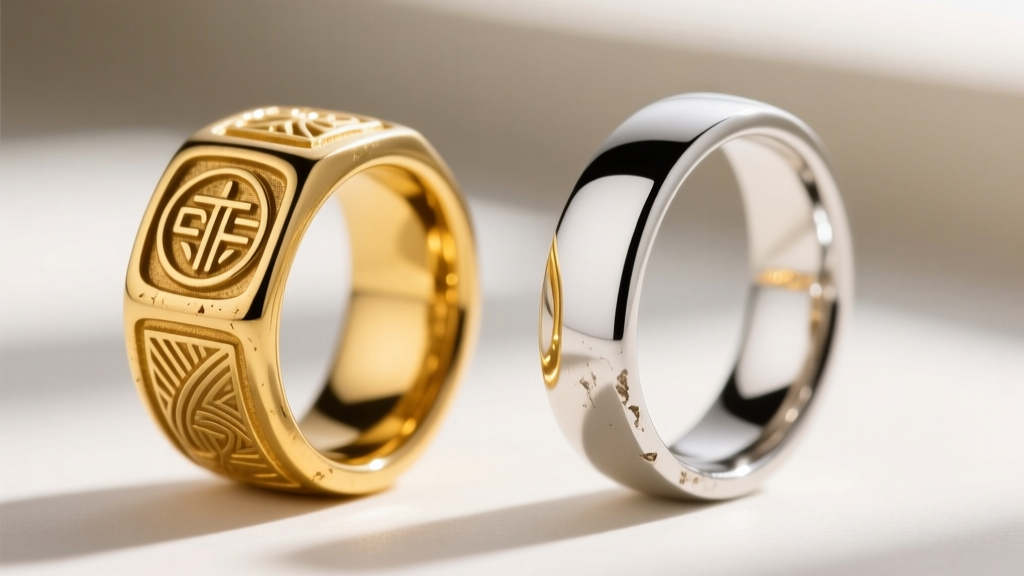
If you are gifting white gold, you must understand the rhodium plating lifecycle. White gold is naturally a pale, yellowish-grey. To achieve a bright white finish, it is electroplated with rhodium. This plating is typically 0.75 to 1.0 microns thick and will inevitably wear away on the friction points of a ring shank within 12 to 24 months, revealing the yellowish alloy beneath. Meaningful jewelry should not require constant maintenance to look correct; therefore, if a bright white, maintenance-free metal is the goal, platinum is the superior choice.
Platinum 950: The Ultimate Canvas for Meaningful Jewelry
Platinum is the undisputed king of heirloom jewelry. Stamped as "950 Plat" or "Pt950", this alloy consists of 95% pure platinum and 5% ruthenium or iridium. Its density is extraordinary—21.45 g/cm³—giving the piece a substantial, luxurious heft that gold cannot replicate.
Displacement vs. Material Loss
The most critical metallurgical advantage of platinum is how it handles mechanical wear. When 14k or 18k gold is scratched, microscopic particles of the metal are gouged out and lost forever, thinning the ring over decades. Platinum, however, is highly malleable at a microscopic level. When scratched, the metal is merely displaced, not lost. Over time, this displacement creates a soft, frosted finish known as a patina. Many collectors prize this patina as a physical record of the jewelry's history, but it can easily be polished back to a mirror finish by a jeweler without compromising the structural integrity of the piece.
Hypoallergenic Purity
Because platinum jewelry is 95% pure, it is inherently hypoallergenic. For a partner with sensitive skin or a history of contact dermatitis from copper or nickel alloys, platinum is the safest, most biocompatible precious metal available.
The Alternative Tier: Titanium and Tantalum
For a modern, industrial aesthetic, alternative metals offer unique properties, though they come with strict limitations regarding customization and resizing.
Grade 5 Titanium (Ti-6Al-4V)
While commercial pure (Grade 2) titanium is common in cheap jewelry, high-end meaningful jewelry utilizes Grade 5 titanium, an alloy containing 6% aluminum and 4% vanadium. This raises the Vickers hardness to an impressive 350 HV, making it virtually scratch-proof in daily environments. However, titanium's extreme melting point and reactivity with oxygen mean it cannot be traditionally soldered or resized. A titanium ring is a permanent commitment to a specific finger size.
Tantalum: The Dense Innovator
Tantalum is a rare, incredibly dense metal (16.6 g/cm³) that naturally forms a protective oxide layer, rendering it completely impervious to tarnish and highly resistant to corrosion from harsh chemicals. It is an excellent choice for a partner who works in medical, laboratory, or marine environments where traditional metals would degrade.
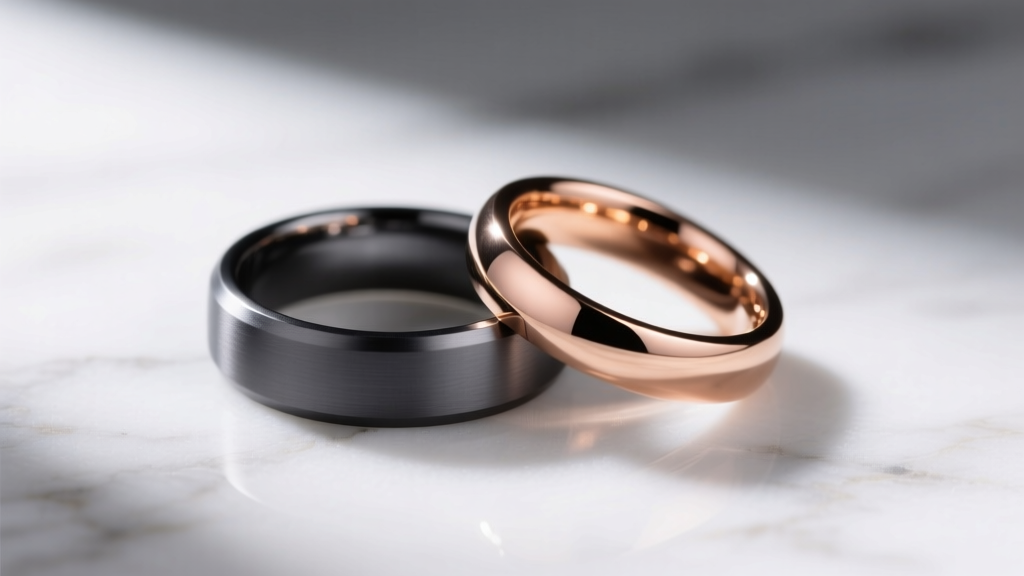
Comprehensive Metal Property Matrix
Use this data table to compare the exact specifications of popular jewelry metals before making your purchase.
| Material | Composition | Hardness (HV) | Resizing Potential | Engraving Method |
|---|---|---|---|---|
| 18k Yellow Gold | 75% Au, 25% Ag/Cu | ~125 HV | Excellent (Solder) | Rotary (Deep/Tactile) |
| 14k White Gold | 58.3% Au, Ni/Pd/Zn | ~150 HV | Good (Requires Re-plating) | Rotary (Deep/Tactile) |
| Platinum 950 | 95% Pt, 5% Ru/Ir | ~135 HV | Excellent (Laser/TIG Weld) | Rotary (Deep/Tactile) |
| Grade 5 Titanium | Ti-6Al-4V | ~350 HV | Impossible | Laser Only (Surface) |
| Tantalum | 99.9% Ta | ~80 HV | Highly Restricted | Laser or Chemical Etch |
How Material Impacts Customization and Engraving
A core component of meaningful jewelry for her is personalization—whether that involves a hidden fingerprint, a handwritten note, or geographic coordinates. The metal you choose dictates the engraving technique and its longevity.
Rotary Engraving: Precious metals like gold and platinum are soft enough to be cut with a diamond-tipped rotary tool. This removes material, creating a deep, tactile groove that will remain legible for centuries. This is the only acceptable method for heirloom-quality text or fingerprint engravings.
Laser Engraving: Hardened alternative metals like titanium and tungsten cannot be rotary engraved without destroying the tool. Instead, they require fiber lasers. Lasers do not cut deep grooves; they alter the surface oxidation to create contrast. While precise, laser engravings on dark metals can eventually wear smooth on high-friction surfaces over several decades.
Gemstone Hardness and the Mohs Scale Reality
If your meaningful jewelry incorporates birthstones or anniversary gems, you must understand the difference between hardness and toughness. According to the GIA Gem Encyclopedia, hardness measures resistance to scratching (the Mohs scale), while toughness measures resistance to chipping and breaking.
- Sapphire (Mohs 9): Exceptional hardness and excellent toughness. Ideal for daily-wear rings.
- Emerald (Mohs 7.5 - 8): While reasonably hard, emeralds are heavily included and inherently brittle. An emerald ring is a high-risk choice for a daily-wear meaningful gift and is better suited for pendants or earrings.
- Opal (Mohs 5.5 - 6.5): Contains up to 20% water. Prone to crazing (cracking) in dry environments and highly susceptible to scratching. Best reserved for occasional-wear pieces.
For further reading on gemstone stability and care, the Jewelers of America provides excellent guidelines on maintaining porous and treated stones over a lifetime.
Final Verdict: Matching the Metal to Her Lifestyle
Selecting meaningful jewelry for her requires aligning the material properties with her daily reality. If she works with her hands, exercises frequently, or prefers a low-maintenance lifestyle, a Platinum 950 band or a solid 14k gold piece with a bezel-set sapphire offers the perfect blend of emotional resonance and physical resilience. If the gift is a pendant or a pair of earrings where high-impact friction is minimal, you can safely explore the richer, softer tones of 18k gold or the vibrant hues of an emerald.
Ultimately, the most meaningful jewelry is that which is engineered to endure. By prioritizing metallurgical integrity and gemstone stability alongside aesthetic beauty, you ensure that your gift remains a flawless testament to your relationship for generations to come.