How to Choose the Best Jewelry Gifts for Him: A 2026 Buying Guide
Discover how to choose the perfect jewelry gifts for him in 2026. Our expert guide covers metals, styles, and sizing for men's bracelets, rings, and chains.


The landscape of men's accessories has undergone a massive transformation over the last decade. Gone are the days when a simple leather cord or a basic steel chain sufficed. As we navigate 2026, the market for jewelry gifts for him is defined by intentionality, material science, and architectural design. Whether you are shopping for a boyfriend, husband, or father, choosing the right piece requires looking past the surface polish and understanding the mechanics of what makes men's jewelry endure daily wear.
This comprehensive buying guide strips away the marketing fluff. We will explore the metallurgy of modern alloys, the structural integrity of chain links, and the ergonomic nuances of ring sizing, ensuring your gift is both aesthetically striking and mechanically sound.
Decoding Metal Metallurgy: Alloys and Durability
When selecting jewelry gifts for him, the base metal dictates the piece's lifespan, weight, and maintenance requirements. According to the Gemological Institute of America (GIA), understanding metal hardness and alloy composition is critical for everyday wearability. Men are generally harder on their jewelry than women, making scratch resistance and tensile strength paramount.
The Tungsten vs. Titanium Dilemma
Two alternative metals dominate the men's market, but they behave entirely differently under stress. Tungsten Carbide (typically composed of 85% tungsten and 15% nickel or cobalt binder) is incredibly hard, rating an 8.5 to 9 on the Mohs scale. It will not scratch, but its rigidity makes it brittle; a hard drop on a tile floor can shatter it. Furthermore, buyers must ensure the binder is nickel, not cobalt, to prevent skin oxidation and allergic reactions.
Grade 5 Titanium (Ti-6Al-4V), on the other hand, is an aerospace-grade alloy that is remarkably lightweight and hypoallergenic. While it ranks lower on the Mohs scale (around 5.5), it possesses high tensile strength. Instead of shattering, titanium will bend or dent under extreme force, making it a safer, more forgiving option for men who work with their hands.
| Metal | Mohs Hardness | Weight Profile | Failure Mode | Best Use Case |
|---|---|---|---|---|
| 316L Stainless Steel | 5.5 - 6.0 | Medium-Heavy | Surface scratching | Chains, Cuff Bracelets |
| Grade 5 Titanium | 5.5 | Ultra-Light | Bending / Denting | Wedding Bands, Active Wear |
| Tungsten Carbide | 8.5 - 9.0 | Very Heavy | Shattering / Cracking | Desk-job Wedding Bands |
| 14k Yellow Gold | 3.5 - 4.0 | Heavy | Deep gouging / Warping | Signet Rings, Heirloom Pieces |
Chain Architecture: Links, Gauges, and Clasp Mechanics
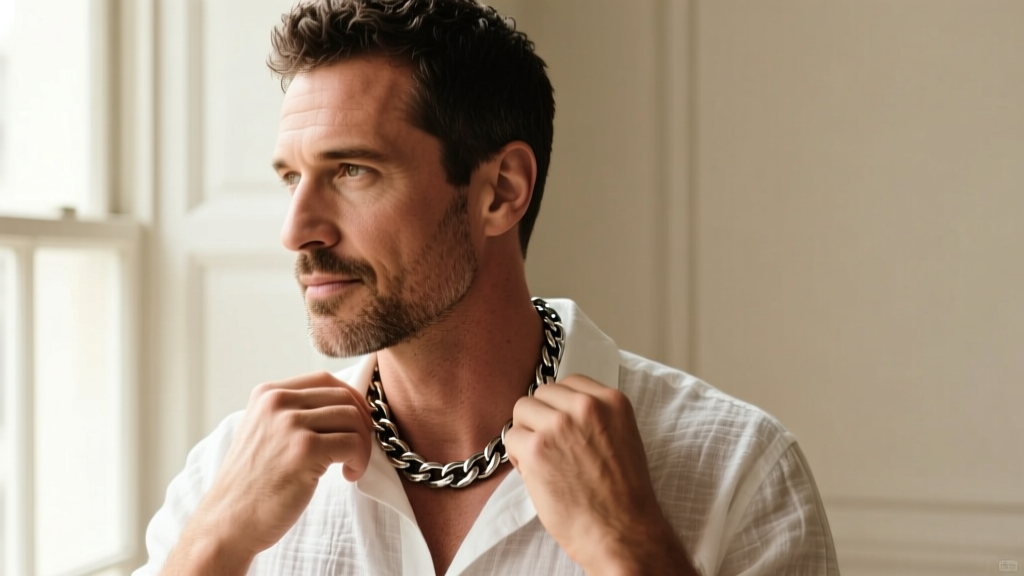
A chain is only as strong as its weakest solder point. When evaluating gold or silver chains as jewelry gifts for him, you must consider the link geometry and the clasp mechanism. The current trend for 2026 favors medium-gauge chains (3mm to 5mm) that offer a substantial presence without crossing into costume territory.
Link Styles and Tensile Strength
- Cuban Links: Characterized by flat, interlocking oval links. They lay flush against the chest and offer excellent structural integrity because the links are thick and uniformly soldered.
- Rope Chains: Twisted links that mimic the look of a rope. While visually dynamic and highly reflective, the intricate twisting creates micro-stress points. They are prone to kinking and are difficult to repair if snapped.
- Figaro Chains: A pattern of three short links followed by one long link. The jump rings connecting the varying link sizes are frequent failure points under heavy tension.
The Clasp: Where Most Chains Fail
Never pair a heavy 5mm+ chain with a standard spring-ring clasp; the internal spring mechanism will inevitably fail. For heavier chains, look for a box clasp with a figure-8 safety catch. The box mechanism provides a secure, locked-in click, while the figure-8 wire acts as a secondary fail-safe, ensuring the chain doesn't drop to the floor if the primary latch is accidentally depressed.
Ergonomics and Sizing: The Hidden Comfort Factors
Sizing is the most common point of failure when gifting rings and bracelets. A piece that fits poorly will end up in a drawer, regardless of its aesthetic appeal.
The Ring 'Knuckle Rule' and Comfort Fit
When sizing a ring for a man, the knuckle is often significantly wider than the base of the finger. The ring must slide over the knuckle with a firm push but sit snugly at the base. Furthermore, always opt for a Comfort Fit interior. Unlike a standard flat interior, a comfort fit ring is domed on the inside, reducing the surface area touching the skin. This allows the ring to slide over knuckles more easily and prevents moisture buildup, which is crucial for men who wear their rings during physical labor or workouts.
Bracelet Sizing and the 'Two-Finger' Metric
For chain or bead bracelets, measure his wrist with a soft tape measure and add exactly 0.5 inches for a snug fit, or 1 inch for a relaxed drape. For rigid cuff bracelets, look for designs that feature a slight inward taper at the ends, which hugs the underside of the wrist and prevents the cuff from sliding off the hand during vigorous movement.
Budget Framework: Navigating the 2026 Market
Understanding what your budget translates to in terms of material quality will help you set realistic expectations. Industry reports from JCK Online highlight a growing divide between mass-produced fashion alloys and artisan-crafted solid metals.
"The modern man views jewelry not as an afterthought, but as a foundational element of his personal uniform. Investing in solid metals over plated alternatives is the cornerstone of building a lasting collection."
- Entry-Level ($50 - $150): Expect high-quality 316L stainless steel, PVD (Physical Vapor Deposition) black-coated titanium, and sterling silver. Avoid gold-plated brass, as the acidic nature of men's sweat will strip the plating within months.
- Mid-Tier ($150 - $600): This tier opens up solid 10k and 14k gold chains (14k is preferred for its higher alloy content, offering better scratch resistance than 18k), heavy-gauge sterling silver cuffs, and custom-machined tungsten rings with precious metal inlays.
- Luxury ($600+): Solid 18k gold, platinum, and hand-forged Damascus steel. At this level, you are paying for artisan craftsmanship, proprietary clasp mechanisms, and ethically sourced gemstones integrated into signet rings or pendants.
Final Thoughts on Building His Collection
The best jewelry gifts for him are those that seamlessly integrate into his existing lifestyle. If he works in a corporate environment, a minimalist 3mm rope chain in white gold or platinum offers a subtle edge that doesn't violate dress codes. If he is outdoorsy or works with his hands, a matte-finished Grade 5 titanium band or a rigid steel cuff provides durability without the anxiety of scratching a precious metal.
By focusing on metallurgical integrity, mechanical clasps, and ergonomic sizing, you elevate your gift from a simple accessory to a permanent fixture in his daily rotation. Pay attention to the details that aren't immediately visible—the interior dome of a ring, the safety catch on a clasp, and the specific alloy blend—and you will secure a piece he will wear for decades.