What Does S925 On Jewelry Mean For Daily Care & Cleaning?
Discover what the S925 stamp means for sterling silver authenticity, and learn expert chemical cleaning and anti-tarnish storage methods.

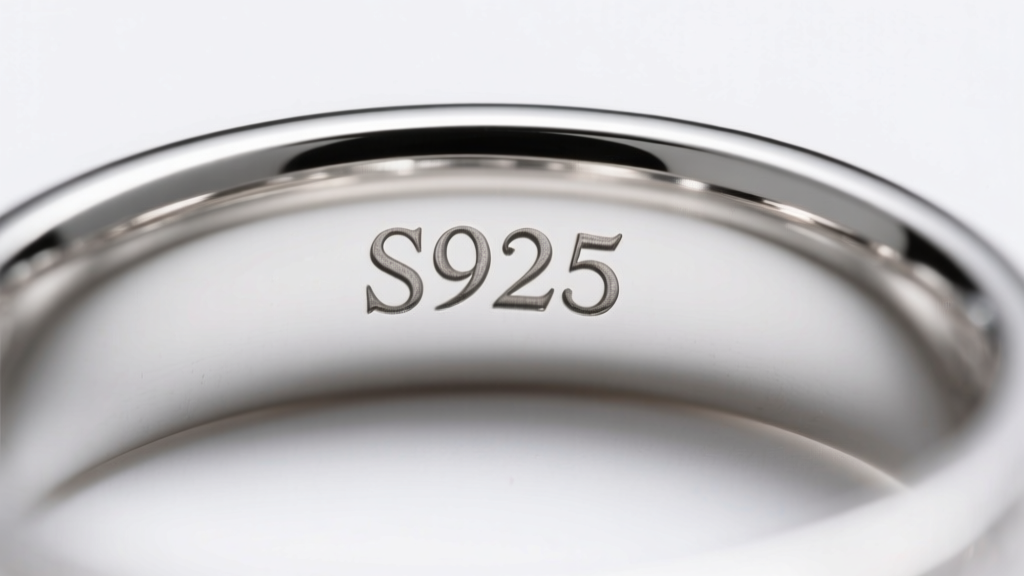
The Authenticity Baseline: Decoding the S925 Stamp
When collectors and everyday wearers ask, 'what does s925 on jewelry mean,' the answer bridges the gap between precious metal authenticity and long-term maintenance. The 'S925' hallmark is the global standard for sterling silver, certifying that the piece consists of exactly 92.5% pure silver and 7.5% alloy metals—most commonly copper. According to the Federal Trade Commission (FTC) Jewelry Guides, this specific ratio is legally required to use the term 'sterling' in the United States.
While pure 999 silver is virtually immune to tarnish, it is far too soft (rating a mere 2.5 on the Mohs hardness scale) for daily wear jewelry. The addition of 7.5% copper provides the necessary structural integrity, raising the hardness to a wearable 3.5. However, this exact metallurgical compromise is what dictates your entire cleaning and care regimen. Copper is highly reactive to sulfur and moisture, meaning your S925 jewelry is inherently predisposed to sulfidation (tarnish) if not maintained correctly.
The Chemistry of Tarnish: Why Your S925 Darkens
Understanding what does s925 on jewelry mean requires understanding how it degrades. Sterling silver does not 'rust' like iron, nor does it oxidize in the traditional sense. Instead, the copper alloy reacts with hydrogen sulfide ($H_2S$) in the atmosphere to form silver sulfide ($Ag_2S$), a black or dull yellowish layer on the surface. Common environmental accelerators include:
- High humidity: Moisture acts as a catalyst for the sulfidation reaction.
- Household chemicals: Bleach, ammonia, and even the sulfur compounds in hard-boiled eggs or rubber bands.
- Personal care products: Lotions, perfumes, and hairsprays containing sulfates or alcohols.
- Body chemistry: Highly acidic sweat can rapidly break down the copper alloy matrix.
It is also vital to distinguish between unintended tarnish and intentional patina. Many artisan S925 pieces are treated with 'liver of sulfur' to darken the recesses of filigree designs, creating contrast. Aggressive cleaning methods will strip this intentional antiquing, ruining the piece's aesthetic value and requiring professional re-oxidation.
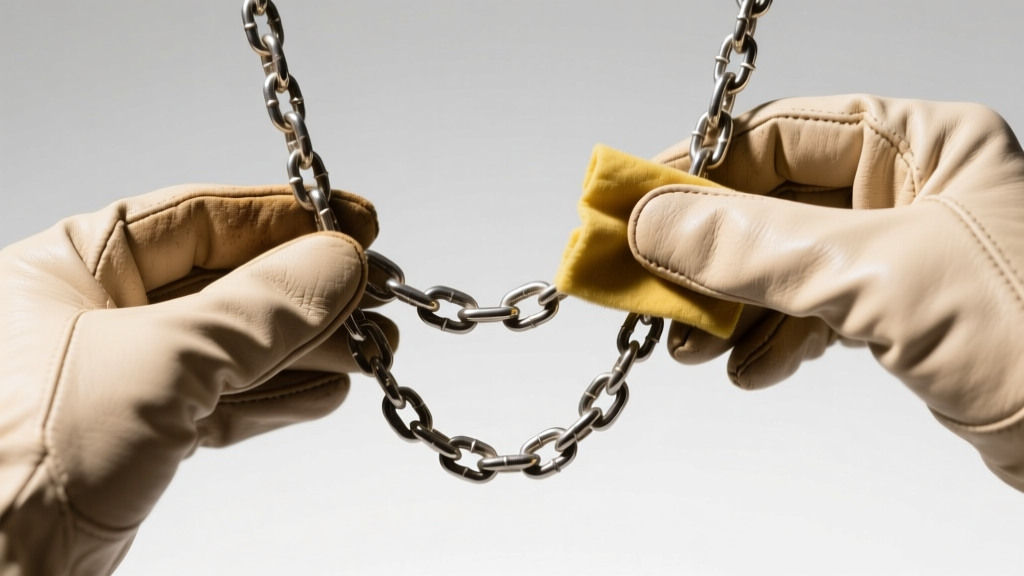
Approved vs. Destructive Cleaning Methods for S925
Because the Gemological Institute of America (GIA) notes that silver sulfide is a surface-level chemical bond, removing it requires either mechanical abrasion or chemical reduction. However, improper methods will permanently scar your S925 pieces. Below is a definitive guide to cleaning safety.
| Cleaning Method | Mechanism | S925 Safety Rating | Best Use Case |
|---|---|---|---|
| Toothpaste & Brush | Mechanical Abrasion | Destructive (Avoid) | Never. Hydrated silica scratches silver. |
| Commercial Silver Dips | Chemical Stripping (Thiourea) | Caution | Heavy tarnish on plain chains (no gems). |
| Jeweler's Rouge Cloth | Mild Micro-Abrasion | Excellent | Weekly maintenance and high-polish finishing. |
| Aluminum Foil & Baking Soda | Electrochemical Reduction | Excellent (with caveats) | Intricate filigree; avoid on oxidized/antiqued silver. |
| Ultrasonic Cleaners | Cavitation | Variable | Safe for plain S925; destroys soft gems (opal, turquoise). |
The Electrochemical Reduction Method (DIY)
For heavily tarnished S925 pieces without porous gemstones, the aluminum foil method is the safest way to revert silver sulfide back to pure silver without removing microscopic layers of the metal. Line a glass bowl with aluminum foil (shiny side up). Add 1 tablespoon of baking soda and 1 teaspoon of salt. Pour boiling water over the mixture. Submerge your S925 jewelry ensuring it touches the foil. The galvanic reaction transfers the sulfur from the silver to the aluminum. Remove after 3 minutes, rinse in distilled water, and buff dry.
Mechanical Polishing (The Sunshine Cloth Standard)
For routine maintenance, avoid liquid dips entirely. Liquid dips strip the metal and leave microscopic pores that actually accelerate future tarnishing. Instead, use a treated polishing cloth impregnated with jeweler's rouge (iron oxide). This gently removes the $Ag_2S$ layer while burnishing the surface, closing those microscopic pores and leaving a protective shine.
Authentication Verification: When Cleaning Reveals a Fake
Sometimes, answering 'what does s925 on jewelry mean' requires verifying if the stamp is lying. The market is flooded with silver-plated brass or nickel alloys bearing counterfeit S925 hallmarks. Your cleaning routine can inadvertently expose these fakes.
The Acid Test Verification
If you suspect a piece is plated rather than solid S925, use a standard silver acid test kit. File a tiny, inconspicuous notch into the metal (to bypass any surface plating) and apply a drop of testing acid (typically a mixture of nitric acid and potassium dichromate). Genuine 92.5% silver will turn a distinct creamy red. If it turns green, you have exposed a copper or brass base metal, confirming the S925 stamp is fraudulent.
The Magnet and Ice Tests
While not definitive for silver purity, a strong neodymium magnet will instantly attract iron or steel cores hidden beneath fake S925 plating. Furthermore, silver possesses the highest thermal conductivity of any common metal. Placing an ice cube on a genuine S925 coin or thick pendant will cause the ice to melt almost instantaneously, whereas silver-plated lead or tin will retain the cold much longer.
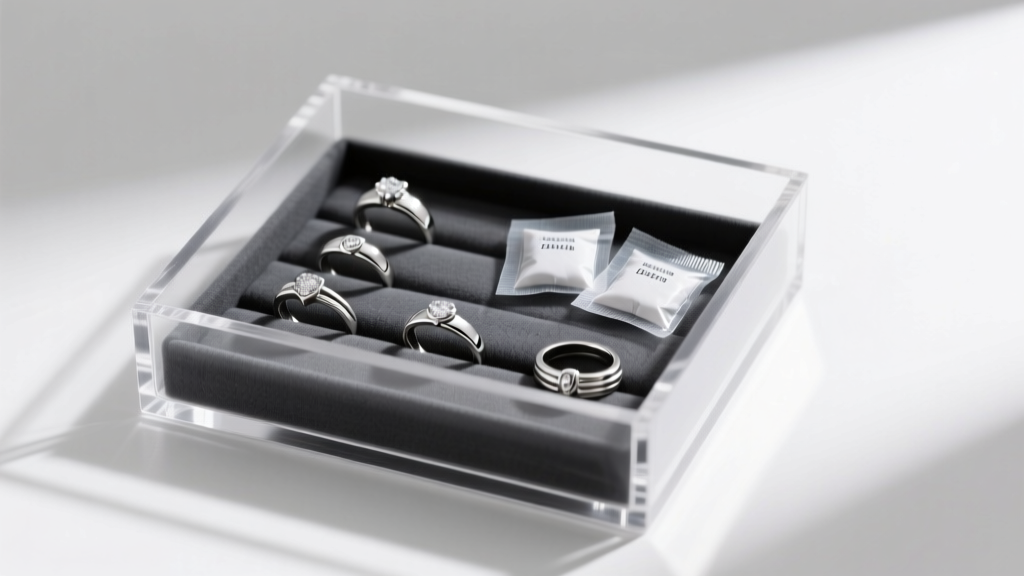
Long-Term Storage & Preventative Maintenance
Knowing what does s925 on jewelry mean is only half the battle; the other half is halting the sulfidation process before it begins. Proper storage is your primary defense mechanism.
- Micro-Environments: Store S925 in airtight polyethylene (PE) zip-top bags. Avoid PVC or cheap vinyl plastics, which can off-gas sulfur and plasticizers that permanently cloud silver.
- Anti-Tarnish Strips: Place a 3M anti-tarnish strip inside the bag. These strips contain copper-based polymers that act as a sacrificial anode, absorbing ambient hydrogen sulfide before it reaches your jewelry. Replace them every 6 months.
- Desiccants: Include a small silica gel packet to drop the relative humidity inside the bag below 40%, effectively starving the sulfidation reaction of its moisture catalyst.
- Avoid Wooden Boxes: Never store sterling silver long-term in untreated wooden jewelry boxes. Woods like oak and cedar emit acidic vapors and natural sulfur compounds that will aggressively tarnish S925 alloys.
- Chalk or Activated Charcoal: If commercial strips are unavailable, a piece of plain blackboard chalk or a sachet of activated charcoal in your jewelry box will absorb ambient moisture and sulfur compounds.
Summary: Protecting Your 92.5% Investment
The S925 stamp is a guarantee of precious metal authenticity, but it is also a warning label for required maintenance. The 7.5% copper alloy gives your jewelry the strength to be worn daily, but demands a rigorous, chemistry-aware approach to cleaning and storage. By abandoning abrasive household hacks in favor of electrochemical reduction and treated microfiber cloths, and by controlling the atmospheric sulfur in your storage environment, your sterling silver will retain its brilliant luster and structural integrity for generations.
Related stories

By Material
Styling For Beginners: Practical, Accessible CSS Fundamentals That Actually Work

By Material
Beginner vs Aesthetic: Why Clean CI/CD Pipelines Are Not Just Pretty — They’re Predictable, Secure, and Profitable

By Material