Decoding the Swan Hallmark on Jewelry: French Silver Marks & Grades
Discover what the swan hallmark on jewelry means. Learn to identify French silver marks, compare 800 vs 925 silver properties, and spot fakes.

The True Identity of the Swan Hallmark on Jewelry
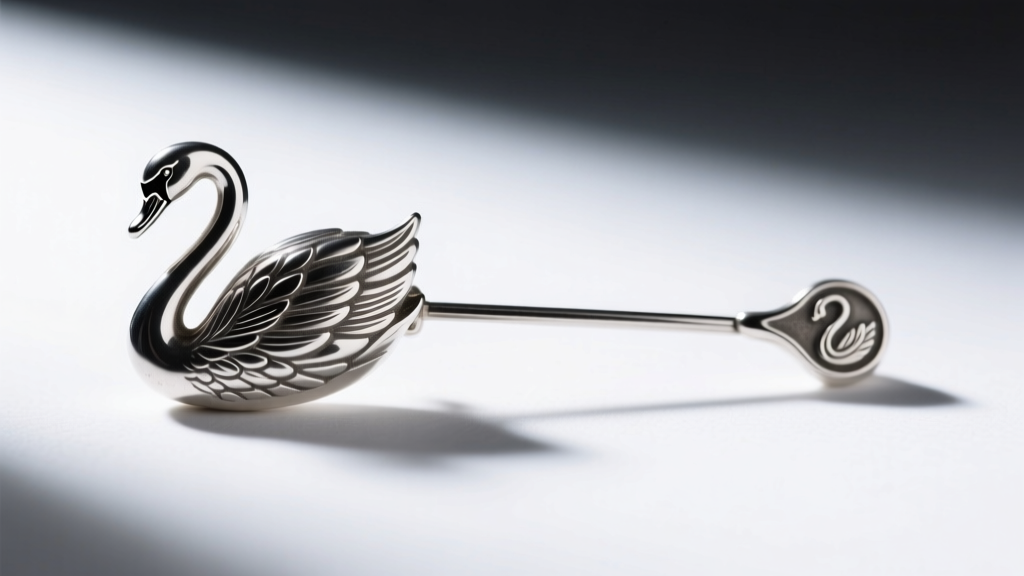
When evaluating estate and antique pieces in 2026, encountering a swan hallmark on jewelry often triggers immediate confusion. Many modern collectors mistakenly associate the swan motif with contemporary crystal brands or specific artisan maker's marks. However, in the strict lexicon of precious metal authentication, the swan (or poinçon de cygne) is a historic French state assay mark. It is a guarantee of metal purity, not a manufacturer's logo.
Introduced by the French Guarantee Office in 1838 alongside the famous Minerva head, the swan hallmark served a highly specific bureaucratic purpose. While the Minerva head was stamped on domestic French silver meeting the 950 or 800 parts-per-thousand standard, the swan was applied to silver items of foreign origin, imported goods, or second-hand pieces sold at public auction that lacked a verifiable domestic maker's mark. According to the French Customs Precious Metals Guarantee, the presence of this mark legally guaranteed a minimum silver content of 800/1000 (80% pure silver).
"A hallmark is the state's signature on the metal. The swan did not denote who made the piece, but rather that the French assay office verified its foreign or secondary-market silver content met the 800/1000 threshold." — Lang Antique Jewelry University
Material Comparison: 800 Silver vs. 925 Sterling vs. 950 Minerva
To understand the physical behavior of jewelry bearing the swan hallmark, we must compare its 800-grade silver composition to the more globally ubiquitous 925 Sterling and the premium French 950 Minerva standards. The varying copper content fundamentally alters the alloy's metallurgical properties, dictating its hardness, tarnish rate, and structural integrity.
| Assay Mark | Silver Purity | Copper Content | Vickers Hardness (HV) | Density (g/cm³) | Primary Use Case |
|---|---|---|---|---|---|
| Swan (Cygne) | 800 / 1000 | 20.0% | ~135 - 145 HV | 10.31 | Imported/Antique structural silver |
| Sterling Lion | 925 / 1000 | 7.5% | ~110 - 120 HV | 10.36 | Global standard jewelry & holloware |
| Minerva Head | 950 / 1000 | 5.0% | ~95 - 105 HV | 10.43 | Premium French domestic silver |
Metallurgical Implications of 20% Copper
The 20% copper content in 800 swan-marked silver makes the alloy significantly harder and more durable than 925 Sterling. This high tensile strength made it ideal for structural components like brooch pin stems, heavy clasp mechanisms, and intricate filigree work that requires rigid wire. However, this metallurgical advantage comes with a severe aesthetic trade-off: oxidation.
Copper is highly reactive to sulfur and oxygen in the atmosphere. Consequently, 800 silver tarnishes at an accelerated rate compared to 925 or 950 alloys. The tarnish on swan-marked silver often presents as a deep, purplish-black or muddy brown layer of cupric oxide and silver sulfide, requiring more aggressive chemical or electrochemical reduction to clean without stripping the underlying metal.
Physical Authentication Protocols for the Swan Mark
Authenticating a swan hallmark requires moving beyond visual inspection and engaging in material science. In 2026, sophisticated laser engraving can replicate the visual geometry of a 19th-century punch mark. Therefore, verification must rely on testing the underlying material properties to ensure the hallmark matches the metal's actual chemistry.
1. Microscopic Displacement Analysis
Traditional French hallmarks were struck using a steel punch and a hammer, displacing the metal rather than removing it. Under a 10x triplet loupe or a digital microscope, an authentic swan hallmark will show raised ridges of metal around the perimeter of the cartouche. The background of the stamp will often be slightly depressed. Conversely, modern laser-engraved forgeries or cast-in-place fake hallmarks will show zero metal displacement, with perfectly flat floors and no microscopic stress fractures in the surrounding silver lattice.
2. Specific Gravity (Density) Testing
Because the swan hallmark guarantees 800 purity, the item's specific gravity (SG) must align with the mathematical density of an 80/20 silver-copper alloy. Pure silver has an SG of 10.49, while pure copper is 8.96. An 800 alloy yields an expected SG of approximately 10.31 g/cm³.
Using a hydrostatic scale, weigh the piece in air, then weigh it suspended in distilled water. Apply the formula:
SG = Weight in Air / (Weight in Air - Weight in Water)
If a piece bearing a swan hallmark yields an SG of 10.36 (indicating 925 Sterling) or 9.5 (indicating a base metal core with thick silver plating), the hallmark is either a misapplication or a deliberate forgery.
3. Nitric Acid Colorimetric Reaction
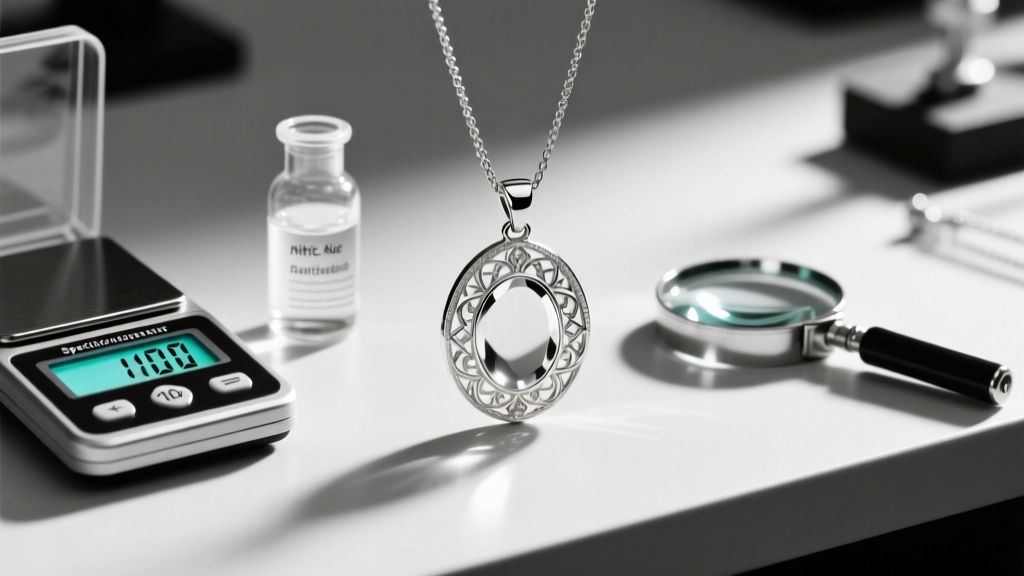
The Gemological Institute of America (GIA) notes that chemical spot testing remains a definitive method for silver grading. When applying a drop of standard silver testing acid (a potassium dichromate and nitric acid solution) to a discreet file mark on the jewelry:
- 800 Silver (Swan Mark): Reacts to form a dark, muddy reddish-brown color due to the high copper oxidation.
- 925 Sterling: Yields a bright, vibrant blood-red color.
- 950 Minerva: Produces a lighter, almost pinkish-red hue.
- Base Metals/Plated: Turns bright green (copper/brass) or milky white (lead/tin).
Common Forgeries and the "Swarovski Confusion"
A critical pitfall for novice authenticators is conflating the French assay swan with the Swarovski crystal maker's mark. Swarovski adopted the swan logo in 1988 to replace the edelweiss flower. However, the Swarovski swan is a brand identifier typically etched or molded into crystal, or stamped onto base-metal or rhodium-plated brass settings. It is never a precious metal hallmark.
If you find a swan mark on a piece of jewelry that is heavily magnetic, lacks the paramagnetic slide-test behavior of silver, or shows green verdigris at the wear points, you are likely looking at a modern base-metal replica or a misidentified brand logo, not an 1838-era French guarantee mark. True French swan hallmarks are almost exclusively found on solid, heavy-gauge antique silver pieces, often accompanied by a poinçon de maître (maker's mark) in a diamond-shaped cartouche.
Conclusion: Respecting the Poinçon de Cygne
The swan hallmark on jewelry is a fascinating relic of 19th-century European trade and tax law. For the modern collector and jeweler, it serves as a reliable indicator of an 800-grade silver alloy—a metal that offers superior structural hardness at the cost of higher maintenance due to copper oxidation. By combining microscopic punch-mark analysis, specific gravity measurements, and colorimetric acid testing, you can definitively authenticate these historic pieces, separating genuine French-import silver from modern forgeries and brand confusion.