Aquamarine vs Bloodstone: March Birthstone Jewelry Properties
Compare aquamarine and bloodstone properties for your March birthstone jewelry. Explore Mohs hardness, metal pairings, and daily wear care guides.

The Gemological Divide: Beryl vs. Cryptocrystalline Quartz
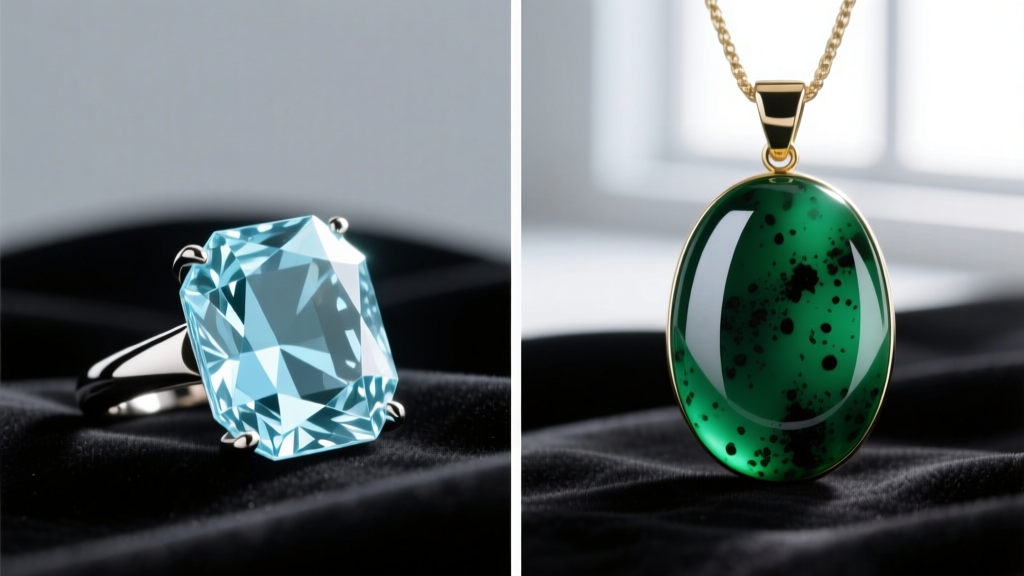
When selecting March birthstone jewelry, consumers and jewelers alike are presented with a fascinating study in mineralogical contrasts. The month of March is uniquely represented by two distinct gemstones: the modern, transparent aquamarine and the traditional, opaque bloodstone (heliotrope). Understanding the fundamental material properties of these two stones is critical for determining their suitability for everyday wear, appropriate setting styles, and long-term maintenance.
Aquamarine belongs to the beryl family, sharing its hexagonal crystal structure with emeralds and morganite. Its chemical composition is beryllium aluminum silicate (Be3Al2(SiO3)6), and it forms in large, well-defined prismatic crystals deep within igneous pegmatites. In stark contrast, bloodstone is a variety of cryptocrystalline quartz, specifically a dark green chalcedony. Its chemical composition is silicon dioxide (SiO2), and it forms in microcrystalline masses rather than distinct geometric crystals. The red spots that give bloodstone its name are caused by inclusions of iron oxide, primarily hematite. This fundamental divergence in crystal habit dictates everything from how the stones are cut to how they withstand mechanical stress.
Hardness, Toughness, and Cleavage: The Durability Matrix
A common misconception in gemology is that 'hardness' equates to 'durability.' While the Mohs scale of mineral hardness measures a stone's resistance to scratching, it does not account for toughness (resistance to breaking or chipping) or cleavage (the tendency to split along structural planes). For March birthstone jewelry intended for daily wear, such as engagement rings or heavy-use bracelets, evaluating all three factors is mandatory.
| Property | Aquamarine (Beryl) | Bloodstone (Chalcedony) |
|---|---|---|
| Mohs Hardness | 7.5 - 8.0 | 6.5 - 7.0 |
| Toughness | Good, but brittle | Excellent, highly resistant to chipping |
| Cleavage | Indistinct / Poor | None (Conchoidal fracture) |
| Specific Gravity | 2.67 - 2.71 | 2.58 - 2.64 |
| Best Jewelry Application | Pendants, earrings, protected ring settings | Signet rings, cabochon rings, bracelets |
According to the Gemological Institute of America (GIA), aquamarine's Mohs hardness of 7.5 to 8 makes it highly resistant to everyday dust and abrasives, which typically contain quartz (Mohs 7). However, its indistinct cleavage and inherent brittleness mean that a sharp blow to the girdle or a poorly designed prong setting can cause the stone to chip or fracture. Conversely, bloodstone lacks any cleavage planes and exhibits a conchoidal fracture, granting it superior toughness. A bloodstone cabochon can withstand significant impact without splitting, making it an excellent candidate for heavy-duty rings and men's signet jewelry.
Optical Properties and Color Stability
The visual appeal of March birthstone jewelry relies heavily on the optical phenomena inherent to each material. Because one is transparent and the other opaque, their interaction with light requires entirely different cutting and polishing techniques.
Aquamarine: Heat Treatment and Refractive Index
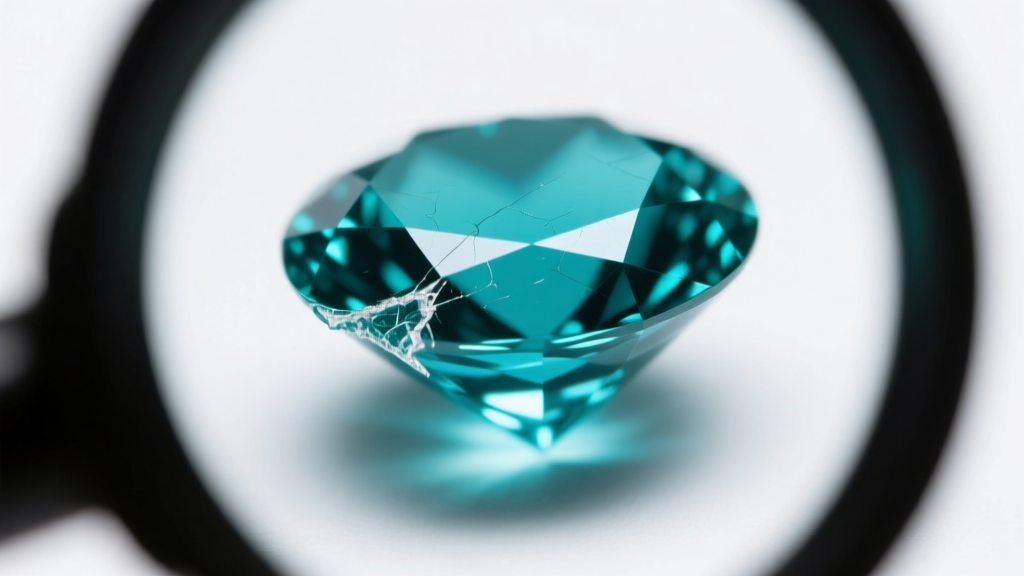
Aquamarine possesses a refractive index (RI) of 1.577 to 1.583 and a birefringence of 0.006. This relatively low birefringence means that light passing through the stone does not double significantly, allowing for crisp, clean facet junctions. In its natural state, many aquamarines exhibit a slight greenish-yellow secondary hue due to iron impurities. To achieve the highly prized pure, saturated blue, the vast majority of commercial aquamarines undergo permanent heat treatment at temperatures between 375°C and 450°C. This process alters the iron oxidation state, eliminating the greenish tint without compromising the stone's structural integrity or long-term color stability.
Bloodstone: Opaque Charm and Susceptibility to Acids
Bloodstone's optical properties are defined by its opacity and vitreous to waxy luster when polished. It does not transmit light; instead, its beauty relies on surface reflection and the stark contrast between the dark green chalcedony matrix and the bright red hematite inclusions. The GIA's bloodstone profile notes that while the quartz matrix is highly stable, the iron oxide inclusions can be vulnerable to harsh chemicals. Prolonged exposure to strong acids or alkaline cleaning solutions can degrade the hematite spots, dulling the stone's signature red 'blood' drops and leaving a pitted surface texture.
Customization and Cut Styles
The physical properties of these March birthstones dictate their ideal lapidary treatments. Aquamarine is almost exclusively faceted to maximize brilliance and color saturation. Step cuts, such as the emerald cut or elongated baguette, are exceptionally popular because their broad, open facet windows highlight the stone's clarity and deep blue hue. Elongated oval and pear cuts are also utilized to preserve carat weight from the rough hexagonal crystals while creating elegant, finger-flattering silhouettes for rings.
Bloodstone, lacking transparency, is never faceted. It is shaped into smooth cabochons, beads, or flat tablets for inlay work. In recent years, there has been a significant resurgence in the art of carving and intaglio work for bloodstone. Master lapidaries carve family crests, mythological figures, or botanical motifs into the flat surface of the stone, utilizing the varying depths to reveal different concentrations of red and green, creating a three-dimensional masterpiece that is particularly striking in custom signet rings.
Metal Pairings: Enhancing the March Birthstones
Selecting the correct precious metal is crucial for optimizing the visual impact of March birthstone jewelry. The cool, icy blue of aquamarine is best complemented by white metals. Platinum, 14k white gold, and 18k white gold provide a neutral, reflective backdrop that enhances the stone's blue saturation without introducing competing color casts. For high-wear aquamarine rings, platinum is the superior choice; its high density and malleability mean that prongs will bend rather than break upon impact, protecting the brittle beryl crystal.
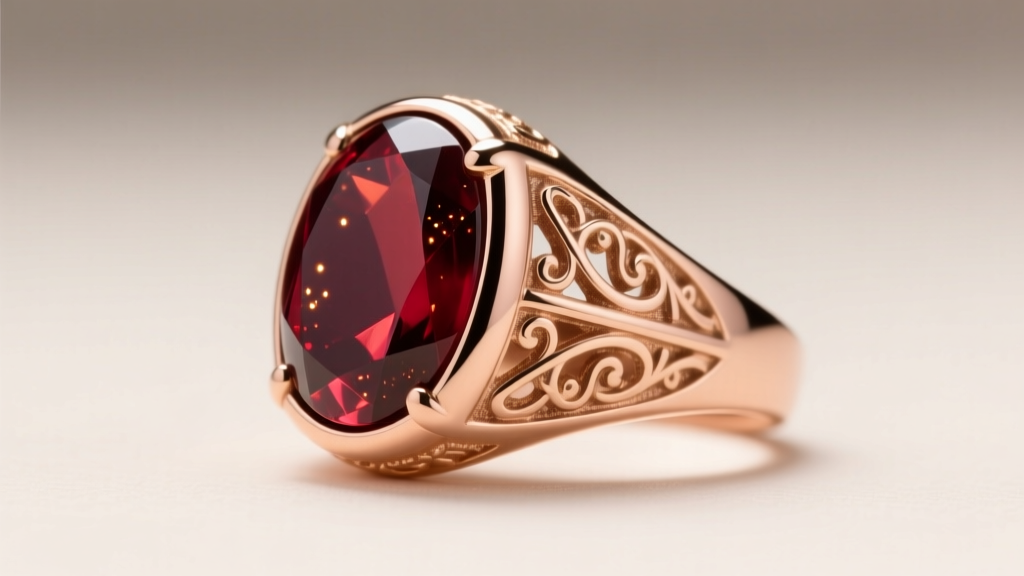
Bloodstone's rich, earthy tones demand warmer metals to create a cohesive aesthetic. 18k yellow gold and 14k rose gold provide a luxurious contrast to the dark green and red hues, evoking a vintage, heraldic feel. Because bloodstone is tough and often cut into flat-backed cabochons or tablets, it is frequently set in bezel or flush settings. A thick yellow gold bezel not only secures the stone firmly but also frames the opaque material, emphasizing its smooth, waxy polish.
Pricing Framework: What to Expect in 2026
The valuation models for aquamarine and bloodstone are fundamentally different, reflecting their rarity and market demand.
- Aquamarine (Commercial Grade): $100 to $250 per carat. These stones exhibit pale blue hues and may contain visible inclusions. They are widely available in standard calibrated sizes.
- Aquamarine (Fine / Gem Grade): $300 to $600 per carat. Features high clarity and a strong, pure blue color.
- Aquamarine (Santa Maria / African): $1,000 to $3,000+ per carat. Originating primarily from specific mines in Brazil and Africa, these stones boast a deep, intensely saturated, almost neon blue that commands premium collector prices.
- Bloodstone (Standard Cabochon): $5 to $20 per carat. Bloodstone is abundant, and pricing is driven more by the quality of the lapidary work and the distinctness of the red spots than by raw material scarcity.
- Bloodstone (Carved / Intaglio): $100 to $500+ per piece. Pricing here reflects the artisan's labor, skill, and the complexity of the custom carving rather than the per-carat weight of the chalcedony.
Care and Maintenance Protocols
Proper care ensures the longevity of your March birthstone jewelry. Aquamarine is generally safe for ultrasonic cleaning, provided the stone does not have significant liquid inclusions or surface-reaching fractures that could expand under high-frequency vibrations. However, the safest and most effective method for cleaning faceted aquamarine is a soft-bristled brush, warm water, and a mild, non-detergent soap, followed by a gentle pat dry with a microfiber cloth.
Bloodstone requires a more conservative approach. Ultrasonic cleaners are strictly prohibited, as the intense vibrations can cause the hematite inclusions to loosen or fracture the microcrystalline quartz matrix. Furthermore, steam cleaners should be avoided. To clean bloodstone jewelry, simply wipe it with a damp, soft cloth and dry it immediately. Store bloodstone pieces separately from harder gems like diamonds, sapphires, and even aquamarines to prevent the quartz surface from becoming scratched and losing its polished luster over time.