Diamond vs Alternatives: Picking Your Jewelry April Birthstone
Compare diamond, moissanite, and white sapphire properties. Discover which jewelry April birthstone suits your lifestyle, budget, and setting needs.

The Gemological Benchmark: Natural and Lab-Grown Diamonds
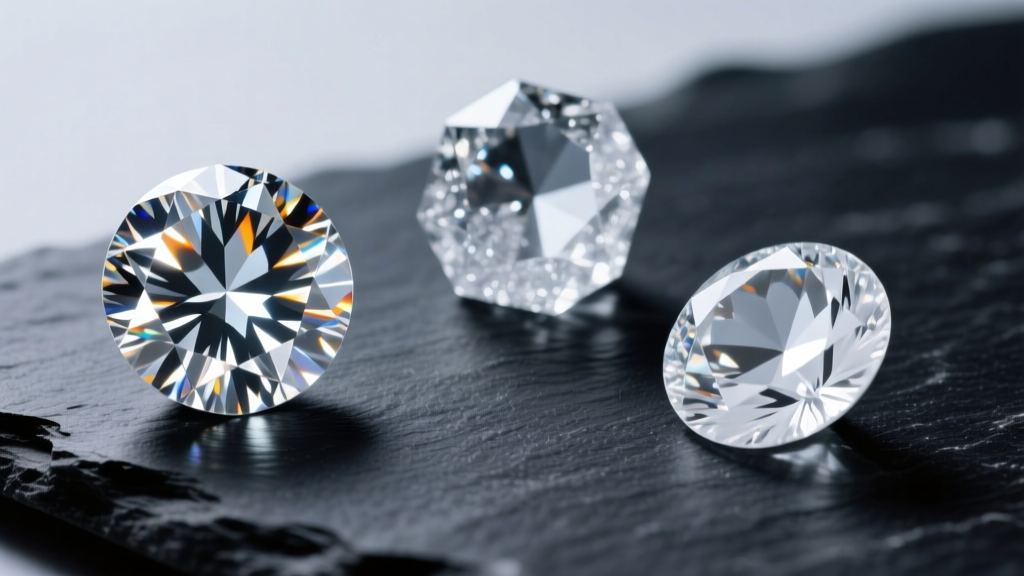
When selecting your jewelry April birthstone, the diamond remains the undisputed gemological benchmark. However, understanding its material properties requires looking past marketing and into crystallography. Diamond is an isometric crystal composed of pure carbon, boasting a Mohs hardness of 10. It is crucial to understand that the Mohs scale is relative and logarithmic, not linear. In absolute hardness (measured by Vickers indentation), diamond is roughly four times harder than corundum (sapphire) and nearly five times harder than moissanite. This extreme surface hardness means a diamond will not abrade or scratch against daily environmental hazards, making it ideal for generational wear.
Yet, diamond is not indestructible. It possesses perfect octahedral cleavage, meaning a sharp, precise impact parallel to its cleavage planes can split the stone. This is why a diamond can chip if struck directly on the girdle against a granite countertop. Optically, a diamond’s refractive index (RI) of 2.417 and dispersion rate of 0.044 create its signature balance of brilliance (white light return) and fire (spectral color separation). According to the Gemological Institute of America (GIA), this precise optical geometry is what gives diamonds their unparalleled scintillation, a trait that lab-grown diamonds perfectly replicate since they share the exact same carbon lattice structure.
The Challenger: Moissanite’s Optical Superiority
Moissanite (silicon carbide) has emerged as the most formidable alternative to the traditional diamond. With a Mohs hardness of 9.25, it is exceptionally durable and lacks the cleavage planes that make diamonds vulnerable to chipping. However, where moissanite truly diverges from diamond is in its optical properties. Moissanite is doubly refractive (birefringent) with an RI of 2.65, which is notably higher than diamond. More importantly, its dispersion rate is 0.104—more than double that of a diamond.
This high dispersion results in an intense "disco ball" effect, producing prominent rainbow flashes that some consumers love and others find artificial. To mitigate this, gem cutters often utilize "crushed ice" pavilion faceting patterns for moissanite, which scatters light and masks the excessive fire, mimicking the broken-light pattern of a cushion-cut diamond. A critical practical note for buyers: standard thermal conductivity diamond testers will flag moissanite as a diamond. Jewelers must use advanced multi-testers that also measure electrical conductivity, as moissanite is a semiconductor while diamond is generally an insulator.
The Classic Alternative: White Sapphire (Corundum)
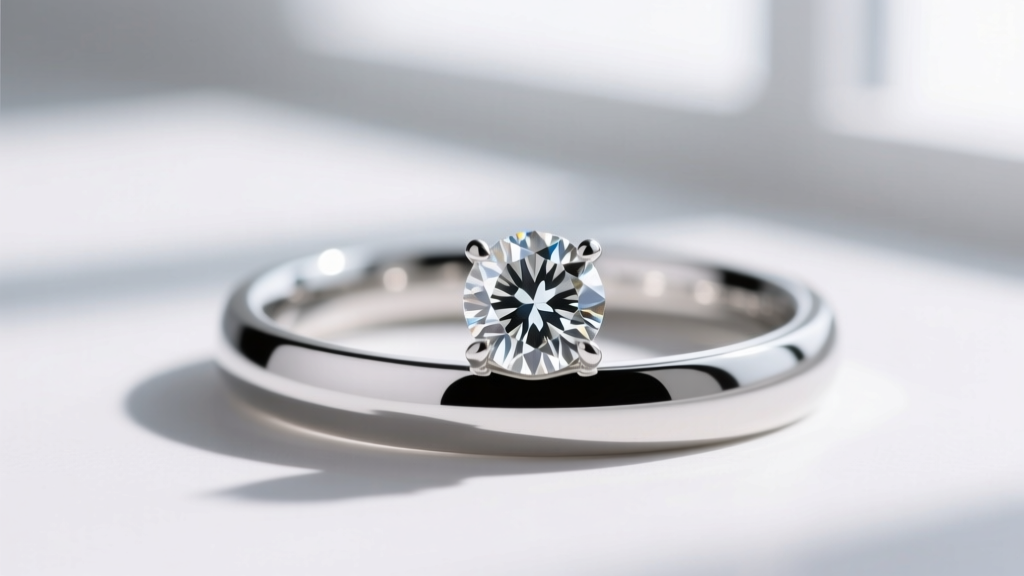
Before lab-grown diamonds saturated the market, white sapphire was the premier alternative for those seeking a clear, durable April birthstone. Sapphire is a variety of corundum, registering a 9 on the Mohs scale. Unlike diamond, corundum lacks true cleavage, though it does exhibit "parting" along twinning planes, making it slightly less prone to catastrophic splitting but still vulnerable to heavy impacts.
Optically, white sapphire falls short of diamond and moissanite. Its RI is 1.76 to 1.77, resulting in lower light return. Furthermore, because it lacks the high dispersion of diamond, a white sapphire will not display fiery spectral flashes; instead, it offers a subtle, icy, monochromatic brilliance. A significant maintenance drawback of white sapphire is its affinity for oils. The surface tension of corundum attracts skin oils and lotions far more readily than diamond, which can quickly dull its appearance. Owners must commit to regular ultrasonic cleaning or scrubbing with a soft brush and dish soap to maintain optical clarity.
The Budget Option: Clear Quartz and Herkimer Diamonds
For fashion jewelry or occasional wear, clear quartz (including the doubly-terminated "Herkimer Diamond" variety) serves as an ultra-budget April birthstone alternative. Quartz sits at a 7 on the Mohs scale with an RI of 1.54. While it possesses excellent transparency and a vitreous luster, its hardness makes it entirely unsuitable for daily-wear rings. Dust and airborne particulates frequently contain microscopic quartz and topaz particles (hardness 7-8); therefore, a quartz gemstone will inevitably accumulate micro-scratches and abrasions on its facet junctions over time, leading to a cloudy appearance.
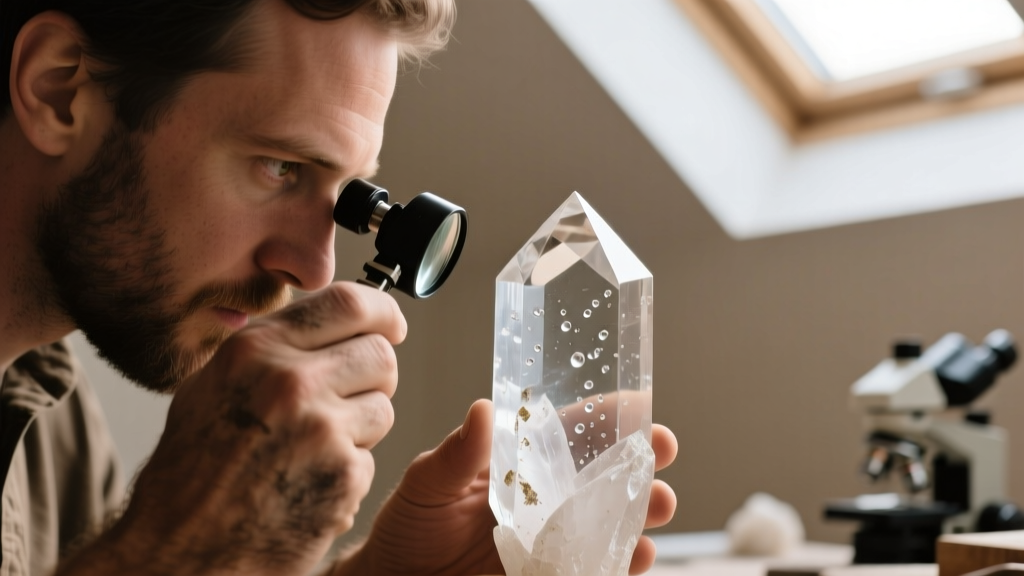
Quartz also exhibits conchoidal fracture and lacks cleavage, meaning it will chip or shatter unpredictably if subjected to mechanical stress. It is best reserved for pendants, earrings, or cocktail rings worn infrequently. As noted in the GIA Gem Encyclopedia, while quartz is abundant and affordable, its structural limitations strictly dictate its application in fine jewelry.
Material Comparison Matrix: Hardness, Optics, and Pricing
To make an informed decision, it is essential to compare the quantitative data of these four materials. The following table outlines the critical gemological and market metrics as of 2026.
| Material | Mohs Hardness | Refractive Index | Dispersion | Cleavage | Avg. Price (1ct Equiv) |
|---|---|---|---|---|---|
| Natural Diamond | 10 | 2.417 | 0.044 | Perfect (Octahedral) | $4,500 - $8,000+ |
| Lab-Grown Diamond | 10 | 2.417 | 0.044 | Perfect (Octahedral) | $600 - $1,200 |
| Moissanite | 9.25 | 2.65 | 0.104 | None | $300 - $600 |
| White Sapphire | 9 | 1.76 - 1.77 | 0.018 | None (Parting) | $200 - $800 |
| Clear Quartz | 7 | 1.54 - 1.55 | 0.013 | None (Fracture) | $10 - $50 |
Setting Mechanics: Matching Metal to Gemstone
The physical properties of your chosen April birthstone directly dictate the safest setting mechanics. Because diamonds possess perfect cleavage, protective settings like the bezel or semi-bezel are highly recommended for active individuals. A bezel setting entirely encircles the girdle—the stone's widest and most vulnerable point—in a rim of metal, neutralizing the risk of impact-induced cleavage.
Conversely, moissanite and white sapphire lack cleavage, making them slightly safer in exposed settings like the classic four-prong or six-prong Tiffany mount. However, because sapphire is softer, a six-prong setting is preferable to a four-prong setting for round brilliant cuts; if one prong snags and bends back on a four-prong ring, a sapphire is much more likely to abrade and fall out than a diamond. Tension settings, which rely on the compressive strength of the metal gripping the stone, should strictly be reserved for diamonds or high-grade sapphires, as the immense pressure can fracture moissanite or quartz.
Sourcing and Market Realities in 2026
The landscape for sourcing your jewelry April birthstone has shifted dramatically. Lab-grown diamonds have experienced a massive price correction over the last few years, making them an incredibly attractive option for buyers who demand the exact physical and optical properties of a mined diamond without the historical markup. However, natural diamonds retain a unique position regarding long-term value retention and rarity.
"When evaluating alternatives, consumers must weigh the absolute durability and light performance of a diamond against the budget-friendly brilliance of moissanite and the subtle, icy elegance of white sapphire. There is no single 'best' stone—only the right material for your specific wear habits."
Ultimately, selecting the right material requires aligning gemological realities with your lifestyle. If you demand maximum scratch resistance and traditional prestige, a lab-grown or natural diamond remains unmatched. If you prefer intense rainbow fire and superior impact resistance, moissanite is a highly engineered marvel. By understanding the precise material properties outlined above, you can confidently choose an April birthstone that will endure both physically and aesthetically for decades to come. For further reading on gemstone durability and wearability, consult the GIA's comprehensive guide on Moissanite and alternative simulants.