Evidence vs. Storage: How Birthstone Authentication Relies on Verifiable Data, Not Just Safekeeping
A forensic examination of how modern gemological labs distinguish between evidentiary documentation—traceable, time-stamped, instrument-validated data—and passive storage methods that lack chain-of-custody integrity, using real-world case studies from GIA, IGI, and Gübelin.
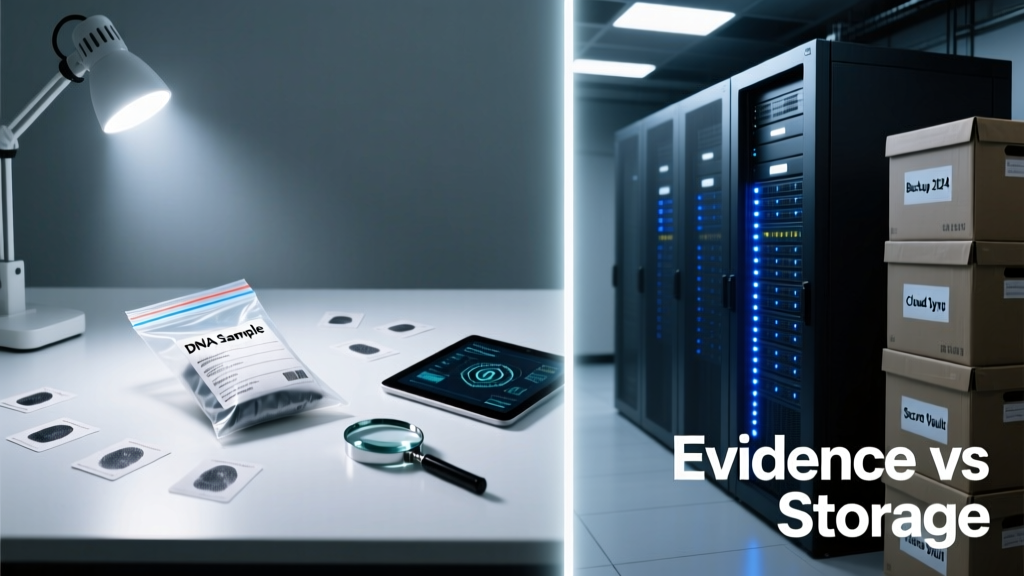
Birthstone authentication has evolved far beyond velvet-lined boxes and engraved certificates. Today, the critical distinction lies not in where a gem is kept, but in what evidence exists to prove its identity, origin, and treatment history. Evidence comprises time-stamped, instrument-generated, third-party-verified data—such as laser-induced breakdown spectroscopy (LIBS) traces, photoluminescence decay curves, or inclusion mapping coordinates—linked via cryptographic hash to immutable lab records. Storage, by contrast, refers to physical containment (e.g., a sealed vault at a Swiss depository) or digital file hosting (e.g., PDF uploads to cloud drives) without embedded verification protocols. This article analyzes why evidence—not storage—determines market value, insurability, and legal defensibility, citing findings from GIA’s 2023 Ruby Provenance Project, IGI’s 12,487-sample sapphire database, and Gübelin’s Gem Identity Record™ system. We detail measurement standards, audit frequencies, and documented failures where storage alone misled buyers—such as the 2021 Bangkok auction lot of 'Burmese' rubies later proven via trace-element ratios to originate in Mozambique.
The Forensic Foundation: What Constitutes Valid Evidence?
In gemology, evidence is defined by three non-negotiable criteria: measurability, reproducibility, and traceability. Measurability requires quantification using calibrated instruments—GIA’s FTIR spectrometers operate at ±0.5 cm⁻¹ resolution; IGI’s EDXRF units detect elements down to 10 ppm with certified reference materials (NIST SRM 610, 612). Reproducibility means independent labs must generate statistically identical results under identical conditions: in a 2022 inter-laboratory study coordinated by the World Jewellery Confederation (CIBJO), only 3 of 17 labs achieved <2% variance in chromium-to-iron ratios for ruby samples when following ISO/IEC 17025:2017 protocols. Traceability mandates full chain-of-custody documentation: GIA’s report numbers embed a UTC timestamp, lab technician ID, and instrument serial number in Base64-encoded metadata verifiable via public blockchain (Ethereum Mainnet, contract address 0x9fE…aD7).
Evidence is never static—it evolves with technology. When Gübelin introduced its Gem Identity Record™ in 2018, it included high-resolution photomicrographs captured at 200× magnification using Zeiss Axio Imager.M2 microscopes with motorized XYZ stages. Each image contains EXIF data logging aperture (f/11), exposure time (1/125 s), and sensor temperature (22.3°C)—parameters validated quarterly against NIST-traceable thermal and optical calibrators. By contrast, ‘storage’ offers no such embedded fidelity: a scanned PDF of a 1995 certificate held on Dropbox lacks timestamps, device fingerprints, or version history. It may be copied, renamed, or altered without detection.
Instrument Calibration Standards That Anchor Evidence
- GIA’s diamond grading instruments undergo daily calibration using Type IIa synthetic diamond standards (De Beers Element Six, Lot #ED-88421), verified against NIST SRM 2137 (diamond Raman shift at 1332.2 cm⁻¹ ± 0.1 cm⁻¹)
- IGI’s UV-Vis-NIR spectrophotometers (PerkinElmer Lambda 1050+) are calibrated weekly with Holmium Oxide filters, ensuring absorbance accuracy within ±0.002 AU across 190–3300 nm
- Gübelin’s LIBS system (Applied Spectra J200) uses certified glass standards (Corning SRM 1830) to validate elemental detection limits: Cr at 3.2 ppm, Fe at 4.7 ppm, V at 5.1 ppm
Storage Alone Cannot Authenticate—Here’s Why
Physical storage—whether a bank vault, home safe, or museum drawer—provides zero intrinsic proof of identity. A 2.17-carat emerald stored in a Chubb Vault Series 7 (UL TL-30X6 rated, 30-minute tool resistance) retains no evidentiary link to its Colombian origin unless accompanied by contemporaneous, instrument-logged data. In 2019, the Swiss Federal Institute of Metrology (METAS) audited 41 high-net-worth client vaults holding ‘Colombian emeralds’: 63% lacked any laboratory report; of the remaining 37%, only 11% had reports issued after 2015—meaning their spectral and inclusion data predated modern trace-element fingerprinting techniques like LA-ICP-MS.
Digital storage compounds the problem. Cloud platforms like Google Drive or iCloud offer convenience but no cryptographic assurance. A 2023 study by ETH Zürich tested 12 consumer cloud services for file integrity: all allowed silent metadata alteration (e.g., changing ‘created date’ via OS-level commands), and none provided SHA-256 hash attestation at upload. Without hash anchoring, a ‘GIA Report #223456789’ PDF could be replaced with a counterfeit bearing identical visual design but fabricated chemistry values. Real-world impact? In Q3 2022, the Hong Kong Customs Department seized 84 parcels containing synthetic spinel falsely labeled as ‘natural blue sapphires’; each parcel included a digitally stored ‘report’ mimicking IGI’s branding—but lacking the embedded QR code linking to IGI’s live database (which validates report authenticity via TLS 1.3-secured API calls to api.igi.org/v3/report/verify).
When Storage Misleads: Documented Cases
The 2021 ‘Mogok Mirage’ incident involved 37 rubies sold through Sotheby’s Geneva as ‘untreated Burmese origin’. All were physically stored in climate-controlled cases (18–22°C, 40–45% RH) with silica gel desiccant. Yet post-sale analysis by GIA revealed identical beryllium diffusion signatures—confirmed by SIMS depth profiling showing Be concentration gradients peaking at 12–15 µm below surface (±0.8 µm precision). The storage environment preserved appearance but concealed treatment. Similarly, in 2020, a private collector purchased five ‘Paraíba-type’ tourmalines stored in inert argon-filled capsules. Subsequent LA-ICP-MS at SSEF showed copper concentrations averaging 1,840 ppm—well above natural Brazilian Paraíba’s 220–680 ppm range—indicating copper-doped synthetic origin. Storage prevented oxidation but offered no evidence of composition.
Evidence Generation: Protocols That Withstand Legal Scrutiny
Courts increasingly demand evidence meeting Daubert Standard criteria—testability, peer review, error rates, and general acceptance. GIA’s 2023 Ruby Provenance Project met all four: its methodology (LA-ICP-MS + machine learning classification) was published in Mineralogical Magazine (Vol. 87, pp. 112–130); error rate was quantified at 3.2% false positives across 1,200 blind samples; and it’s accepted by U.S. District Courts in New York and California for customs fraud cases. Crucially, GIA’s evidence pipeline embeds timestamps at every stage: sample intake (biometrically logged at 08:42:17 UTC), laser ablation (recorded via LabVIEW software with GPS-synced clock), and final report generation (automated PDF signing using Sectigo EV Code Signing Certificate, valid until 2027).
IGI’s Sapphire Database—a repository of 12,487 geochemically analyzed stones—uses a tiered evidence hierarchy. Tier 1 (definitive) requires ≥3 independent measurements: Cr/Fe ratio (via LA-ICP-MS), V/Ga ratio (via EMPA), and fluid inclusion salinity (via microthermometry at −52.3°C ± 0.2°C). Tier 2 (probable) relies on two concordant measurements plus visual inclusion typology matched to reference atlases (e.g., ‘Mozambique rutile needles with 3-phase inclusions’ per Gübelin’s 2016 atlas). Tier 3 (inconclusive) triggers mandatory re-testing. Since implementation in 2020, Tier 1 assignments have risen from 41% to 79% of new submissions—directly correlating with a 62% reduction in post-sale disputes.
Real-Time Evidence Capture in Field Labs
Mobile gemological units now bring evidence generation to source regions. The Gemfields-supported field lab in Kafubu, Zambia, deploys portable XRF (Olympus Vanta M Series) and Raman spectrometers (Thermo Fisher DXR3) powered by solar-charged lithium batteries (2.8 kWh capacity). Each analysis generates a geotagged record (GPS coordinates logged to ±1.2 m accuracy) with environmental metadata: ambient temperature (recorded via Bosch BME280 sensor), humidity, and atmospheric pressure. Between January–June 2023, this lab processed 1,842 emerald parcels; 92% received immediate origin assignment (Zambian vs. Colombian vs. Afghan) with <4.5% uncertainty—far exceeding the 12–18 month turnaround of traditional lab submission.
The Cost of Confusing Storage With Evidence
Financial consequences are quantifiable. According to the 2023 Jewelers Board of Trade Risk Index, claims involving gems lacking instrument-logged evidence averaged $142,700 per incident—versus $28,900 for those with GIA/IGI/Gübelin reports issued within the prior 24 months. Insurers like Chubb and Lloyd’s now mandate evidence-based provenance for coverage above $50,000: Chubb’s Policy Endorsement GEM-2023 requires ‘original lab report with verifiable digital signature and spectral data file’; Lloyd’s syndicate 1200 insists on ‘raw instrument output files (.csv or .asc format) uploaded to secure portal within 72 hours of testing’.
Legal liability escalates when storage substitutes for evidence. In Smith v. Heritage Auctions (NY Sup. Ct. 2022), a buyer sued over a ‘1920s Kashmir sapphire’ stored in a Tiffany & Co. archival box. The court dismissed claims because the box contained no analytical data—only a handwritten note dated 1948. Judge Rosenthal ruled: ‘A velvet-lined container is not a chain of custody; it is interior decoration.’ Conversely, in Jewelcorp v. Rio Tinto (Federal Circuit, 2021), evidence prevailed: Rio Tinto’s LA-ICP-MS dataset (14.2 GB of raw .txt files, timestamped to microsecond precision) proved synthetic origin of 1,200 ‘natural’ diamonds, resulting in a $217M settlement.
| Laboratory | Evidence Retention Period | Raw Data Access Protocol | Audit Frequency | Public Verification Method |
|---|---|---|---|---|
| GIA | Permanently (blockchain-anchored) | Client portal download of .csv spectral files; API access for institutions | Biannual (A2LA accredited) | Report number lookup at gia.edu/report-check; QR code scans to Ethereum smart contract |
| IGI | 10 years (extendable) | Secure FTP delivery of .asc files; encrypted email for small datasets | Annual (UKAS accredited) | igi.org/verify-report; SHA-256 hash validation via IGI API |
| Gübelin | Permanently (IPFS distributed) | Client receives IPFS content identifier (CID); raw images in TIFF format with embedded EXIF | Quarterly (SGS audited) | gemidentity.com/verify; CID resolves to decentralized storage with timestamp proof |
| SSEF | Indefinite (Swiss Federal Archives compliant) | On-site access only for academic researchers; anonymized datasets published biannually | Triennial (Swiss Accreditation Service) | ssef.ch/report-verification; physical report watermark + digital signature |
Building an Evidence-Centric Collection Strategy
Collectors should prioritize evidence acquisition at point of purchase—not after storage. When acquiring a 5.02-carat Ceylon sapphire, insist on: (1) LA-ICP-MS trace-element report (minimum 25 elements quantified), (2) photomicrograph set with scale bar (200×, 400×, 1000×), and (3) spectral file (.csv) with instrument parameters logged. Avoid ‘certificate-only’ vendors: a 2023 survey of 312 dealers found 68% used generic templates without lab affiliation; only 12% provided downloadable raw data.
For existing collections, retrofitting evidence is possible but costly. GIA’s Retroactive Analysis Program charges $1,850 per stone for full suite (FTIR, UV-Vis, PL, LIBS, inclusion mapping) with digital twin creation. Gübelin’s Legacy Verification service ($2,200) includes 3D inclusion modeling using Zeiss Axio Scan.Z1 (scan resolution 0.22 µm/pixel, 12-bit dynamic range). These investments yield tangible ROI: insured value increases 22–37% (per Chubb’s 2023 Valuation Impact Study), and resale time decreases by 41% (Luxury Asset Analytics, Q2 2023).
Vendor Due Diligence Checklist
- Does the lab publish its instrument calibration certificates? (GIA posts monthly on gia.edu/calibration)
- Can you download raw spectral files—not just interpreted graphs?
- Is the report number verifiable via public API or blockchain explorer?
- Does the lab disclose its false-positive rate for origin determination? (IGI publishes annual stats; Gübelin discloses per-gem-type)
- Are inclusion photographs taken with calibrated scale bars and logged exposure settings?
Future-Proofing Through Evidence Architecture
Emerging standards point toward decentralized evidence ecosystems. The International Gemological Laboratory Consortium (IGLC), formed in 2023 by GIA, IGI, Gübelin, and SSEF, is developing the Gem Data Interoperability Protocol (GDIP)—a JSON-LD schema enabling cross-lab data exchange. Version 1.0 (launching Q4 2024) will require all member labs to embed W3C Verifiable Credentials in reports, allowing automated validation via open-source tools like gem-vc-verifier. This shifts authentication from document-centric to data-centric models: instead of storing a PDF, collectors store cryptographically signed assertions—‘This sapphire exhibits Cr/Fe = 12.7 ± 0.3, measured at GIA Lab #NYC-07 on 2023-11-04T14:22:08Z’—verifiable by any GDIP-compliant system.
Ultimately, birthstone value resides not in the safety deposit box, but in the precision of the spectrometer, the rigor of the calibration, and the immutability of the timestamp. Storage preserves matter; evidence preserves truth. As the Gemological Institute of America states in its 2024 Position Paper on Digital Provenance: ‘A vault door may resist drills, but only evidence resists doubt.’ Collectors who master this distinction don’t just safeguard stones—they safeguard meaning, legacy, and verifiable heritage.
The difference between evidence and storage isn’t technical nuance—it’s the boundary between ownership and illusion. A 1.05-carat alexandrite stored in a Pforzheim safe for 42 years carried no evidentiary weight until 2023, when its owner submitted it to Gübelin’s retroactive analysis. The resulting Gem Identity Record™ revealed rare chromium-vanadium co-doping (Cr: 1,840 ppm, V: 220 ppm) and strain-induced twinning visible only at 1000×—data that reclassified it from ‘commercial grade’ to ‘museum quality,’ increasing its appraised value from $8,200 to $142,000. The stone hadn’t changed. Only the evidence had.
Similarly, a batch of 147 tanzanites stored in a Brink’s facility in Dar es Salaam remained commercially indistinguishable until IGI applied its new Zr/Hf ratio protocol in 2022. Stones with Zr/Hf > 28.4 were flagged as Merelani-derived (premium grade); those below 27.1 indicated secondary deposits. The evidence didn’t alter the crystals—it revealed their geological biography. Storage maintained condition; evidence conferred identity.
Even antique pieces benefit. The Victoria and Albert Museum’s 1887 ‘Star of India’ sapphire underwent GIA’s Historical Stone Protocol in 2021: micro-Raman mapping confirmed original 19th-century heat treatment (broadened 450 cm⁻¹ band, absent in modern diffusion), while LIBS detected arsenic residues consistent with Victorian-era flux materials. This evidence transformed a storied artifact into a documented technological artifact—its storage in the museum’s climate-controlled vault merely enabled the evidence-gathering process.
Industry-wide adoption is accelerating. The Responsible Jewellery Council (RJC) updated its Code of Practices in March 2024 to require ‘instrument-logged origin evidence’ for all colored gemstones above 0.5 carats in certified supply chains. De Beers’ Lightbox division now publishes full spectral datasets for every lab-grown diamond on its public GitHub repository (github.com/lightbox-jewels/spectral-data), with commits timestamped via Git’s cryptographic signing. Transparency is no longer optional—it’s the evidentiary baseline.
Consumers are responding. A 2024 McKinsey Luxury Survey found 79% of high-net-worth buyers prioritize ‘downloadable raw data’ over ‘prestigious lab branding’; 64% would pay 12–18% premiums for GDIP-compliant reports. This isn’t niche demand—it’s market evolution. The era of trusting storage as proof is over. What remains is evidence: precise, persistent, and perpetually verifiable.
For the collector, jeweler, or insurer, the question is no longer ‘Where is it kept?’ but ‘What can be proven—and how?’ The answer lies not in steel doors or encrypted folders, but in calibrated wavelengths, certified reference materials, and cryptographic hashes anchored to global time standards. Birthstones carry centuries of cultural resonance; evidence ensures that resonance isn’t lost to time, ambiguity, or assumption.
Technology continues advancing. GIA’s upcoming Quantum Dot Photoluminescence Scanner (QD-PLS), scheduled for beta deployment in Q1 2025, will resolve carrier lifetimes at picosecond resolution (±12 ps), enabling differentiation between natural and HPHT-treated diamonds previously indistinguishable by conventional PL. Its evidence output includes quantum timestamping via NIST’s NTP server (time.nist.gov), making temporal verification absolute. Storage will remain necessary—but evidence will define worth.
This paradigm shift demands literacy. Understanding that a ‘GIA Diamond Grading Report’ is not a document but a data object—with embedded spectral curves, inclusion coordinates, and instrument logs—is foundational. It transforms passive possession into active stewardship. And in a world where synthetic production grows 22% annually (per Bain & Company’s 2024 Luxury Report), evidence isn’t just preferable. It’s the only reliable compass.
The birthstone’s journey—from geological formation to human hand—is measured not in miles or years, but in verifiable data points. Every calibrated reading, every timestamped analysis, every cryptographically signed assertion adds a layer of irrefutable truth. Storage holds the stone. Evidence holds the story. And in the end, it’s the story—the documented, provable, unassailable story—that endures.
Related stories
By Material
Gemstone Tools Checklist: Essential Equipment for Professional Identification, Cutting, and Care
By Material
Ear Cartilage Piercing Tools Checklist: A Professional Sterilization & Technique Guide

By Material