How to Safely Clean Gold Jewelry at Home by Karat Type
Learn how to clean gold jewelry at home safely. Our expert guide breaks down karat-specific methods for 10k, 14k, 18k, and 24k gold pieces.

The Metallurgy of Tarnish: Why Your Gold Loses Luster
Before you attempt to clean gold jewelry at home, it is crucial to understand the metallurgy of your pieces. Pure gold (24k) is a noble metal, meaning it is highly resistant to oxidation and corrosion. However, pure gold is too soft for daily wear. To increase durability, jewelers alloy it with metals like copper, silver, zinc, and nickel. According to the Gemological Institute of America (GIA), it is these secondary alloy metals—not the gold itself—that react with environmental sulfur, oxygen, and moisture to create tarnish.
A 10k gold ring contains only 41.7% pure gold, leaving 58.3% of the metal vulnerable to oxidation. Conversely, an 18k piece contains 75% pure gold, making it far more resistant to tarnish but significantly softer and more prone to micro-scratching. Understanding this metallurgical balance is the first step in selecting the correct cleaning protocol for your specific jewelry.
The Universal 4-Step Cleaning Protocol
For routine maintenance of all gold karats (10k, 14k, 18k, and 24k), a mild surfactant approach is the safest and most effective method. This process lifts sebum, cosmetic residue, and environmental dust without attacking the alloy matrix.
- Step 1: The Containment Setup. Always plug your sink drain or use a dedicated silicone basin. Dropping a slippery gold chain down a drain is the most common cause of household jewelry loss.
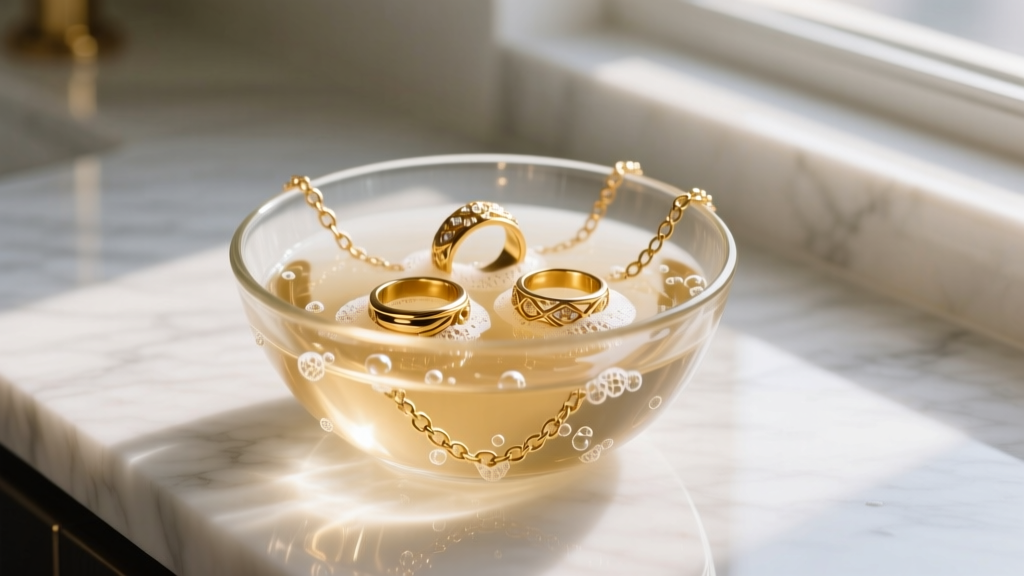
- Step 2: The Surfactant Bath. Fill a glass bowl with lukewarm water (strictly between 85°F and 95°F). Hot water can cause thermal shock to certain gemstone inclusions often set in gold. Add three drops of phosphate-free, mild dish soap (such as original blue Dawn). Avoid soaps with heavy moisturizers or citrus extracts, which can leave a filmy residue.
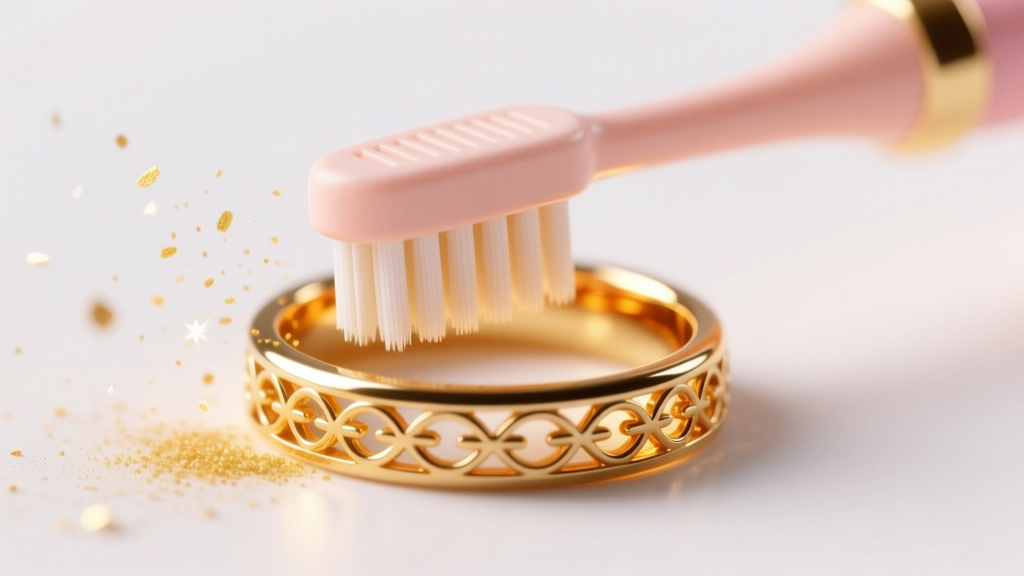
- Step 3: Agitation and Soaking. Submerge the jewelry and let it soak for exactly 15 minutes. This allows the surfactants to break the surface tension of trapped oils. After soaking, use an extra-soft baby toothbrush (with bristles no thicker than 0.1mm) to gently agitate the crevices, particularly behind gemstone settings and inside chain links.
- Step 4: The Purified Rinse. Rinse the piece under a gentle stream of lukewarm distilled or filtered water. Tap water often contains trace minerals and chlorine that can leave water spots on high-polish gold surfaces.
Karat-Specific Deep Cleaning Adjustments
While the universal soap method handles daily grime, heavily tarnished pieces require karat-specific interventions. The Federal Trade Commission (FTC) mandates strict karat stamping, which you should check before applying any advanced chemical cleaners.
10K and 14K Gold: Managing High-Alloy Tarnish
Because 10k and 14k gold contain high percentages of copper and silver, they are prone to dark, stubborn sulfide tarnish. For severe cases, you can use a diluted ammonia solution. Mix one part clear household ammonia to six parts lukewarm water. Submerge the jewelry for no longer than 60 seconds. Ammonia is highly effective at dissolving copper oxidation, but prolonged exposure can degrade the zinc alloys and cause stress corrosion cracking. Rinse immediately and thoroughly with distilled water. Never use this method on gold jewelry containing porous gemstones like pearls, opals, or turquoise.
18K Gold: Protecting the Softer Matrix
18k gold (75% pure gold) has a richer, deeper yellow hue but a significantly lower Vickers hardness rating than 14k gold. It scratches easily. Never use abrasive pastes, baking soda, or toothpaste on 18k gold. The micro-abrasives in these substances will create a matte finish of microscopic scratches, permanently dulling the mirror polish. Stick strictly to the mild soap protocol and rely on a professional jeweler for mechanical polishing if the piece becomes heavily scratched.
24K Gold: Pure Gold Maintenance
24k gold (99.9% pure) does not tarnish. If a 24k piece looks dull, it is simply coated in skin oils and lotions. Because pure gold is exceptionally malleable, aggressive brushing can actually bend prongs or distort thin bands. Clean 24k gold using only the soap soak, skipping the toothbrush entirely. Gently massage the soap into the metal with your fingertips, rinse, and pat dry.
The Chemistry of Destruction: What to Avoid
Many DIY jewelry cleaning hacks found online are actively destructive to gold alloys. Understanding the chemical reactions at play will save you from ruining expensive pieces.
| Chemical Agent | Effect on Gold Alloys | Risk Level |
|---|---|---|
| Chlorine (Bleach/Pool Water) | Reacts with copper/silver alloys to form gold chloride. Causes irreversible stress corrosion cracking, making the metal brittle and prone to snapping. | Critical |
| Baking Soda & Vinegar | The abrasive nature of baking soda scratches the gold surface, while the acidic vinegar can pit the solder joints used in chain links. | High |
| Toothpaste | Contains hydrated silica (Mohs hardness of ~7). Gold has a Mohs hardness of 2.5-3. Toothpaste acts like sandpaper, stripping the high-polish finish. | High |
| Acetone (Nail Polish Remover) | Will not damage the gold metal itself, but will severely degrade the adhesives used in some jewelry manufacturing and ruin any plated rhodium finishes on white gold. | Moderate |
Expert Warning: Never wear 14k or 18k gold jewelry in a chlorinated swimming pool or hot tub. The combination of heat and chlorine accelerates stress corrosion cracking, which can cause a ring's shank to spontaneously snap.
Drying, Polishing, and Storage Framework
The final steps of cleaning are just as critical as the washing process. How you dry and store your gold dictates how quickly it will require cleaning again.
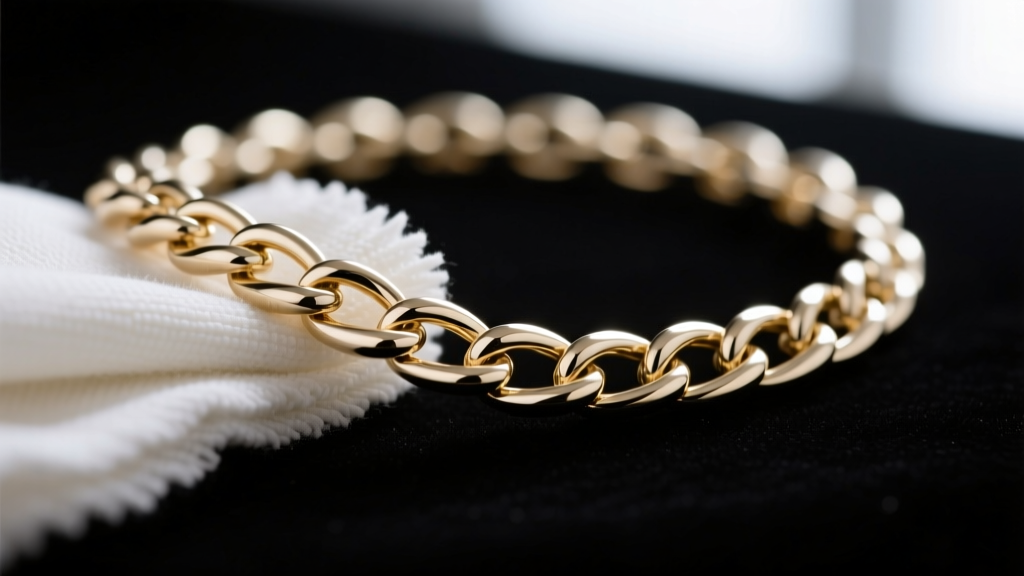
Drying: Never use paper towels, tissues, or standard cotton bath towels to dry gold. Paper products are manufactured from wood pulp, which contains microscopic wood fibers that are hard enough to scratch 18k and 24k gold. Standard cotton towels leave behind lint that gets trapped in chain links and prongs. Instead, use a clean, short-pile microfiber cloth designed specifically for optical lenses or jewelry. Gently pat the piece dry, then use a dry section of the cloth to lightly buff the surface to a high shine.
Storage: Once completely dry, store your gold jewelry in individual, anti-tarnish flannel pouches or zip-lock bags with the air pressed out. For 14k and 10k pieces, consider adding a small silica gel packet or a 3M anti-tarnish strip to the storage container to absorb ambient moisture and sulfur compounds.
Expert Maintenance Schedule
To maintain the structural integrity and optical brilliance of your gold jewelry, adhere to this professional maintenance schedule:
- Weekly: Wipe down daily-wear pieces (like wedding bands and stud earrings) with a dry microfiber cloth to remove daily sebum and lotion buildup before it hardens.
- Monthly: Perform the Universal 4-Step Soap Protocol on all frequently worn chains, rings, and bracelets.
- Bi-Annually: For pieces with gemstone settings, visit a professional jeweler. They will use ultrasonic cleaners (safe for diamonds and sapphires) and steam to remove calcified buildup behind the stones, while simultaneously checking for prong wear and micro-fractures in the gold shank.
By respecting the specific metallurgical properties of your gold's karat weight and avoiding harsh household chemicals, you can safely clean gold jewelry at home while preserving its heirloom quality for decades.


