The Ultimate Jewelry 925 Buying Guide: What to Look For in 2026
Master the art of buying authentic jewelry 925. Learn to spot hallmarks, test purity, evaluate craftsmanship, and avoid plated fakes with our 2026 guide.

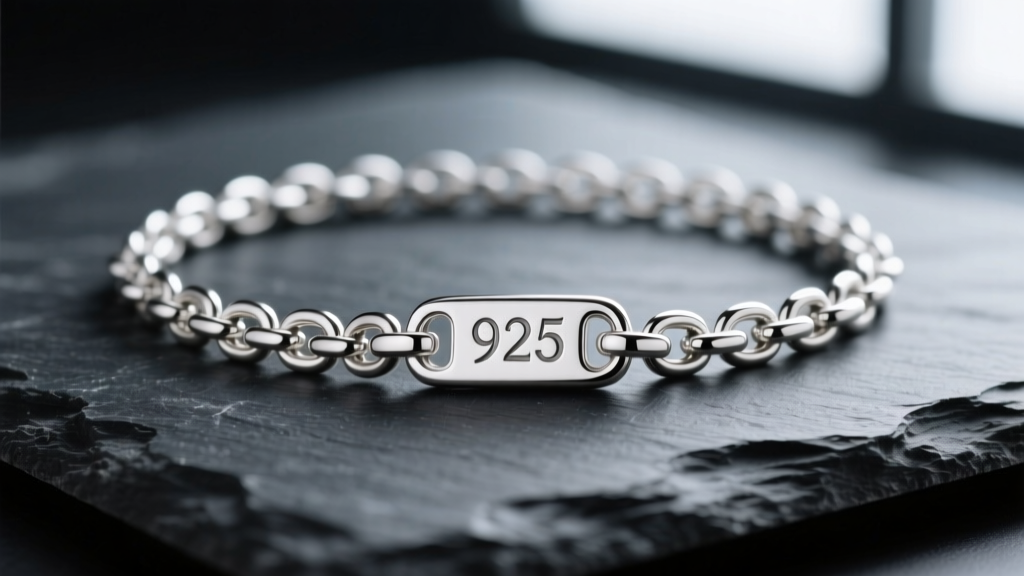
The Anatomy of Jewelry 925: Beyond the Surface
When navigating the modern precious metals market, understanding the exact metallurgical composition of your accessories is non-negotiable. The term "jewelry 925" refers to sterling silver, an alloy consisting of exactly 92.5% pure silver and 7.5% secondary metals. Pure silver (99.9% or "fine silver") is far too malleable for functional wear—it ranks at just 2.5 to 3.0 on the Mohs hardness scale, meaning it would scratch, bend, and lose its shape within days of daily use.
Historically, copper has been the standard 7.5% alloying metal, providing the necessary tensile strength and durability. However, copper is highly reactive with oxygen and sulfur in the environment, leading to the copper oxide layer we commonly recognize as tarnish. As we move through 2026, the industry has seen a massive shift toward advanced alloys and traceable, recycled silver, but the fundamental 92.5% purity threshold remains the global benchmark for authenticity. According to the Gemological Institute of America (GIA), any piece falling below this threshold cannot legally be marketed as sterling silver in most major jurisdictions.
Decoding Hallmarks and Stamps
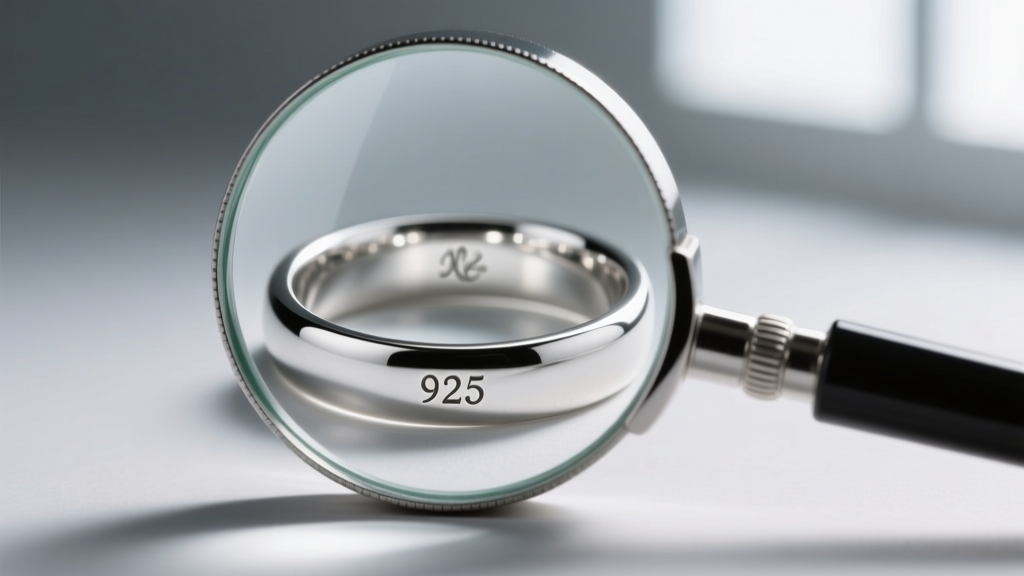
The first step in evaluating any piece is locating the hallmark. However, a stamp is merely a claim of purity, not a guarantee. Counterfeit manufacturers frequently stamp brass or copper-alloy pieces with "925" to deceive untrained buyers. Here is what you need to look for:
- .925 or 925: The most common international stamp indicating 92.5% purity.
- STER or STERLING: Often found on vintage or North American pieces.
- 925/1000: A fractional stamp common in European markets, denoting 925 parts per 1000.
- The Lion Passant: The traditional British hallmark for sterling silver, strictly regulated by The London Assay Office. If you see this, the piece has been independently tested and verified.
- Maker’s Marks: Authentic, high-quality jewelry 925 will often feature a secondary stamp indicating the manufacturer or silversmith, providing a layer of traceability.
The 2026 Market: Traditional Sterling vs. Argentium
Not all jewelry 925 is created equal. While traditional sterling silver uses copper as its alloy, modern metallurgy has introduced Argentium silver, which replaces a portion of the copper with germanium. This creates a transparent germanium dioxide layer on the surface that drastically slows tarnishing. Below is a comparative breakdown to help you decide which alloy suits your lifestyle and budget.
| Feature | Traditional 925 Sterling | Argentium 925 Silver | Silver-Plated (Fake) |
|---|---|---|---|
| Composition | 92.5% Ag, 7.5% Cu | 92.5% Ag, Cu + Germanium | Brass/Copper core, thin Ag coat |
| Tarnish Resistance | Low (Requires regular polishing) | High (Tarnishes 7x slower) | N/A (Wears off to reveal base metal) |
| Hypoallergenic | Moderate (Copper can cause reactions) | High (Germanium is biocompatible) | Low (Nickel often present in base) |
| Price Premium | Baseline Market Price | 15% - 25% Higher | Extremely Cheap |
Field Testing: Verifying Authenticity Before You Buy
If you are buying jewelry 925 from a secondary market, estate sale, or independent online vendor, relying on visual inspection is not enough. Employ these three non-destructive and micro-destructive field tests to verify the metal's integrity.
1. The Neodymium Magnet Test
Silver is paramagnetic, meaning it exhibits very weak magnetic properties. If you run a strong neodymium magnet down the length of a silver chain, it should not snap or stick. Instead, you should feel a slight, viscous drag or eddy-current resistance as the magnet moves. If the piece instantly clings to the magnet, it contains a ferromagnetic core like steel or iron and is unequivocally fake.
2. The Thermal Conductivity (Ice) Test
Silver possesses the highest thermal conductivity of any common metal. If you place an ice cube on a room-temperature piece of solid jewelry 925, the ice will begin to melt almost instantly, as if placed on a hot stove. The silver itself will rapidly become freezing cold to the touch. Plated brass or stainless steel will melt the ice at a standard, gradual room-temperature rate.
3. The Nitric Acid Scratch Test
For absolute certainty, use a precious metal testing kit. File a tiny, inconspicuous notch into the metal to bypass any surface plating, and apply a drop of nitric acid. According to the Federal Trade Commission (FTC) Jewelry Guides, misrepresentation of precious metals is a serious offense, yet it remains rampant in unregulated markets. If the acid turns creamy white, the piece is genuine 925 sterling. If it turns green, the base metal is copper or brass. If it turns black, it is likely fine 999 silver.
The Pricing Math: Calculating the Melt Value Floor
One of the most effective ways to spot counterfeit jewelry 925 is by applying basic commodity math. In 2026, the spot price of silver generally fluctuates between $28.00 and $32.00 per troy ounce. A troy ounce equals exactly 31.1035 grams. Therefore, one gram of pure silver is worth roughly $0.90 to $1.02.
Because sterling silver is 92.5% pure, its baseline melt value sits at approximately $0.83 to $0.94 per gram. Let us apply this to a real-world scenario: You are evaluating a heavy, 60-gram solid Cuban link chain. The raw material cost alone is a minimum of $50.00 ($0.83 x 60g). You must then factor in manufacturing labor, import duties, and retail markup. If a vendor is selling this 60-gram chain for $25.00, it is mathematically impossible for it to be solid sterling silver. It is undoubtedly a brass or copper core with a microscopic silver electroplate. Always calculate the melt value floor before making a purchase.
Evaluating Craftsmanship and Structural Integrity
Because silver is softer than 14k gold or platinum, the structural engineering of jewelry 925 requires specific design considerations. When inspecting a piece, pay close attention to the gemstone settings. Avoid pieces with thin, high-profile prong settings for daily wear, as silver prongs bend easily and will eventually lose their stones. Instead, prioritize bezel settings, channel settings, or designs with reinforced gallery wires.
Furthermore, examine the solder joints on chains and clasps. High-quality manufacturers use laser welding or high-grade silver solder that closely matches the 925 purity. Cheap, mass-produced fakes often use lower-grade, lead-based or cadmium-based solders that leave visible dark seams, create structural weak points, and pose severe skin-contact health risks.
Final Verdict: Building a Genuine Collection
Acquiring authentic jewelry 925 is a rewarding pursuit, provided you approach the market with a critical eye and a firm grasp of metallurgical realities. By combining hallmark verification, thermal and magnetic field testing, and strict adherence to melt-value pricing logic, you can entirely eliminate the risk of purchasing plated counterfeits. Whether you opt for traditional copper-alloyed sterling or the modern, tarnish-resistant properties of Argentium, prioritizing structural craftsmanship will ensure your silver pieces remain pristine and wearable for decades to come.


