The 70s Hippie Jewelry Revival: 2026 Trend Analysis
Discover how 70s hippie jewelry is shaping 2026 boho trends. Explore material guides, turquoise grading, and expert layering frameworks for authentic style.

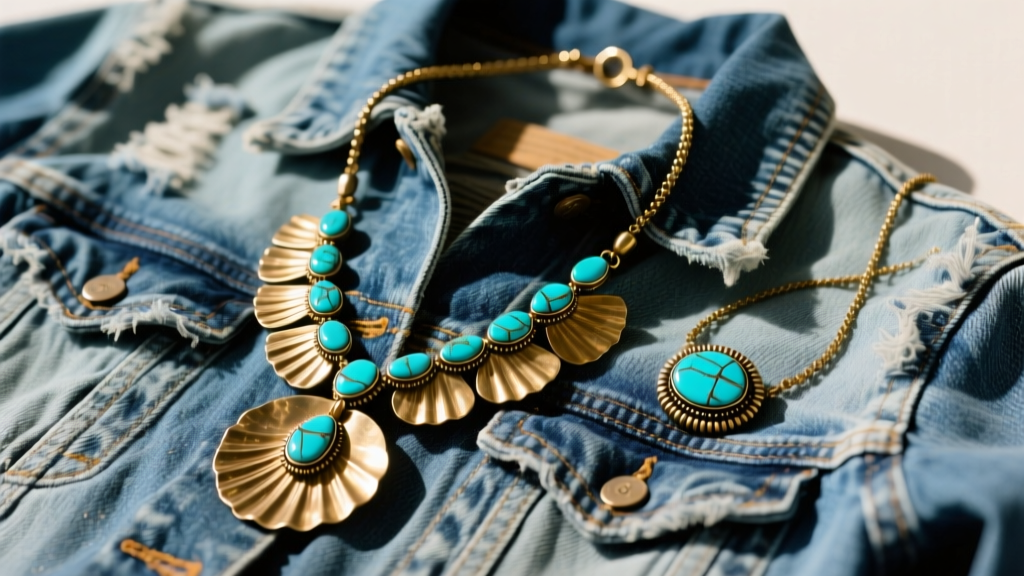
The fashion pendulum has officially swung away from the hyper-minimalism and sterile Y2K aesthetics of the early 2020s. As we navigate the style landscape of 2026, the dominant force in bohemian accessories is undeniably the 70s hippie jewelry revival. But this isn't a mere copy-paste of Woodstock costumes. Today's boho-chic movement demands material integrity, artisanal craftsmanship, and a sophisticated approach to layering that elevates vintage motifs into modern luxury.
At Jewel Style Radar, we've analyzed the shift from fast-fashion festival gear to high-impact, earthy maximalism. This comprehensive trend analysis breaks down the metallurgy, gemology, and styling frameworks you need to master the 70s hippie jewelry aesthetic in 2026.
The 2026 Macro-Shift: Earthy Maximalism
Why is 70s hippie jewelry dominating the current market? The cultural driver is a collective craving for tactility and nostalgia. In an increasingly digital world, consumers are gravitating toward pieces that feel grounded, organic, and inherently human. The hallmark of the 1970s bohemian movement was an embrace of global, indigenous, and handcrafted techniques—think Navajo silversmithing, Afghan lapis lazuli, and hand-knotted macrame.
However, the 2026 interpretation requires a discerning eye. The market is currently saturated with 'vintage-washed' fast fashion that lacks structural integrity. True style authority lies in distinguishing between authentic vintage pieces, high-quality modern artisan replicas, and hollow mass-produced imitations.
Material Integrity: Vintage vs. Modern Artisan
When sourcing 70s hippie jewelry, understanding material composition is critical. The 1970s saw a boom in both fine artisan jewelry and cheap, mass-produced costume pieces. Here is what you need to know about the metals and textiles defining the era and its modern revival.
The Metallurgy of 70s Brass and Silver
Authentic 1970s festival jewelry frequently utilized yellow brass (an alloy of copper and zinc) and pot metal. While these pieces have a beautiful, heavy patina today, vintage costume jewelry from this era can sometimes contain unsafe levels of lead or cadmium in the solder or base metal. Modern artisans recreating the 70s aesthetic have pivoted to safer, more durable alternatives:
- Recycled 925 Sterling Silver: The standard for high-end modern boho pieces, offering the bright, reflective quality needed for intricate stamped motifs.
- Jeweler's Brass (NuGold): A modern alloy that mimics the warm, rich tone of 14k gold without the price tag, and is strictly regulated for skin safety.
- 14k Gold-Filled (1/20 14k GF): Unlike the thin gold plating of the 70s that flakes away, modern gold-filled wire features a thick, mechanically bonded layer of 14k gold over a brass core, ensuring decades of wear.
Macrame and Textile Cords
The original 70s hemp and cotton cords were prone to fraying, stretching, and rotting when exposed to moisture. The 2026 standard utilizes waxed Irish linen or micro-braided nylon (such as Linhasita), which offers the exact matte, organic texture of vintage hemp but boasts a tensile strength that will not snap under the weight of heavy brass pendants.
| Feature | Authentic 1970s Vintage | 2026 Modern Artisan Replica | Fast-Fashion Imitation |
|---|---|---|---|
| Base Metal | Yellow Brass, Pot Metal (Lead risk) | Recycled 925 Silver, NuGold Brass | Zinc Alloy, Hollow Aluminum |
| Stone Setting | Bezel set, often with rough epoxy | Precision bezel, prong, or cold-connection | Glued-in dyed howlite or glass |
| Cord Material | Raw hemp, un-waxed cotton (frays easily) | Waxed linen, micro-braided nylon | Thin polyester thread |
| Price Range | $45 - $850+ (depending on provenance) | $80 - $400 | $12 - $35 |
Decoding the Stones: Turquoise, Lapis, and Malachite
The 70s hippie jewelry movement was inextricably linked to the earthy, vibrant hues of natural gemstones. However, the modern market is flooded with treated and synthetic alternatives. To build a credible bohemian collection, you must understand gemological grading.
The Turquoise Matrix
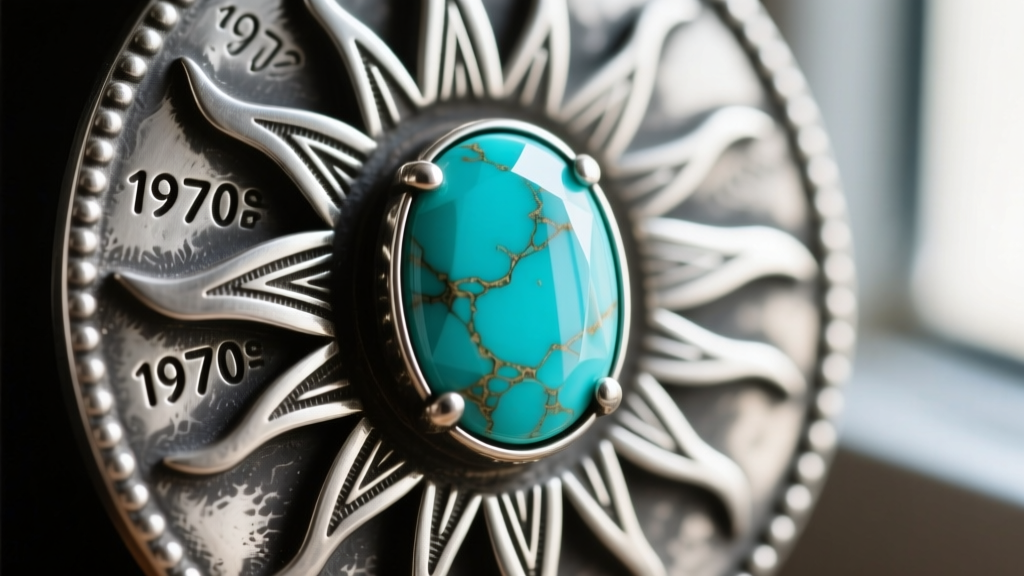
Turquoise is the undisputed king of the 70s boho aesthetic, particularly in squash blossom necklaces and heavy cuff bracelets. According to the Gemological Institute of America (GIA), natural turquoise is relatively soft (Mohs 5-6) and porous. In the 1970s, the 'Zachery enhancement' method was introduced to treat lower-grade stones without using polymers. Today, you must be able to spot the difference between:
- Natural, Untreated Turquoise: Rare and expensive. Features a distinct, often asymmetrical matrix (the brown or black host rock webbing). Sleeping Beauty and Lander Blue are the most coveted 70s-era mines.
- Stabilized Turquoise: Treated with a clear epoxy to harden the stone. This is an accepted industry practice and was heavily used in authentic 70s Native American jewelry to prevent the stone from cracking.
- Dyed Howlite/Magnesite: The most common fast-fashion fake. Look for concentrated dye pooling in the cracks and a matrix that looks too uniform or 'drawn on'.
Lapis Lazuli and the Pyrite Factor
Afghan Lapis Lazuli was a staple of the 70s counterculture, popularized by global travel and the import of heavy, ornate silver rings. The GIA notes that high-quality lapis should feature a deep, royal blue body color with evenly distributed flecks of golden pyrite. Avoid pieces with large, dull white calcite patches, which indicate lower-grade material often heavily dyed to mimic top-tier Afghan exports.
The 3-Tier Layering Framework
The secret to wearing 70s hippie jewelry in 2026 without looking like you're wearing a Halloween costume lies in the mathematics of layering. The modern boho stack requires precise length differentials and mixed chain gauges to prevent tangling and visual clutter.
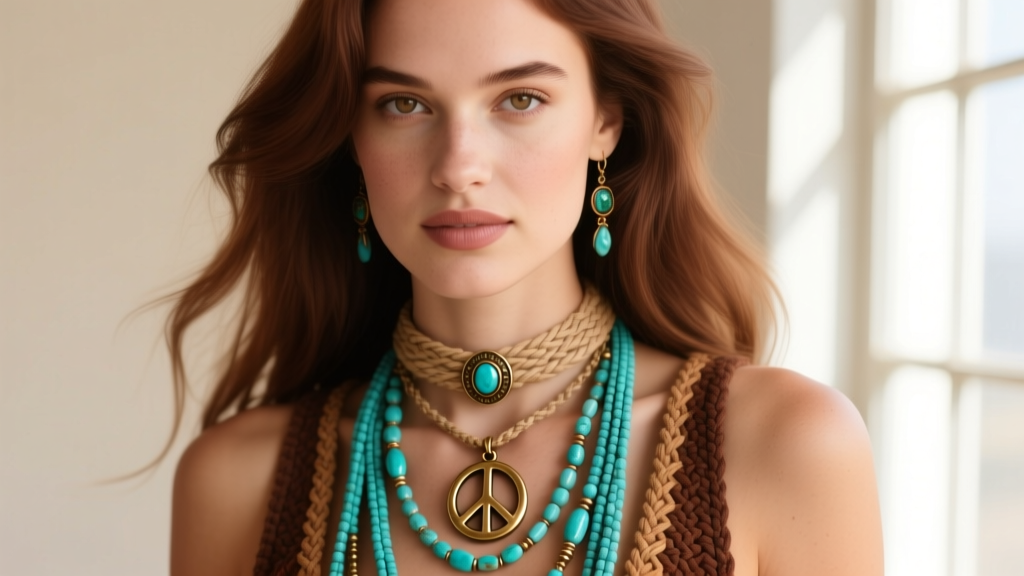
Tier 1: The Anchor (14 to 16 Inches)
Start with a snug, textural piece that sits at the base of the throat. A 1.5mm oxidized sterling silver rope chain or a 3mm hand-knotted macrame choker works best. This tier grounds the stack and draws the eye upward.
Pro Tip: Use a choker with an adjustable sliding macrame knot rather than a standard 1.2mm spring-ring clasp, which is prone to breaking under the tension of daily wear.
Tier 2: The Motif (20 to 24 Inches)
This is where the core 70s symbolism lives. A hammered brass peace sign, a heavy cast-silver zodiac medallion, or a raw lapis lazuli geode slice should rest squarely on the sternum. Opt for a heavier chain gauge here—such as a 2.5mm wheat chain or a 4mm oxidized cable chain—to support the weight of a 15-30 gram pendant without warping.
Tier 3: The Flow (30 to 36 Inches)
The final tier provides movement and elongates the torso. A long turquoise lariat, a strand of authentic puka shells, or a beaded mala necklace completes the look. Ensure the third tier is at least 6 inches longer than the second tier to maintain clear visual separation between the pieces.
Sourcing Guide: Where to Find Authentic Pieces
Building a high-quality 70s hippie jewelry collection requires moving beyond standard mall retailers. For authentic vintage pieces, platforms like Lang Antiques and specialized 1stDibs dealers offer verified provenance, particularly for high-end Zuni and Navajo squash blossom necklaces, which can command prices from $800 to over $5,000.
For modern artisans who are ethically recreating the 70s aesthetic with superior materials, look for independent silversmiths on Etsy who explicitly list their metal sourcing (e.g., 'recycled 925') and stone origins (e.g., 'natural Kingman turquoise'). Expect to pay between $120 and $350 for a well-crafted, heavy-gauge artisan pendant.
Conclusion: The Enduring Legacy of Boho Chic
The 70s hippie jewelry revival of 2026 is not a fleeting micro-trend; it is a return to intentional, meaningful adornment. By prioritizing material safety, understanding gemological authenticity, and applying a structured approach to layering, you can harness the free-spirited energy of the 1970s while maintaining a polished, contemporary edge. True bohemian style isn't about wearing everything at once—it's about curating pieces that tell a grounded, global story.