Decoding Boho Jewelry: Metal Alloys, Patinas, and Turquoise Grading
An expert technical guide to boho jewelry metallurgy, covering Argentium silver, liver of sulfur patinas, and the science of turquoise stabilization.

The Foundation: Metallurgy in Artisan Boho Jewelry
While mainstream fashion often reduces boho jewelry to mass-cast feathers and synthetic beads, true artisan bohemian pieces are rooted in advanced metallurgy and material science. The hallmark of high-end boho jewelry is its heavy texturing—achieved through stamping, reticulation, and granulation. These techniques create deep crevices that make traditional polishing impossible, necessitating a profound understanding of metal alloys and oxidation.
Sterling Silver vs. Argentium: The Germanium Advantage
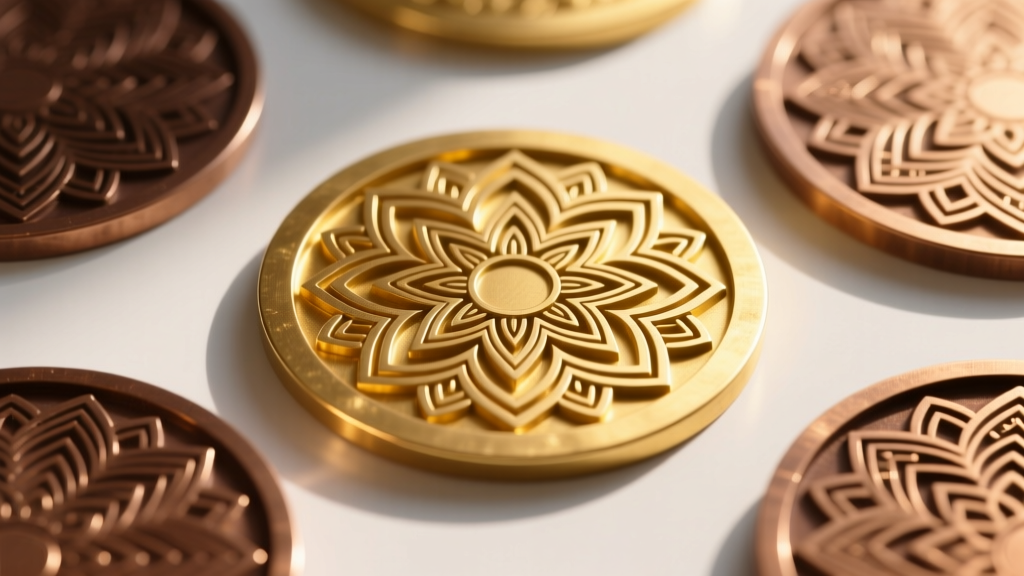
Traditional 925 sterling silver consists of 92.5% silver and 7.5% copper. While the copper adds necessary tensile strength, it is highly susceptible to firescale and rapid tarnishing (silver sulfide formation). For a boho jewelry artisan, firescale trapped in a heavily stamped mandala pattern is a structural and aesthetic failure.
This is where Argentium Silver (935 or 960) becomes the superior choice. By replacing a portion of the copper with germanium, Argentium forms a transparent, self-healing germanium dioxide (GeO2) layer on the surface. This makes the alloy highly tarnish-resistant and completely eliminates firescale during soldering. According to research presented at the Santa Fe Symposium on Jewelry Manufacturing Technology, Argentium's fusion-welding capabilities also allow boho artisans to join complex, multi-layered components without the capillary action issues associated with traditional solder.
Brass and Bronze: Managing Copper Alloys
For warmer, earth-toned boho pieces, brass (copper and zinc) and bronze (copper and tin) are staples. However, artisan makers must strictly source lead-free, cadmium-free alloys to comply with regulations like California's Prop 65. Jewelers brass (typically 70% Cu, 30% Zn) offers a bright gold-like hue but work-hardens rapidly. Phosphor bronze (copper, tin, and a trace of phosphorus) provides superior fatigue resistance, making it ideal for the intricate, spring-loaded clasps often found in heavy boho cuff bracelets.
The Chemistry of Forced Patinas and Oxidation
The dark, antique contrast that defines the boho-chic aesthetic is rarely accidental; it is the result of controlled chemical oxidation. The most common agent is Liver of Sulfur (LOS), a mixture of potassium sulfide, potassium polysulfide, and potassium thiosulfate.
When dissolved in water, LOS releases hydrogen sulfide gas, which reacts with the silver or copper to form silver sulfide (Ag2S) or copper sulfide (CuS). The technical mastery lies in controlling the reaction variables:
- Concentration: A standard ratio is a pea-sized amount of LOS gel to one cup of distilled water. Higher concentrations yield brittle, flaking black oxides, while dilute solutions produce durable, iridescent layers (gold, purple, blue) before turning black.
- Temperature: The optimal bath temperature is between 140°F and 160°F (60°C - 71°C). Boiling water destroys the chemical efficacy of the sulfides and results in a chalky, easily rubbed-off patina.
- Quenching and Sealing: Once the desired depth of black Ag2S is achieved, the piece must be quenched in cold water with a pinch of baking soda to neutralize the acid. Because boho jewelry features heavy textures, the high points are polished back with a 3M radial bristle disc, leaving the crevices black. Finally, the piece is sealed with a microcrystalline wax (like Renaissance Wax) to prevent atmospheric moisture from continuing the oxidation process.
Turquoise Grading: Beyond the 'Sky Blue' Myth
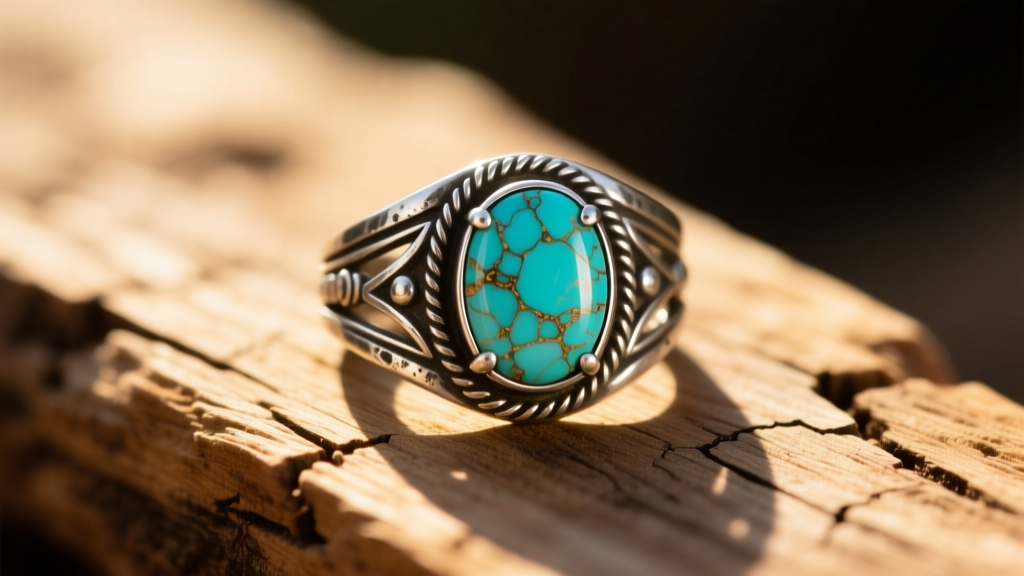
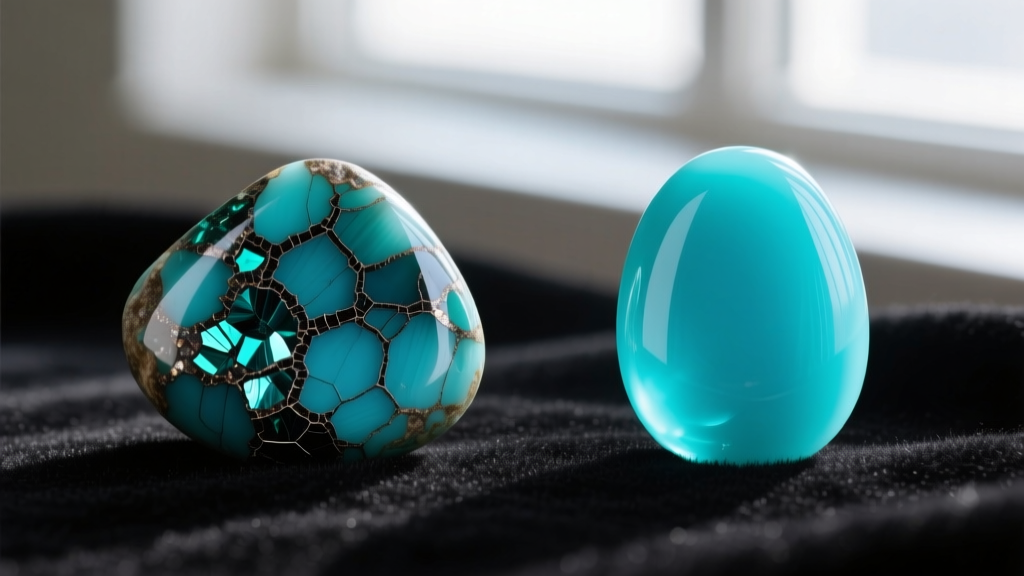
Turquoise is the undisputed cornerstone of bohemian and Southwestern jewelry. Chemically, it is a hydrous phosphate of copper and aluminum: CuAl6(PO4)4(OH)8·4H2O. Its porous nature and relatively low Mohs hardness (5 to 6) mean that over 90% of the turquoise on the commercial market has been altered in some way. Understanding the Gemological Institute of America's (GIA) turquoise quality factors is critical for evaluating high-end boho pieces.
The Stabilization Spectrum
Artisan boho jewelers frequently debate the ethics and aesthetics of stabilized versus natural stones. Stabilization is not inherently a 'fake' process; it is a lapidary necessity for stones that would otherwise crumble during the cabochon cutting process.
'True stabilization involves placing chalky, low-grade turquoise in a vacuum chamber to remove air and moisture, then introducing a liquid hardening agent (usually an epoxy resin or cyanoacrylate) under high pressure. This permanently locks the matrix together without altering the stone's natural color.' — Master Lapidary Standards
Conversely, the Zachary Process is an electrochemical treatment that alters the stone's molecular structure to increase hardness and color saturation without introducing foreign polymers. Reconstituted turquoise (often called 'block'), however, is merely turquoise dust mixed with epoxy and dye—a material that serious boho collectors and artisans strictly avoid.
| Turquoise Grade | Treatment Type | Mohs Hardness | Avg. Market Value (per carat) | Best Boho Application |
|---|---|---|---|---|
| Natural / Gem Grade | None (Untreated) | 5.5 - 6.0 | $15.00 - $50.00+ | High-end bezel-set statement rings |
| Stabilized | Epoxy/Resin Vacuum | 5.0 - 5.5 | $3.00 - $10.00 | Multi-strand squash blossom necklaces |
| Zachary Treated | Electrochemical | 5.5 - 6.0 | $8.00 - $20.00 | Intricate wire-wrapped pendants |
| Reconstituted (Block) | Dust + Epoxy + Dye | 3.0 - 4.0 | $0.10 - $0.50 | Mass-market fashion boho (Avoid) |
Wire Wrapping Mechanics and Gauge Selection
Wire wrapping is a foundational technique in boho jewelry, allowing artisans to secure irregular, uncalibrated rough stones without the use of heat or solder. The structural integrity of a wire-wrapped boho pendant relies entirely on the correct selection of wire gauge, shape, and temper.
Gauge and Temper Framework
Wire thickness is measured in American Wire Gauge (AWG), where a lower number indicates a thicker wire. The temper refers to the metal's hardness and malleability.
- 20-Gauge Half-Hard: The workhorse for structural frames and heavy bail wraps. Half-hard wire has been drawn and slightly work-hardened, providing enough rigidity to hold the shape of a heavy turquoise cabochon while remaining pliable enough to bend with nylon-jaw pliers.
- 22-Gauge Dead-Soft: Essential for intricate weaving and coiling. Dead-soft wire has been annealed, making it buttery and highly malleable. It will work-harden as the artisan weaves it around the 20g frame, locking the structure into place.
- 26-Gauge to 28-Gauge Dead-Soft: Used exclusively for fine, hair-like weaving patterns (such as the 'weave' or 'cobra' stitch) that bind the primary structural wires together.
For boho designs, square wire is preferred over round wire for the primary frame. When twisted or bundled, square wire lays flush against itself, preventing the structural gaps and rolling issues inherent to round wire. Furthermore, square wire creates sharp, distinct edges that catch the light, complementing the rustic, unpolished aesthetic of bohemian jewelry.
Final Sourcing and Ethical Considerations
The modern boho consumer is highly educated and demands transparency. Artisan jewelers must trace their materials. For silver, sourcing Fairmined certified metals ensures that the silver was extracted using environmentally responsible practices and that miners receive fair compensation. For turquoise, purchasing directly from specific, renowned mines (such as the Kingman or Sleeping Beauty mines in the American Southwest) with documented provenance guarantees authenticity and supports domestic lapidary economies. By mastering the metallurgy, chemistry, and structural mechanics outlined above, artisans elevate boho jewelry from a fleeting trend to a respected, enduring craft.