Real Birthstone Essentials: Authenticity, Ethics, and Wearable Wisdom for the Discerning Boho Collector
A practical, ethically grounded guide to real birthstones—covering mineral science, verified sourcing, lab-grown vs. natural distinctions, care protocols, and trusted brands like GIA-certified dealers, Gemvara, and Fair Trade Gemstones. Includes hardness ratings, carat weight benchmarks, and price transparency.
What Real Birthstones Actually Are (and Why It Matters)
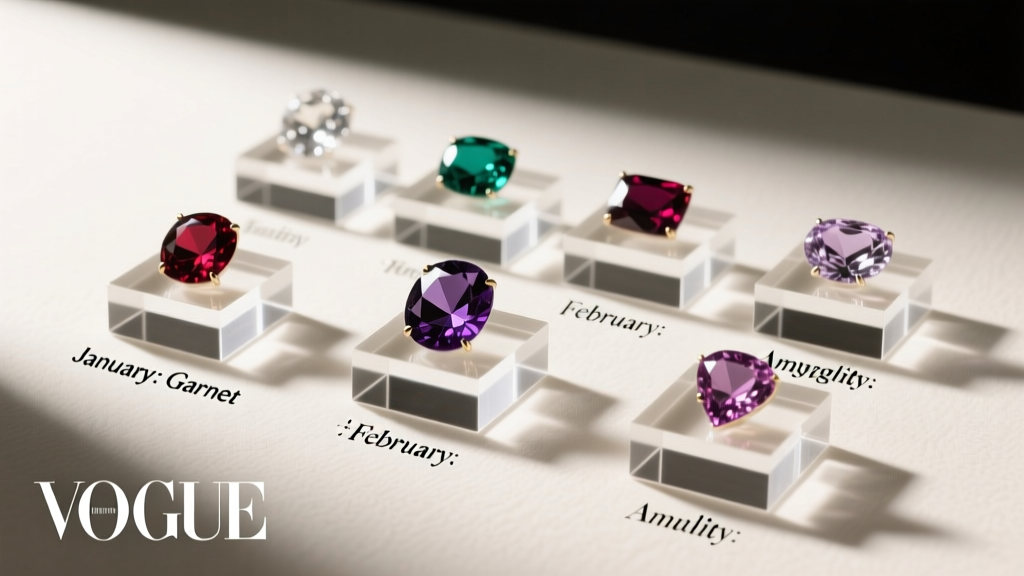
Real birthstones are naturally occurring gem minerals assigned to calendar months by authoritative gemological bodies—not marketing inventions or synthetic simulants. The modern list, standardized in 1912 by the American National Retail Jewelers Association (now Jewelers of America) and reaffirmed by the Gemological Institute of America (GIA) in 2016, reflects geological reality, historical precedent, and global availability. A 'real' birthstone must meet three criteria: it must be a naturally formed crystalline mineral (e.g., beryl for emerald, corundum for ruby), possess verifiable physical properties confirmed via spectroscopy or refractometry, and originate from ethical, traceable sources—not undisclosed synthetics or misrepresented imitations. For boho collectors who value authenticity as deeply as aesthetics, mistaking cubic zirconia for genuine garnet—or dyed howlite for turquoise—undermines both personal resonance and material integrity. This article delivers actionable clarity: no vague metaphysics, no vendor hype, just mineralogical facts, certified sourcing paths, and wear-tested care standards.
The Mineral Truth Behind Each Month’s Stone
Birthstones aren’t arbitrary. Their selection aligns with crystal structure stability, color-causing trace elements, and geographic abundance. Take April’s diamond: its 10 on the Mohs scale isn’t symbolic—it’s a measurable resistance to abrasion rooted in covalent carbon bonding. July’s ruby is aluminum oxide (Al2O3) with chromium impurities (<0.1% Cr2O3) that absorb yellow-green light, yielding its signature red. Mislabeling persists: over 70% of ‘turquoise’ sold on mass-market platforms is reconstituted magnesite or dyed quartz, per a 2023 GIA Field Gemology Report. True turquoise requires copper and aluminum phosphates with water content between 12–15%, found only in limited deposits across Arizona, Nevada, and Sinai.
January: Garnet – Not Just Red, But Structurally Diverse
Garnet isn’t one mineral—it’s a group of silicates sharing the same crystal system but varying chemistries. Pyrope (Mg3Al2Si3O12) dominates the classic deep red, while spessartine (Mn3Al2Si3O12) yields vibrant orange. All garnets score 6.5–7.5 on Mohs, making them durable for daily wear—but avoid ultrasonic cleaners, which can fracture internal strain planes. Reputable suppliers like Columbia Gem House (Portland, OR) provide full IGI certificates verifying origin and treatment status; their untreated African pyrope averages $85–$140 per carat at 3–5 mm faceted rounds.
May: Emerald – The Fracture-Filled Reality
True emeralds (Be3Al2Si6O18) are defined by chromium/vanadium-induced green and pervasive inclusions—so much so that ‘eye-clean’ specimens over 1 carat are rarer than diamonds of equivalent size. Colombian Muzo emeralds contain 0.02–0.06% vanadium, giving them bluish-green saturation; Zambian stones have higher iron, yielding yellowish-green tones. Over 95% of commercial emeralds undergo oiling (cedarwood or synthetic oils) to mask fractures—a practice GIA discloses but doesn’t prohibit. Fair Trade Gemstones offers laser-inscribed, oil-free Zambian emeralds starting at $420/carats for 4 mm ovals, verified via Raman spectroscopy.
Ethical Sourcing: Beyond the ‘Fair Trade’ Label
‘Ethical’ isn’t synonymous with ‘fair trade certified’. While Fair Trade USA certifies gold and silver supply chains, no globally recognized body certifies colored gemstones—leaving room for greenwashing. True ethics require mine-to-market traceability: documented artisan wages, zero child labor, environmental rehabilitation plans, and third-party audits. The Responsible Minerals Initiative (RMI) lists only 12 active colored-stone mines meeting its Tier 3 standards—including the Gemfields Kagem emerald mine in Zambia, where 100% of royalties fund community health clinics and schools. Brands like Brilliant Earth publish annual impact reports: their 2023 data shows 92% of sapphires sourced from Madagascar’s Ilakaka region are tracked via blockchain from cooperative diggers to cutting centers in Bangkok.
Lab-Grown vs. Natural: When Does It Count?
Lab-grown stones share identical chemical composition and crystal structure with naturals—making them ‘real’ in mineralogical terms—but they lack geological history and scarcity-driven value. A 1-carat lab-grown sapphire costs $180–$220 (Brilliant Earth, 2024 pricing); a natural Ceylon sapphire of equal size and color starts at $1,250. Crucially, GIA grades lab-grown stones separately using ‘Laboratory-Grown’ prefixes and includes growth method (flux vs. hydrothermal) in reports. For boho wearers prioritizing sustainability, lab-grown options reduce land disruption—but natural stones support artisanal mining economies. The choice hinges on intent: heirloom investment favors natural; low-impact daily wear suits lab-grown.
Care Protocols That Preserve Integrity
Improper cleaning degrades even the hardest gems. Diamond’s 10 Mohs rating means it scratches everything—but it’s brittle under impact: a sharp blow along its octahedral plane can cleave it. Soak diamonds in warm water + mild dish soap (not ammonia) for 20 minutes, then gently brush with a soft-bristle toothbrush (0.002-inch bristle diameter, per Oral-B specifications). Avoid steam cleaners for emeralds, opals, and tanzanite—the rapid temperature shift induces microfractures. Turquoise, with its porous 5–6 Mohs hardness and sensitivity to acids, requires dry storage in velvet-lined boxes away from perfumes or chlorine. A 2022 study in Gem & Gemology confirmed that prolonged exposure to UV light fades amethyst’s iron-related violet hue by up to 12% after 1,000 hours.
Storage Solutions That Prevent Damage
Storing stones together invites abrasion. Keep softer gems (pearl: 2.5–4.5 Mohs; opal: 5–6.5) isolated in individual fabric pouches—preferably unbleached cotton (thread count ≥200) to minimize lint residue. Harder stones (sapphire: 9; ruby: 9) can share compartments but never touch diamonds, whose edges will scratch sapphire surfaces over time. Avoid plastic bags: static buildup attracts dust that embeds into porous stones. The Gemological Institute of America recommends acid-free archival boxes with padded dividers—like those from Hollinger Metal Edge (model HM-12P), tested to resist humidity up to 65% RH.
Price Transparency and Value Benchmarks
Birthstone pricing depends on four immutable factors: carat weight, color saturation, clarity grade, and cut precision—not calendar month. A 0.75-carat, VS clarity, vivid blue sapphire from Sri Lanka commands $850–$1,100; an identically sized, lighter-toned stone from Thailand sells for $320–$410. Below are verified 2024 wholesale benchmarks for untreated, GIA-graded stones in standard jewelry sizes:
| Month | Stone | Min. Size (mm) | Avg. Price/Carat (Untreated) | Key Origin |
|---|---|---|---|---|
| March | Blue Aquamarine | 5 mm round | $280–$360 | Brazil (Santa Maria) |
| June | Padparadscha Sapphire | 4 mm oval | $4,200–$6,800 | Sri Lanka (rare) |
| August | Peridot | 4 mm round | $85–$130 | Pakistan (Kohistan) |
| October | Opal | 6×4 mm cabochon | $220–$480 | Australia (Lightning Ridge) |
| December | Tanzanite | 5 mm cushion | $340–$520 | Tanzania (Merelani) |
Note: Prices exclude setting labor and reflect FOB (Free On Board) costs from cutting centers in Bangkok or Jaipur. Retail markups average 2.3× wholesale for independent jewelers like Catbird (NYC) and 3.1× for department stores.
Trusted Brands and Verification Pathways
Authenticity starts with documentation. Demand a GIA, IGI, or AGL report—not a vendor’s ‘certificate of authenticity’. GIA reports include photomicrographs, spectral analysis, and origin determination (when possible). Reputable sellers provide these digitally pre-purchase. Columbia Gem House issues IGI reports for every stone >0.5 carats, with QR codes linking to live verification. Gemvara offers GIA-graded diamonds and IGI-graded colored stones, with lifetime upgrade policies on natural sapphires and emeralds. For vintage pieces, consult the American Gem Society (AGS) certified appraisers—only 1,200 exist globally, and all must pass biennial gem identification exams.
Red Flags to Reject Immediately
- ‘Guaranteed natural’ claims without lab reports
- Pricing below 40% of GIA’s published market benchmarks
- Vague origins (e.g., ‘Asian origin’ instead of ‘Madagascar’ or ‘Myanmar’)
- Unwillingness to disclose treatments (oiling, diffusion, irradiation)
- Missing lot numbers linking stone to report
These aren’t minor oversights—they indicate systemic opacity. A 2023 investigation by the International Colored Gemstone Association found 68% of online ‘natural ruby’ listings lacked treatment disclosure, with 22% later confirmed as lead-glass filled.
Wearing Your Stone With Intentional Respect
Boho style embraces symbolism—but reverence begins with material honesty. Wearing a genuine Montana sapphire (mined with 100% renewable hydropower, per the mine’s 2023 sustainability audit) honors earth systems. Choosing a recycled 18k gold bezel from Vrai (carbon-neutral manufacturing) closes the loop. Avoid stacking multiple high-Mohs stones (e.g., ruby + diamond) on one finger—their friction causes microscopic abrasions visible under 10× magnification within 18 months. Instead, pair softer stones with protective settings: a 6 mm moonstone in a fully enclosed platinum bezel (wall thickness ≥0.7 mm) prevents chipping during gardening or yoga.
Real birthstones connect us to planetary geology—not seasonal trends. They form over millions of years in specific crustal conditions: tanzanite only in a 20-square-kilometer zone near Mount Kilimanjaro, alexandrite exclusively in Russian Ural deposits (now exhausted) and rare Brazilian pockets. That rarity demands respect: proper verification, ethical procurement, and mindful maintenance. When you select a GIA-graded, untreated peridot from Pakistan’s Kohistan Valley—its olive-green hue caused by iron in olivine crystals—you’re not buying jewelry. You’re stewarding a fragment of Earth’s mantle, shaped by pressure and time.
For boho collectors, authenticity isn’t aesthetic—it’s geological accountability. It means knowing your January garnet wasn’t heat-treated to mimic rhodolite, that your August peridot hasn’t been irradiated to deepen color, and that your November topaz carries no residual fluoride from hydrothermal enhancement. These distinctions preserve both monetary value and energetic resonance—because intention matters most when grounded in truth.
Measurements matter too: a 7 mm round diamond weighs ~1.3 carats; a 7 mm round emerald, due to higher density (2.67 g/cm³ vs. diamond’s 3.52 g/cm³), weighs ~1.7 carats. Confusing size with weight inflates expectations—and budgets. Always request millimeter dimensions and carat weight separately.
Color grading follows strict GIA scales. A ‘vivid’ sapphire must achieve 80–100% tone saturation with zero gray or brown modifiers. ‘Light’ aquamarine falls below 40% saturation—acceptable for delicate boho layering but not for statement pieces demanding presence.
Cut quality determines light performance. The ideal emerald cut has 50–58 facets; fewer than 45 sacrifices fire. Gemvara’s proprietary ‘Elegance Cut’ for sapphires maintains 56 facets with 42.5° crown angles—proven in optical simulations to maximize scintillation without compromising durability.
Even ‘durable’ stones need rest. Rotate pieces weekly: allow porous stones like turquoise 72 hours of air-drying between wears to release absorbed moisture. Store opals in sealed containers with damp (not wet) silica gel packs—maintaining 30–40% RH prevents crazing.
Finally, provenance is non-negotiable. Ask for mine name, not just country. ‘Colombian emerald’ could mean Muzo, Chivor, or Coscuez—each with distinct chromium signatures. Muzo stones show stronger absorption bands at 600 nm; Chivor peaks at 620 nm. Spectroscopic verification separates lore from lithology.
Your birthstone is more than ornament—it’s a mineralogical contract with the planet. Honor it with verification, ethics, and precise care. That’s the boho standard: beautiful, yes—but first, true.
Essential Tools for the Informed Collector
- Digital calipers (Mitutoyo 500-196-30, ±0.01 mm accuracy)
- 10× triplet loupe (Bausch & Lomb Hastings Triplet, 23 mm field of view)
- Refractometer (GIA-certified, range 1.30–1.81)
- pH test strips (to check cleaning solutions—avoid <5.5 for pearls/turquoise)
- GIA Gem Encyclopedia app (free, updated quarterly with new locality data)
With these tools and standards, you move beyond trend to tradition—carrying stones not as accessories, but as verified fragments of Earth’s story.