Styling 50's Style Jewelry: A 2026 Trend & Outfit Guide
Discover how to integrate 50's style jewelry into modern 2026 wardrobes. Explore AB rhinestones, vintage collars, and expert layering frameworks.

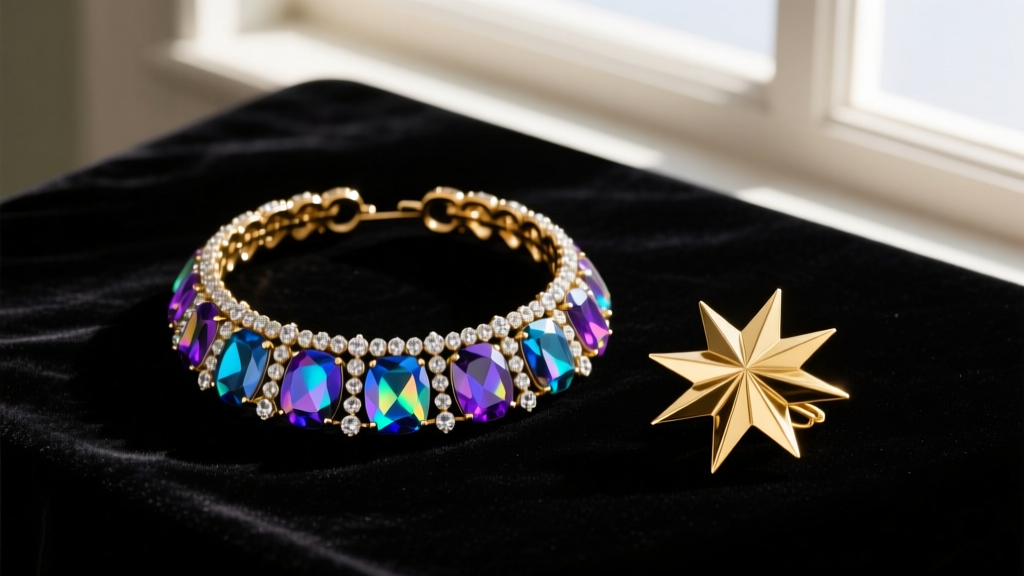
The fashion landscape of 2026 has decisively pivoted away from the quiet luxury and sterile minimalism of the early 2020s, embracing what trend forecasters are calling 'curated maximalism.' At the heart of this revival is a profound appreciation for mid-century adornment. Specifically, 50's style jewelry has emerged as a cornerstone for stylists and vintage enthusiasts looking to inject personality, structural contrast, and historical weight into contemporary wardrobes. However, integrating mid-century costume jewelry into modern outfits requires more than simply pinning a brooch to a lapel. It demands an understanding of proportion, material degradation, and the architectural silhouettes of the post-war era.
This comprehensive styling guide breaks down the anatomy of authentic mid-century pieces, provides actionable frameworks for pairing them with 2026 silhouettes, and offers expert troubleshooting for maintaining vintage integrity.
The Anatomy of Mid-Century Adornment
To style 50's style jewelry effectively, you must first understand the materials that define the era. The 1950s was a golden age for costume jewelry innovation, driven by post-war manufacturing booms and a cultural appetite for opulence without the fine-jewelry price tag.
Aurora Borealis (AB) Rhinestones
In 1955, Swarovski collaborated with Christian Dior to introduce the Aurora Borealis (AB) finish. By vaporizing blue metal onto the surface of glass rhinestones, they created an iridescent, rainbow-like refraction that mimicked the northern lights. When sourcing vintage AB pieces, look for the distinct oil-slick sheen on the facets of the glass chatons. In 2026, AB rhinestones are being styled against matte, heavy-gauge fabrics like raw silk and brushed wool to allow the light refraction to pop without competing with high-shine textiles.
Proprietary Base Metals and Plating
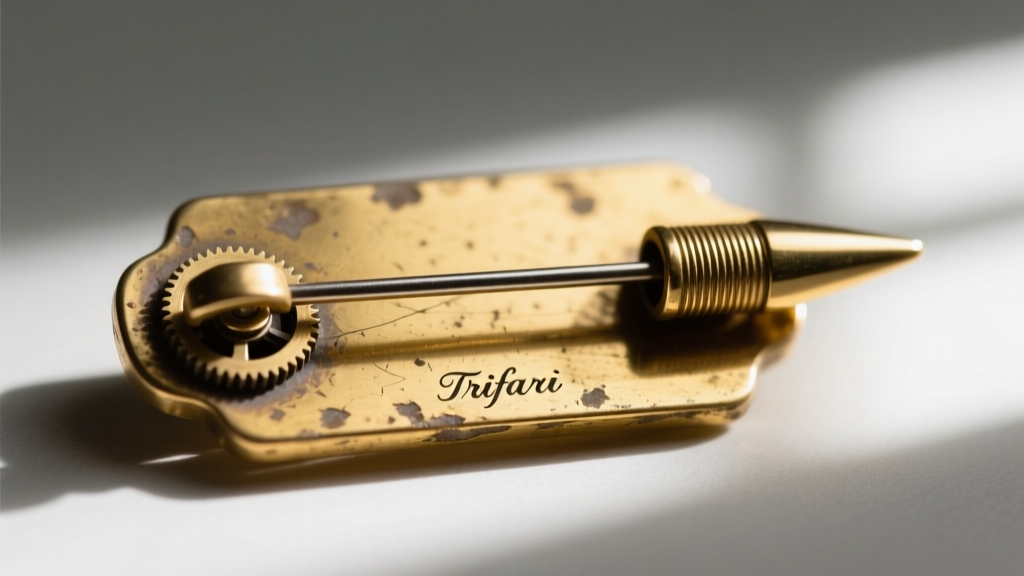
Unlike modern fast-fashion jewelry that uses thin flash-plating over zinc, premier 1950s houses utilized robust, proprietary alloys. Trifari, for instance, patented 'Trifanium,' a non-tarnishing base metal alloy that accepted gold plating beautifully. Meanwhile, Miriam Haskell utilized 'Russian Gold' plating—a 24k gold wash over a copper and brass base, yielding a soft, matte, antique glow that is virtually impossible to replicate today. Understanding these material grades helps you authenticate pieces and determine their value, with pristine Trifari sets often commanding between $150 and $400 on the secondary market, while complex Haskell pieces can exceed $1,000.
The 2026 Trend Shift: Curated Maximalism
The modern approach to 50's style jewelry relies heavily on juxtaposition. The goal is to avoid looking like you are wearing a period costume. In 2026, the most sophisticated styling involves anchoring heavy, ornate mid-century pieces with severe, minimalist, or avant-garde contemporary clothing.
Consider the 'Atomic Starburst' motif. Originally designed to reflect the Space Age optimism of the late 50s, these jagged, asymmetrical gold-tone brooches and earrings are now being used as focal points on structured, oversized blazers. The sharp, architectural lines of the starburst cut through the softness of modern tailoring, creating a dynamic visual tension that feels entirely current.
Expert Styling Note: Never pair 50's style jewelry with vintage 1950s clothing unless you are attending a themed event. The synergy of mid-century jewelry with 2026 silhouettes—like asymmetric slip dresses, wide-leg tailored trousers, or structured leather trenches—is what elevates the pieces from 'costume' to 'high fashion.'
Proportion and Placement Frameworks
Mid-century jewelry was designed to complement the specific necklines and hemlines of the 1950s. Adapting these pieces requires strict adherence to proportion rules.
The Collar and Choker Protocol
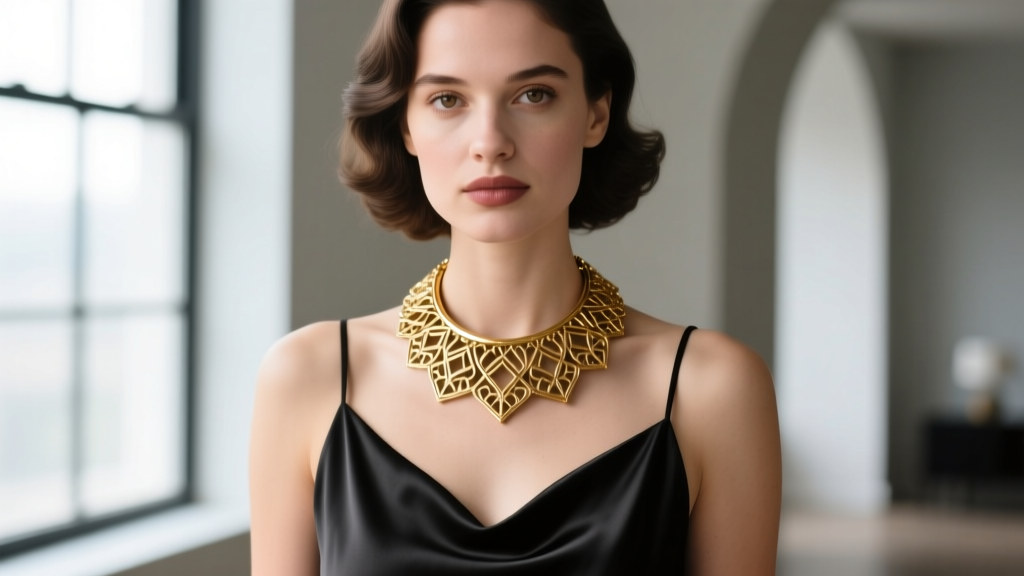
Authentic 1950s collar necklaces are notoriously short, typically measuring between 14 and 15 inches in circumference. They were designed to sit snugly at the base of the throat, complementing the era's popular boatneck and scoop-neck blouses. When styling these today, avoid pairing them with standard crewnecks, which will cause the necklace to bunch awkwardly. Instead, utilize deep V-necks, sweetheart necklines, or off-the-shoulder tops. This allows the 14-inch collar to 'float' against bare skin, acting as a standalone architectural frame for the collarbone. If you must layer, use a modern, ultra-thin 24-inch gold vermeil chain to create a cascading effect, but ensure the vintage collar remains the undisputed top layer to prevent prong-snagging.
Strategic Brooch Repositioning
The traditional lapel placement for brooches is outdated. Vintage 50s brooches—particularly the heavy, three-dimensional floral bouquets and jelly belly lucite animals—feature thick 18-gauge (1.2mm) pin stems. These heavy-gauge stems can easily tear modern delicate silks and lightweight wools. To mitigate this while achieving a 2026 aesthetic, reposition your brooches:
- The Belt Cinch: Thread a heavy gold-tone chain through a leather belt and use the brooch to clasp the center, acting as an oversized, ornate buckle.
- The Scarf Anchor: Use a starburst or geometric brooch to pin the ends of a heavy silk twill scarf at the sternum, replacing a traditional knot.
- The Cuff Upgrade: Pin smaller, 1-inch dress clips or brooches directly onto the cuffs of an oversized button-down shirt, mirroring the function of modern cufflinks but with mid-century flair.
Sourcing Guide: Authentic Vintage vs. Modern Reproductions
As the demand for 50's style jewelry surges, the market is flooded with modern reproductions. While reproductions offer durability, they lack the historical manufacturing techniques that give vintage pieces their soul. Use this comparison chart to guide your purchasing decisions.
| Feature | Authentic Vintage (1950-1959) | Modern Reproductions (2020s) |
|---|---|---|
| Materials | Lead glass rhinestones, brass/copper base, Russian gold or Trifanium plating. | Acrylic or resin stones, zinc alloy base, thin flash gold-plating. |
| Clasp Hardware | Barrel clasps, early fold-over clasps, trombone clasps (rare post-1950). | Standard lobster claws, magnetic clasps. |
| Stone Setting | Hand-set in metal prongs or chaton cups; occasional foiling. | Glue-set into cast metal recesses. |
| Pricing Range | $45 - $800+ (Designer dependent; e.g., Weiss, Coro, Haskell). | $25 - $90 (Mass-market vintage-inspired brands). |
| Weight & Drape | Substantial weight; links articulate fluidly due to hand-assembly. | Lightweight; stiff drape due to machine-cast unified links. |
For authoritative insights on identifying authentic mid-century maker's marks and dating specific clasp mechanisms, resources like Collectors Weekly and the V&A Museum's costume jewelry archives are indispensable tools for serious collectors.
Troubleshooting and Preservation
Wearing 70-year-old jewelry comes with inherent structural risks. Proper maintenance is non-negotiable to preserve both the garment and the artifact.
Combating Foil Rot and Verdigris
Many 50s rhinestones were backed with delicate silver or gold foil to enhance their sparkle. Over decades, moisture can seep behind the glass, causing the foil to oxidize and turn black—a condition known as 'foil rot.' Once a stone has foil rot, it cannot be reversed without completely unsetting and replacing the stone, which destroys its vintage value. Similarly, the copper content in brass base metals can react with skin oils and humidity, creating verdigris (a green, crusty oxidation). Always inspect the back of a piece before purchasing or wearing. If verdigris is present, gently brush it away with a dry, soft-bristled toothbrush. Never use liquid jewelry cleaners or ultrasonic machines.
The Golden Rule of Moisture
The adhesives used in the 1950s to secure rhinestones into their metal chatons were often water-soluble. Submerging vintage 50's style jewelry in water, or wearing it in high-humidity environments like saunas or steamy bathrooms, will dissolve the glue, causing stones to fall out. Always apply perfumes, hairsprays, and lotions at least 15 minutes before putting on your jewelry. When removing the pieces, wipe them down with a dry, lint-free microfiber cloth to remove acidic skin oils before storing them in a climate-controlled, anti-tarnish environment.
Final Thoughts on Mid-Century Styling
Integrating 50's style jewelry into a 2026 wardrobe is an exercise in intentional contrast. By respecting the architectural proportions of mid-century collars, understanding the chemical realities of vintage base metals, and boldly repositioning brooches away from traditional lapels, you transform historical artifacts into cutting-edge style statements. The enduring appeal of the 1950s lies in its unapologetic glamour; your styling should honor that legacy while firmly planting it in the present day.


