The Ivy Luxe Piercing & Jewelry Trend: 2026 Ear Curation
Explore the 2026 Ivy Luxe piercing & jewelry trend. Discover botanical 18k gold ear curation, threadless gem settings, and luxury studio aesthetics.

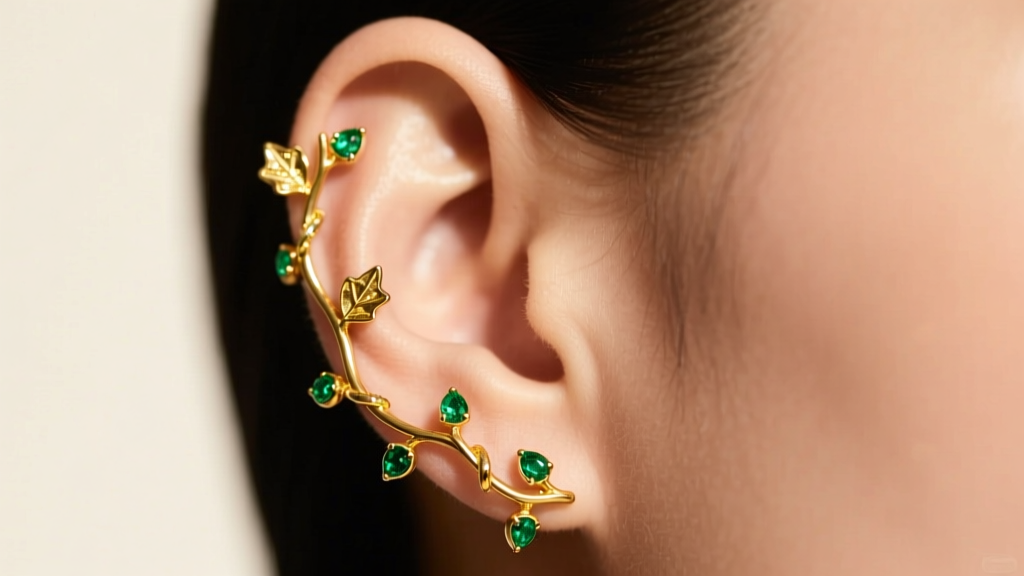
The landscape of fine body modification has undergone a radical transformation over the last decade, evolving from standard mall-kiosk studs into highly bespoke, gallery-level art. As we navigate the 2026 aesthetic landscape, one movement has completely captivated the high-end studio circuit: the ivy luxe piercing & jewelry trend. This botanical-inspired approach to ear curation bridges the gap between traditional fine jewelry and anatomical body art, favoring organic, nature-driven maximalism over the stark minimalism that dominated the early 2020s.
At its core, the Ivy Luxe movement is defined by intricate vine motifs, trailing leaf clusters, and high-karat gold settings adorned with ethically sourced, unconventional gemstones. But achieving this luxurious aesthetic requires a deep understanding of metallurgy, anatomical placement, and weight distribution. Below, we deconstruct the anatomy, material standards, and pricing of the Ivy Luxe trend, providing a comprehensive guide for collectors and piercing enthusiasts alike.
The Rise of the Ivy Luxe Aesthetic in Fine Piercing
Historically, luxury body jewelry leaned heavily on geometric shapes, bezel-set brilliant-cut diamonds, and symmetrical constellations. The Ivy Luxe trend disrupts this by introducing romantic, asymmetrical, and organic silhouettes. Master jewelers and elite piercing studios are collaborating to create custom 18k gold ends that mimic the natural, creeping growth of ivy vines across the auricle's ridges.
This shift is largely driven by a desire for hyper-personalization. Because no two ears share the exact same folds, helixes, and conch basins, an ivy vine cluster must be custom-bent and arranged to flow with the client's unique anatomy. According to industry leaders like BVLA (Body Vision Los Angeles), the demand for custom-fitted, nature-inspired luxury ends has surged, with botanical motifs now accounting for a significant portion of their high-carat gold commissions.
Botanical Motifs Meet High-Karat Gold
The signature of the Ivy Luxe style is the use of textured gold. Rather than high-polish, mirror-finish metals, artisans are employing matte, hammered, and sandblasted finishes on 18k gold to replicate the organic texture of bark and leaves. These textural contrasts are frequently paired with rose-cut or cabochon gemstones—such as teal sapphires, salt-and-pepper diamonds, and tsavorite garnets—which offer a moody, vintage brilliance that complements the botanical theme far better than traditional synthetic cubic zirconia.
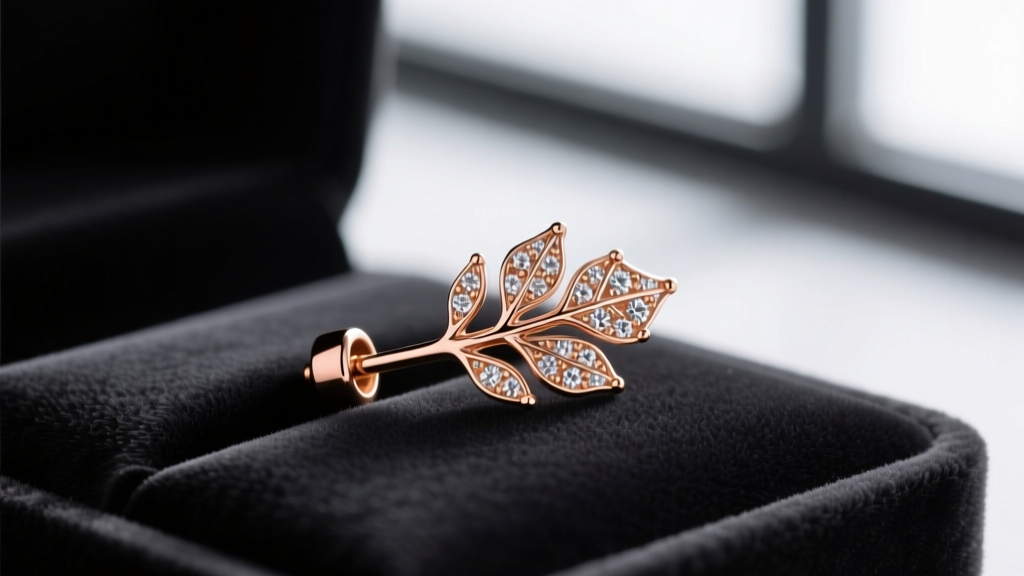
Anatomy of an Ivy Luxe Curated Ear
A successful Ivy Luxe ear project is not merely a collection of random piercings; it is a cohesive, flowing composition. The placement of each piercing must support the visual weight and directional flow of the vine motifs. Here is the standard anatomical blueprint utilized by luxury curators in 2026:
- The Conch (14g or 16g): The anchor of the composition. The conch typically features a large, sprawling ivy leaf cluster or a central floral cabochon surrounded by trailing vines. Due to the weight of solid gold clusters, a 14-gauge post is often recommended to prevent migration.
- The Helix & Flat (16g): Utilized for the 'creeping' vine effect. Small, threadless ivy leaf ends are placed along the outer helix rim, drawing the eye upward.
- The Tragus (16g): A subtle, single-leaf or tiny seed-pod end in 14k or 18k gold, providing balance to the heavier upper-ear placements.
- The Daith (14g): Often fitted with a curved barbell featuring asymmetrical ivy leaves wrapping around the cartilage fold, creating a seamless integration with the inner ear.
Material Standards: Beyond Implant-Grade Titanium
While the Association of Professional Piercers (APP) strictly mandates ASTM F-136 implant-grade titanium for fresh piercings, the Ivy Luxe trend operates primarily in the realm of fully healed, mature fistulas. This allows for the introduction of high-karat gold, which carries specific metallurgical considerations.
Pure 24k gold is entirely too soft for body jewelry; it will warp, scratch, and lose its tension settings. Therefore, luxury studios rely on alloyed gold. However, the specific alloy mix dictates both the color and the biocompatibility of the jewelry.
| Material Grade | Composition & Hardness | Average Price Range (Ends Only) | Best Application in Ivy Luxe |
|---|---|---|---|
| 14k Solid Gold | 58.5% Gold. Highly durable, resistant to scratching. Contains higher alloy metals (copper/silver). | $120 - $350 | Everyday wear, high-friction areas (tragus, rook), and clients with active lifestyles. |
| 18k Solid Gold | 75% Gold. Softer, richer color. Requires palladium or platinum alloys to maintain biocompatibility. | $250 - $1,200+ | Conch clusters, helix vines, and statement pieces where deep color and prestige are paramount. |
| ASTM F-136 Titanium | Implant-grade, nickel-free, lightweight. Can be anodized to mimic dark botanical stems. | $30 - $80 | Internal posts, healing jewelry, and structural vine stems that require high tensile strength. |
A common point of failure in amateur luxury curation is nickel dermatitis triggered by cheap white gold alloys. Reputable Ivy Luxe studios exclusively use nickel-free white gold (alloyed with palladium) or stick to yellow and rose gold to ensure long-term tissue health.
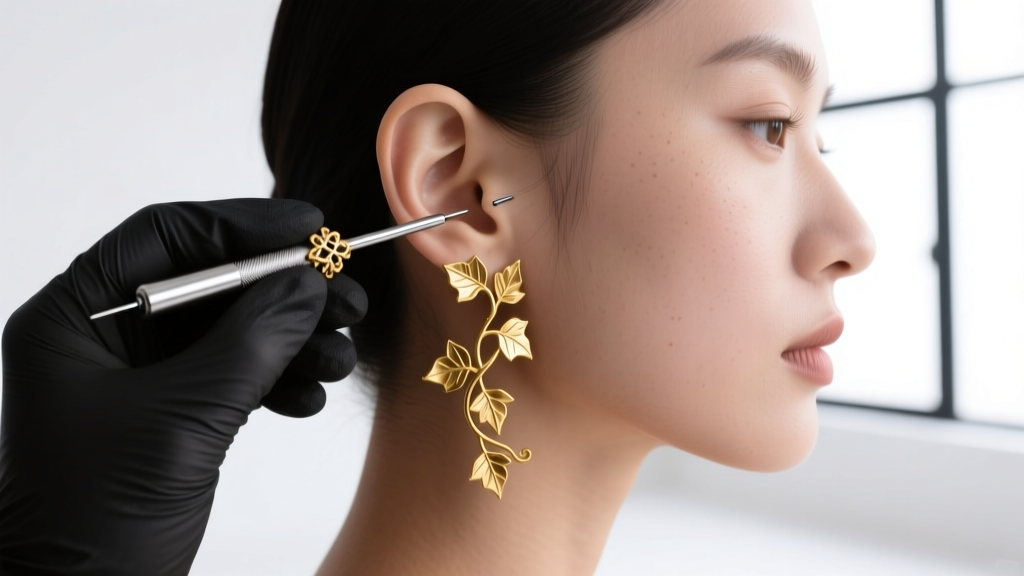
The Threadless Revolution in Luxury Ends
You cannot discuss the Ivy Luxe trend without addressing the hardware that makes it possible: threadless (push-pin) technology. Traditional internally threaded jewelry features screw mechanisms that can strip, harbor bacteria, and create bulky joints that ruin the delicate silhouette of a gold ivy leaf.
Threadless ends utilize a small pin that is slightly bent before insertion into a hollow titanium or gold post. The tension created by the bent pin against the inner wall of the post creates a vacuum-like seal. This offers three massive advantages for botanical jewelry:
- Seamless Aesthetics: The joint between the post and the ivy leaf end is virtually invisible, creating the illusion that the gold vine is growing directly out of the skin.
- Security: Threadless ends are incredibly secure. They will not unscrew when caught on hair, towels, or clothing—a vital feature for intricate, expensive 18k gold pieces.
- Modularity: Clients can purchase a single high-quality titanium post and swap out multiple gold ivy ends, allowing for versatile styling without the need for tools.
Healing and Aftercare for Heavy Botanical Jewelry
A critical mistake made by eager collectors is attempting to heal a fresh piercing with a heavy, solid 18k gold ivy cluster. The weight of these luxury ends can cause the 'cheese-cutter effect,' where the heavy jewelry slowly migrates downward through the healing cartilage, leading to rejection or severe angle distortion.
The standard Ivy Luxe protocol dictates a two-phase approach. Phase one involves healing the piercing with a lightweight, anodized titanium flat-back labret stud. This phase typically lasts 6 to 12 months, depending on the cartilage thickness and the client's aftercare diligence. Only once the fistula is fully mature, stable, and capable of supporting the physical load, does the piercer upsize the post (often from 16g to 14g for structural integrity) and install the heavy gold botanical ends. Daily aftercare during the transition phase requires sterile saline sprays and avoiding heavy hair products that can snag on the intricate leaf settings.
'True luxury in body jewelry isn't just about the karat weight of the gold; it is about respecting the anatomy. An 18k gold ivy vine should look like it belongs on the ear, not like it is dragging the cartilage down.' — Master Piercer, 2026 APP Conference Keynote.
Pricing the Ivy Luxe Experience
Curating an Ivy Luxe ear is a significant financial investment, comparable to purchasing high-end fine jewelry. The cost is broken down into studio piercing fees, structural posts, and the decorative gold ends.
- Studio Piercing Fee: $80 to $150 per placement (excluding jewelry), reflecting the expertise required for precise, anatomy-based angling.
- Titanium Posts: $30 to $60 each.
- 18k Gold Ivy Ends: $250 for small, single-leaf tragus pieces, scaling up to $1,500+ for large, custom-fitted conch clusters featuring natural diamonds and sapphires.
- Total Project Cost: A full, multi-placement Ivy Luxe ear project typically ranges from $3,500 to over $10,000, depending on the gemstone quality and the number of placements.
Final Thoughts on the 2026 Luxury Piercing Shift
The ivy luxe piercing & jewelry trend represents a maturation of the body modification industry. It demands a higher level of collaboration between the client, the master piercer, and the fine jeweler. By prioritizing anatomical flow, biocompatible high-karat alloys, and secure threadless engineering, this botanical movement has redefined what it means to wear luxury on the body. As 2026 progresses, expect to see these organic, vine-draped earscapes continue to dominate the upper echelons of fine jewelry curation, proving that nature remains the ultimate designer.

