Outer Body Jewelry Materials: The Ultimate Comparison Guide
Discover the best materials for outer body jewelry. Compare titanium, niobium, gold, and PTFE for dermals, surface bars, and navel piercings.

The Biomechanics of Outer Body Piercings
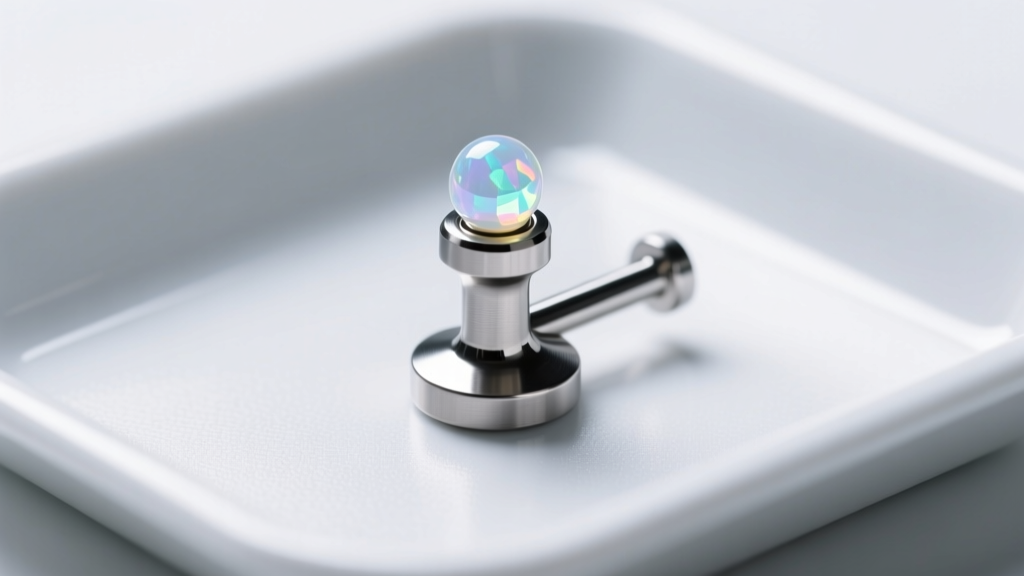
When we discuss 'outer body jewelry,' we are referring to adornments worn in piercings located on the external skin and cartilage surfaces—this includes dermal anchors, surface bars, navel, nipple, and standard ear piercings. Unlike oral or mucosal piercings, which are bathed in enzyme-rich saliva and maintain a stable internal temperature, outer body piercings face a harsh, dynamic environment. They are subjected to UV radiation, fluctuating temperatures, sweat, friction from clothing, and mechanical snagging.
Because of these environmental stressors, the material properties of your jewelry dictate not just the aesthetic outcome, but the biological survival of the piercing. A material that performs adequately in an earlobe might fail catastrophically in a surface piercing or dermal anchor due to micro-movements and galvanic corrosion. According to the Association of Professional Piercers (APP), selecting materials with high biocompatibility, superior tensile strength, and a flawless surface finish is non-negotiable for long-term outer body retention.
Implant-Grade Titanium (ASTM F136): The Gold Standard
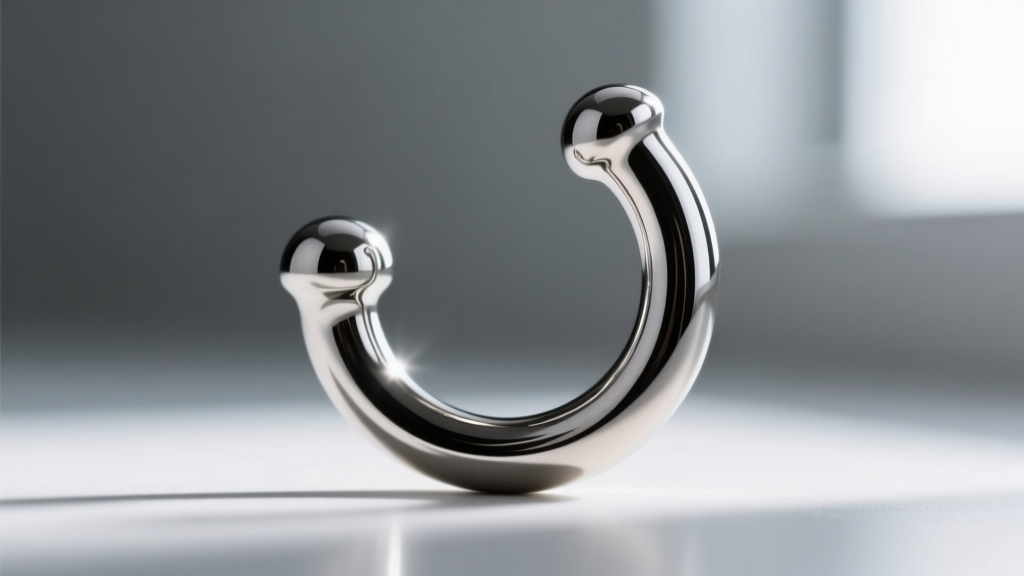
For any fresh outer body piercing, Implant-Grade Titanium (specifically Ti-6Al-4V ELI, compliant with ASTM F136) is the undisputed champion. The 'ELI' stands for Extra Low Interstitial, meaning the alloy has strictly limited levels of oxygen, nitrogen, carbon, hydrogen, and iron. This precise chemical composition prevents localized corrosion and ensures the metal remains entirely inert within human tissue.
Why Titanium Excels on the Outer Body
- Passivation Layer: Titanium instantly forms a microscopic, stable oxide layer when exposed to air. This layer prevents the metal from reacting with sweat or sebum, which are highly corrosive to lesser metals.
- Strength-to-Weight Ratio: Outer body jewelry, particularly large surface bars or heavy navel shields, must not drag on the piercing channel. Titanium offers the tensile strength of steel at roughly 45% less weight, reducing the 'cheese-cutter effect' in surface piercings.
- Anodizing Capability: Unlike steel, titanium can be anodized using voltage to create a spectrum of vibrant, non-toxic colors without using paints or dyes that could flake off into a healing fistula.
Real-World Specs & Pricing: Expect to pay between $30 and $85 for a high-quality, internally threaded 14-gauge (1.6mm) titanium curved barbell. For dermal anchors, look for bases with a footprint of at least 3.0mm x 1.2mm to ensure adequate tissue integration.
Niobium: The Malleable Alternative
Niobium is a transitional metal that shares titanium's exceptional biocompatibility but differs significantly in its physical handling. It is unalloyed and highly malleable. While it is slightly heavier than titanium, its ability to be custom-bent by a piercer without snapping or losing its structural integrity makes it invaluable for specific outer body applications.
For surface piercings on curved areas of the body—like the nape of the neck or the sternum—a rigid titanium surface bar might create pressure points. A piercer can gently curve a niobium surface bar to match the exact topography of the client's anatomy. However, niobium cannot be mirror-polished to the exact same microscopic smoothness as titanium, making it slightly less ideal for fresh dermal anchors where tissue must grow into micro-pores.
Solid Gold: Luxury with Strict Caveats
Gold is a highly sought-after material for outer body jewelry, but it requires strict adherence to alloy compositions. Only 14k or 18k solid gold should be used. 24k gold is entirely too soft for body jewelry; it will scratch easily, harboring bacteria, and deform under the mechanical stress of daily wear.
The critical danger with gold lies in the alloying metals used to give it hardness and color. White gold, for instance, is frequently alloyed with nickel, which is a known sensitizer. A study published in the National Institutes of Health (PMC) highlights that nickel contact dermatitis is one of the most prevalent allergic reactions globally, often triggered by prolonged skin contact with jewelry. Always demand 14k or 18k gold that is explicitly nickel-free and palladium-alloyed. Furthermore, gold should only be introduced into outer body piercings after they are fully healed (usually 6 to 12 months for surface and navel piercings), as the microscopic porosity of cast gold can irritate a forming fistula.
PTFE (Polytetrafluoroethylene) for Surface Bars
While metals dominate the jewelry market, PTFE (often known by the brand name Teflon) plays a crucial, specialized role in outer body piercings, specifically surface bars. PTFE is a flexible, biocompatible synthetic polymer.
When to Use PTFE
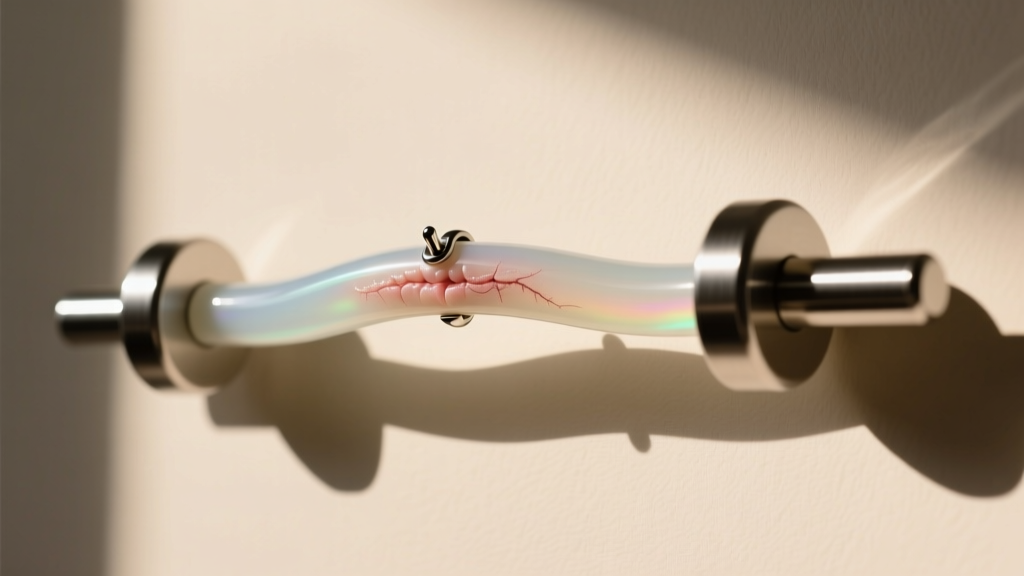
PTFE is primarily utilized as a temporary or transitional material. If a surface piercing is experiencing rejection or excessive pressure due to body movement, a piercer may swap a rigid titanium bar for a PTFE bar. Its flexibility allows the jewelry to move with the body rather than against it, reducing the mechanical stress that leads to migration. However, PTFE is slightly porous and degrades over time when exposed to UV light and body oils. It should be paired with implant-grade titanium ends and replaced every 6 to 12 months.
Outer Body Jewelry Material Comparison Matrix
Use the following data table to make informed decisions based on your specific piercing type, budget, and healing stage.
| Material | ASTM Standard | Nickel Content | Tensile Strength | Best Outer Piercing Type | Avg. Price Range |
|---|---|---|---|---|---|
| Ti-6Al-4V ELI | F136 | 0% | 860 MPa | Fresh Dermal, Navel, Nipple | $30 - $90 |
| Niobium | N/A (Unalloyed) | 0% | 275 MPa | Curved Surface Bars, Healed Ears | $25 - $70 |
| 14k/18k Gold | F2129 (Testing) | 0% (if Pd-alloyed) | 300-600 MPa | Healed Ear, Navel, Nipple | $80 - $300+ |
| 316L Steel | F138 | 8% - 10.5% | 485 MPa | Healed Earlobes (Not recommended for surface/dermal) | $10 - $30 |
| PTFE | N/A (Polymer) | 0% | 25 MPa | Rejecting/Migrating Surface Bars | $15 - $35 |
Real-World Troubleshooting & Failure Modes
Even with the correct material, outer body jewelry can fail if the manufacturing standards are subpar. Here are the most common material-related failure modes seen in professional piercing studios:
1. Micro-Scratches and Tissue Adhesion
If titanium or steel jewelry is machined but not electropolished to a mirror finish, microscopic tool marks remain on the surface. In a healing navel or nipple piercing, the body's fibroblasts will grow into these scratches, essentially anchoring the tissue to the jewelry. When the jewelry is moved, it causes micro-tears, leading to chronic inflammation and hypertrophic scarring. Always inspect the threading and bar surface under a bright light before insertion.
2. Galvanic Corrosion in Mixed Metals
Galvanic corrosion occurs when two dissimilar metals are in contact in the presence of an electrolyte (like human sweat). If you pair a 316L steel dermal top with a titanium anchor base, the sweat acts as a salt bridge, causing the less noble metal (the steel) to rapidly corrode and release nickel ions into the surrounding tissue. Always ensure that both the anchor and the interchangeable top are made of the exact same alloy.
3. The 316L Passivation Breakdown
While 316L Surgical Steel (ASTM F138) is heavily marketed as 'implant grade,' it relies on a chromium oxide passivation layer to trap its 8-10.5% nickel content inside the alloy. In high-friction outer body environments—like a navel piercing constantly rubbed by waistbands—this microscopic layer can wear away. Once breached, the nickel leaches out, triggering allergic contact dermatitis. For any outer body piercing subject to friction, 316L should be strictly avoided in favor of ASTM F136 titanium.
Final Verdict on Material Selection
When outfitting your outer body piercings, never compromise on material integrity. Implant-grade titanium remains the most reliable, versatile, and biologically sound choice for everything from micro-dermals to heavy navel shields. Reserve gold for fully healed, low-friction environments, and utilize PTFE strictly as a flexible intervention for troubled surface piercings. By matching the metallurgical properties of your jewelry to the specific biomechanical demands of your piercing, you ensure a safe, long-lasting, and visually stunning result.


