Relic Moon Fine Jewelry & Body Piercing Care Guide
Master the care of high-end body jewelry. Learn expert cleaning, gemstone maintenance, and hardware tips for premium piercing investments.

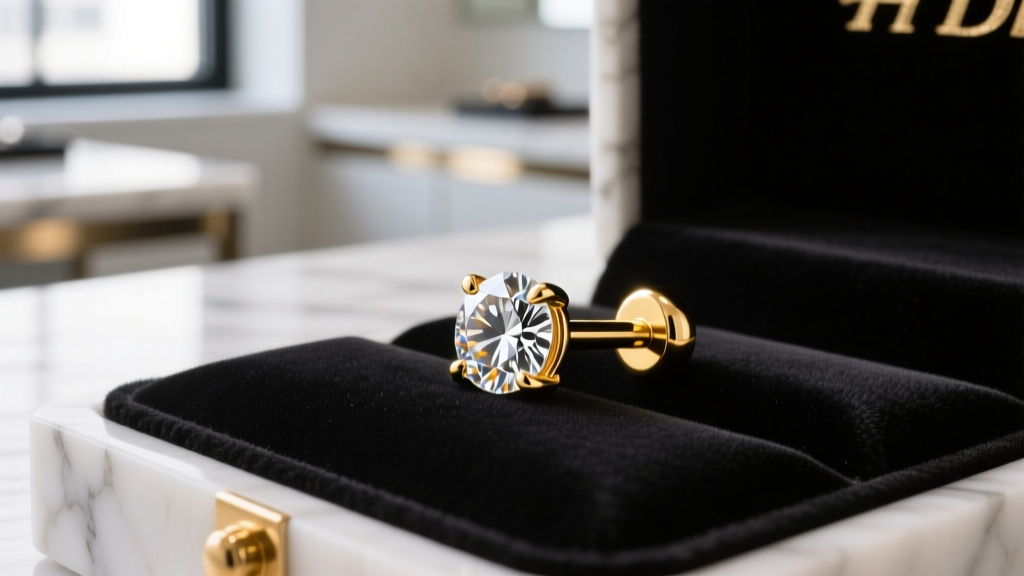
When you invest in premium body modification, standard aftercare simply is not enough. Studios and curators specializing in high-end adornments, such as Relic Moon Fine Jewelry & Body Piercing, offer pieces that transcend basic surgical steel. We are talking about 14k and 18k solid gold, ASTM F-136 implant-grade titanium, and genuine precious gemstones. These materials represent a significant financial investment—often ranging from $150 to over $800 per piece—and they require a sophisticated approach to maintenance, cleaning, and long-term storage. Treating fine body jewelry like mall-kiosk accessories is the fastest way to degrade precious metals and fracture delicate gemstone settings.
This comprehensive guide will walk you through the exact protocols needed to maintain the structural integrity, brilliance, and biocompatibility of your fine piercing jewelry, ensuring your investment remains flawless for a lifetime.
The Material Science of Premium Body Jewelry
Before applying any cleaning solution to your skin or jewelry, you must understand the metallurgy of what you are wearing. High-end studios strictly avoid porous materials, mystery metals, and gold plating. Instead, they rely on two primary benchmarks for biocompatibility and longevity:
- ASTM F-136 Implant-Grade Titanium: This specific alloy is the gold standard for initial piercings and sensitive tissue. It is entirely nickel-free, highly resistant to corrosion from bodily fluids, and can be safely sterilized in an autoclave. According to the ASTM International F-136 Standard, this titanium alloy is specifically formulated for surgical implants, meaning it will not degrade or pit when exposed to saline or sweat.
- Nickel-Free 14k and 18k Solid Gold: Fine jewelry brands formulate their gold alloys specifically for body wear. Unlike standard commercial gold which may contain nickel for hardness, fine body jewelry uses palladium or silver as alloying agents. 14k gold (58.5% pure gold) offers the best balance of durability and purity for daily wear in high-friction areas like the nostril or helix, while 18k gold (75% pure gold) provides a richer color but is slightly softer, making it ideal for low-impact areas like the lobe or septum.
Because these materials are non-porous and highly polished, they resist bacterial adhesion far better than cheap alternatives. However, their polished surfaces can still accumulate sebum, dead skin cells, and environmental pollutants, necessitating a rigorous but gentle cleaning routine.
Daily Cleaning Protocols: Saline and Sterility
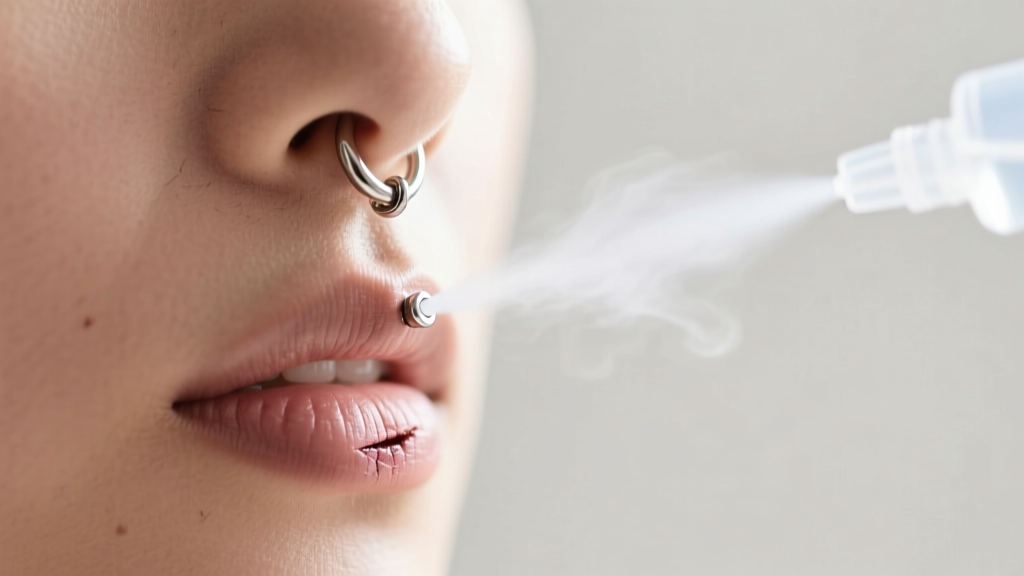
The cornerstone of piercing aftercare and long-term maintenance is sterile saline. The Association of Professional Piercers (APP) strictly recommends using only sterile, 0.9% sodium chloride solution with no additives. Homemade sea salt soaks are strongly discouraged because it is nearly impossible to achieve the exact 0.9% isotonic ratio at home; a solution that is too salty will dehydrate the tissue, while one that is too weak can cause swelling.
Cleaning Frequency and Methodology
How you clean your jewelry depends entirely on the healing stage of the piercing. Over-cleaning a fresh piercing disrupts the delicate fistula (the tube of healing tissue), while under-cleaning a healed piercing allows sebum to harden around the jewelry settings.
| Healing Stage | Cleaning Frequency | Recommended Solution | Application Method |
|---|---|---|---|
| Fresh (0-12 Weeks) | 1-2 times daily | Sterile 0.9% Saline Spray | Spray directly, let air dry or pat with non-woven gauze |
| Maturing (3-12 Months) | Once daily | Sterile 0.9% Saline Spray | Spray, gently wipe away softened crusties with a cotton swab |
| Fully Healed (1+ Years) | 2-3 times weekly | Mild, fragrance-free liquid soap | Lather in hands, gently massage jewelry and tissue, rinse thoroughly |
For fully healed piercings wearing intricate fine jewelry (such as a cluster gem setting or a detailed daith clicker), a weekly deep clean is necessary. Remove the jewelry, wash it with a mild, glycerin-based castile soap, and use a soft-bristled baby toothbrush to gently dislodge debris from beneath the gemstone prongs.
Gemstone Care: Navigating the Mohs Hardness Scale
Fine body jewelry frequently features genuine precious and semi-precious gemstones. Understanding the Mohs Hardness Scale is critical to preventing permanent damage to your jewelry. The Gemological Institute of America (GIA) notes that different stones react differently to chemicals, temperature changes, and ultrasonic vibrations.
CRITICAL WARNING: Never place opals, emeralds, pearls, or turquoise in an ultrasonic jewelry cleaner. The high-frequency vibrations can easily fracture these stones, and the heat can strip opals of their natural moisture, causing irreversible crazing (cracking).
Diamonds (Mohs 10), sapphires (Mohs 9), and rubies (Mohs 9) are incredibly durable and can withstand ultrasonic cleaning, provided they are removed from the body first. However, stones like opals (Mohs 5.5-6.5) and moonstones (Mohs 6-6.5) require a much gentler touch. To clean an opal inlay or a moonstone cabochon in a 14k gold setting, simply wipe it with a damp, lint-free microfiber cloth. Avoid exposing these softer stones to harsh chemicals, including chlorinated pool water, which can dull their polish and degrade the adhesive used in bezel settings.
Hardware Maintenance: Threadless and Internally Threaded
Premium body jewelry almost exclusively utilizes threadless (press-fit) or internally threaded connections. These mechanisms are vastly superior to externally threaded jewelry, which features sharp threads that tear the fistula upon insertion. However, they do require occasional mechanical maintenance.
Adjusting Threadless Tension
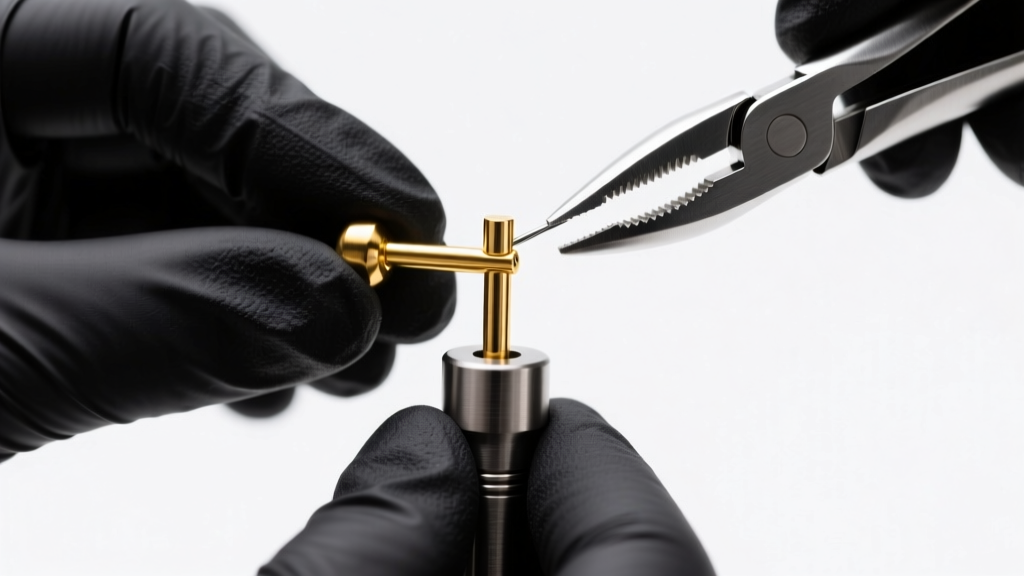
Threadless jewelry stays secure via the tension of a slightly bent pin on the decorative end. Over time, or after repeated removal for cleaning, this pin can straighten out, causing the end to fall out unexpectedly—often resulting in the loss of a $300 diamond cluster end. To maintain proper tension:
- Insert the pin about one-third of the way into the hollow post.
- Using your fingers or a pair of clean, silicone-tipped hemostats, gently bend the pin upward by just a few degrees.
- Test the tension by inserting it fully. It should require a firm, deliberate pull to remove.
Checking Prongs and O-Rings
Every six months, inspect the prongs holding your gemstones. Because body jewelry is subject to friction from clothing, hair, and sleep, prongs can slowly lift away from the stone. If you catch a prong on your clothing, do not ignore it. Visit your piercer to have the prong tightened and polished. Additionally, if you wear segment rings or hinged clickers, check the silicone O-rings that secure the hinge mechanism. These degrade over time due to exposure to skin oils and should be replaced annually.
Long-Term Storage and Travel
How you store your fine jewelry when it is not in your body is just as important as how you clean it. A common mistake is tossing multiple pieces of fine jewelry into a single bag or box. Remember that diamonds (Mohs 10) will easily scratch 14k gold (Mohs 2.5-3) and even other gemstones if they rub together.
- Individual Compartments: Always store fine body jewelry in individual soft pouches or separate compartments within a jewelry box.
- Anti-Tarnish Strips: While high-quality 14k and 18k gold is highly resistant to tarnish, the alloying metals (like copper or silver) can still oxidize over time when exposed to humidity. Place 3M anti-tarnish strips in your jewelry storage drawers to absorb airborne sulfur compounds.
- Travel Cases: When traveling, use a hard-shell, EVA-foam jewelry case designed specifically for body jewelry. These cases feature deep, cylindrical indentations that keep posts and barbells from being crushed or bent under pressure in your luggage.
Preserving Your Investment
Owning pieces from Relic Moon Fine Jewelry & Body Piercing is an investment in both personal aesthetics and metallurgical excellence. By abandoning harsh chemicals, respecting the physical properties of your gemstones, and maintaining the mechanical integrity of your hardware, you ensure that your jewelry remains as brilliant and biocompatible as the day it was inserted. Treat your fine body jewelry with the same reverence you would afford a high-end luxury watch, and it will safely adorn you for a lifetime.


