A Beginner Guide to Choosing Sterile Piercing Jewelry
Learn why sterile piercing jewelry is crucial for safe healing. Discover how to verify autoclave sterilization and avoid infection risks.

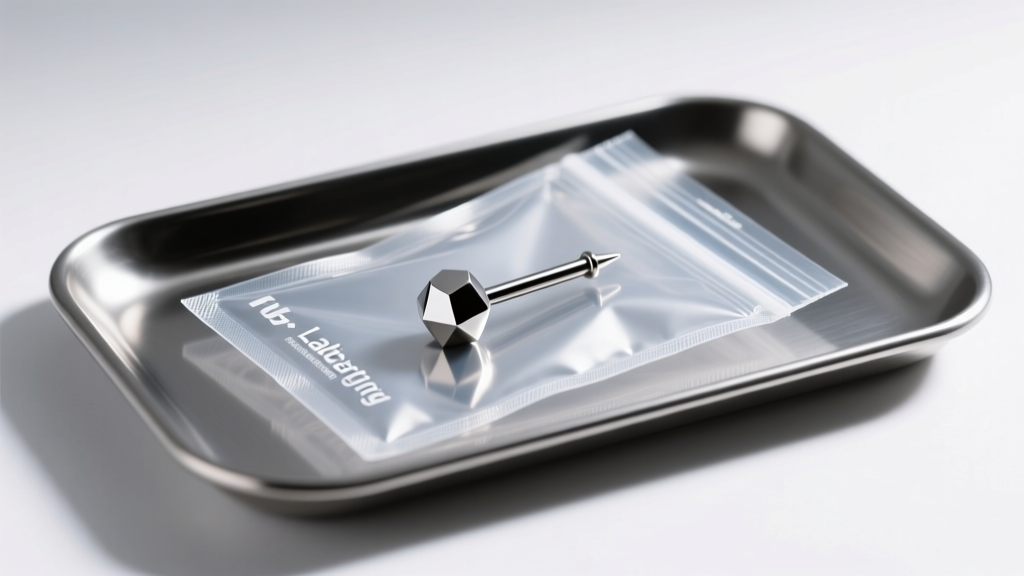
Getting a new piercing is an exciting milestone, but it is fundamentally a minor surgical procedure. While most beginners focus heavily on the aesthetic design of their new adornment or the skill of the piercer, the most critical factor in ensuring a smooth, complication-free healing process is often overlooked: the use of genuinely sterile piercing jewelry. In an industry where terminology is sometimes used loosely, understanding the difference between "clean," "disinfected," and "sterile" can mean the difference between a beautiful, healthy piercing and a severe, prolonged infection.
The Hidden Risks of Non-Sterile Body Jewelry
When jewelry is inserted into a fresh wound, it bypasses the body's primary defense mechanism: the skin. If the jewelry harbors microscopic pathogens, bacteria, or fungal spores, they are introduced directly into your bloodstream and deep tissue. This can lead to localized staph infections, contact dermatitis, or, in severe cases, the transmission of bloodborne pathogens. Even jewelry that looks perfectly shiny and clean to the naked eye can be teeming with biofilms—microscopic communities of bacteria that cling to metal surfaces and resist standard cleaning methods.
According to the Association of Professional Piercers (APP), all jewelry used for initial piercings must be sterilized using a steam autoclave. This is not merely a recommendation; it is the baseline standard of care for professional body modification. Yet, many mall kiosks and amateur studios cut corners, relying on inadequate methods that leave clients vulnerable.
Autoclave vs. UV vs. Chemical: What Actually Works?
To protect yourself, you must understand the hierarchy of decontamination. Many disreputable studios use the word "sterilized" when they actually mean "disinfected." The CDC Guidelines for Disinfection and Sterilization clearly delineate these processes. True sterilization is the complete elimination or destruction of all forms of microbial life, including highly resistant bacterial spores.
| Method | Classification | Efficacy for Initial Piercings | Notes |
|---|---|---|---|
| Steam Autoclave | Sterilization | 100% Effective (Required) | Uses pressurized steam at 121°C+ to destroy all microbial life and spores. |
| UV Light Box | Surface Disinfection | Unsafe & Unacceptable | Only sanitizes surfaces light directly touches; fails inside threaded crevices. |
| Chemical Soak (e.g., Barbicide) | Disinfection | Unsafe & Unacceptable | Leaves toxic chemical residue on jewelry; cannot penetrate microscopic scratches. |
| Boiling Water | Sanitization | Unsafe & Unacceptable | Fails to reach temperatures required to kill resilient bacterial spores. |
As the table illustrates, only a medical-grade autoclave provides the necessary environment to guarantee that sterile piercing jewelry is safe for insertion into a fresh wound. Steam under pressure penetrates microscopic threads, hinges, and gem settings that chemical soaks and UV light simply cannot reach.
How to Verify Your Jewelry is Truly Sterile
As a client, you have the right to verify the safety protocols being used on your body. You do not need a degree in microbiology to spot proper sterilization; you just need to know what to look for in the studio.
Reading the Sterilization Pouch Indicators
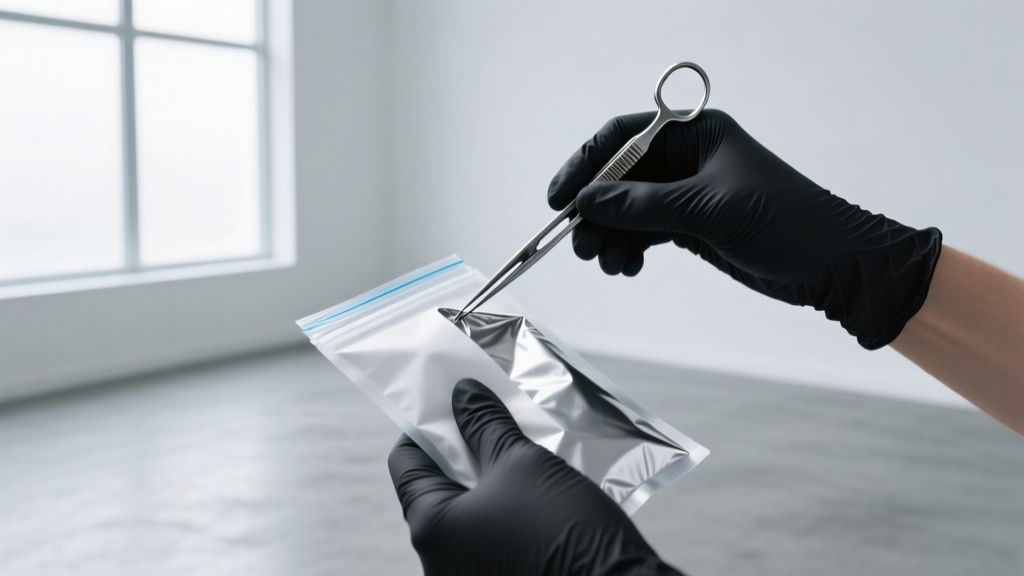
Genuine sterile piercing jewelry is sealed in a specialized medical pouch before it goes into the autoclave. These pouches feature built-in chemical indicators. Look for a small grid or symbol on the outside of the pouch. Before sterilization, this indicator is one color (often blue or pink). After a successful autoclave cycle, the heat and steam cause a chemical reaction that changes the indicator to a completely different color (usually black or brown). If the pouch is clear, lacks an indicator, or the indicator has not changed color, the jewelry is not sterile.
The "Sterile Field" Protocol
Sterility is easily broken. A professional piercer will set up a "sterile field" using a medical-grade drape. They will wash their hands, don fresh, single-use nitrile gloves, and only open your sterilized pouch immediately before the procedure. If a piercer opens the pouch hours in advance, leaves it sitting on an un-draped counter, or handles the jewelry with bare hands or non-sterilized tweezers, the sterile field is compromised. The jewelry must be re-sterilized or discarded.
The Science of Spore Testing: The Ultimate Proof
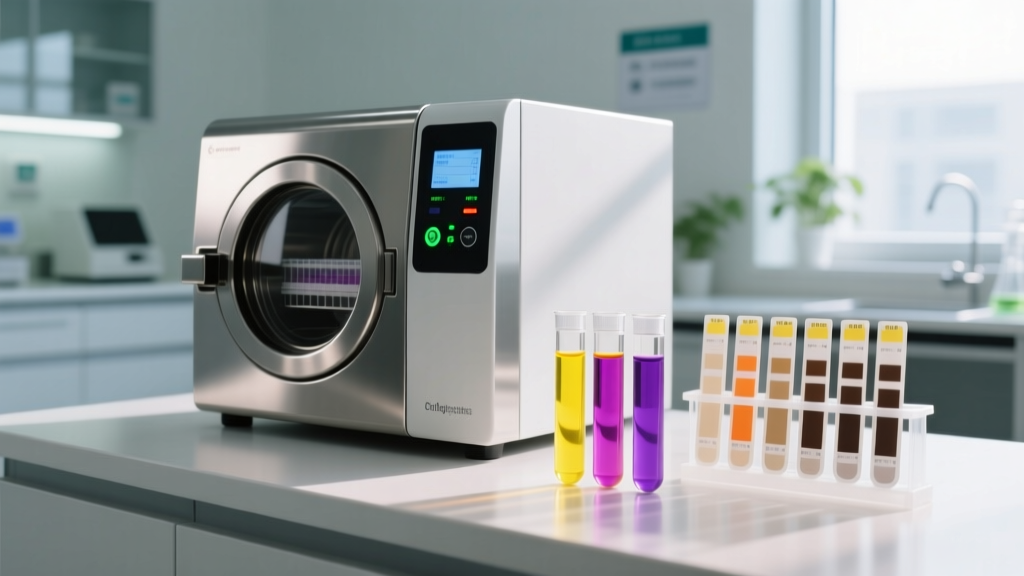
While chemical indicators on pouches prove that the jewelry was exposed to heat and steam, they do not guarantee that the autoclave actually killed the bacteria. For this, professional studios rely on biological indicators, commonly known as spore tests.
A spore test contains vials of Geobacillus stearothermophilus, a bacterium chosen specifically because its spores are highly resistant to heat and pressure. Once a week, a reputable studio will run a vial through the autoclave alongside a batch of jewelry, then mail it to an independent laboratory. If the lab confirms that the highly resistant spores were destroyed, it proves the machine is functioning perfectly and that all the sterile piercing jewelry processed that week is genuinely safe. Do not be afraid to ask your piercer to see their most recent passing spore test certificate; a professional will be proud to show it to you.
Material Matters: Implant-Grade Titanium and Sterility
Sterilization is only half the battle; the material of the jewelry itself plays a massive role in how the body reacts to the healing process. For initial piercings, the undisputed gold standard is implant-grade titanium, specifically alloyed to meet ASTM F136 standards.
Why does material matter in the context of sterility? Lower-quality metals, such as surgical steel or mystery alloys, often have microscopic pits, scratches, and porous surfaces. These imperfections act as safe havens for bacteria, shielding them from the steam of the autoclave. Implant-grade titanium, on the other hand, is polished to a mirror finish. This ultra-smooth surface leaves nowhere for pathogens to hide, ensuring that the autoclave process is 100% effective. Furthermore, titanium is entirely nickel-free, eliminating the risk of allergic contact dermatitis, which is frequently misdiagnosed by beginners as an infection.
Red Flags: When to Walk Away from a Piercing Studio
Your health is not worth risking for the sake of convenience or a cheaper price tag. If you observe any of the following red flags, politely decline the service and leave the studio:
- The "Pre-Opened" Display: If the piercer reaches into a glass display case with their bare hands to grab your jewelry, it is not sterile. Display jewelry is for looking, not for piercing.
- The UV "Sterilizer": If you see a small box emitting blue/purple light and the piercer claims it sterilizes the tools and jewelry, leave immediately. UV light is for surface sanitization only and is entirely inadequate for body piercing.
- Refusal to Show Proof: If you ask about their autoclave spore testing and the piercer becomes defensive, evasive, or claims they "boil" their jewelry instead, they are violating fundamental health codes.
- Piercing Guns: Piercing guns cannot be placed in an autoclave because the plastic will melt. Therefore, it is physically impossible for the jewelry or the gun mechanism to be truly sterile. Always opt for a single-use, sterilized hollow needle.
Summary: Your Sterility Checklist
As you prepare for your piercing appointment, keep this quick checklist in mind to ensure your safety:
- Verify the jewelry is made of ASTM F136 implant-grade titanium.
- Ensure the jewelry is presented in a sealed pouch with a color-changed chemical indicator.
- Watch the piercer open the pouch only after they have gloved up and prepared the sterile field.
- Confirm the studio uses a steam autoclave and conducts weekly biological spore tests.
By demanding genuinely sterile piercing jewelry and understanding the science behind the sterilization process, you empower yourself to make safe, informed decisions. A professional piercer will always respect a client who prioritizes health and safety, and adhering to these standards is the first step toward a beautiful, perfectly healed piercing.


