Common Types of Piercing Jewelry for Beginners Explained
Discover the most common types of piercing jewelry for beginners. Learn about materials, gauge sizes, and which styles suit initial vs. healed piercings.

The Golden Rule: Initial vs. Healed Piercing Jewelry
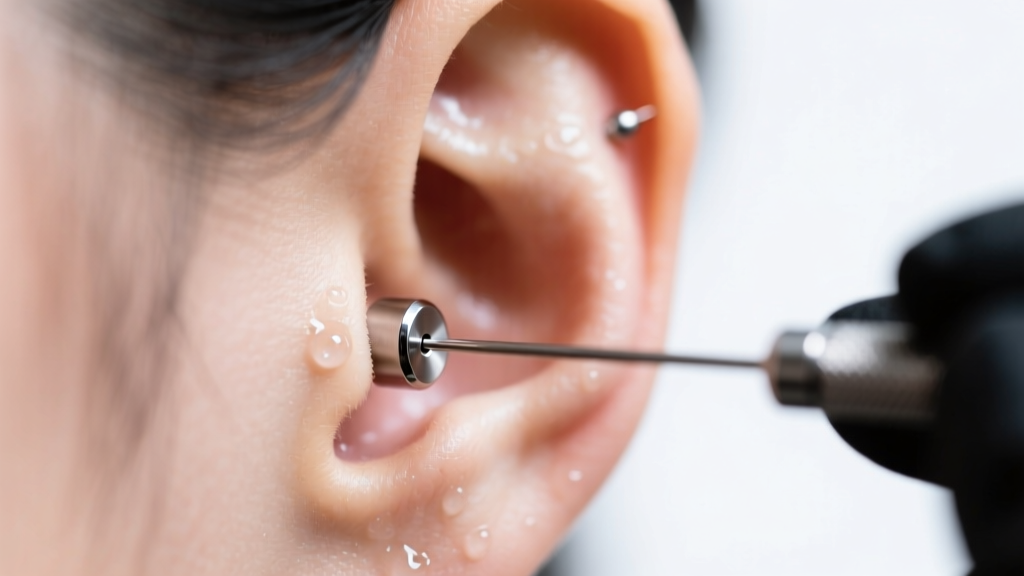
When stepping into a professional piercing studio for the first time, the sheer variety of options can be overwhelming. Understanding the different types of piercing jewelry is not just about aesthetics; it is a critical component of your health, healing timeline, and long-term comfort. The most fundamental rule in body modification is that jewelry designed for a fresh, open wound is structurally different from jewelry meant for a fully healed fistula (the tube of skin that forms around the piercing channel).
According to the Association of Professional Piercers (APP), initial jewelry must accommodate swelling, feature completely smooth surfaces to prevent tissue tearing, and be made of biocompatible materials. Once the piercing is fully healed—which can take anywhere from 6 weeks for earlobes to over a year for cartilage—the jewelry can be swapped for more decorative, form-fitting styles. Let us break down the exact styles you need to know.
Essential Types of Piercing Jewelry for Fresh Piercings
When you are first pierced, your body will react with localized inflammation. The jewelry must account for this swelling while remaining stable enough to avoid migration or irritation bumps.
Flat Back Labret Studs
The flat back labret is the undisputed champion of modern initial piercings, particularly for earlobes, helixes, tragus, and lip piercings. Unlike traditional "butterfly back" earrings that trap bacteria and dig into the neck, a flat back labret features a smooth, disc-shaped backing that sits flush against the skin. They are typically sold in specific post lengths (e.g., 5/16" or 8mm) to accommodate initial swelling, with the intention of being downsized later.
Straight Barbells
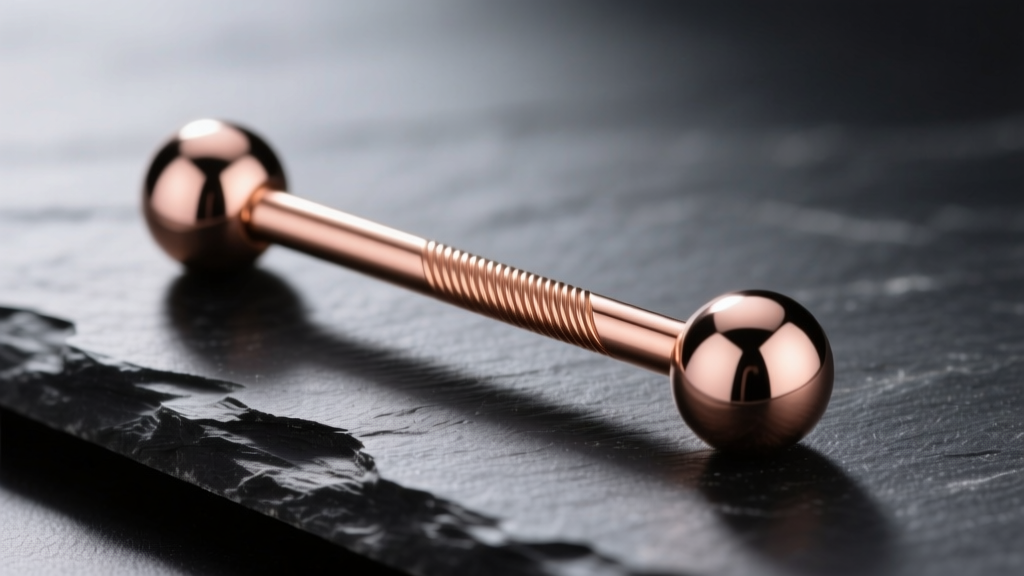
Straight barbells consist of a rigid, straight post with a bead or end on each side. These are the mandatory standard for industrial piercings (two cartilage holes connected by one bar) and tongue piercings. The rigidity of the bar ensures that the piercing channel heals in a perfectly straight line, preventing the tissue from warping or rejecting.
Curved Barbells
Often referred to as "bananas" or "navel rings," curved barbells feature a gentle arc. They are primarily used for initial navel piercings, rook piercings, and sometimes eyebrows. The curve follows the natural anatomy of the tissue, reducing pressure on the entry and exit points during the inflammatory phase.
Types of Piercing Jewelry for Healed Piercings
Once your piercer confirms your fistula is mature and swelling has entirely subsided, you can transition to jewelry that prioritizes aesthetics and snug fits.
Captive Bead Rings (CBRs) and Segment Rings
CBRs are classic hoops where a single bead is held in place by the tension of the ring's ends. Segment rings offer a similar continuous hoop look but use a removable curved segment that slides into place, offering a smoother surface than a CBR. These are excellent for healed daith, septum, and helix piercings, though they require specialized ring-opening pliers to change safely.
Hinged Clickers and Seamless Hoops
Clickers feature a hinged mechanism that "clicks" shut, making them incredibly user-friendly for beginners changing their own healed jewelry. They are highly popular for septum, daith, and helix piercings. Seamless hoops, which twist open and closed, offer a continuous circle look but can sometimes warp if opened incorrectly, making clickers the preferred choice for most modern enthusiasts.
The Material Matrix: What to Actually Put in Your Body
Choosing the right material is arguably more important than the style. The Cleveland Clinic warns that cheap alloys are a leading cause of contact dermatitis and piercing rejection. Here is a data-driven breakdown of what to buy and what to avoid in 2026.
| Material | Grade / Standard | Best For | Avg. Price Range |
|---|---|---|---|
| Implant-Grade Titanium | ASTM F-136 | Initial & Healed | $15 - $45 |
| Niobium | Elemental (No ASTM) | Healed (Hinged Rings) | $20 - $50 |
| Solid Gold | 14k or 18k (Nickel-Free) | Initial & Healed | $60 - $200+ |
| Surgical Steel | 316L / 316LVM | Avoid (Contains Nickel) | $5 - $15 |
| Acrylic / Silicone | N/A | Avoid (Porous, Harbors Bacteria) | $2 - $10 |
Expert Insight: Never accept "surgical steel" for a fresh piercing. The term is unregulated, and most commercial surgical steel contains 8-12% nickel, which will leach into an open wound and cause severe allergic reactions. Always demand ASTM F-136 certified titanium.
Demystifying Gauge and Post Length
Beginners often confuse gauge (thickness) with length. The American Wire Gauge (AWG) system is counterintuitive: the higher the number, the thinner the metal.
- 20G (0.81mm): Standard for nose screws and some delicate earlobes. Rarely used for initial cartilage piercings due to the "cheese-cutter effect" (thin wire migrating through tissue).
- 18G (1.0mm): The standard for most nostril piercings and some earlobes.
- 16G (1.2mm): The gold standard for initial cartilage piercings (helix, tragus, conch), lips, and septums. It provides enough structural integrity to prevent migration.
- 14G (1.6mm): Common for navel, industrial, and tongue piercings to support heavier tissue loads.
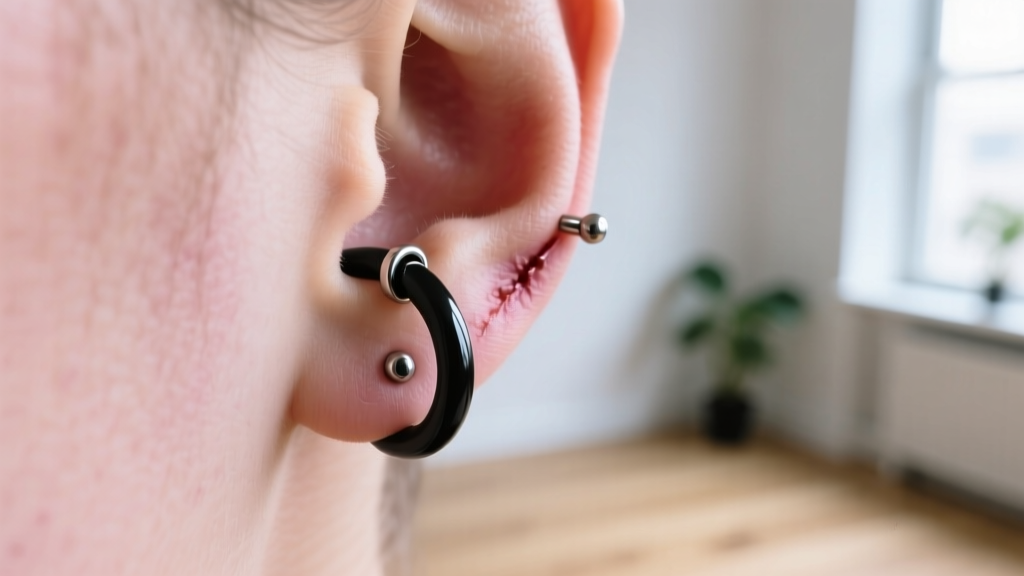
Post length is equally vital. A standard initial helix piercing might require a 5/16" (8mm) post to allow for swelling, whereas the healed, downsized post will likely be 1/4" (6mm). Wearing a post that is too long after swelling subsides will cause the jewelry to snag on hair and clothing, leading to chronic irritation bumps.
The Critical "Downsize" Appointment
If you take only one piece of actionable advice from this guide, let it be this: you must downsize your jewelry. Most beginners are unaware that the long post used on day one is strictly temporary. Between weeks 4 and 8, once the initial swelling has subsided, you must return to your piercer to swap the long post for a shorter, snug-fitting post. Skipping this step is the number one cause of delayed healing, migration, and hypertrophic scarring in cartilage piercings.
Threading: The Hidden Detail Beginners Miss
How the decorative end attaches to the post matters immensely. Avoid externally threaded jewelry at all costs; the screw pattern is on the post itself, meaning sharp metal threads must pass through your delicate fistula every time you change it, causing micro-tears.
Instead, look for internally threaded jewelry (the screw is on the decorative end, and the post is completely smooth) or threadless (press-fit) jewelry. Threadless jewelry uses a slightly bent pin that creates tension inside the hollow post, offering a secure, seamless fit that is incredibly easy to change once you learn the technique. Investing in high-quality, threadless titanium ends from reputable brands like BVLA or Anatometal ensures your jewelry will last a lifetime without degrading or losing its gems.