How to Authenticate a Miriam Haskell Brooch Vintage Jewelry Find
Learn how to authenticate, clean, and style a Miriam Haskell brooch. Expert tips on baroque pearls, Russian gold plating, and vintage jewelry marks.

The Enduring Allure of Miriam Haskell
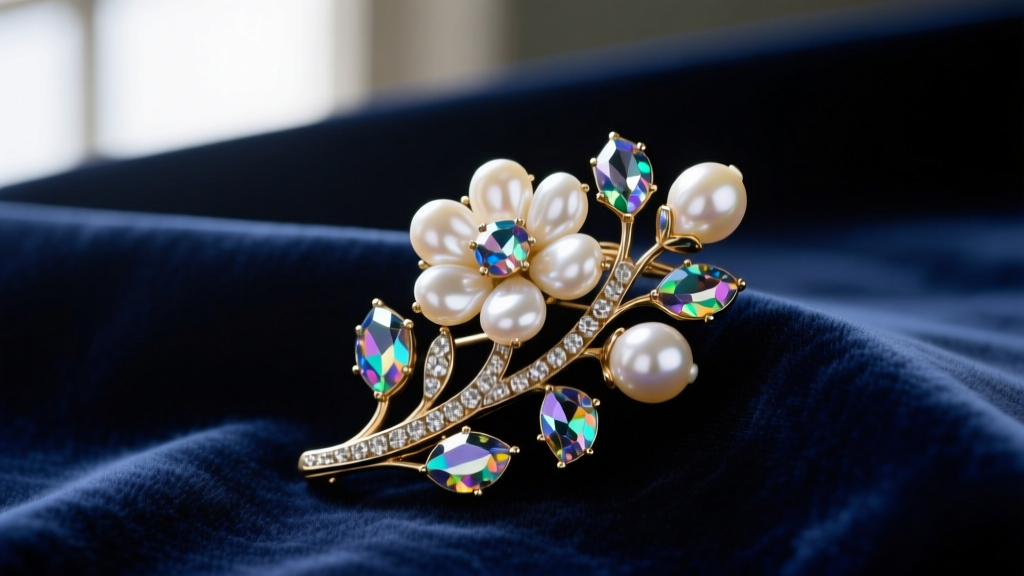
Finding a genuine Miriam Haskell brooch vintage jewelry piece at an estate sale or antique shop is one of the most thrilling experiences for a collector. Founded in 1926, the House of Miriam Haskell revolutionized American costume jewelry by elevating it to the realm of high art. Working alongside her brilliant head designer, Frank Hess, Haskell created pieces that rivaled fine jewelry in their complexity and craftsmanship. Today, as we navigate the 2026 vintage market, Haskell pieces remain highly coveted, but the surge in demand has also led to an influx of sophisticated counterfeits and heavily altered 'franken-pieces.' Whether you are a seasoned collector or a stylist looking to incorporate heirloom accessories into modern tailoring, understanding the precise anatomy of a Haskell brooch is essential.
Unlike mass-produced stamped metal jewelry of the mid-century, Haskell pieces are architectural marvels. They are defined by their intricate hand-wiring, signature baroque pearls, and the legendary 'Russian gold' finish. In this comprehensive guide, we will break down the exact step-by-step authentication protocol, provide a safe restoration matrix, and share professional styling techniques to secure these heavy, ornate masterpieces to your lapels without damaging your garments.
Step-by-Step Authentication Protocol
Authenticating a Miriam Haskell brooch requires a jeweler's loupe (10x magnification) and a keen eye for historical manufacturing techniques. Here is how to verify provenance.
1. Examine the 'Russian Gold' Plating
The most iconic element of vintage Haskell jewelry is the 'Russian gold' finish. This is not a standard gold plating; it is a highly specific 24-karat gold wash applied over a brass base. The resulting color is a soft, matte, brassy-yellow hue that mimics the antique gold favored by Russian royalty. Under a loupe, genuine Russian gold should show a slightly porous, brushed texture rather than the mirror-like shine of modern electroplated gold. Over decades, this finish develops a rich, dark patina in the crevices. If the gold tone is overly bright, yellow, or highly reflective, you are likely looking at a modern reproduction or a piece that has been aggressively re-plated, which immediately diminishes its collector value by up to 60%.
2. Inspect the Hand-Wiring and Construction
Frank Hess insisted on hand-wiring beads and stones to filigree backings rather than using prong settings or adhesives. When examining the reverse side of the brooch, look for 24-gauge to 28-gauge brass or copper wire wrapping the stems of the faux pearls and rhinestones to the metal base. According to historical archives documented by Collectors Weekly, Haskell artisans were trained to wrap the wire so tightly and neatly that the reverse side of the brooch looked almost as beautiful as the front. If you spot any traces of modern cyanoacrylate (super glue) or epoxy holding stones in place, the piece has either been repaired by an amateur or is an outright fake. Genuine Haskell construction relies entirely on the tension and wrapping of the wire.
3. Decode the Maker's Marks and Clasps
The evolution of the Haskell maker's mark is the most reliable timeline for dating a piece:
- 1920s to 1940s: Completely unmarked. Authentication relies entirely on the specific filigree stampings, the quality of the Russian gold, and the use of early Japanese glass baroque pearls.
- 1948 to Mid-1950s: The introduction of the iconic horseshoe-shaped plaque stamped with 'Miriam Haskell'. This plaque was typically riveted or soldered to the back of the brooch.
- Late 1950s to 1960s: The horseshoe was replaced by an oval plaque bearing the same script.
- 1970s and Beyond: Marks were often stamped directly into the metal or placed on a rectangular cartouche.

4. Evaluate the Baroque Pearls
Haskell is synonymous with baroque pearls. In the early days, these were high-quality Japanese glass beads coated with essence d'orient (a pearlescent substance derived from fish scales). Later pieces utilized acrylic or genuine freshwater pearls. According to the Gemological Institute of America (GIA), true baroque pearls are characterized by their irregular, non-symmetrical shapes. Haskell specifically selected pearls with pronounced 'tails' and bumps to give their floral and organic designs a naturalistic, overgrown aesthetic. If the pearls on the brooch are perfectly round and uniform, proceed with extreme caution.
Restoration and Cleaning Matrix
Cleaning vintage costume jewelry is fraught with peril. The materials used by Haskell—particularly the Russian gold wash and essence d'orient pearl coatings—are highly reactive to modern chemicals. Never use ultrasonic cleaners, as the high-frequency vibrations will shatter the glass pearls and strip the gold wash. Below is a professional restoration matrix for maintaining your pieces.
| Material Component | Safe Cleaning Method | Strict Prohibitions (Never Use) |
|---|---|---|
| Russian Gold Plating | Dry, untreated microfiber cloth. Use a soft-bristled makeup brush for crevices. | Silver polish, ammonia, baking soda, or treated jeweler's cloths (these will strip the 24k wash). |
| Faux / Glass Pearls | Damp cloth with a drop of mild baby shampoo. Dry immediately. | Alcohol, acetone, hot water, or vinegar (these will melt or cloud the pearlescent coating). |
| Foil-Backed Rhinestones | Soft, dry brush. Use a dry cotton swab to gently lift dust from the settings. | Any liquid submersion or glass cleaner (moisture will seep under the stone and rot the silver foil). |
| Brass / Copper Wiring | Leave alone. The dark oxidation provides structural contrast and proves age. | Brasso or any acidic metal dip (will weaken the wire and ruin the patina). |
Securing Heavy Vintage Brooches to Modern Tailoring
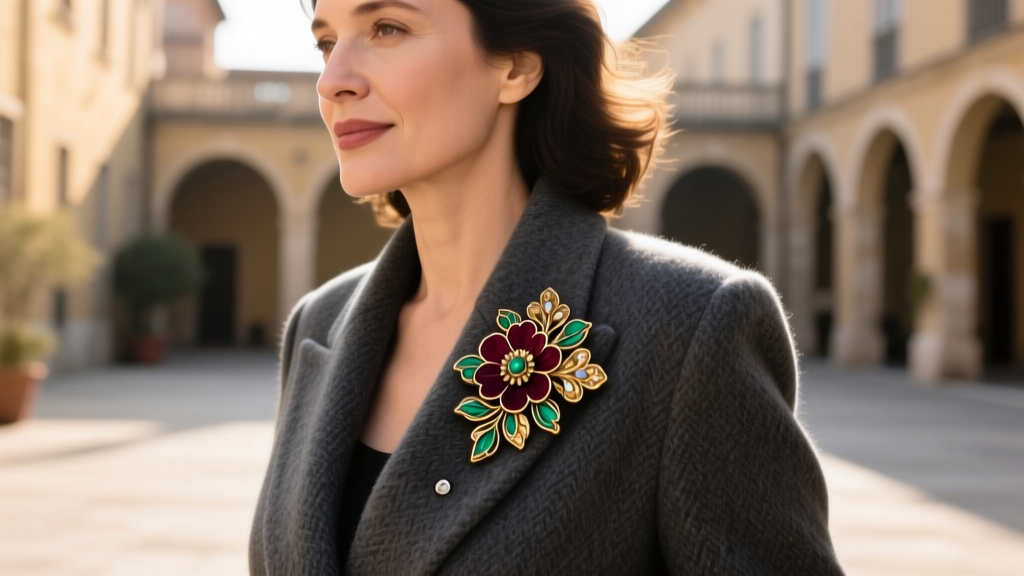
A common issue when styling a Miriam Haskell brooch vintage jewelry piece is its sheer weight. A large, multi-layered floral Haskell brooch from the 1950s can easily weigh between 35 and 60 grams. Standard vintage pin stems and C-clasps were designed for the heavy wools and tweeds of the mid-century; they will easily sag, droop, or tear the delicate silk and fine-gauge merino wools of modern blazers and lapels.
The Magnetic Lapel Anchor Technique
To wear a heavy Haskell brooch securely without ruining your garment, abandon the traditional pin-through-fabric method and use a magnetic stabilization system.
- Acquire Neodymium Magnets: Purchase a set of small, flat neodymium disc magnets (approx. 10mm diameter, 2mm thick) encased in soft silicone or fabric to prevent snagging.
- Prepare the Brooch: If the brooch has a standard pin stem, leave it closed. If it has a flat back, attach a thin piece of double-sided jewelry tape to the back of the brooch, then press a magnet onto it.
- The Counter-Magnet: Place the brooch on the outside of your lapel. On the inside of the lapel, directly behind the brooch, place the second magnet. The magnetic pull will clamp the fabric securely between the two pieces.
- Distribute the Weight: For exceptionally heavy pieces, use a 'spread plate'—a thin, lightweight aluminum disc (about 1 inch in diameter) placed on the inside of the lapel, with the magnet attached to the disc. This distributes the downward pull across a wider area of the fabric, completely eliminating the risk of tearing.
Market Valuation and Investment Insights
As of 2026, the market for authenticated Miriam Haskell jewelry remains robust, driven by a renewed interest in artisanal, hand-crafted fashion accessories. However, value is strictly dictated by era, condition, and complexity.
'The true value of a Haskell piece lies not just in the materials, but in the visible hours of hand-wiring. A complex 1930s unmarked piece with pristine Russian gold and intact essence d'orient pearls is a museum-grade artifact, commanding prices that rival fine jewelry.' — Senior Vintage Jewelry Appraiser, Estate & Heritage Auctions.
- 1930s-1940s Unmarked Masterpieces: $400 to $1,200+. These are the most desirable, featuring the highest quality Japanese glass pearls and complex, three-dimensional floral or bib designs.
- 1950s Horseshoe/Oval Marked Pieces: $150 to $450. Excellent for everyday styling, featuring slightly more standardized designs but retaining the classic Russian gold and baroque pearl aesthetic.
- 1970s+ Later Productions: $50 to $150. While still well-made, these pieces often lack the depth, heavy brass backings, and intricate wiring of the Hess era.
Whether you are investing in a rare 1930s unmarked floral spray or carefully styling a 1950s marked piece on a modern winter overcoat, treating your Miriam Haskell brooch with the respect its artisanal construction demands will ensure it survives for another century of wear.