Vintage BSK Jewelry Brooch: Authentication & Repair Guide
Discover expert technical details on authenticating, repairing, and valuing vintage BSK jewelry brooches, from rhinestone cuts to base metal analysis.

The Metallurgical Baseline of Mid-Century BSK Costume Jewelry
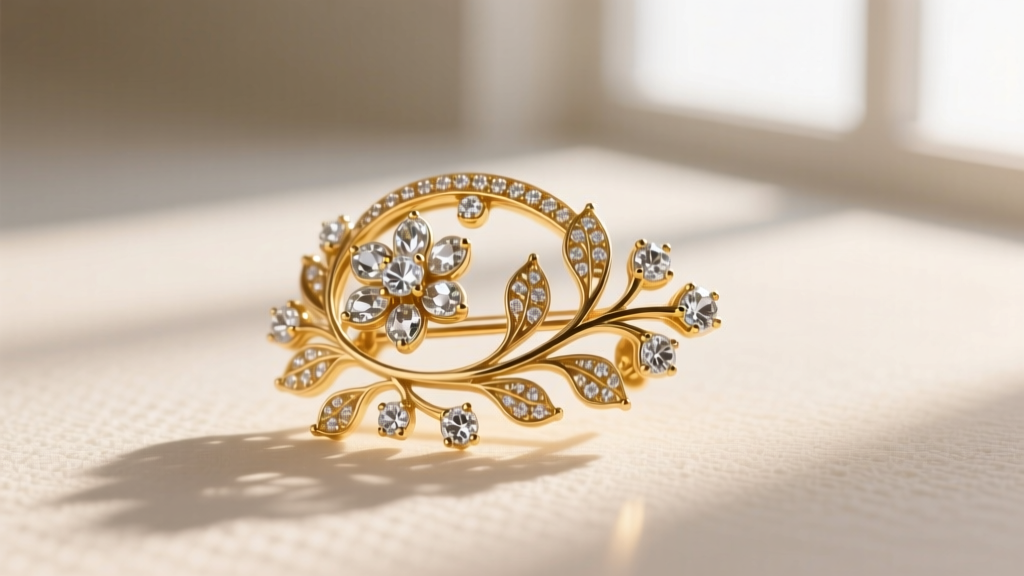
The BSK jewelry brooch represents a fascinating intersection of mid-century American manufacturing ingenuity and accessible luxury. Founded by Benjamin Siegel in New York, the BSK mark flourished from the late 1940s through the 1970s. For collectors and lapel accessory archivists in 2026, understanding the technical composition of these pieces is no longer just about aesthetic appreciation; it is a critical requirement for authentication and conservation. Unlike fine jewelry, which relies on the inherent stability of precious metals, vintage BSK pieces were primarily constructed from 'pot metal'—a variable alloy of zinc, aluminum, lead, and copper. While this allowed for intricate, high-relief casting of floral, figurative, and Asian-motif designs, it also introduced specific failure modes that experts must monitor.
Zinc-based alloys are particularly susceptible to intergranular corrosion, often referred to by horologists and jewelers as 'zinc pest.' When exposed to fluctuating humidity over several decades, the lead and tin impurities in the alloy can cause the metal to crystallize, swell, and eventually fracture. A genuine BSK jewelry brooch from the 1950s will often exhibit a distinct, heavy heft in the hand due to the high lead content used in earlier casting runs, whereas later 1970s iterations transitioned to lighter, lead-free white brass alloys to comply with emerging safety regulations. Recognizing these metallurgical shifts is the first step in accurately dating an unmarked or partially worn BSK piece.
Deconstructing the Hardware: Clasps, Hinges, and Pin Stems
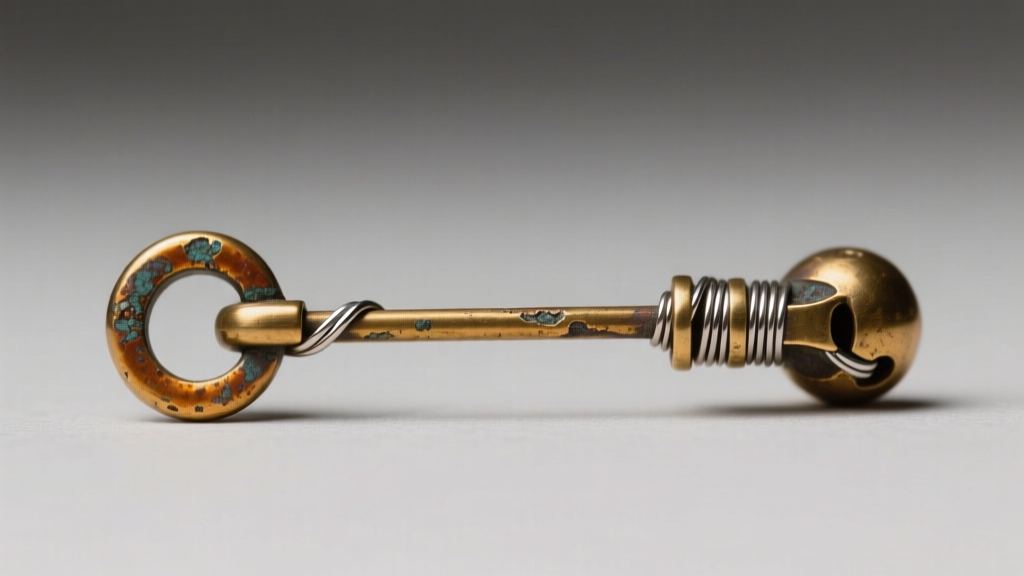
The reverse side of a BSK jewelry brooch provides the most reliable forensic evidence for dating and authentication. The evolution of the clasp mechanism directly correlates with the manufacturing era of the piece. Early post-war BSK brooches (circa 1946-1952) frequently utilized the trombone clasp or a simple C-clasp without a safety catch. The pin stems on these early models were typically crafted from mild steel or soft brass, measuring between 0.9mm and 1.1mm in gauge. Because mild steel was common, rust accumulation at the hinge joint is a frequent issue that can seize the pin entirely.
The Transition to the Roll-Over Safety Catch
By the mid-1950s, BSK adopted the roll-over safety catch, a mechanism featuring a hinged, locking lever that secures the pin stem. When examining a BSK brooch with a safety catch, inspect the solder joints connecting the clasp to the base metal. Authentic mid-century BSK pieces exhibit hand-soldered joints that may appear slightly asymmetrical or possess minor flux residue under 10x magnification. Modern reproductions or 'Frankenstein' pieces (where a broken clasp has been replaced with a modern, machine-stamped component) will often show signs of laser welding or use a distinctly different brass alloy that lacks the decades-old patina of the original base.
Rhinestone and Enamel Specifications in BSK Brooches
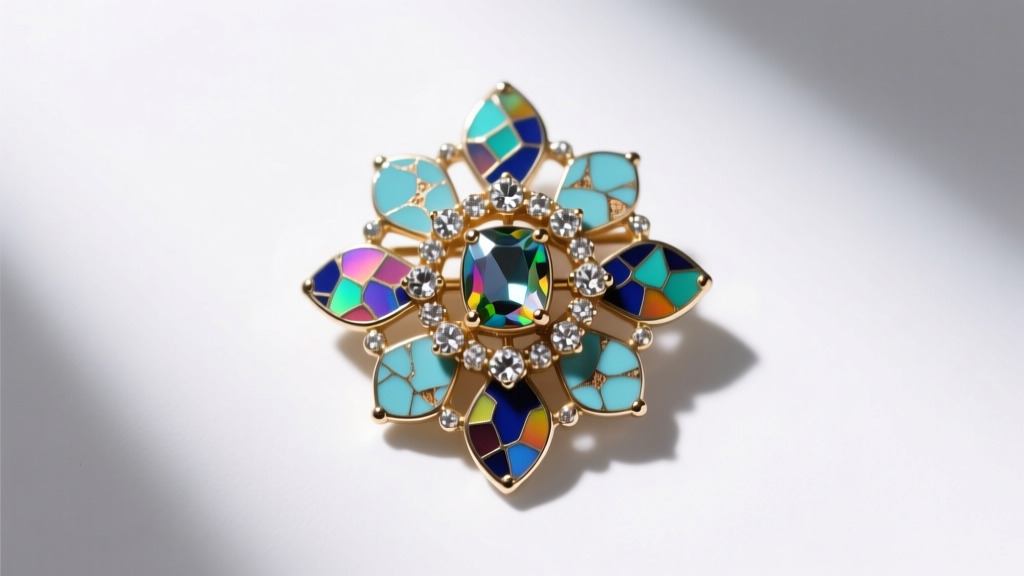
BSK was renowned for its lavish use of rhinestones and cold enamel. Unlike vitreous enamel, which is fired at high temperatures and fused to metal, BSK primarily utilized cold enamel (a pigmented epoxy or resin). While this allowed for a broader, more vibrant color palette, cold enamel is highly prone to micro-chipping, yellowing from UV exposure, and delamination from the metal substrate over time.
The rhinestones used in BSK jewelry brooches were predominantly glass, featuring silver-foil backing to enhance brilliance. The cuts varied widely, from standard round chatons to elaborate marquis, navette, and baguette shapes. The stones were almost exclusively prong-set rather than glued, a hallmark of quality mid-century costume jewelry. However, the silver foil backing is highly vulnerable to moisture ingress. Once the foil oxidizes, the stone turns a dull, opaque black—a condition known in the trade as 'dead stone' syndrome.
| Rhinestone Cut | Foil Backing Type | Common Degradation Mode | Restoration Feasibility |
|---|---|---|---|
| Round Chaton | Silver-foil (glued) | Moisture ingress causing black oxidation | High (Foil can be carefully replaced) |
| Marquis / Navette | Silver-foil (glued) | Prong fatigue leading to stone loss | Medium (Requires custom prong tightening) |
| Baguette | Unfoiled / Aurora Borealis | Surface scratching and AB coating wear | Low (AB coating cannot be authentically restored) |
| Cabochon (Glass) | Unfoiled (painted base) | Adhesive failure and base paint flaking | High (Can be re-glued and base repainted) |
Authentication Framework: Spotting Fakes and Frankenstein Pieces
As the secondary market for vintage lapel accessories continues to mature in 2026, the prevalence of counterfeit marks and composite 'Frankenstein' brooches has increased. According to archival data from Illusion Jewels, the BSK mark was typically stamped directly into the metal or applied via a small, soldered cartouche. When authenticating a BSK jewelry brooch, apply the following technical framework:
- Font and Stamp Depth: Authentic BSK stamps feature a distinct, blocky sans-serif font. The stamping should show consistent depth. Shallow, laser-etched marks are a definitive indicator of a modern reproduction.
- Patina Consistency: The gold-tone or silver-tone plating on vintage BSK pieces was applied via electroplating. Over 60+ years, this plating develops a specific micro-porous patina. If the raised edges are bright and polished while the recesses are heavily oxidized, the piece may have been aggressively re-plated, destroying its collector value.
- Weight and Resonance: Due to the dense pot metal core, an authentic 3-inch BSK floral brooch should weigh between 25 and 40 grams. Hollow-cast modern replicas will feel suspiciously light and produce a higher-pitched 'tink' when tapped against glass, compared to the dull thud of solid mid-century cast alloy.
Conservation and Repair: Addressing Base Metal Fatigue
Repairing a damaged BSK jewelry brooch requires a strict adherence to conservation ethics. The most catastrophic mistake a novice can make is placing a vintage BSK piece in an ultrasonic cleaner. The high-frequency vibrations will instantly shatter the adhesive bond holding the silver foil to the back of the rhinestones, and the heat will melt the cold enamel. Furthermore, commercial silver dips will strip the gold-tone plating and turn the exposed pot metal a permanent, irreversible black.
For surface cleaning, experts recommend a non-ionic surfactant (such as Orvus WA Paste) diluted in distilled water, applied with a soft-bristled sable brush. Moisture must be kept strictly away from the rhinestone settings. If a pin stem is bent or broken, it should not be heated with a torch, as the zinc alloy will melt at a much lower temperature (around 419°C for pure zinc, but often lower in mixed alloys) than the steel pin. Instead, mechanical straightening using padded parallel pliers is the safest approach. For re-setting loose stones, avoid cyanoacrylate (Superglue), which emits fumes that permanently fog glass rhinestones. Instead, use a specialized jeweler's adhesive like Gem-Tac or E6000, applied via a micro-fine needle tip to the prong base, ensuring no adhesive seeps onto the stone's table.
Market Valuation and Collector Grading in 2026
The valuation of a BSK jewelry brooch is heavily dependent on its condition, design rarity, and material integrity. According to market analyses from Lang Antiques University, standard floral or geometric BSK brooches in good condition typically trade in the $35 to $85 range. However, highly sought-after figurative designs—such as the iconic BSK poodle, the Asian dragon motifs, or intricate multi-layered filigree pieces featuring rare aurora borealis stones—can command prices between $150 and $400, provided the hardware is original and the enamel is intact.
Collectors in 2026 are increasingly prioritizing 'honest wear' over aggressive restoration. A BSK brooch with minor, stable enamel wear and original, unpolished hardware will almost always outperform a piece that has been heavily re-plated and fitted with modern replacement stones. Understanding the precise technical anatomy of these mid-century marvels ensures that collectors can preserve the legacy of Benjamin Siegel's craftsmanship for decades to come.