Budget Tragus Piercing Earrings: A Value & Safety Guide
Discover the best budget tragus piercing earrings. We assess material value, gauge sizing, and top brands to save money without risking infection.

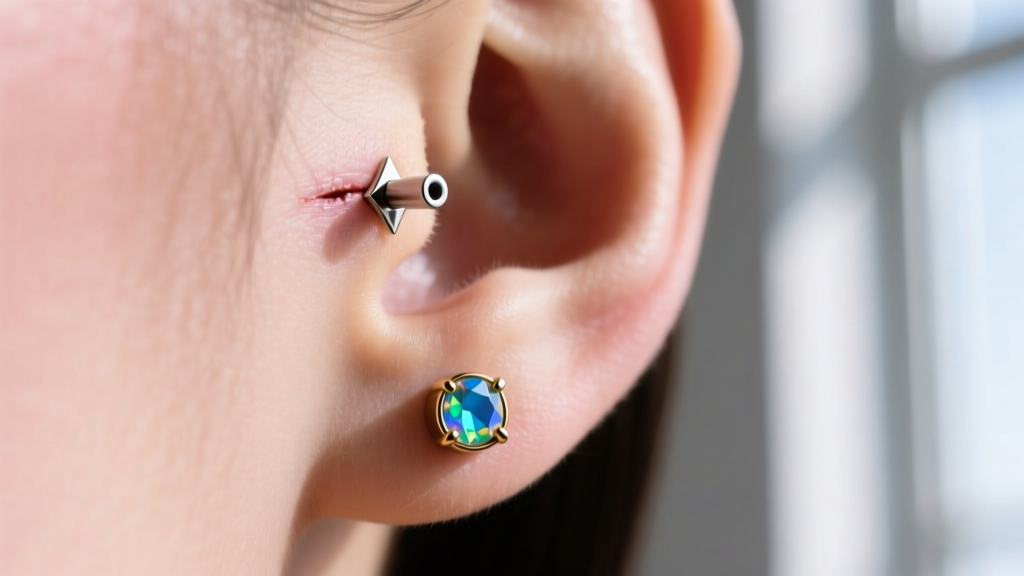
When building a curated ear curation, the tragus is a focal point that demands precision. Because this thick, rigid flap of cartilage sits directly over the ear canal, the jewelry you choose must be anatomically appropriate and highly biocompatible. However, navigating the market for tragus piercing earrings can be financially daunting. High-end boutique pieces often carry steep markups, while bargain-bin alternatives pose severe risks to your healing fistula.
As we move through 2026, the jewelry market has bifurcated. You now have access to premium, implant-grade materials at direct-to-consumer prices, provided you know where to look. This guide strips away the marketing fluff to provide a rigorous budget and value assessment for tragus jewelry, ensuring you never compromise on safety for the sake of a lower price tag.
The True Cost of Cheap Tragus Jewelry
It is tempting to purchase $8 mystery-metal studs from mall kiosks or unverified online marketplaces. However, evaluating value requires looking beyond the initial transaction. The tragus is a dense cartilage piercing with a notoriously slow healing timeline, often taking 6 to 12 months to fully mature. During this window, the tissue is highly susceptible to contact dermatitis and mechanical irritation.
According to data published by the National Center for Biotechnology Information (NCBI), nickel is the most common contact allergen worldwide. Many budget earrings are crafted from 316L "surgical steel," which contains up to 10% nickel. When exposed to the saline, humid environment of a healing ear, nickel ions leach into the tissue. The resulting allergic reaction causes granulomas, severe swelling, and potential piercing migration. The cost of treating a severe infection or re-piercing a rejected tragus far exceeds the $30 you would have spent on a high-quality, nickel-free alternative.
The Golden Rule of Cartilage Value: True value is calculated by dividing biocompatibility and longevity by the initial cost. A $25 titanium stud that lasts a lifetime is infinitely more valuable than a $10 plated brass stud that causes an infection in three weeks.
Material Breakdown: Where to Spend and Where to Save
Implant-Grade Titanium (The Non-Negotiable Baseline)
For budget-conscious buyers, ASTM F-136 implant-grade titanium is the undisputed champion. It contains zero nickel, is highly polished to a mirror finish to prevent bacterial adhesion, and is remarkably affordable. You can easily find high-quality titanium labret posts for $12 to $18. The Association of Professional Piercers (APP) explicitly recommends this specific alloy for all fresh and healing cartilage piercings. If you are on a strict budget, build your entire tragus collection around titanium posts and swap out the decorative ends.
The Gold Plating Trap vs. Solid Gold
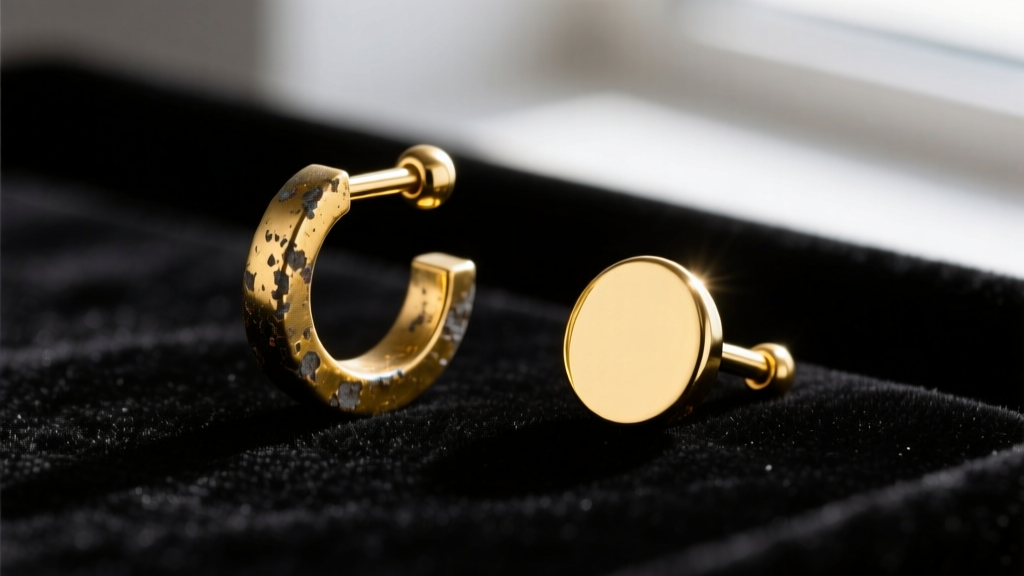
Gold-plated or gold-filled tragus earrings are a massive value trap. The tragus experiences high friction from headphones, phone receivers, and sleeping pillows. Electroplated gold over brass or copper will inevitably wear away, exposing the reactive base metal to your piercing. If you desire the look of gold on a budget, look for PVD (Physical Vapor Deposition) coating on a titanium base. While not as permanent as solid gold, PVD titanium is vastly superior to traditional gold plating and usually costs between $25 and $40.
Niobium: The Underdog Budget Material
Niobium is a highly biocompatible, nickel-free elemental metal that is softer than titanium but entirely safe for healing tragus piercings. It is often cheaper than titanium and can be anodized into a spectrum of vibrant colors (like deep blues, purples, and golds) without using toxic dyes or plating. Anodized niobium tragus rings and labrets usually range from $15 to $25, offering incredible aesthetic value.
Price vs. Value Matrix for Tragus Earrings
To help you allocate your jewelry budget effectively, we have mapped out the current market tiers for tragus-appropriate labret studs and clickers.
| Material & Type | Avg. Price Range | Biocompatibility | Long-Term Value Rating |
|---|---|---|---|
| 316L Surgical Steel (Mall Kiosk) | $5 - $15 | Poor (Contains Nickel) | 1/5 (High Infection Risk) |
| Gold-Plated Brass/Copper | $10 - $25 | Very Poor (Toxic Base) | 1/5 (Plating Wears Off) |
| ASTM F-136 Titanium (Threadless) | $15 - $35 | Excellent (Nickel-Free) | 5/5 (Lifetime Durability) |
| PVD Coated Titanium | $25 - $45 | Excellent (Safe Coating) | 4/5 (Coating May Fade) |
| Solid 14k Gold (Nickel-Free Alloy) | $80 - $150+ | Excellent (Hypoallergenic) | 5/5 (Heirloom Quality) |
Sizing Specifics That Impact Your Budget
Buying the wrong size is a hidden budget killer. If your tragus jewelry is too long, it will catch on hair and masks, leading to irritation bumps that require expensive aftercare or jewelry replacements. If it is too short, it will embed into the swelling cartilage, requiring an emergency trip to a professional piercer.
- Gauge: The standard for tragus piercings is 16G (1.2mm). While some piercers use 18G (1.0mm), 16G offers a much wider, more affordable selection of high-quality ends and provides better structural support for the cartilage.
- Post Length: For a fully healed tragus, a 6mm (1/4") flat-back labret post is the gold standard. If you are currently healing or prone to swelling, you will need an 8mm (5/16") post. Buying a multi-pack of titanium posts in varying lengths is a smart budget move.
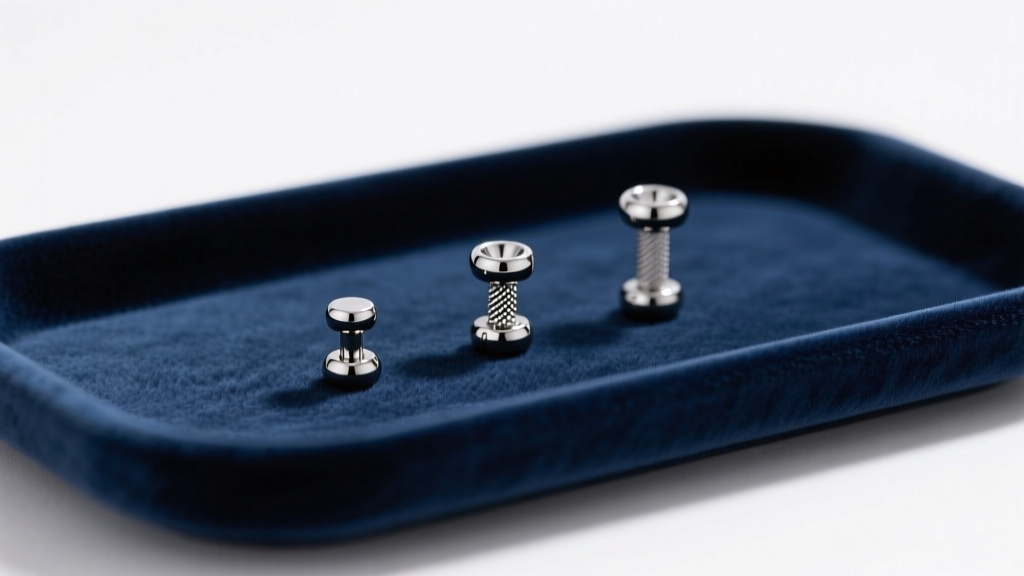
- Backing Style: Never buy butterfly-back earrings for a tragus. They harbor bacteria and press unevenly against the cartilage. Always opt for flat-back labrets. Furthermore, threadless (push-pin) systems offer the best long-term value; you buy one post and can inexpensively swap out the decorative ends without needing tools.
Top Value Brands for Tragus Piercings
Knowing which brands offer the best intersection of price, safety, and aesthetic is crucial for the budget-conscious collector. Here are the top performers in the 2026 market:
1. NeoMetal (The Threadless Titan)
NeoMetal pioneered the threadless push-pin system. Their ASTM F-136 titanium posts and ends are the industry standard for professional piercers. A titanium post costs around $12, and basic gemstone ends start at $18. This modularity makes NeoMetal the ultimate budget hack, allowing you to own ten different tragus looks for the price of one solid gold piece.
2. Junipurr Jewelry (Accessible Solid Gold)
If you have saved up and want to transition from titanium to solid gold, Junipurr offers 14k and 18k gold threadless ends at prices that undercut boutique brands by 30% to 40%. Their bezel-set gemstone ends start around $65, providing genuine luxury value without the inflated markup of high-street jewelry stores.
3. Intrinsic Body (Reliable Basics)
For those who prefer internally threaded jewelry over threadless, Intrinsic Body offers impeccably polished, implant-grade titanium labrets with flat backs. Their pricing is highly competitive, and their minimalist ball and disc ends are perfect for those who want a subtle, snag-free tragus profile for under $20.
Final Verdict: Building a Budget-Friendly but Safe Collection
When shopping for tragus piercing earrings, your budget should never dictate a compromise on material safety. The most financially sound strategy is to invest in a few high-quality, implant-grade titanium threadless posts from a reputable brand like NeoMetal. From there, you can slowly build a collection of interchangeable ends—ranging from PVD-coated titanium for daily wear to solid 14k gold for special occasions.
By avoiding the false economy of surgical steel and gold-plated brass, you protect your cartilage from irreversible damage and allergic reactions. True value in body jewelry is not about finding the cheapest option; it is about investing in pieces that honor your anatomy, heal flawlessly, and last a lifetime.