Daith Piercing Heart Jewelry: Ultimate Cleaning Guide
Learn how to safely clean and maintain your daith piercing heart jewelry. Expert tips on saline soaks, avoiding snags, and keeping titanium clickers pristine.

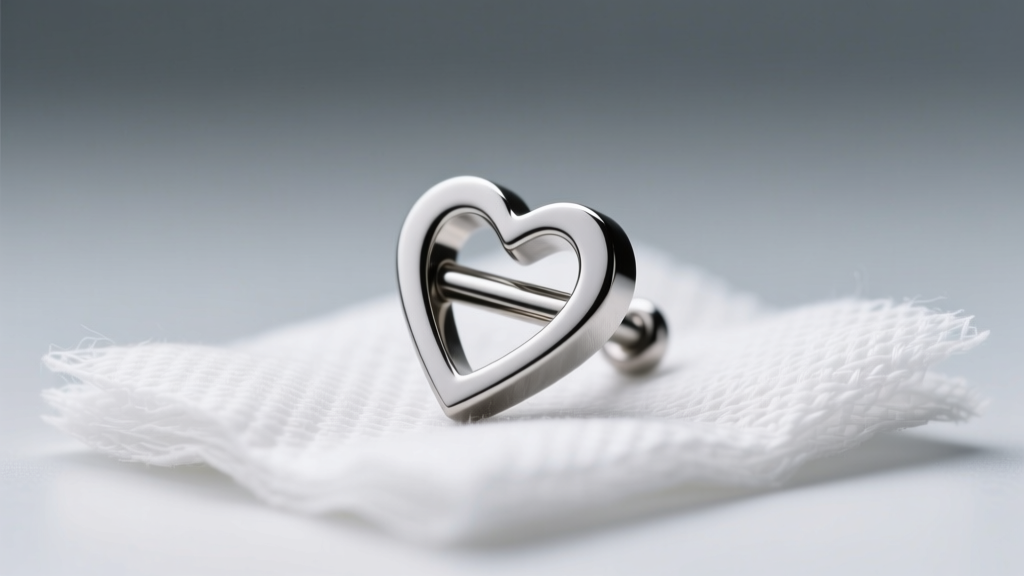
The daith piercing passes through the innermost cartilage fold of the ear, anatomically known as the crus of the helix. It is a visually striking placement, but it is also one of the most notoriously difficult piercings to heal due to its recessed location and the thickness of the cartilage tissue. When you choose daith piercing heart jewelry, you are typically opting for a hinged clicker or a captive bead ring shaped into a romantic silhouette. While aesthetically beautiful, the unique geometry of a heart-shaped clicker introduces specific maintenance challenges that standard circular barbells do not possess.
Whether you are navigating the grueling 9-to-12-month initial healing phase or maintaining a fully healed daith, proper hygiene is non-negotiable. This comprehensive guide breaks down the exact protocols, material science, and troubleshooting frameworks required to keep your daith heart jewelry pristine and your fistula healthy.
The Anatomy of a Daith Heart Clicker & Why It Traps Debris
Most professional daith piercings are performed at 16-gauge (1.2mm) or 14-gauge (1.6mm). Heart-shaped clickers in these gauges feature a hinged barrel mechanism that snaps shut, eliminating the need for threading tools. However, the design of the heart shape creates structural micro-pockets. The "dip" at the top cleft of the heart and the pointed terminus at the bottom act as natural catchments for lymph fluid, dead skin cells, and sebum.
Furthermore, the hinge mechanism itself is a notorious trap for debris. If you are healing a fresh daith, understanding how to clean these specific crevices without disrupting the delicate fistula (the skin tube lining the piercing channel) is critical. Always ensure your jewelry is crafted from implant-grade ASTM F-136 titanium. Lower-grade metals or mystery "surgical steel" can leach nickel when exposed to the slightly acidic pH of healing lymph, causing contact dermatitis that perfectly mimics a severe bacterial infection.
The Daily Saline Protocol: Step-by-Step
The Association of Professional Piercers (APP) strictly recommends sterile saline wound wash as the only necessary topical aftercare product for healing cartilage piercings. Your saline must be 0.9% sodium chloride with no added preservatives, fragrances, or alcohol. Here is the exact daily protocol for cleaning a daith heart clicker:
- Step 1: Hand Hygiene. Wash your hands thoroughly with antibacterial soap. Never touch your daith or the heart clicker with unwashed fingers.
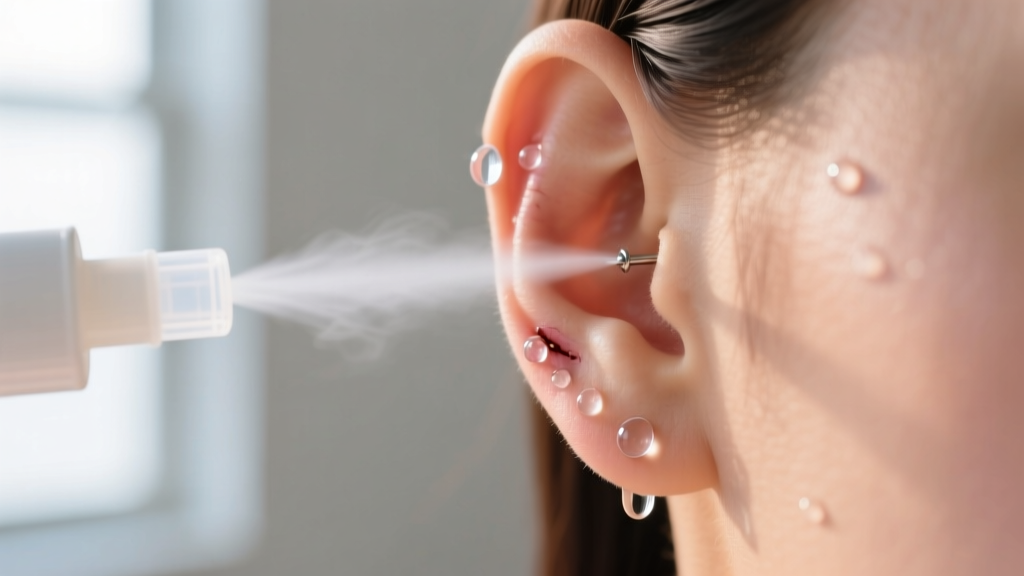
- Step 2: Application. Spray the sterile saline directly onto the front and back of the daith piercing. Ensure the liquid pools slightly in the top cleft of the heart shape to soften any dried lymph.
- Step 3: Soften, Never Pick. Allow the saline to sit for 30 to 60 seconds. Never pick or scrape dried "crusties" off the heart jewelry while they are dry. Forcing dry debris off the metal will pull on the healing fistula, causing micro-tears that reset your healing timeline and invite bacteria.
- Step 4: Gentle Wiping. Using a piece of sterile non-woven gauze, gently wipe away the softened debris. Crucial Tip: Avoid cotton swabs (Q-tips) and cotton balls. The microscopic cotton fibers easily snag on the sharp points and hinges of heart-shaped jewelry, leaving behind irritants that can trigger bumps.
- Step 5: Thorough Drying. Moisture trapped in the inner ear fold breeds bacteria and fungi. Dry the area using a fresh piece of non-woven gauze, or use a hair dryer on the "cool" and "low" setting held at arm's length.
Cleaning Agents: What Works and What Destroys Titanium
A common mistake among piercing enthusiasts is using harsh household chemicals or essential oils in an attempt to "deep clean" their jewelry. These substances can degrade the anodized layers of titanium, strip the ear's natural acid mantle, and cause severe chemical burns on the sensitive crus of the helix.
| Cleaning Agent | Verdict | Why / Scientific Context |
|---|---|---|
| Sterile Saline (0.9%) | Highly Recommended | Isotonic to human blood; flushes debris without damaging cellular tissue or delaying wound healing. |
| Tea Tree Oil | Avoid | Highly caustic and cytotoxic. Causes chemical burns, contact dermatitis, and severe irritation bumps on cartilage. |
| Rubbing Alcohol / Peroxide | Avoid | Destroys healthy fibroblasts (cells responsible for healing) and dries out the fistula, leading to cracking and bleeding. |
| Antibacterial Soap | Use with Extreme Caution | Only for cleaning the outer ear during showers. Never force soap into the piercing hole; it disrupts the microbiome. |
| Ultrasonic Cleaner | For Removed Jewelry Only | Excellent for deep-cleaning the hinge barrel of a heart clicker, but never use on jewelry currently inside the ear. |
Navigating Snags and Hinge Maintenance
Heart shapes inherently feature angles and points. The top cleft of the heart is a primary snag hazard for loose hair, hoodies, and towels. Snagging is the number one cause of hypergranulation (irritation bumps) in daith piercings. When the jewelry is violently shifted, the body overproduces vascular tissue to protect the wound, resulting in a fleshy, red bump adjacent to the heart clicker.
To prevent this, tie your hair up in a loose bun or braid while sleeping, and consider using a travel pillow (sleeping with your ear in the center hole) to prevent pressure and friction against your mattress. According to the Mayo Clinic's body piercing guidelines, minimizing physical trauma to the site is just as important as the chemical cleaning process.
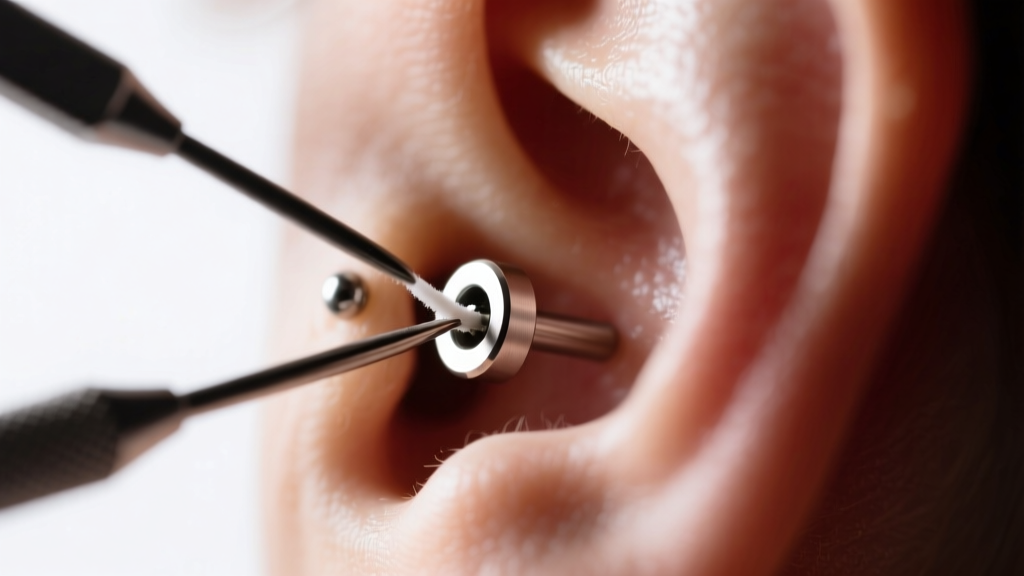
Hinge Maintenance for Healed Piercings: Once your daith is fully healed (usually after 12+ months), you should remove the heart clicker every few months for a deep clean. Sebum and dead skin will inevitably calcify inside the tiny hinge barrel, making it stiff and difficult to open. Soak the removed jewelry in a small ultrasonic cleaner filled with warm water and a drop of mild, fragrance-free dish soap for 5 minutes. Rinse thoroughly with distilled water and dry completely before reinserting. This prevents metal fatigue and keeps the snapping mechanism crisp.
Troubleshooting Irritation Bumps vs. Infections
Because the daith is tucked inside the ear, it retains heat and moisture, making it difficult to visually inspect. When you feel tenderness around your heart jewelry, you must accurately identify whether you are dealing with an irritation bump or a true infection.
Identifying the Issue
Irritation Bumps (Hypergranulation): These are incredibly common. They appear as small, localized, fleshy or red bumps right next to the exit hole. The fluid secreted is usually clear or slightly white (lymph). They are caused by snagging, sleeping on the ear, or using harsh chemicals. The cure is the LITHA method (Leave It The Hell Alone), warm sterile saline compresses, and ensuring your jewelry is high-quality titanium.
True Infections: True bacterial infections in cartilage are actually quite rare if proper aftercare was followed. Symptoms include intense throbbing pain, excessive heat radiating from the entire ear, systemic fever, and thick, foul-smelling yellow or green pus. If you suspect a true infection, do not remove the heart jewelry (removing it can trap the infection inside the cartilage, leading to an abscess). Instead, consult a medical professional immediately for oral antibiotics.
Long-Term Care and Metal Fatigue
Even after your daith piercing is completely healed and seasoned, heart clickers require ongoing vigilance. The constant opening and closing of the hinge to clean the ear can eventually lead to metal fatigue, particularly at the solder joints where the heart shape meets the hinge barrel. Inspect your jewelry under a bright light every six months. If you notice the hinge pin protruding slightly, or if the clicker no longer snaps shut with a firm, audible "click," it is time to retire the piece. A compromised hinge can scratch the inside of your fistula or, worse, snap and become lodged inside the piercing channel.
By respecting the unique anatomy of the daith, utilizing the correct isotonic solutions, and treating your titanium heart jewelry with mechanical care, you ensure that this intricate piercing remains a beautiful, healthy staple in your ear curation for years to come.