Ultimate Care and Cleaning Guide for Fake Helix Earrings
Learn how to properly clean, maintain, and store fake helix earrings to prevent skin irritation, tarnishing, and tension loss with our expert guide.

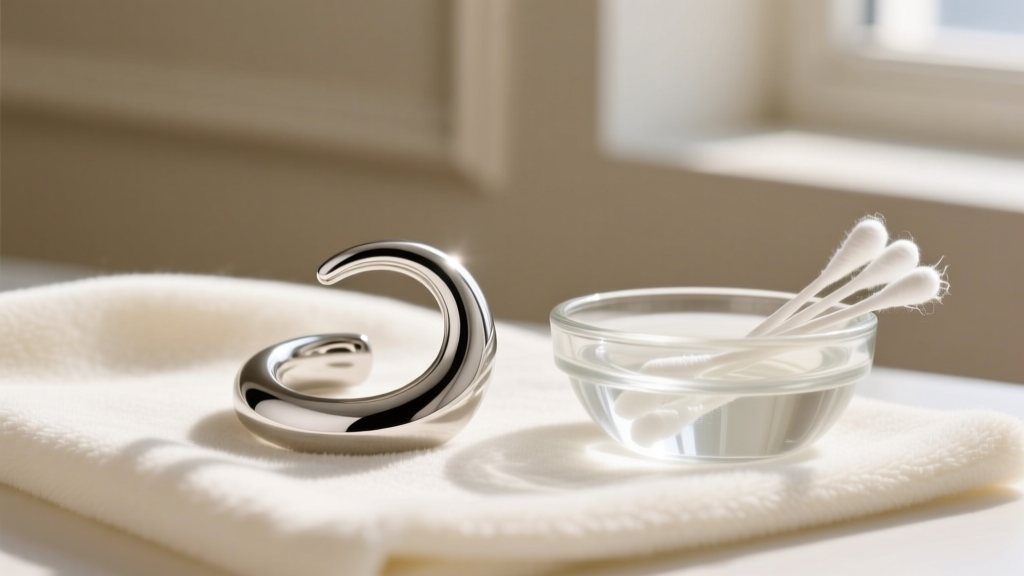
The Hidden Hygiene Risks of Faux Cartilage Jewelry
While fake helix earrings—commonly known as ear cuffs, clip-ons, or magnetic cartilage wraps—offer the aesthetic of a piercing without the commitment or healing time, they introduce a unique set of dermatological and mechanical challenges. Because these pieces clamp directly onto the outer rim of the ear, they create a micro-environment where sweat, sebum, dead skin cells, and environmental pollutants become trapped against the skin. As of 2026, dermatologists continue to see a rise in localized contact dermatitis and bacterial folliculitis stemming directly from poorly maintained faux jewelry.
Unlike a healed piercing where the jewelry moves freely and allows the fistula to breathe, a tight ear cuff restricts airflow. If you wear your fake helix earrings for more than eight hours a day without a rigorous cleaning protocol, you risk developing 'green ear' (verdigris buildup), metal fatigue, and severe skin irritation. This comprehensive guide will walk you through the exact metallurgical and hygienic steps required to maintain your faux cartilage collection.
Material Matters: Identifying Your Fake Helix Composition
The cleaning method you use must be strictly dictated by the base metal and plating of your ear cuffs. Using the wrong chemical agent can strip plating, accelerate oxidation, or ruin structural tension. Below is a breakdown of common materials used in fake helix earrings and their specific care requirements.
| Material Type | Irritation Risk | Cleaning Agent | Water Safe? |
|---|---|---|---|
| Implant-Grade Titanium | Extremely Low | Mild soap, ultrasonic | Yes |
| Solid Sterling Silver | Low | Silver polish, baking soda | No (causes tarnish) |
| Surgical Steel (316L) | Low to Moderate | Isopropyl alcohol, soap | Yes |
| Brass/Copper Alloy (Plated) | High (if plated) | Dry microfiber only | Absolutely Not |
| Zinc Alloy (Fast Fashion) | Very High | Wipe down, avoid moisture | No |
If you are prone to metal allergies, the American Academy of Dermatology strongly recommends avoiding zinc and brass alloys, as the nickel content often leaches through microscopic pores in cheap plating when exposed to the acidity of human sweat.
Step-by-Step Cleaning Routine for Ear Cuffs and Clip-Ons
To maintain both the luster of the metal and the health of your cartilage ridge, implement a two-tier cleaning system: a daily sanitization and a weekly deep clean.
The Daily Wipe-Down
After removing your fake helix earrings at the end of the day, never simply toss them into a jewelry box. The oils from your skin will begin to oxidize the metal within hours.
- Step 1: Take a lint-free microfiber cloth and gently wipe the interior band of the cuff, paying special attention to the crevices where the metal grips the cartilage.
- Step 2: Use a cotton swab lightly dampened with 70% isopropyl alcohol to clean the inner grip. Note: Do not use alcohol on gold-plated or pearl-inlaid cuffs, as it will strip the finish and damage organic gems.
- Step 3: Wipe the exterior decorative elements with a dry, soft-bristled makeup brush to dislodge dust and cosmetic powders.
The Weekly Deep Clean Protocol
For solid metals (titanium, stainless steel, solid gold), a weekly ultrasonic bath is the gold standard for removing microscopic debris.
- Fill an ultrasonic jewelry cleaner with distilled water and two drops of ammonia-free dish soap.
- Submerge the fake helix earrings and run the machine on a gentle 40kHz cycle for exactly three minutes.
- Remove the cuffs with plastic tweezers (metal tweezers can scratch the finish) and rinse under lukewarm distilled water.
- Pat dry with a microfiber cloth and allow them to air-dry completely on a paper towel before storage.
Pro-Tip: Never use ultrasonic cleaners on fake helix earrings featuring glued-in rhinestones, cubic zirconia, or enamel. The high-frequency vibrations will shatter the adhesive bond, causing the stones to fall out.
Maintaining Tension and Structural Integrity
The most common failure mode for fake helix earrings is the loss of spring tension. Ear cuffs rely on the mechanical memory of the metal band to grip the ear. Over time, repeatedly prying the cuff open to slide it over the cartilage ridge causes metal fatigue, resulting in a loose fit that slips and falls off.
How to Safely Adjust Ear Cuff Tension
If your ear cuff is slipping, you can recalibrate the tension, but you must do so without marring the metal or snapping the band.
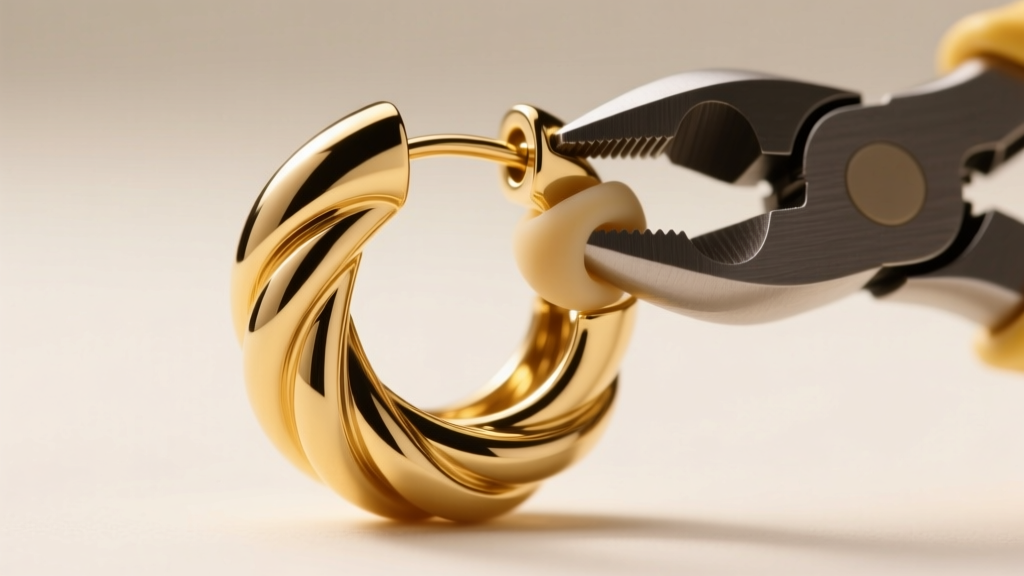
- Use the Right Tools: Never use standard steel jewelry pliers, as the teeth will leave permanent gouges in the metal. Invest in a pair of nylon-jaw or silicone-tipped pliers.
- The Squeeze Technique: Hold the cuff by its thickest structural point (usually the center or the base of a decorative charm). Gently squeeze the open ends inward by no more than 1-2 millimeters.
- Test the Grip: Slide the cuff onto your ear. It should require a slight, firm push to snap over the thickest part of your helix ridge, but it should not cause pain or cut off circulation to the skin.
For added security, many professional jewelers now apply microscopic silicone O-rings or clear medical-grade resin bumps to the interior of the cuff. These increase friction against the skin without requiring the metal to be clamped dangerously tight.
Preventing Contact Dermatitis and 'Green Ear'
The dreaded 'green ear' effect is not a sign of infection, but rather a chemical reaction. When copper or brass alloys in cheap fake helix earrings mix with the salt and acids in your sweat, they create copper chloride (verdigris). While harmless in small amounts, it is unsightly and often accompanied by nickel-induced contact dermatitis. According to the Mayo Clinic, prolonged exposure to allergenic metals can cause chronic skin thickening and blistering.
Actionable Prevention Strategies
If you already own plated fake helix earrings and want to wear them safely, consider these barrier methods:
- Clear Coat Barrier: Paint the interior band of the cuff with a thin layer of hypoallergenic clear nail polish or a specialized jewelry coating like Jewelry Shield. Reapply every 3-4 weeks, as friction will wear it away.
- Skin Prep: Before applying the cuff, wipe your helix ridge with an astringent or witch hazel to remove excess oils and sweat, creating a drier surface that slows the oxidation process.
- Upgrade Your Metals: If you experience persistent itching, discard the plated jewelry. Upgrading to solid 14k gold or implant-grade titanium cuffs eliminates the risk of galvanic skin reactions entirely.
Proper Storage to Prevent Tarnish and Warping
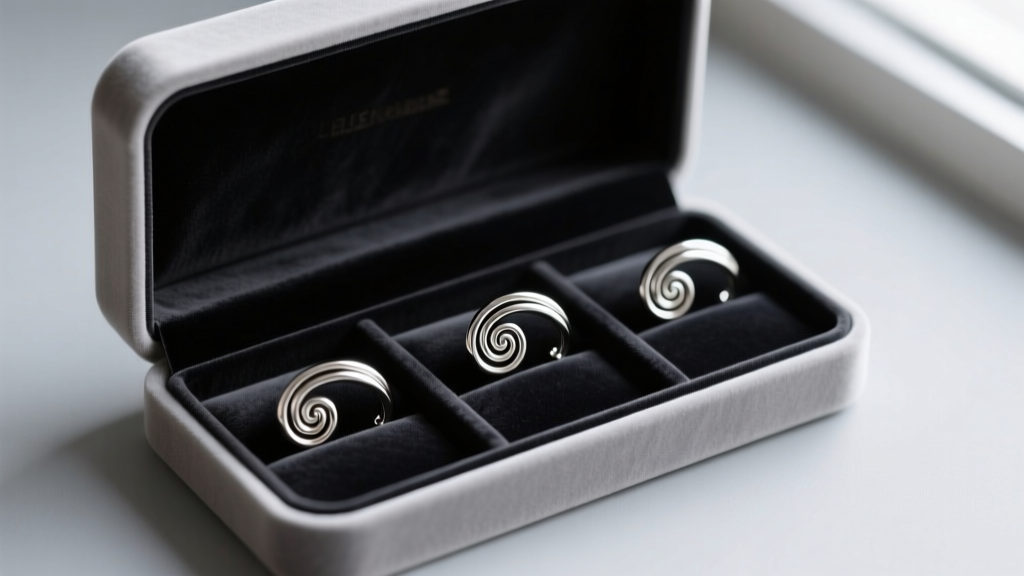
How you store your fake helix earrings is just as critical as how you clean them. Tossing multiple cuffs into a single drawer guarantees that harder metals will scratch softer platings, and exposure to ambient humidity will accelerate tarnishing.
- Individual Compartments: Store each ear cuff in its own soft velvet pouch or a dedicated compartment in a lined jewelry box to prevent friction damage.
- Moisture Control: Place a small silica gel desiccant packet inside your jewelry box to absorb ambient moisture, which is the primary catalyst for silver and copper oxidation.
- Anti-Tarnish Strips: For sterling silver or silver-plated fake helix earrings, store them in airtight ziplock bags alongside 3M anti-tarnish strips. These strips absorb sulfur compounds from the air that cause silver to turn black.
- Shape Retention: Do not store ear cuffs clamped onto pieces of cardboard or plastic displays for long periods. Keeping the metal under constant tension while in storage will accelerate metal fatigue and ruin the spring mechanism.
When to Retire Your Fake Helix Jewelry
Even with meticulous care, fake helix earrings have a finite lifespan. You should immediately retire a piece if you notice the plating flaking off (which exposes the reactive base metal to your skin), if the metal band develops microscopic stress fractures, or if the decorative elements become loose and pose a choking or scratching hazard. By treating your faux cartilage jewelry with the same respect and maintenance as fine pierced jewelry, you ensure a comfortable, safe, and stylish experience every time you wear them.