Tragus Earrings: A Technical Guide to Sizing, Threading & Metals
Master tragus earrings with our expert technical guide. Discover exact gauge sizes, threading types, and implant-grade metals for flawless healing.

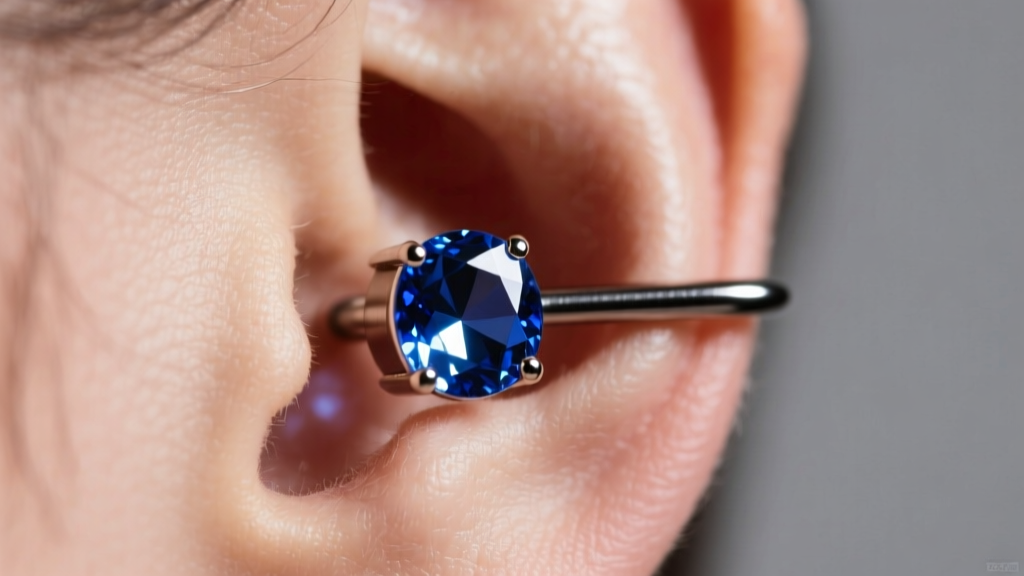
The tragus is a deceptively complex piece of ear anatomy. Unlike the relatively uniform tissue of the earlobe, the tragus consists of a dense, thick plate of elastic cartilage covered by a thin layer of skin and highly vascularized connective tissue. Because of this unique density and its proximity to the ear canal, selecting the correct tragus earrings requires a rigorous understanding of biomechanics, metallurgy, and precision sizing. As of 2026, the professional piercing industry has moved far beyond generic "one-size-fits-all" jewelry, relying instead on exact millimeter tolerances and implant-grade material standards to ensure long-term tissue health.
The Biomechanics of Tragus Jewelry Fit
The average tragus thickness ranges from 5mm to 8mm, though it can exceed 10mm in some individuals. When a piercing needle passes through this dense cartilage, the surrounding tissue undergoes acute trauma, resulting in localized edema (swelling) that can increase the effective tissue thickness by 2mm to 4mm during the initial 14-day inflammatory phase.
If a jeweler inserts a standard 1/4-inch (6mm) post into a fresh tragus piercing with an 8mm tissue depth, the result is immediate embedding. The jewelry's front and back discs compress the swelling tissue, cutting off local circulation and forcing the body to grow granulation tissue over the metal. Conversely, a post that is too long creates a "moisture trap" behind the tragus, pooling cerumen (earwax), shampoo residue, and dead skin cells against the healing fistula, which frequently triggers hypergranulation and chronic irritation bumps.
Precision Sizing: Gauge and Post Length Matrix
Professional piercers utilize a specific matrix of gauge diameters and post lengths to accommodate both the healing and healed phases of a tragus piercing. Below is the clinical standard framework used by APP-certified professionals.
| Metric | Standard Specification | Alternative Specification | Clinical Rationale |
|---|---|---|---|
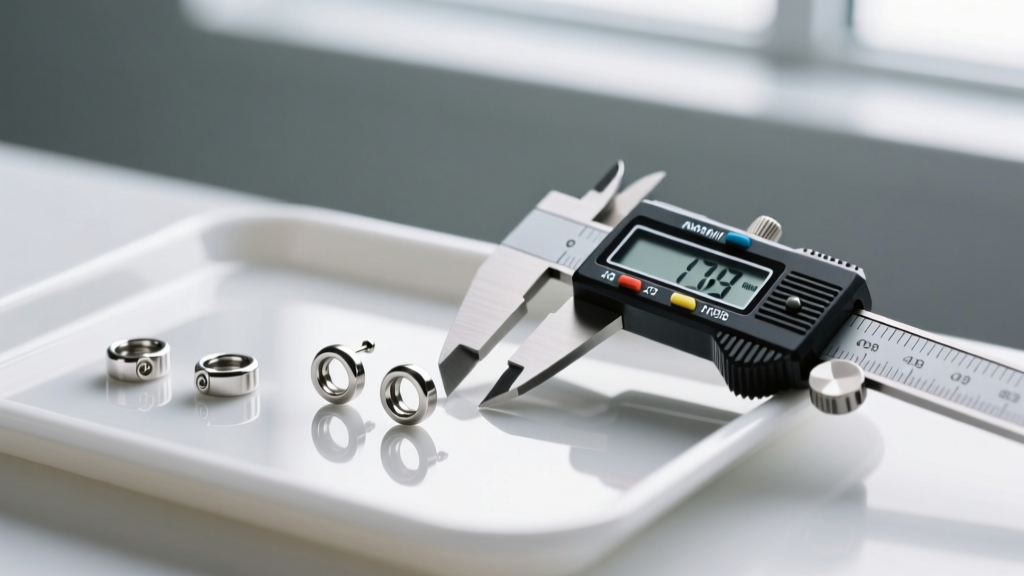
| Gauge (Diameter) | 16G (1.2mm) | 18G (1.0mm) | 16G provides superior structural support, reducing the "cheese-cutter effect" if the jewelry is snagged. |
| Post Length (Healing) | 5/16" (8mm) | 3/8" (10mm) | Accommodates peak edema during days 3-14 of the inflammatory healing phase. |
| Post Length (Healed) | 1/4" (6mm) | 3/16" (5mm) | Provides a flush, snug fit that prevents rotation and minimizes bacterial trapping. |
| Backing Profile | Flat Back (Disc) | None (Threadless end) | Flat backs prevent the jewelry from pressing into the ear canal or catching on hair and headphones. |
According to the Association of Professional Piercers (APP), downsizing to a healed post length is a mandatory step typically performed 4 to 8 weeks post-piercing, once the initial swelling has entirely subsided.
Connection Mechanics: Threadless vs. Internally Threaded
The method by which the decorative end attaches to the post is critical for cartilage health. Externally threaded jewelry—where the screw pattern is on the post itself—is universally condemned by modern professionals. Dragging sharp, jagged threads through a delicate cartilage fistula causes micro-tears, delaying healing and increasing the risk of hypertrophic scarring.
Threadless (Push-Pin) Technology
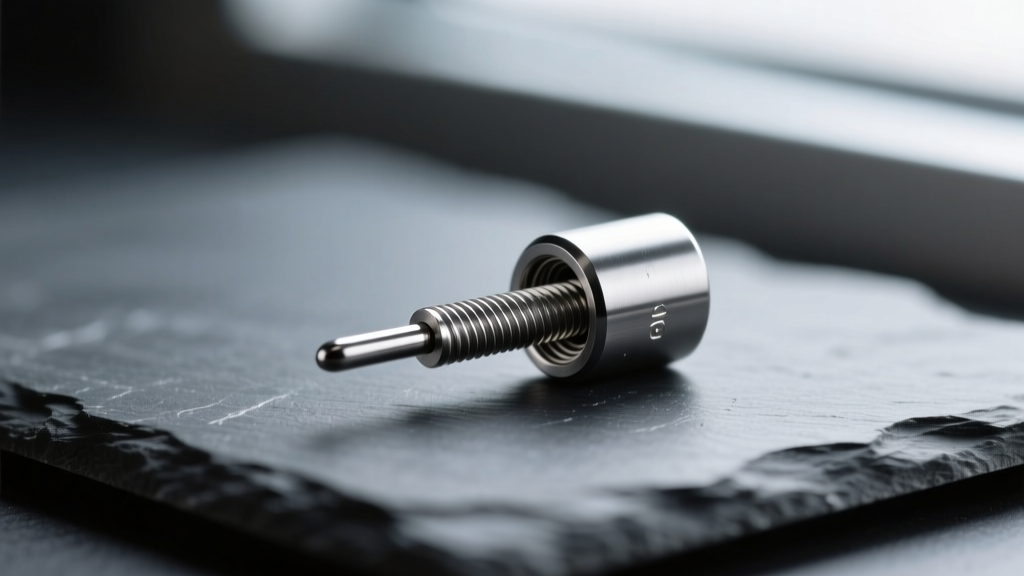
Threadless tragus earrings rely on mechanical tension. The decorative end features a slightly bent, smooth titanium pin that is pushed into the hollow post. The bend creates outward pressure against the inner wall of the post, securing the jewelry. High-end manufacturers machine these pins to a tolerance of 0.05mm, ensuring a secure fit that will not fall out during sleep, yet can be removed by a piercer using specialized hemostats and a twisting motion. Threadless systems are currently the gold standard for initial tragus piercings due to the seamless, joint-free insertion process.
Internally Threaded Systems
In internally threaded jewelry, the screw pattern is located inside the decorative end, while the post remains perfectly smooth. This allows the post to glide through the fistula without causing trauma. While highly secure, internally threaded labrets require the piercer to carefully align the threads inside the ear canal, which can be technically challenging in the tight space behind the tragus.
Metallurgical Standards for Cartilage Biocompatibility
The tragus is highly susceptible to contact dermatitis and metal hypersensitivity. The moisture and heat trapped near the ear canal accelerate the corrosion of inferior alloys. Therefore, the metallurgical composition of your tragus earrings is non-negotiable.
- ASTM F136 Titanium (Ti6Al4V ELI): This is the absolute benchmark for fresh cartilage piercings. The "ELI" (Extra Low Interstitial) designation means the alloy contains minimal oxygen, nitrogen, and carbon, maximizing its biocompatibility. Titanium naturally forms a passive layer of titanium dioxide when exposed to oxygen, rendering it completely impervious to bodily fluids and corrosion.
- ASTM F138 Stainless Steel: While acceptable for fully healed piercings in individuals without nickel allergies, F138 steel contains up to 14% nickel. Over time, the acidic environment of the ear canal can degrade the steel's passivation layer, leaching nickel ions into the tissue and triggering localized eczema or rejection.
- Niobium (99.99% Pure): An elemental metal that is highly biocompatible and can be anodized to create vibrant colors without the use of toxic dyes or platings. However, it is softer than titanium and more prone to scratching, which can harbor bacteria if the surface is compromised.
Clinical Troubleshooting: Migration and Hypergranulation
Even with perfect jewelry, environmental factors can compromise a tragus piercing. Understanding failure modes allows for rapid intervention.
Expert Insight: Hypergranulation (the overgrowth of moist, red, friable tissue around the exit hole) is rarely an infection. It is almost always a mechanical or environmental response. If you see this tissue on your tragus, evaluate your post length and your drying technique before reaching for topical antibiotics.
Moisture Traps: Because the tragus sits directly over the ear canal, water frequently becomes trapped behind the jewelry disc after showering. This constant moisture softens the healing fistula, leading to hypergranulation. Solution: Use a sterile, non-woven gauze to gently wick moisture away from the back of the tragus after every shower, followed by a blast of cool air from a hair dryer.
Pressure Necrosis: Sleeping on a fresh tragus piercing compresses the cartilage against the pillow, restricting blood flow and causing pressure necrosis (tissue death). This often results in the piercing migrating at an angle. Solution: Utilize a U-shaped travel pillow, positioning the ear in the hollow center to eliminate all lateral pressure during the 6-to-9-month healing window.
Sourcing Authentic Implant-Grade Components
The market is flooded with counterfeit jewelry stamped with fake "titanium" hallmarks. True implant-grade tragus earrings must be sourced from verified manufacturers who provide mill certificates for their alloys. Industry leaders such as BVLA (Body Vision Los Angeles), Anatometal, and Industrial Strength machine their jewelry in ISO-certified cleanrooms, ensuring that every post is ultrasonically cleaned and free of microscopic metal burrs.
When purchasing, always verify that the jeweler or piercer can confirm the exact ASTM standard of the metal. For a comprehensive overview of safe jewelry standards and aftercare protocols, refer to the clinical guidelines published by the Association of Professional Piercers. Investing in precision-machined, implant-grade jewelry is not merely an aesthetic choice; it is a critical medical decision that dictates the lifelong stability and health of your cartilage.