Piercing Earrings Helix Technical Guide: Fit, Gauge, and Alloys
An expert technical guide to piercing earrings helix fit, covering ASTM F136 titanium, gauge mapping, thread types, and biomechanical healing factors.

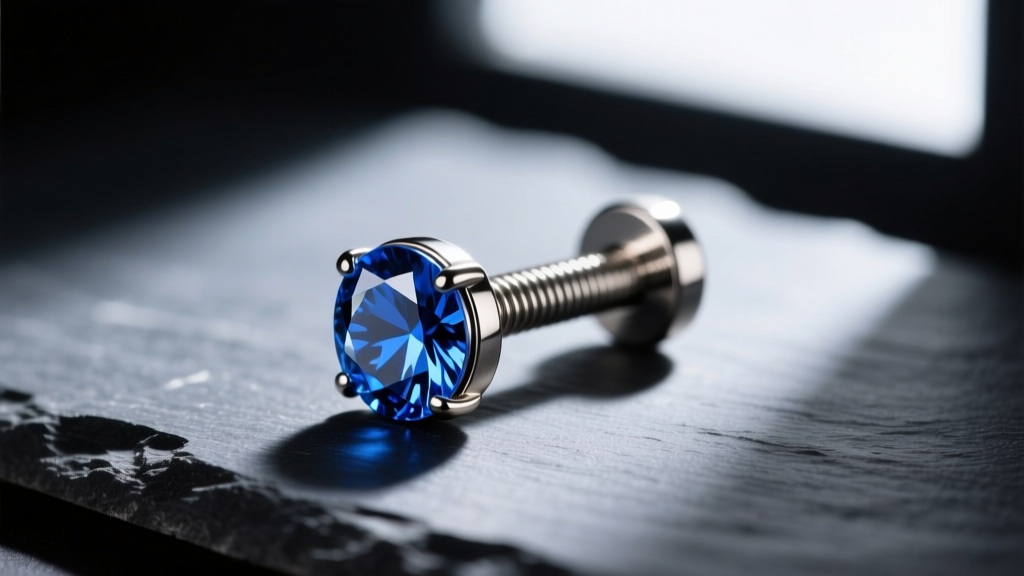
Navigating the world of piercing earrings helix options requires a firm understanding of cartilage biomechanics, metallurgical standards, and precise anatomical mapping. Unlike the highly vascular earlobe, the helix is composed of dense, avascular cartilage encased in a thin layer of perichondrium. This structural reality means that blood flow is minimal, healing windows are extended (often 9 to 12 months), and the margin for error regarding jewelry fit and material purity is virtually zero. In this technical deep dive, we deconstruct the engineering and material science required for optimal helix jewelry selection.
The Metallurgical Standard: Beyond "Surgical Steel"
The term "surgical steel" is a marketing colloquialism, not a regulated metallurgical standard. When evaluating body jewelry, professionals rely on specific ASTM (American Society for Testing and Materials) or ISO designations to ensure biocompatibility. According to the Association of Professional Piercers (APP), only specific implant-grade alloys should be utilized in fresh or healing cartilage piercings.
ASTM F136 vs. ASTM F138: A Micro-Alloy Breakdown
The gold standard for helix jewelry is ASTM F136 Implant-Grade Titanium (specifically Ti-6Al-4V ELI). This alloy contains aluminum and vanadium but is entirely free of nickel. Its surface naturally forms a dense, inert titanium oxide passivation layer that prevents corrosion and halts ion leaching into the surrounding fistula.
Conversely, ASTM F138 Implant-Grade Stainless Steel (often 316LVM) contains between 10% and 14% nickel. While the chromium oxide passivation layer generally traps the nickel, micro-abrasions from jewelry movement or exposure to highly acidic bodily fluids during the inflammatory healing phase can compromise this layer, leading to contact dermatitis and localized tissue rejection.
| Material Designation | Nickel Content | Passivation Layer | Helix Suitability |
|---|---|---|---|
| ASTM F136 Titanium (Ti-6Al-4V ELI) | 0% | Titanium Oxide (Highly Inert) | Optimal (Fresh & Healed) |
| ASTM F138 Steel (316LVM) | 10-14% | Chromium Oxide (Vulnerable) | Moderate (Healed Only) |
| Niobium (Reactor Grade) | 0% | Niobium Oxide | Excellent (Healed/Hypersensitive) |
| 14k/18k Solid Gold (Nickel-Free) | 0% (if alloyed with Pd/Ag) | N/A (Inert Noble Metal) | Excellent (Healed Only) |
Biomechanics of the Helix: Why Post Style Dictates Healing
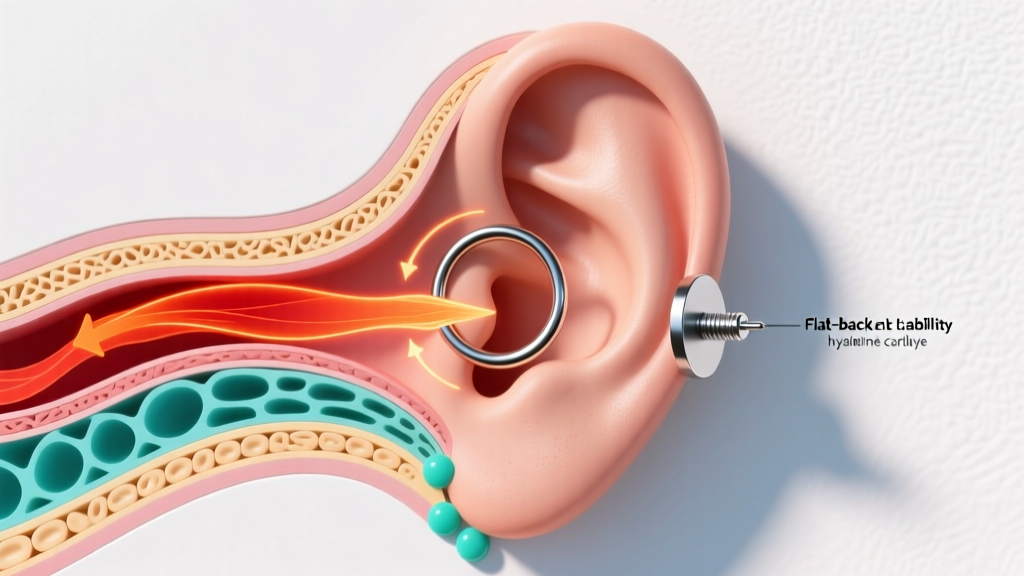
The most pervasive error in helix aftercare is the premature introduction of captive bead rings (CBRs) or seamless hoops. The helix cartilage requires absolute immobilization during the proliferative phase of healing. Hoops introduce two destructive biomechanical forces:
- Rotational Friction: Every time the ear is bumped, a hoop rotates, dragging environmental bacteria and dried exudate directly into the open fistula.
- The Cheese-Cutter Effect: The curvature of a hoop places uneven tension on the piercing channel. Over time, this downward pressure can cause the jewelry to slowly migrate through the cartilage, thinning the tissue.
Flat-back labrets (straight posts with a flush posterior disc) eliminate rotational movement. The disc rests flush against the posterior scapha, distributing pressure evenly and anchoring the jewelry in place.
Threadless vs. Internally Threaded: A Micro-Mechanical Breakdown
When securing a flat-back labret, the connection mechanism is critical. Never use externally threaded jewelry; the screw threads act like a microscopic file, tearing the delicate epithelial lining of the fistula upon insertion.
Expert Insight: Threadless (push-pin) jewelry utilizes a bent pin that creates tension against the inside of the hollow post. This allows for micro-adjustments in post length and provides a seamless, gap-free exterior that will not harbor bacteria or irritate the cartilage ridge.
Precision Sizing: Gauge and Post Length Mapping
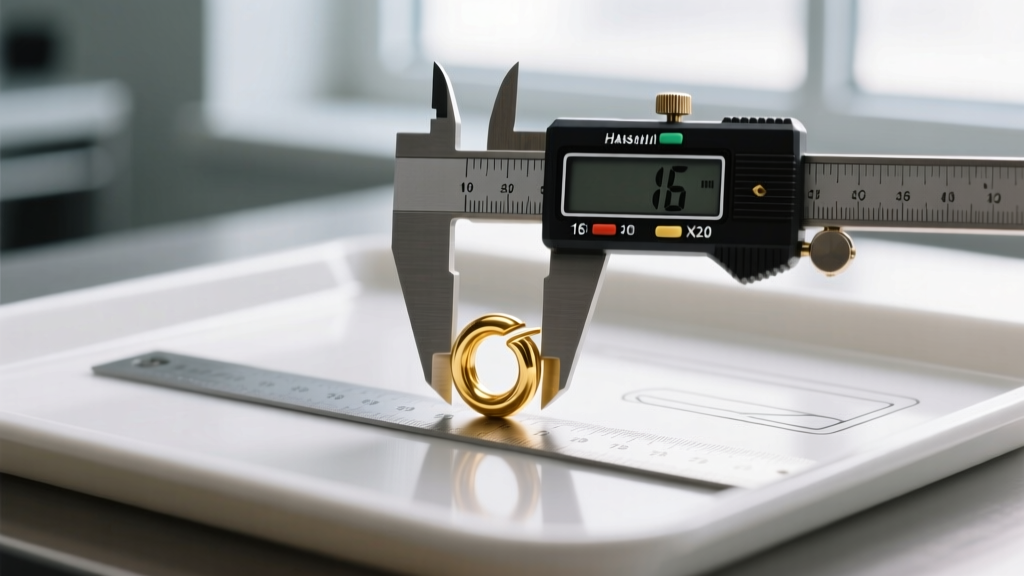
Cartilage thickness varies wildly among individuals, ranging from 2mm to over 6mm. Selecting the correct gauge and post length requires digital caliper measurements, not guesswork. While 18G (1.0mm) is common in commercial mall kiosks, professional piercers overwhelmingly default to 16G (1.2mm) or 14G (1.6mm) for the helix. A thicker gauge provides structural rigidity, reducing the risk of the "cheese-cutter" migration effect and minimizing the localized edema (swelling) that often traps thinner jewelry.
The Post Length Swelling Matrix
The posterior disc must clear the swelling cartilage without leaving excessive room that allows the post to "piston" back and forth. Pistoning delays healing by repeatedly disrupting the forming epithelial tube. Below is the standard sizing matrix utilized by advanced piercing studios:
| Healing Phase | Cartilage Thickness | Required Post Length | Imperial Equivalent |
|---|---|---|---|
| Initial (Weeks 1-4) | Thin (2-3mm) | 8.0mm | 5/16" |
| Initial (Weeks 1-4) | Thick (4-6mm) | 10.0mm | 3/8" |
| Downsize (Weeks 4-8) | Thin (2-3mm) | 6.0mm | 1/4" |
| Downsize (Weeks 4-8) | Thick (4-6mm) | 8.0mm | 5/16" |
Note: Failing to downsize the post once initial swelling subsides is the primary cause of helix irritation bumps (hypertrophic scarring), as the elongated post catches on hair and pillows, altering the piercing angle.
Troubleshooting Common Helix Failure Modes
Even with perfect jewelry, anatomical variables can cause complications. Understanding these failure modes allows for rapid intervention.
1. Angle Migration and Rejection
If a helix piercing is placed at an improper angle (not perpendicular to the tissue ridge), the body will treat the jewelry as a foreign splinter. The tissue will slowly push the post toward the surface to expel it. This is irreversible once the fistula begins to thin. Prevention relies entirely on the piercer's initial needle trajectory and the use of a rigid, straight post.
2. Localized Contact Dermatitis
If a client experiences intense itching, weeping, and localized redness that does not respond to standard sterile saline aftercare (as outlined by the APP Aftercare Guidelines), suspect a nickel allergy. Immediate removal of 316L steel and replacement with ASTM F136 Titanium or solid Niobium is required to halt the immune response.
3. Posterior Embedding
If the flat-back disc sinks into the posterior scapha tissue, it is a medical emergency requiring immediate downsizing. Embedding cuts off localized circulation and can lead to tissue necrosis or severe infection. This typically occurs when a client sleeps on the fresh piercing, forcing the edema to swell over and encapsulate the disc.
Final Technical Verdict
The helix is an unforgiving anatomical zone that demands respect for material science and biomechanics. By strictly adhering to ASTM F136 titanium, utilizing threadless flat-back labrets, and mapping post lengths to the millimeter, you transform a notoriously difficult piercing into a stable, long-term aesthetic success. Never compromise on the metallurgy or the mechanics; the cartilage will always reveal the truth.