Surface Tragus Piercing Jewelry Trends & Styles for 2026
Discover 2026 surface tragus piercing jewelry trends, from PVD-coated microdermals to 14g surface bars, plus expert tips on avoiding rejection.

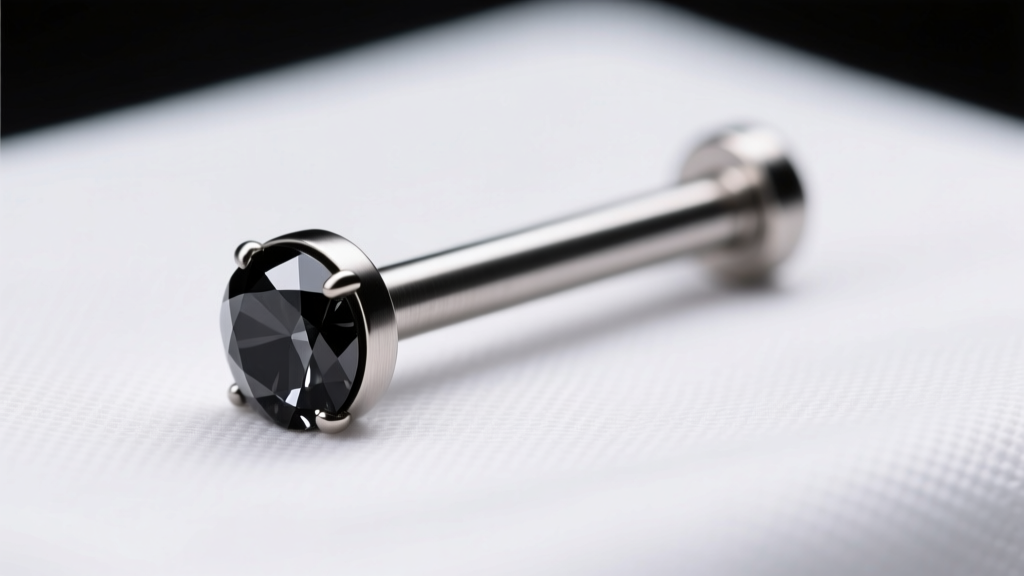
In the evolving landscape of advanced ear curation, the surface tragus piercing occupies a unique, highly debated space. Before diving into the 2026 aesthetic trends, we must establish a critical anatomical distinction that even some novice piercers conflate: a standard tragus piercing passes vertically or horizontally through the thick cartilage flap of the tragus itself, typically utilizing a labret stud. A surface tragus piercing, however, is a true surface piercing placed horizontally across the flat, pre-auricular skin directly anterior to the tragus cartilage. Because it does not pass through a distinct ridge or flap of tissue, surface tragus piercing jewelry requires specialized staple-shaped surface bars or single-point microdermal anchors to survive the body's natural rejection mechanisms.
As we move through 2026, the jewelry industry has adapted to the biomechanical challenges of this placement. The focus has shifted heavily toward advanced metallurgy, low-profile dermal tops, and alternative 'faux surface' styling techniques that deliver the desired aesthetic without the inevitable heartbreak of migration. Here is your comprehensive, expert-level guide to navigating surface tragus jewelry this year.
The Biomechanics of the Pre-Auricular Zone: Why Standard Jewelry Fails
The skin in front of the ear is highly mobile. Every time you chew, speak, or smile, the pre-auricular tissue shifts. If a piercer attempts to use a curved barbell or a standard straight barbell for a surface tragus, the jewelry will act as a lever. The body recognizes this constant tension and initiates an immune response to push the foreign object out—a process known as the 'cheese-cutter effect.'
To counteract this, authentic surface tragus piercing jewelry must utilize a staple-shaped surface bar. These bars feature a 90-degree bend at each end, allowing the jewelry to sit flush against the tissue plane while the ends exit the skin at a perpendicular angle, eliminating upward pressure. According to the Association of Professional Piercers (APP), surface piercings are inherently temporary, often lasting anywhere from one to five years before rejection begins. Therefore, selecting the correct jewelry architecture from day one is not just about style; it is about maximizing the lifespan of the piercing.
2026 Trend Report: Aesthetic Shifts in Surface Jewelry
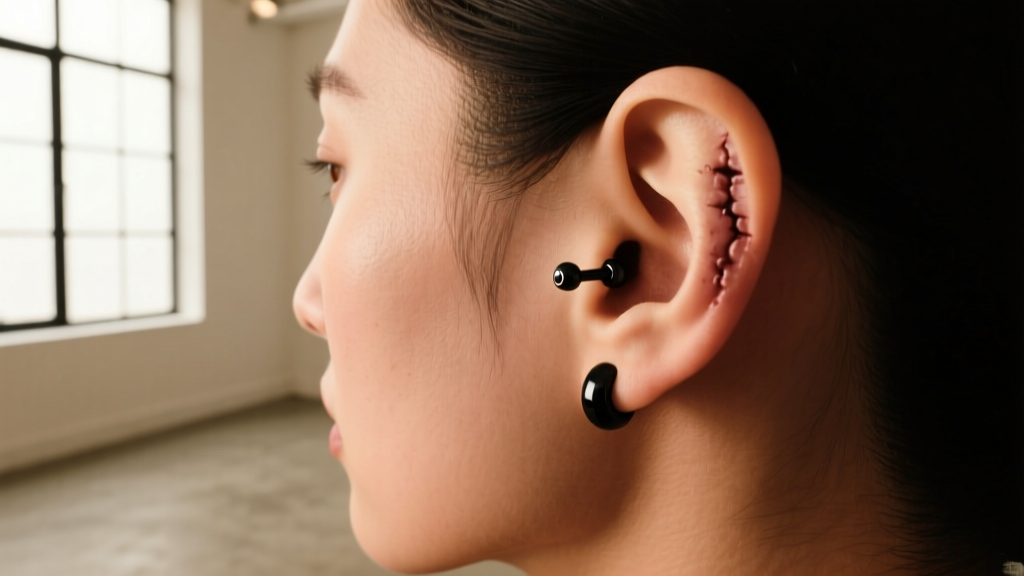
This year, the visual language of surface piercings has moved away from the bulky, oversized gemstones of the early 2010s. The 2026 ethos is rooted in 'stealth luxury' and biomimicry—jewelry that looks like an organic extension of the skin rather than an industrial attachment.
- Black PVD & Gunmetal Titanium: Physical Vapor Deposition (PVD) coating on implant-grade titanium has become the dominant trend for surface tragus placements. Black and dark gunmetal finishes visually recede against the skin, making the gemstone appear as though it is floating directly on the cheek. Brands like Industrial Strength and Neometal are leading the charge in scratch-resistant PVD dermal tops.
- Rose-Cut and 'Salt & Pepper' Gemstones: Brilliant-cut diamonds and synthetic cubic zirconia are being replaced by rose-cut stones, which feature a flat bottom and faceted dome. This lower profile reduces the risk of snagging on hair or masks. Furthermore, 'salt and pepper' diamonds and raw, unpolished opals are highly sought after for their organic, understated light diffusion.
- Micro-Dermal Dominance: While traditional surface bars are still used, 2026 has seen a massive pivot toward single-point microdermal anchors. A single 3mm or 4mm dermal top placed precisely in the surface tragus zone offers a minimalist aesthetic and slightly better longevity than a two-point surface bar, as there is only one exit point for the body to attack.
Material Matrix: What to Demand from Your Piercer
When dealing with surface piercings, material biocompatibility is non-negotiable. The tissue is under constant tension, and any microscopic corrosion or nickel leaching will accelerate rejection. The APP Jewelry Materials Guide strictly outlines which metals are safe for long-term implantation. Below is the specification matrix you should expect for high-end surface tragus jewelry in 2026.
| Material Grade | Industry Standard | Best Application | Avg. Price Range (Ends/Anchors) |
|---|---|---|---|
| Implant-Grade Titanium | ASTM F-136 / F-1295 | Initial surface bars & dermal anchors | $60 - $140 |
| Niobium | ASTM B392 | Custom-anodized surface bars | $80 - $160 |
| Solid 14k/18k Gold | Nickel-Free, Alloyed | Healed dermal tops only (heavy weight) | $150 - $350+ |
| Surgical Steel (316L) | ASTM F-138 | Avoid for surface piercings | N/A |
Note: Never accept surgical steel for a surface tragus piercing. The nickel content, even in high-grade 316L steel, is a primary catalyst for contact dermatitis and subsequent migration in high-tension surface placements.
The 'Faux Surface' Styling Movement
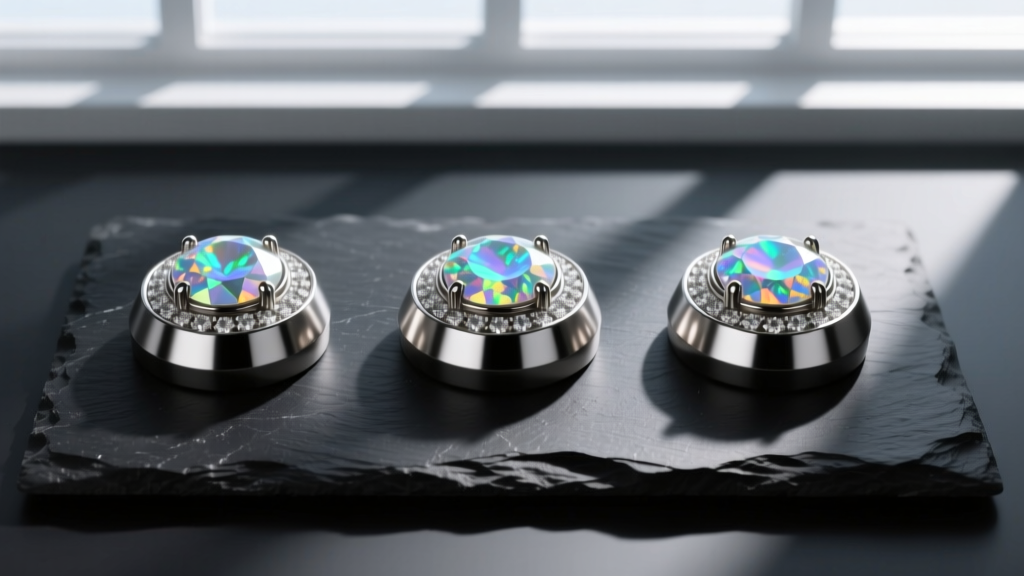
Because true surface tragus piercings carry a notoriously high rejection rate, a major trend in 2026 is the 'Faux Surface' styling movement. Master piercers are now collaborating with clients to create the visual illusion of a horizontal surface bar using standard, permanent cartilage piercings.
By pairing a standard tragus piercing (fitted with a horizontal barbell end or a specialized flat-back cluster) with a meticulously placed daith or rook piercing, curators can draw a geometric, horizontal line across the ear that perfectly mimics the aesthetic of a surface tragus. This approach utilizes the structural integrity of the ear's cartilage ridges, ensuring the jewelry remains secure for a lifetime while delivering the exact edgy, avant-garde look the client originally sought. This paradigm shift represents a mature, anatomical-first approach to ear styling that prioritizes longevity over temporary trends.
Skincare Interactions and Rejection Prevention
The longevity of surface tragus piercing jewelry is not solely determined by the metal; it is heavily influenced by your daily chemical environment. The pre-auricular zone is a primary target for facial skincare routines, which poses a hidden threat to surface piercings.
'Active ingredients like retinoids, glycolic acid (AHAs), and salicylic acid (BHAs) accelerate cellular turnover and thin the epidermis. When these migrate to a surface piercing site, they compromise the tissue matrix holding the dermal anchor or surface bar, drastically accelerating the rejection process.' — Advanced Dermal Piercing Protocols, 2025
To protect your investment, you must meticulously shield the piercing site during your skincare routine. Use a physical barrier, such as a sterile gauze pad or a hydrocolloid patch, over the jewelry when applying chemical exfoliants or retinols to your face. Furthermore, avoid sleeping directly on the side of the piercing. Even with a specialized travel pillow, the lateral pressure applied to the cheek during sleep creates micro-traumas that encourage the body to push the jewelry to the surface.
Final Considerations for the Advanced Curator
Surface tragus piercing jewelry represents the intersection of high fashion and extreme anatomical risk. Whether you opt for a staple-shaped 14-gauge titanium surface bar or a sleek, black PVD microdermal anchor, success relies on uncompromising material standards and rigorous aftercare. For those unwilling to accept the temporary nature of surface piercings, the 2026 'Faux Surface' cartilage combinations offer a brilliant, permanent alternative. Always consult with an APP-certified professional who can assess your specific tissue depth and mobility before committing to this advanced placement.
For more detailed aftercare protocols regarding surface placements and dermal anchors, refer to the official APP Aftercare Guidelines to ensure your curation heals safely and beautifully.


