Daith Earrings Material Guide: Titanium, Gold, and Steel Compared
Discover the best metals for daith earrings. Compare implant-grade titanium, solid gold, and surgical steel for healing and long-term wear.

When navigating the world of cartilage modifications, selecting the right jewelry is never just about aesthetics. This is especially true for daith earrings, which sit in the innermost cartilage fold of the ear known as the crus of the helix. Because the daith passes through a thick, dense layer of tissue and is subjected to constant movement from chewing and talking, the material you choose dictates not only your comfort but the very survival of the piercing.
The Biomechanics of the Daith: Why Material Matters
A standard daith piercing is typically performed at 16-gauge (1.2mm) or 14-gauge (1.6mm) and requires a ring diameter between 8mm and 10mm. Unlike a standard lobe piercing, the daith fistula (the healed tube of tissue) is surrounded by rigid cartilage. If your jewelry contains irritants, porous surfaces, or rough threading, the resulting inflammation has nowhere to expand. This leads to hypertrophic scarring, persistent swelling, and delayed healing times that can stretch from the standard six months well past a year.
Furthermore, the daith has gained massive popularity due to anecdotal claims regarding migraine relief. While the medical consensus on its efficacy for migraines remains debated, this surge in popularity means many individuals with heightened sensory sensitivities are getting pierced. For these individuals, hypoallergenic, biocompatible metals are non-negotiable.
Implant-Grade Titanium (ASTM F136): The Undisputed Champion
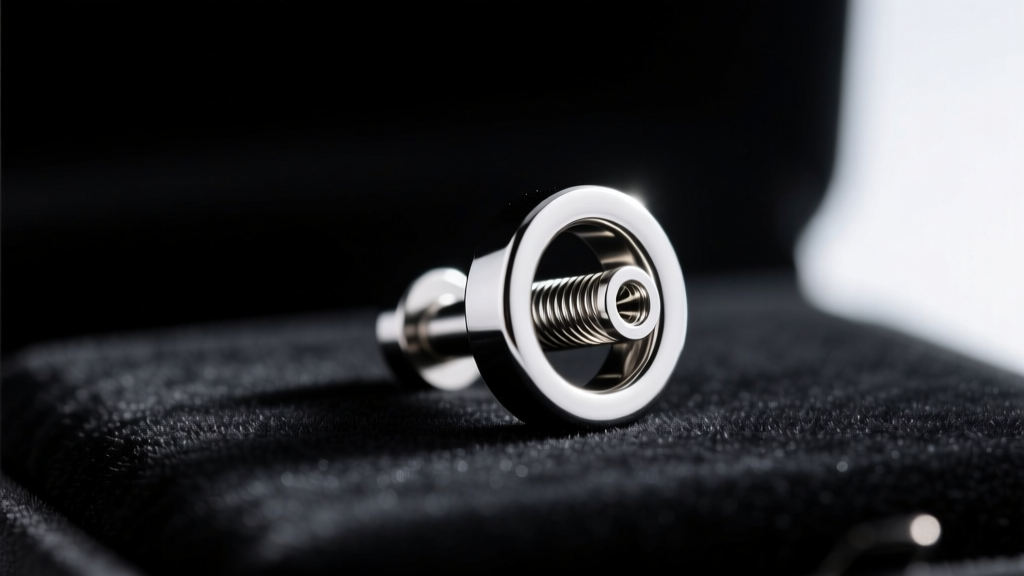
If you are getting a fresh daith piercing, or struggling with an irritated one, implant-grade titanium is the absolute gold standard. Specifically, you need to look for Ti-6Al-4V ELI (ASTM F136). This is the exact same alloy used in orthopedic joint replacements and pacemaker casings.
Why Titanium Dominates Fresh Piercings
- 100% Nickel-Free: Unlike surgical steel, ASTM F136 titanium contains zero nickel, completely eliminating the risk of contact dermatitis.
- Lightweight: Titanium is nearly 45% lighter than steel, reducing the gravitational drag on a fresh, tender daith fistula.
- Anodization: Titanium can be safely anodized using electrical currents to create vibrant colors (like gold, rose, or deep blue) without adding any dyes, paints, or plating that could flake off into the wound.
According to the Association of Professional Piercers (APP), implant-grade titanium is the premier recommendation for all initial piercings due to its biocompatibility and mirror-finish capabilities.
Pricing Expectation: A high-quality, internally threaded titanium daith clicker from reputable brands like NeoMetal or BVLA typically ranges from $40 to $85, depending on gemstone additions.
Solid Gold: Navigating Karats, Alloys, and the Nickel Trap
Gold is a classic choice for daith earrings, but it requires a highly discerning eye. Pure 24k gold is entirely biocompatible but far too soft for body jewelry; it would easily warp and scratch inside the daith, creating micro-tears in the tissue. Therefore, gold must be alloyed with other metals for structural integrity.
The 14k vs. 18k Debate
For body jewelry, 18k (75% gold) and 14k (58.3% gold) are the only acceptable standards. However, the danger lies in the remaining 25% to 41.7% of the alloy. Historically, jewelers used nickel to whiten gold or increase hardness. Today, reputable body jewelry manufacturers use palladium, silver, or copper instead.
When shopping for gold daith earrings, you must explicitly verify that the piece is nickel-free. If you are buying for a fully healed daith, 14k or 18k solid gold is exceptional. However, for a fresh piercing, many piercers prefer titanium over gold simply because the alloy variations in gold can sometimes cause unpredictable reactions in open wounds.
Pricing Expectation: Solid gold daith jewelry is a premium investment. Expect to pay between $90 and $250+ for a single 14k or 18k gold segmented ring or clicker.
Surgical Stainless Steel (316L): The Healed-Only Compromise
Surgical stainless steel, specifically the 316L or 316LVM grades, is the most common and affordable metal in the jewelry market. It is highly durable, resistant to tarnish, and possesses a bright, silvery luster. However, it has a fatal flaw for fresh piercings: it contains between 8% and 10.5% nickel.
While the nickel is largely trapped within the crystalline structure of the steel, the harsh environment of a healing wound (with its fluctuating pH levels and saline exposure) can cause nickel ions to leach out. The American Academy of Dermatology notes that nickel allergy is the most common contact allergy worldwide, affecting up to 18% of adults.
The Verdict: 316L stainless steel is perfectly acceptable for a fully healed daith piercing (typically 12+ months old) if you do not have a known nickel sensitivity. It should never be used for initial piercing jewelry.
The Danger Zone: Materials to Strictly Avoid
To protect your cartilage, immediately discard or avoid the following materials in daith earrings:
- Sterling Silver (925): Silver contains 7.5% copper, which oxidizes and tarnishes when exposed to the moisture and sulfur compounds in human sebum. This can lead to a permanent bluish-gray staining of the tissue known as localized argyria.
- Gold-Plated or Vermeil: Plating is a microscopically thin layer of gold over a base metal (often brass or steel). The friction of a daith ring rotating through the fistula will quickly wear away the plating, exposing the reactive base metal to your tissue.
- Bioplastics and Acrylics: While sometimes marketed as hypoallergenic, plastics are inherently porous. They harbor bacteria, degrade under body heat, and cannot be sterilized in an autoclave.
Material Comparison Chart
| Material | Grade / Standard | Nickel Content | Best Use Case | Avg. Price Range |
|---|---|---|---|---|
| Titanium | ASTM F136 (Implant) | 0% | Fresh & Healed | $35 - $85 |
| Solid Gold | 14k or 18k (Nickel-Free) | 0% | Healed (Fresh with caution) | $90 - $250+ |
| Surgical Steel | 316L / 316LVM | 8% - 10.5% | Fully Healed Only | $15 - $40 |
| Niobium | Unalloyed (Reactive) | 0% | Fresh & Healed | $30 - $60 |
Beyond the Metal: Threading and Surface Topography
The material composition is only half the battle; how that material is machined is equally critical. The daith is a highly mobile piercing. Every time you speak or eat, the jewelry rotates slightly. If your ring has external threading (where the screw grooves are on the post that passes through the ear), those sharp metal ridges will act like a file, scraping and tearing the delicate fistula lining with every movement.
Always insist on internally threaded jewelry (where the screw is on the removable bead, and the post is perfectly smooth) or threadless (push-pin) mechanisms. Furthermore, the metal must feature a mirror polish. Microscopic scratches in the metal can harbor biofilm and bacteria, leading to chronic low-grade infections that stall the healing process.
Final Recommendations for Your Daith
If you are currently in the healing phase of a daith piercing, invest in an ASTM F136 implant-grade titanium captive bead ring or seamless clicker. Ensure it is internally threaded, features a mirror polish, and is sized correctly (usually 16g with a 9mm or 10mm inner diameter) by a professional piercer. Once your daith is fully seasoned and healed after a year or more, you can safely transition into 14k or 18k solid gold, or high-quality 316L steel, allowing you to build a diverse, safe, and stunning jewelry wardrobe.