Best Budget Helix Earrings: 2026 Value & Quality Guide
Discover the true value of budget helix earrings in 2026. We compare materials, gauge sizes, and brands to find safe, affordable cartilage jewelry.

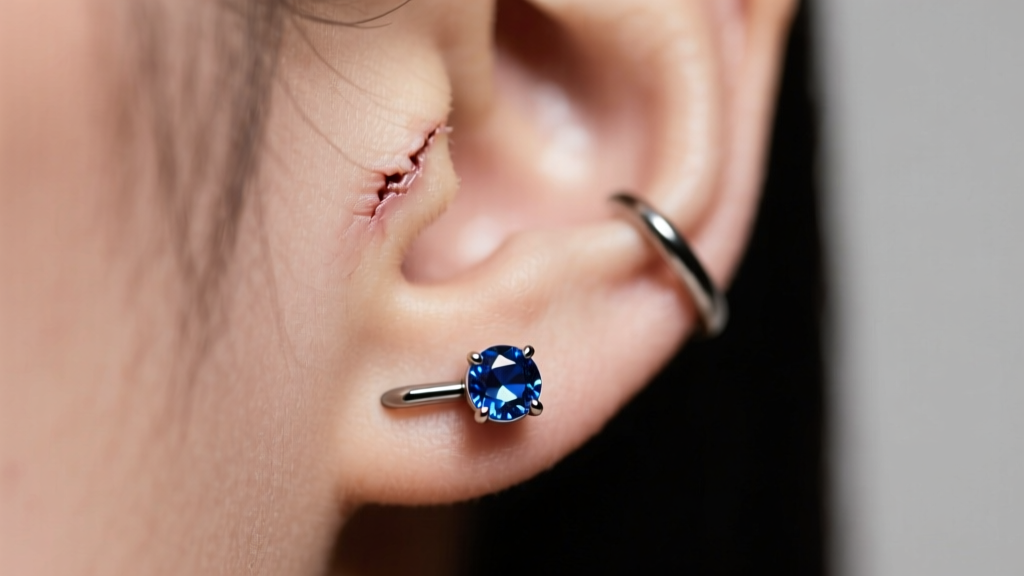
When building a curated ear stack, the helix is often the focal point. However, navigating the market for helix earrings can feel like walking through a minefield of misleading marketing terms and hidden metallurgical hazards. In 2026, the jewelry market is more saturated than ever, with fast-fashion retailers pushing $5 alloys and high-end boutiques charging $300 for basic gold bands. For the budget-conscious consumer, the goal is not simply finding the lowest price tag; it is identifying the intersection of biocompatibility, structural integrity, and aesthetic longevity.
A true value assessment requires looking past the initial checkout total. Cheap cartilage jewelry often leads to irritation bumps, contact dermatitis, and even severe infections like perichondritis, which can cost hundreds of dollars in medical bills and permanently damage the ear's cartilage structure. This guide breaks down the exact material grades, mechanical designs, and brand pricing models you need to know to build a safe, stunning helix stack without draining your bank account.
The True Cost of "Cheap" Helix Earrings
Cartilage is avascular, meaning it lacks a direct blood supply. It heals slowly (often taking 6 to 12 months) and relies on surrounding tissue for immune responses. When you introduce a low-quality metal into this delicate environment, the body reacts aggressively. The immediate savings of a $12 mystery-metal hoop from a mall kiosk are quickly erased when you develop a hypertrophic scar or an irritation bump that requires professional piercer intervention and specialized aftercare.
According to the Association of Professional Piercers (APP), the surface finish and alloy composition of body jewelry are the primary determinants of healing success. Budget jewelry often suffers from microscopic pitting, poor polishing, and high nickel content. The American Academy of Dermatology notes that nickel allergy is one of the most common causes of allergic contact dermatitis, affecting up to 36% of women in the United States. Once you develop a nickel allergy, it is lifelong. Therefore, investing in hypoallergenic baseline materials is not a luxury; it is a medical necessity.
Material Breakdown: What You Should Actually Pay
To assess value, we must establish a baseline for acceptable materials. In 2026, implant-grade titanium remains the undisputed king of budget-friendly, biocompatible jewelry. Below is a comparative analysis of common helix earring materials, their market price ranges, and their true value proposition.
| Material | Standard / Grade | Price Range (Studs) | Value Verdict |
|---|---|---|---|
| Implant-Grade Titanium | ASTM F-136 | $15 - $45 | Excellent. The gold standard for budget and healing. Hypoallergenic, lightweight, and highly polishable. |
| Niobium | Unalloyed / Reactive | $20 - $50 | Great. Hypoallergenic and can be anodized to various colors, though slightly softer than titanium. |
| Surgical Steel | ASTM F-138 | $8 - $25 | Poor for fresh piercings. Contains up to 13% nickel. Acceptable only for fully healed, non-sensitive ears. |
| Solid Gold | 14k or 18k (Nickel-Free) | $80 - $250+ | Good (Long-term). High upfront cost, but lasts a lifetime. Avoid gold-plated or gold-filled options entirely. |
The Surgical Steel Trap
The term "surgical steel" is largely a marketing fabrication. There is no single standardized alloy that goes by this name in metallurgy. While ASTM F-138 steel is used in some medical tools, it is not ideal for long-term implantation in cartilage due to its nickel content. Many budget brands use the "surgical steel" label to sell low-grade 316L stainless steel that has been poorly polished. If you are on a strict budget, ASTM F-136 implant-grade titanium is actually cheaper than high-quality steel and infinitely safer for your tissue.
Gauge, Threading, and Hidden Value Factors
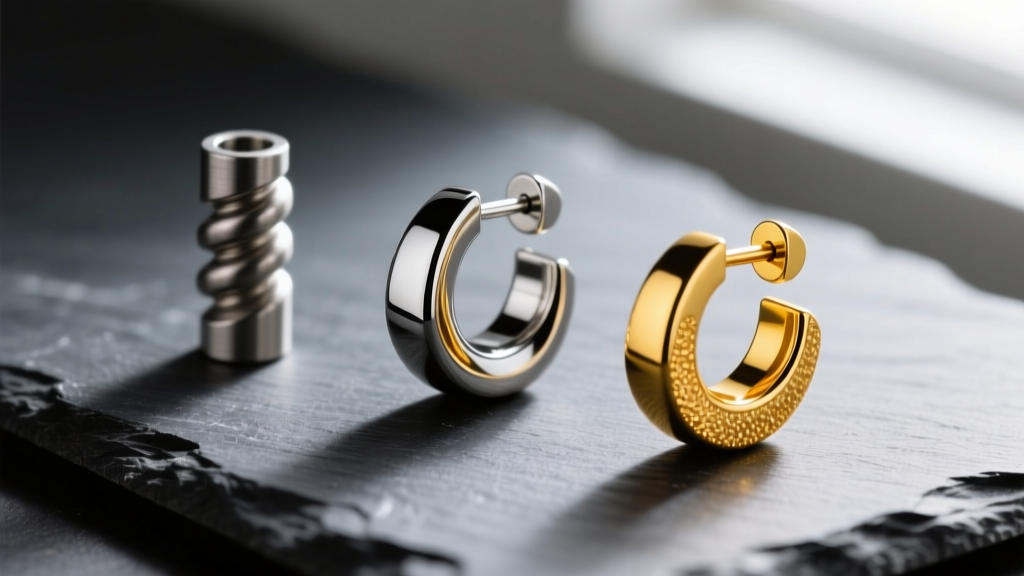
Material is only half the equation. The physical architecture of your helix earrings dictates both comfort and tissue health. The standard gauge sizes for helix piercings are 16G (1.2mm) and 14G (1.6mm). While 18G (1.0mm) wire hoops are common in budget retail stores, wearing wire that is too thin can cause the "cheese-cutter effect," where the jewelry slowly migrates and slices through the cartilage over time due to pressure and gravity.
Why External Threading Ruins Your Piercing
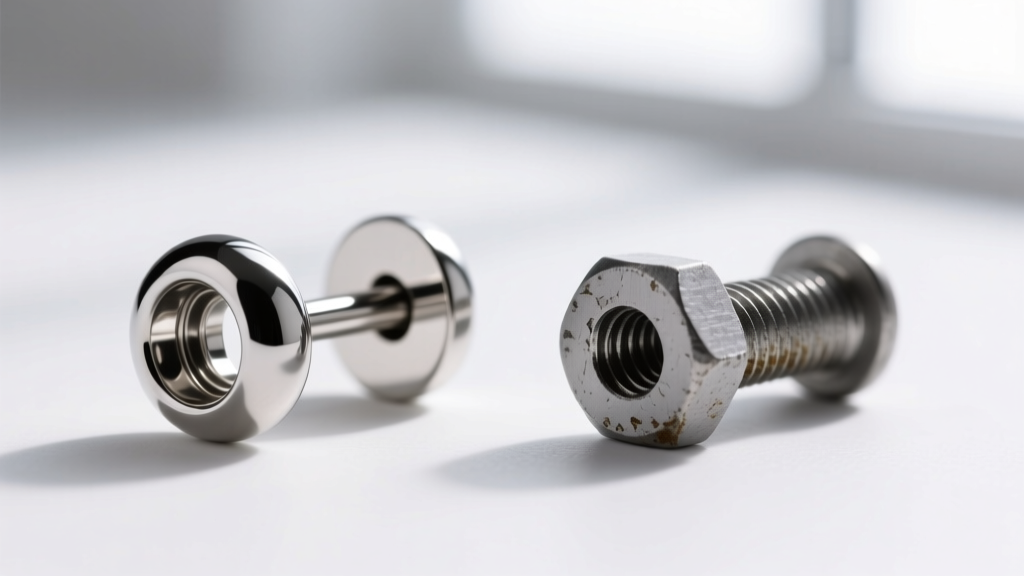
If you are buying budget helix studs, you must inspect the threading. Externally threaded jewelry features sharp, screw-like ridges on the post that must pass directly through your piercing channel. Every time you insert or remove the earring, those microscopic metal threads act like a file, scraping and tearing the delicate fistula (the tube of healed skin inside the piercing).
For true value and safety, you must only purchase internally threaded or threadless (press-fit) jewelry. Internally threaded posts have the screw mechanism hidden inside the shaft, leaving the exterior completely smooth. Threadless jewelry uses a slight bend in a tension pin to lock the decorative end into the hollow shaft. Threadless titanium jewelry is often the most budget-friendly option on the market because it requires less precision machining than internal threading, yet it offers a secure, tissue-safe fit that rivals high-end gold pieces.
Top Value-Driven Brands for Helix Jewelry
To maximize your budget, you need to understand how professional body jewelry is sold. High-quality brands typically sell the "shaft" (the post or bar) and the "end" (the decorative gem or ball) separately. While this seems confusing to beginners, it is actually a massive cost-saver. Once you own a few titanium shafts, you only need to buy new decorative ends to change your look, which are significantly cheaper.
1. NeoMetal (The Threadless Titan)
NeoMetal pioneered the threadless (push-pin) jewelry market. Their 16G titanium shafts usually cost between $8 and $12, while their titanium decorative ends range from $15 to $30. For under $40, you can secure a premium, completely nickel-free, tissue-safe helix earring that will last a lifetime. Their bezel-set synthetic opals and anodized titanium ends offer incredible aesthetic variety on a strict budget.
2. Intrinsic Body (The Budget Workhorse)
If you need basic, high-quality titanium labret studs for a fresh helix piercing, Intrinsic Body is a phenomenal choice. Their internally threaded and threadless ASTM F-136 titanium posts are frequently priced under $15. They lack the elaborate gemstone settings of luxury brands, but their mirror polish and strict adherence to APP standards make them the ultimate value pick for minimalist ear stacks.
3. Junipurr Jewelry (Accessible 14k Gold)
For those who want the prestige and warmth of solid gold without the $300 boutique markup, Junipurr offers CNC-machined 14k gold threadless ends. While their gold ends range from $60 to $120, you can pair them with a standard $10 titanium shaft. This hybrid approach—using a titanium post for the part of the jewelry that sits inside the tissue, and a gold end for the visible aesthetic—provides the look of solid gold helix earrings at a fraction of the traditional cost, while remaining incredibly safe for sensitive skin.
The Final Verdict: Building a Budget-Friendly but Safe Helix Stack
Evaluating the value of helix earrings in 2026 requires a shift in consumer mindset. The cheapest option on the market is almost always a liability disguised as a bargain. By strictly limiting your purchases to ASTM F-136 implant-grade titanium or nickel-free 14k gold, and by refusing to compromise on internal or threadless mechanics, you protect your cartilage from irreversible damage.
Build your foundation with affordable, high-quality titanium shafts from brands like NeoMetal or Intrinsic Body. Invest your remaining budget into a few statement gemstone ends rather than buying ten pairs of cheap, hazardous alloy hoops. Your ears will heal faster, your jewelry will never tarnish, and your curated stack will look indistinguishable from one that cost three times as much.