Buying Guide: Jewelry Industrial Piercing Styles & Sizing (2026)
Your 2026 guide to buying jewelry industrial piercing styles. Learn about gauge, barbell length, implant-grade materials, and threading for safe healing.

The Biomechanics of the Industrial Piercing
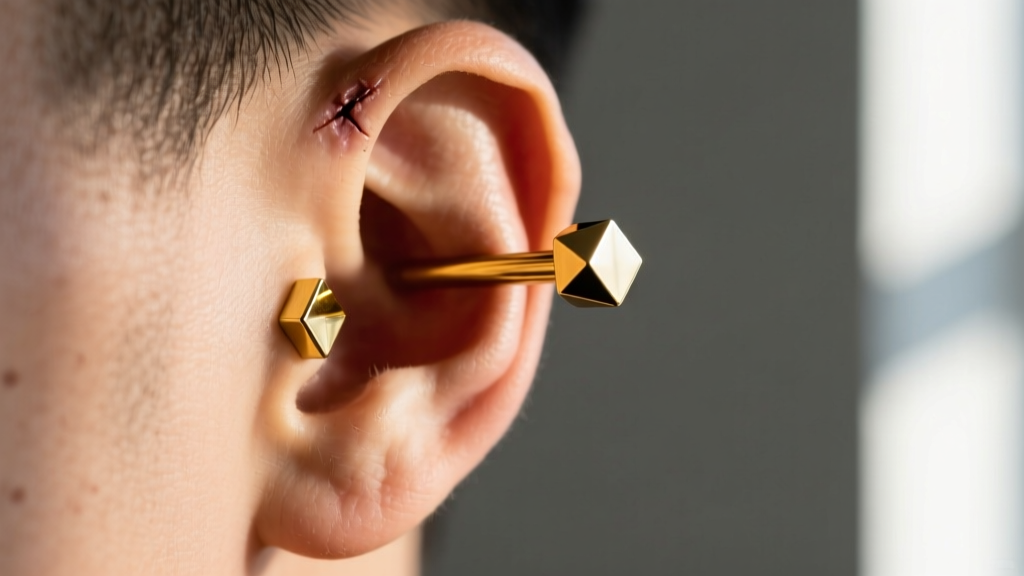
The industrial piercing, historically referred to as a scaffold, is a complex cartilage modification that connects two distinct fistulas—typically the forward helix and the upper helix rim—with a single, rigid barbell. Because it bridges two separate puncture sites, the margin for error is virtually zero. When evaluating jewelry industrial piercing options, buyers must understand that this is not merely an aesthetic choice; it is a biomechanical one. A poorly fitted barbell will act as a lever, applying uneven torque to the healing cartilage and inevitably leading to migration, pressure necrosis, or severe hypertrophic scarring.
In 2026, the market for high-end body jewelry has shifted heavily toward custom-fitted, anatomically correct pieces. Off-the-shelf, one-size-fits-all barbells are now widely recognized by professional piercers as a primary cause of industrial piercing failure. This guide breaks down the exact specifications, metallurgical standards, and structural nuances you must look for when purchasing an industrial barbell.
Sizing Metrics: Gauge and Length
The most common mistake consumers make is assuming standard sizing will fit their unique ear anatomy. The industrial barbell requires precise measurements in both thickness (gauge) and span (length).
The 'Cheese-Cutter' Effect and Gauge Selection
For an industrial piercing, 14-gauge (1.6mm) is the undisputed gold standard. While some older or poorly executed piercings may have been done at 16-gauge (1.2mm), inserting a 16g barbell into a fresh or healing industrial is a recipe for disaster. The thin wire can trigger the 'cheese-cutter effect,' where the jewelry slowly slices through the cartilage due to the tension between the two piercing sites. Always opt for 14g to distribute the pressure across a wider surface area.
Span and Length Considerations
The standard length for an industrial barbell is 1.5 inches (38mm). However, human ears vary wildly in size and curvature. A barbell that is too short will compress the tissue, restricting blood flow and causing necrosis. A barbell that is too long will catch on hair and clothing, introducing bacteria and physical trauma. Below is a breakdown of standard sizing parameters:
| Measurement | Standard Metric | Clinical Application & Notes |
|---|---|---|
| Gauge | 14g (1.6mm) | Mandatory for initial piercings to prevent migration and the cheese-cutter effect. |
| Initial Length | 1.5' to 1.75' (38-44mm) | Accommodates the severe swelling common in double-cartilage wounds during weeks 1-6. |
| Downsized Length | 1.25' to 1.5' (32-38mm) | Fitted by a professional post-swelling to sit flush against the ear without compressing the fistula. |
Metallurgy: What is Actually Safe for Cartilage?
Cartilage is avascular, meaning it lacks a direct blood supply and heals significantly slower than lobe tissue. This makes it highly susceptible to prolonged inflammation and allergic contact dermatitis. When shopping for jewelry industrial piercing styles, the material grade is non-negotiable.
ASTM F-136 Titanium vs. 316L Steel
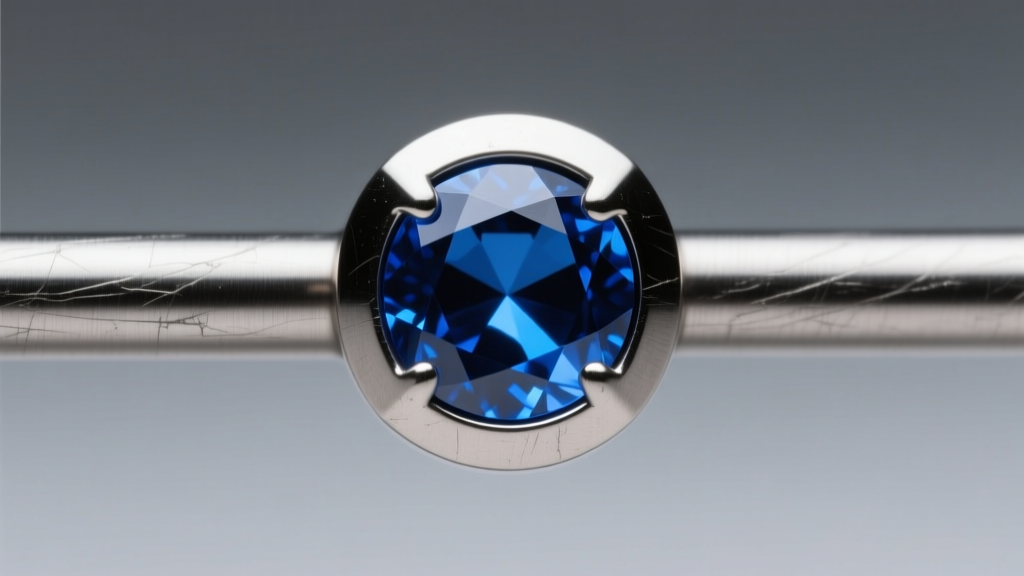
According to the Association of Professional Piercers (APP), the only acceptable metals for initial cartilage piercings are implant-grade titanium (ASTM F-136), niobium, or fused glass. You must actively avoid 'surgical steel' or 316L stainless steel for fresh industrials. 316L contains up to 10% nickel, and the polishing process used by mass-market manufacturers often traps nickel particles on the surface. In a wet, healing wound, this leaches into the tissue, causing chronic swelling and rejection.
Implant-grade titanium (ASTM F-136) is highly biocompatible, lightweight, and entirely nickel-free. Furthermore, it can be anodized to create vibrant, safe colors without the use of toxic paints or platings that can chip inside the fistula.
Threading and End Types: Avoiding Tissue Trauma
The mechanism that holds the decorative ends onto the barbell shaft plays a massive role in the healing process. Every time the jewelry is moved, the threading passes through the delicate epithelial lining of the fistula.
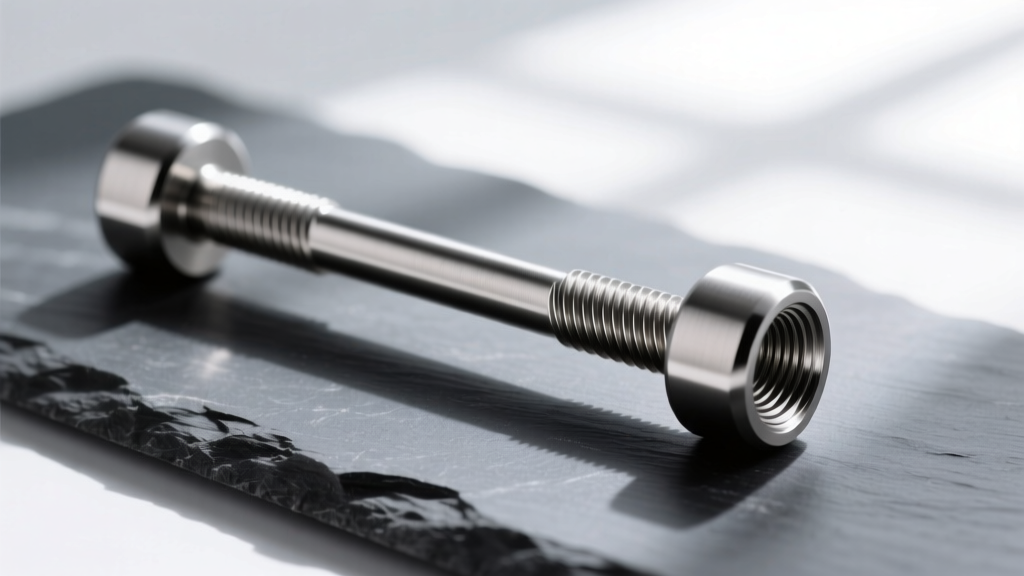
- Externally Threaded: The screw threads are on the barbell itself. This acts like a file, shredding the inside of the piercing channel upon insertion or removal. Never buy externally threaded industrial jewelry.
- Internally Threaded: The screw threads are inside the decorative end, and the barbell shaft is smooth. This is a safe, secure option that glides through the tissue without causing micro-tears.
- Threadless (Push-Pin):strong> The decorative end features a slightly bent pin that creates tension inside the hollow shaft. This is currently the preferred standard for industrials, as it eliminates cross-threading and allows for seamless, tool-free removal by a professional.
The Angle Problem: Why Custom Bends are Essential
The most critical, yet frequently overlooked, aspect of buying an industrial barbell is the angle. An industrial piercing requires the forward helix fistula and the upper helix fistula to be perfectly parallel. If they are even slightly misaligned, a standard, straight barbell will force the jewelry through the tissue at an unnatural angle.
This constant lateral pressure leads to 'angle rejection,' where the body slowly pushes the jewelry out of the skin to relieve the stress. In 2026, top-tier studios utilize a technique called 'taper testing.' Before inserting the jewelry, the piercer passes a smooth, 14g insertion taper through both holes simultaneously. If the taper does not glide through with zero resistance, the client's anatomy requires a custom-bent barbell.
Brands like Industrial Strength Body Jewelry and Anatometal offer custom-bending services. By heating and precisely bending the titanium or gold shaft to match the exact topography of the client's ear, the jewelry rests passively in the fistulas. For a deeper dive into material stress and custom fabrication, refer to Anatometal's metallurgical standards and custom fitting guidelines.
2026 Pricing and Brand Recommendations
Investing in high-quality jewelry is cheaper than paying for a revision surgery or treating a severe cartilage infection. Here is what you should expect to pay for safe, professional-grade industrial jewelry in the current market:
Entry-Level Implant Grade ($40 - $70)
Brands like Industrial Strength and NeoMetal offer excellent ASTM F-136 titanium barbells with basic threadless ends (such as plain titanium balls or small synthetic opals). This is the baseline standard for a safe initial piercing.
Premium and Fine Jewelry ($120 - $350+)
For healed industrials, or those seeking luxury aesthetics, brands like BVLA and Anatometal dominate the market. These pieces feature solid 14k or 18k gold, genuine gemstones (like sapphires or diamonds), and precision-machined bezel settings that prevent snagging. Note that gold must be alloyed for body safety; avoid rose gold or lower karats that may contain copper or zinc irritants.
Expert Troubleshooting Tip: If your industrial piercing is constantly swollen, bleeding at the ends, or developing persistent 'piercing bumps' (granulomas), do not immediately assume it is an infection. In 80% of cases, it is a mechanical issue caused by a barbell that is too long, too short, or incorrectly angled. Visit an APP-certified piercer for a hardware assessment before resorting to heavy antibiotic ointments, which can trap bacteria and stall healing.
Final Thoughts on Sourcing Your Jewelry
When purchasing jewelry industrial piercing enthusiasts must prioritize anatomical precision over fleeting aesthetic trends. Ensure your barbell is 14-gauge, crafted from ASTM F-136 titanium or niobium, and features internal or threadless connections. Most importantly, respect the geometry of your own ear. By demanding custom-fitted lengths and angles, you transform the industrial piercing from a high-risk gamble into a stunning, lifelong staple of your curation.