Troubleshooting Jewelry for Forward Helix Piercing Irritation
Struggling with irritation bumps? Learn how to choose the right jewelry for forward helix piercing to solve healing issues and swelling.

The Anatomy of a Forward Helix Irritation Bump
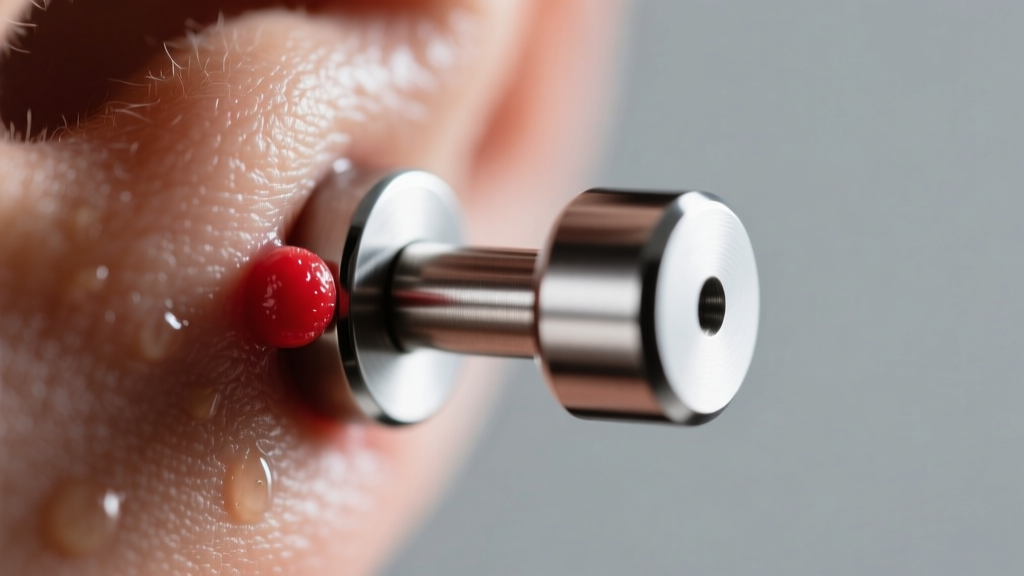
The forward helix is one of the most aesthetically striking cartilage placements, sitting precisely on the anterior crux of the ear's helix rim. However, its anatomical location makes it notoriously hostile to improper jewelry. When clients search for jewelry for forward helix piercing upgrades, they are often reacting to the sudden appearance of an irritation bump—a localized, fluid-filled or fibrous nodule adjacent to the fistula (the piercing channel).
Unlike keloids, which are genetic, overgrown scar tissues that extend beyond the original wound site, irritation bumps (hypertrophic scarring) are localized immune responses to mechanical stress, chemical irritation, or bacterial imbalance. The cartilage in the forward helix is exceptionally thin and rigid, meaning it lacks the vascular density to flush out inflammatory markers quickly. When the wrong jewelry is introduced, the body walls off the perceived trauma, resulting in a stubborn bump that will not resolve until the mechanical stressor is removed.
Why Your Current Jewelry is Causing the Problem
Choosing the correct jewelry for forward helix piercing placements requires an understanding of biomechanics, not just aesthetics. Most healing complications stem from three critical jewelry failures:
1. The Post Length Trap and Leverage
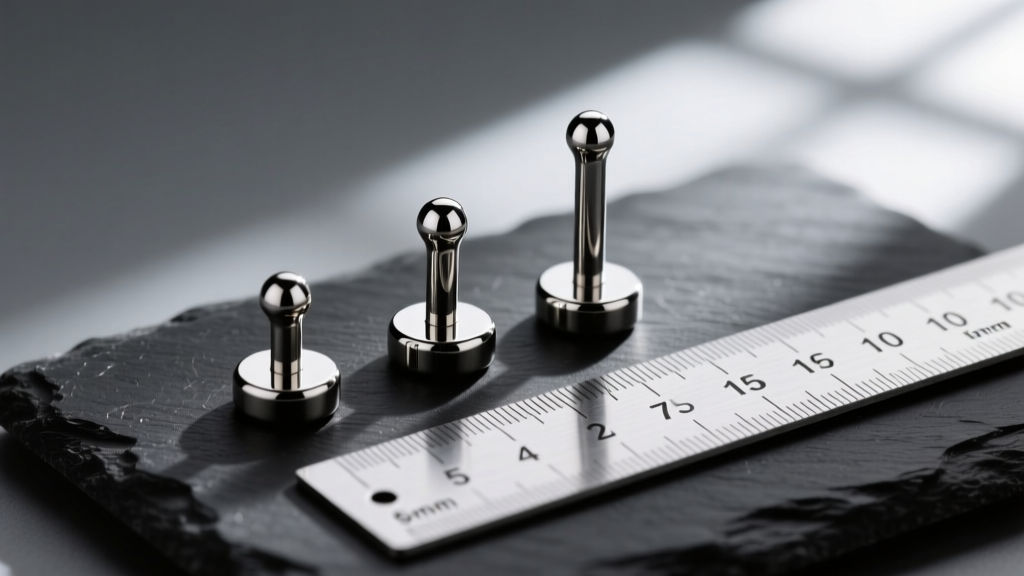
During the initial piercing phase, a professional piercer will use a longer post—typically 8mm (5/16") to 10mm (3/8")—to accommodate acute swelling. The error occurs when the wearer leaves this long post in after the swelling subsides (usually around 4 to 6 weeks). A protruding post acts as a lever. Every time you brush your hair, pull a shirt over your head, or sleep on that side, the external pressure is magnified at the internal disc, driving the post at an angle into the delicate fistula wall. This micro-trauma triggers the exact cellular response that builds an irritation bump.
2. Material Incompatibility and Nickel Leaching
Many commercial jewelry pieces are labeled "surgical steel," which is a misleading term for implant-grade standards. Standard 316L stainless steel contains between 10% and 14% nickel. In the highly saline, moist environment of a healing cartilage wound, nickel ions can leach into the tissue, causing contact dermatitis that mimics an infection and stalls the healing cascade. True implant-grade jewelry must meet specific metallurgical standards to be considered biocompatible.
3. Poor Surface Finish
Under a microscope, low-quality jewelry reveals deep scratches, pits, and tooling marks. These microscopic crevices harbor dead skin cells, sebum, and bacteria, creating a biofilm that the immune system constantly fights. High-end body jewelry is polished to a mirror finish, eliminating these hiding spots and allowing the fistula to heal smoothly against the metal.
The Forward Helix Troubleshooting Matrix
Use the following diagnostic table to identify the root cause of your forward helix complications and select the appropriate jewelry correction.
| Symptom | Probable Cause | Jewelry Solution |
|---|---|---|
| Red, fleshy bump directly on the exit hole | Mechanical stress from long posts or sleeping on the ear | Downsize to a 5mm or 6mm flat back labret (ASTM F-136 Titanium) |
| Itchy, flaky skin with yellowish crust | Nickel allergy or contact dermatitis from 316L steel | Swap to solid 14k/18k palladium-white gold or Niobium |
| Piercing angle looks skewed; jewelry sits crooked | Incorrect initial piercing angle combined with rigid jewelry | Consult a piercer for a potential re-pierce; avoid hoops entirely |
| Localized heat, throbbing, and thick green discharge | Bacterial infection (requires medical diagnosis) | Do NOT remove jewelry (risks abscess trapping); see a doctor immediately |
Hoops vs. Flat Backs: The Curvature Problem
A pervasive myth in body modification is that captive bead rings (CBRs) or seamless hoops are suitable for healing cartilage. For the forward helix, this is categorically false. The forward helix sits on a tight, curved ridge. A circular ring forces the jewelry to exit the fistula at an angle that does not match the natural tissue plane. This creates constant rotational pressure and invites debris to track up into the channel.
According to the Association of Professional Piercers (APP), initial jewelry must be straight and appropriately sized to accommodate swelling while minimizing movement. Flat back labrets are the undisputed gold standard for any forward helix placement.
The flat disc of a labret sits flush against the inner conch or scapha, distributing pressure evenly and preventing the "cheese cutter effect" that thin hoops can cause in delicate cartilage folds.
Step-by-Step Rescue Protocol for Angry Piercings
If your forward helix is currently sporting an irritation bump, follow this strict, evidence-based protocol to restore homeostasis to the tissue:
- Step 1: Downsize Immediately. Visit an APP-certified piercer to swap your long initial post for a shorter, snug-fitting titanium flat back (usually 16-gauge, 6mm length). The reduction in leverage is often enough to stop bump growth within 48 hours.
- Step 2: Sterile Saline Only. Spray 0.9% sterile wound wash (no additives, no aloe, no tea tree oil) twice daily. The American Academy of Dermatology advises against harsh chemicals like rubbing alcohol or hydrogen peroxide, which destroy newly formed fibroblasts.
- Step 3: Warm Compresses. Apply a sterile, warm saline compress for 3 to 5 minutes daily. The heat increases localized blood flow, helping the lymphatic system drain the trapped fluid comprising the bump.
- Step 4: The LITHA Method. Leave It The Hell Alone. Stop touching the bump, stop twisting the jewelry, and stop applying TikTok-trend pastes like crushed aspirin or tea tree oil, which cause chemical burns on cartilage.
Material Science: What to Buy When You Upgrade
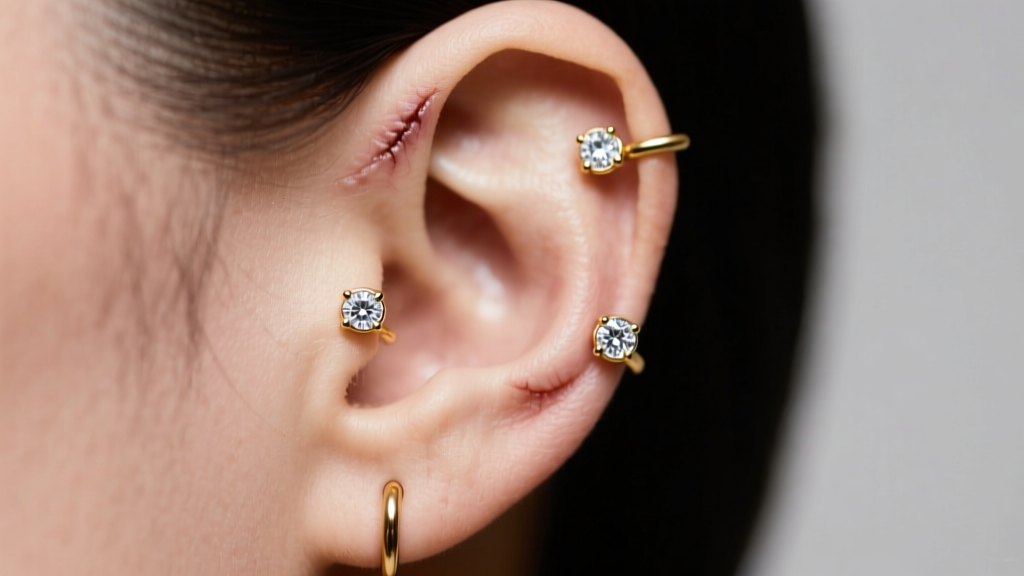
Once your forward helix is fully healed (which takes 9 to 12 months for cartilage), you may want to upgrade to decorative ends. When shopping for premium jewelry, restrict your choices to these verified materials:
- Implant-Grade Titanium (ASTM F-136): The absolute baseline for safe body jewelry. It contains zero nickel and is highly resistant to corrosion.
- Solid 14k or 18k Gold (Nickel-Free): Ensure the alloy is specifically formulated for body jewelry (often alloyed with palladium or silver instead of nickel). Plated gold is unacceptable, as the plating will wear off and expose the reactive base metal beneath.
- Niobium: A highly reactive element that forms a safe, inert oxide layer. It is an excellent, lightweight alternative for those with severe metal sensitivities, though it cannot be anodized to the same bright colors as titanium.
When to Consult a Professional Piercer or Doctor
While irritation bumps are common and usually benign, certain failure modes require immediate professional intervention. If the jewelry begins to visibly migrate (the fistula becomes shallower and the tissue between the holes thins), the body is actively rejecting the foreign object. Furthermore, if you experience systemic symptoms like a fever, or if the redness spreads outward from the ear in hot, radiating streaks, bypass the piercing studio and visit an urgent care clinic, as cartilage infections (perichondritis) can lead to permanent ear deformation if left untreated. By respecting the biomechanics of the ear and investing in high-quality, properly fitted flat back labrets, you can transform a problematic forward helix into a lifelong, flawless accessory.