Rook Piercing Jewelry Materials: Titanium, Gold, and Niobium
Discover the safest metals for rook piercing jewelry. Compare implant-grade titanium, solid gold, and niobium for healing and long-term wear.

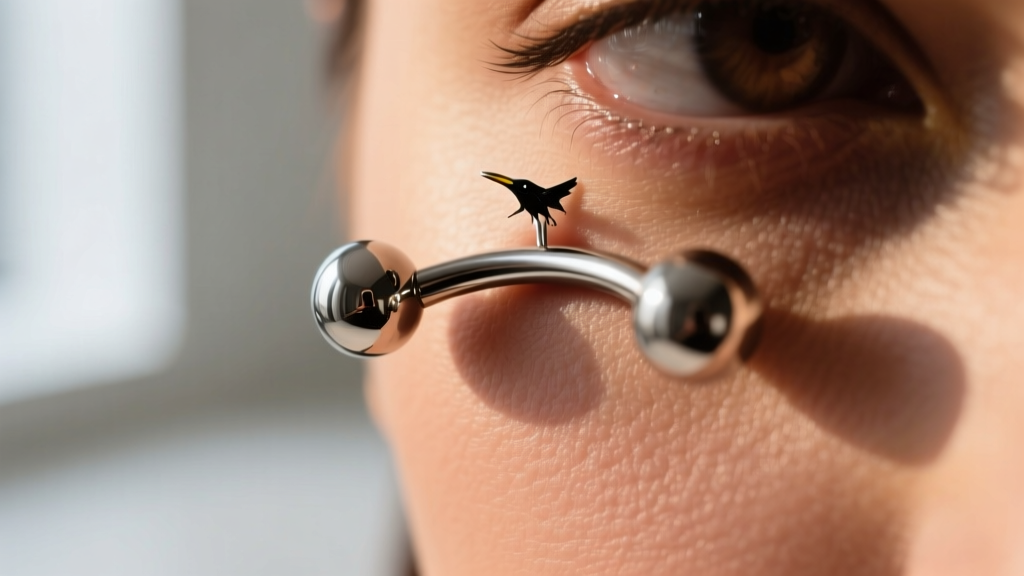
The Unique Anatomy of the Rook and Why Material Matters
The rook piercing is located in the antihelix of the ear, a dense, thick fold of cartilage that sits just above the daith and below the forward helix. Because of its specific anatomical placement, the rook is subjected to constant pressure, friction from hair and headphones, and a high degree of tension during the healing process. This makes the choice of rook piercing jewelry not just a matter of aesthetics, but a critical factor in whether the piercing thrives or develops chronic irritation bumps.
When selecting metals for this specific cartilage fold, biocompatibility is paramount. The fistula (the tube of healed tissue) in a rook is notoriously sensitive. Substandard metals can leach heavy ions, causing contact dermatitis, hypergranulation, and delayed healing. In 2026, professional piercers and metallurgists alike emphasize strict adherence to implant-grade standards. Let us break down the metallurgical properties of the best materials for your rook, separating the safe investments from the hazardous imposters.
Implant-Grade Titanium: The Undisputed Champion for Healing
If you are getting a fresh rook piercing, or struggling with a stubborn irritation bump in an old one, implant-grade titanium is the gold standard—ironically speaking. Specifically, you need to look for ASTM F-136 compliant titanium. This is the exact same alloy (Ti6Al4V ELI) used in surgical joint replacements and pacemaker casings.
Understanding the Passivation Layer
The magic of ASTM F-136 titanium lies in its passivation layer. When exposed to oxygen, the surface of the titanium instantly forms a microscopic, inert layer of titanium dioxide. This layer prevents the metal from reacting with your bodily fluids, ensuring zero nickel leaching and virtually eliminating the risk of metal-induced allergic reactions. Furthermore, titanium is highly paramagnetic, meaning it is completely safe for MRI scans, a crucial consideration for long-term body jewelry.
Expert Insight: Always verify that your piercer is using implant-grade titanium, not just 'titanium-colored' or commercial-grade titanium. Reputable brands like Anatometal, Industrial Strength, and NeoMetal provide mill certificates verifying their ASTM F-136 compliance.
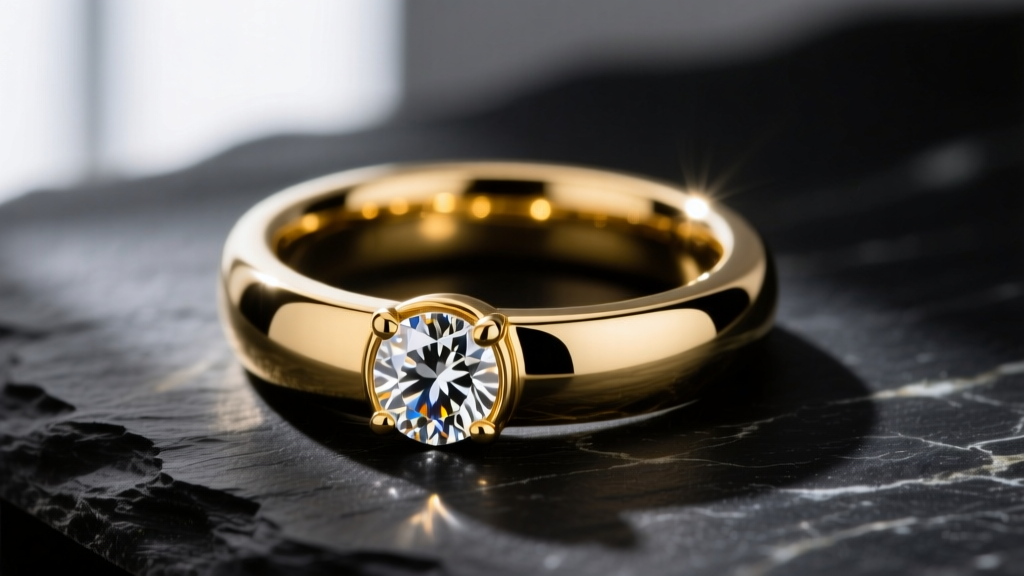
Solid Gold (14k and 18k): Luxury for Healed Rooks
Once your rook is fully healed (which can take 12 to 18 months due to the density of the antihelix), you may want to upgrade to solid gold. However, not all gold is created equal. For body jewelry, 14k and 18k solid gold are the only acceptable karats. Pure 24k gold is far too soft; it scratches easily, and those microscopic grooves become breeding grounds for bacteria in the tight confines of the rook fold.
The Alloy Problem: Why Rose Gold and White Gold Require Scrutiny
Gold must be alloyed with other metals to achieve the necessary hardness for a curved barbell or clicker hoop. The specific alloy dictates the biocompatibility:
- Yellow Gold: Usually alloyed with silver, copper, and zinc. High-quality 14k and 18k yellow gold from premium brands like BVLA or Maria Tash is exceptionally well-tolerated in healed rooks.
- White Gold: Traditionally alloyed with nickel to achieve a silver color. Nickel is a primary contact allergen. If you want white gold, you must specifically seek out nickel-free white gold, which is alloyed with palladium instead.
- Rose Gold: Achieves its pink hue through a high copper content. Copper is highly reactive with the saline and sweat that accumulates in the rook fold, often leading to green discoloration of the skin and localized irritation. Most professional piercers advise against rose gold for cartilage piercings.
Niobium: The Hypoallergenic Elemental Alternative
Niobium is an elemental metal, meaning it is not an alloy and contains absolutely no nickel or other reactive additives. It is highly biocompatible and frequently used as a secondary option for clients who have hyper-specific sensitivities, even to the trace elements in titanium alloys.
One unique property of niobium is its ability to be anodized. By running an electrical current through the metal in an electrolyte bath, piercers can change the surface color of niobium rook jewelry to virtually any shade on the spectrum—without using paints or dyes that could flake off into the piercing channel. The primary drawback of niobium is that it is softer than titanium and cannot be polished to a flawless mirror finish, making it slightly less ideal for the initial healing phase but excellent for long-term wear.
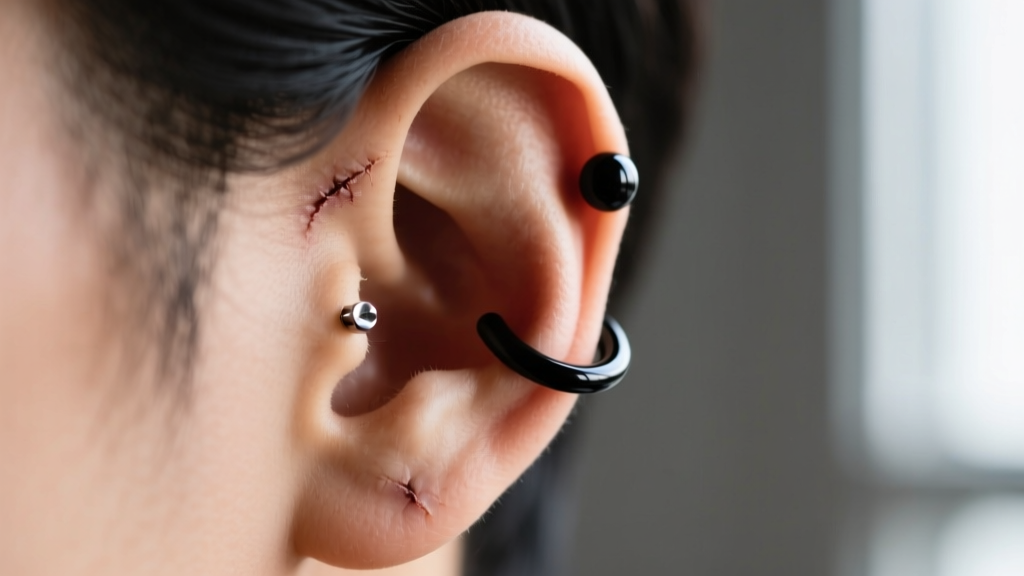
Materials to Strictly Avoid in Your Rook
The cartilage fold of the rook is a high-friction, low-airflow environment. Introducing reactive metals here is a recipe for chronic inflammation, embedding, and scarring. Avoid the following at all costs:
- Surgical Steel (316L / 316LVM): Despite the medical-sounding name, surgical steel contains between 8% and 10% nickel. The 'VM' (Vacuum Melt) process reduces surface leaching but does not eliminate the nickel content. It is unacceptable for healing rooks.
- Sterling Silver: Silver tarnishes rapidly when exposed to sulfur and moisture, creating silver sulfide. In a healing cartilage piercing, this tarnish can permanently stain the inside of the fistula black (localized argyria) and cause severe tissue irritation.
- Plated or Filled Metals: Gold-plated or titanium-anodized over brass or steel bases will eventually wear down. Once the microscopic plating chips, the reactive base metal is exposed directly to your open wound.
Material Comparison Chart for Rook Piercings
| Material | Biocompatibility | Best Use Case | Polish Quality | Estimated Price Range (16g) |
|---|---|---|---|---|
| Implant-Grade Titanium (ASTM F-136) | Exceptional | Initial healing & irritation bumps | Flawless Mirror | $35 - $85 |
| Solid 14k/18k Yellow Gold | Excellent | Fully healed piercings | High Mirror | $120 - $450+ |
| Niobium | Exceptional | Healed piercings & anodized colors | Satin / Matte | $40 - $90 |
| Surgical Steel (316L) | Poor (Contains Nickel) | Not recommended | High Mirror | $10 - $25 |
Beyond the Metal: Threading, Gauge, and Surface Finish
Selecting the right metal is only half the battle. The physical construction of the rook piercing jewelry dictates how smoothly it passes through the delicate fistula.
Threading Standards
For curved barbells, internally threaded or threadless (push-pin) designs are mandatory. Externally threaded jewelry features sharp, jagged threads on the end of the barbell that must pass through the piercing. In a tight rook fold, these threads act like a micro-cheese grater, tearing the newly formed tissue and introducing bacteria. Threadless jewelry, which relies on the tension of a slightly bent pin, is currently the industry favorite for its seamless insertion and secure fit.
Gauge and Dimensions
The standard gauge for a rook piercing is 16g (1.2mm), though some piercers prefer 14g (1.6mm) for added stability in thicker antihelix folds. A 16g curved barbell typically requires an inner diameter of 5/16' (8mm) or 3/8' (10mm) to accommodate initial swelling. Downsizing to a snugger fit once the swelling subsides is critical; leaving a long, bulky barbell in the rook invites snagging on hairbrushes and towels, which is the leading cause of migration and rejection.
According to the Association of Professional Piercers (APP), the surface finish of the jewelry is just as vital as the material. A true mirror polish reduces friction and prevents bacterial adhesion. Brands like Anatometal utilize multi-stage tumbling and hand-polishing processes to ensure their titanium and gold pieces meet these rigorous medical-grade surface standards.
Expert Verdict: Building Your Rook Jewelry Wardrobe
Successfully navigating a rook piercing requires patience and strict material discipline. For the first year, rely exclusively on internally threaded or threadless implant-grade titanium (ASTM F-136). Once the piercing is completely settled, you can safely transition to high-quality, nickel-free 14k or 18k solid gold clickers or custom curved barbells. By understanding the metallurgy behind your jewelry, you protect the integrity of your cartilage and ensure your rook piercing remains a stunning, irritation-free staple of your ear curation.