18k Gold Earrings: A Technical Guide to Alloys, Durability & Care
Discover the technical science behind 18k gold earrings. Expert analysis of alloy compositions, structural durability, gauge sizing, and hypoallergenic traits.

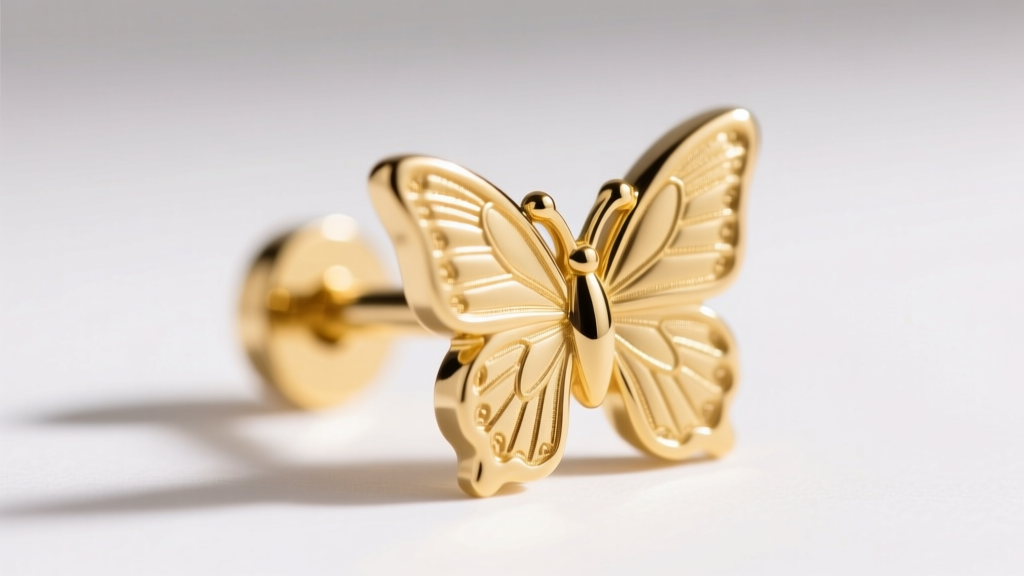
When evaluating fine jewelry, 18k gold earrings represent the pinnacle of balance between pure gold's luxurious luster and the structural necessity of alloyed metals. However, the terminology surrounding karats, alloy compositions, and structural integrity is often obscured by marketing fluff. As a technical deep dive into horological and jewelry metallurgy, this guide strips away the guesswork. We will examine the exact elemental breakdowns, Vickers hardness metrics, and mechanical failure points of 18k gold earrings to help you make scientifically informed purchasing decisions.
The Exact Metallurgy of 18k Gold Alloys
The '18k' designation is not merely a stamp; it is a strict mathematical ratio. According to the World Gold Council, 18-karat gold consists of exactly 75% pure gold (Au) and 25% secondary alloy metals. Pure 24k gold is far too malleable for daily wear—it would bend under the slightest pressure and fail to secure gemstones. The 25% alloy matrix dictates the color, tensile strength, and oxidation resistance of the final piece.
Yellow, Rose, and White: The Elemental Breakdown
- 18k Yellow Gold: Typically alloyed with 12.5% silver (Ag) and 12.5% copper (Cu). This specific ratio preserves the natural warm wavelength of pure gold while increasing the Vickers hardness (HV) from roughly 25 HV (pure gold) to approximately 125 HV.
- 18k Rose Gold: The copper content is significantly increased, usually to 20% copper and 5% silver. The higher copper concentration not only shifts the light absorption spectrum to produce a pinkish-red hue but also marginally increases the alloy's tensile strength.
- 18k White Gold: Pure gold cannot be made truly white. 18k white gold relies on bleaching agents like palladium (Pd), nickel (Ni), or manganese (Mn) to neutralize the yellow. It is almost universally plated with a microscopic layer of rhodium to achieve a mirror-like, chrome-white finish.
Structural Integrity: 18k vs. 14k for Different Earring Types
Because 18k gold contains more pure gold than 14k gold (which is 58.3% gold), it is inherently softer and more prone to scratching and deformation. This metallurgical reality means that 18k gold is not universally ideal for every earring silhouette. The Gemological Institute of America (GIA) notes that jewelry design must adapt to the physical limitations of the chosen alloy.
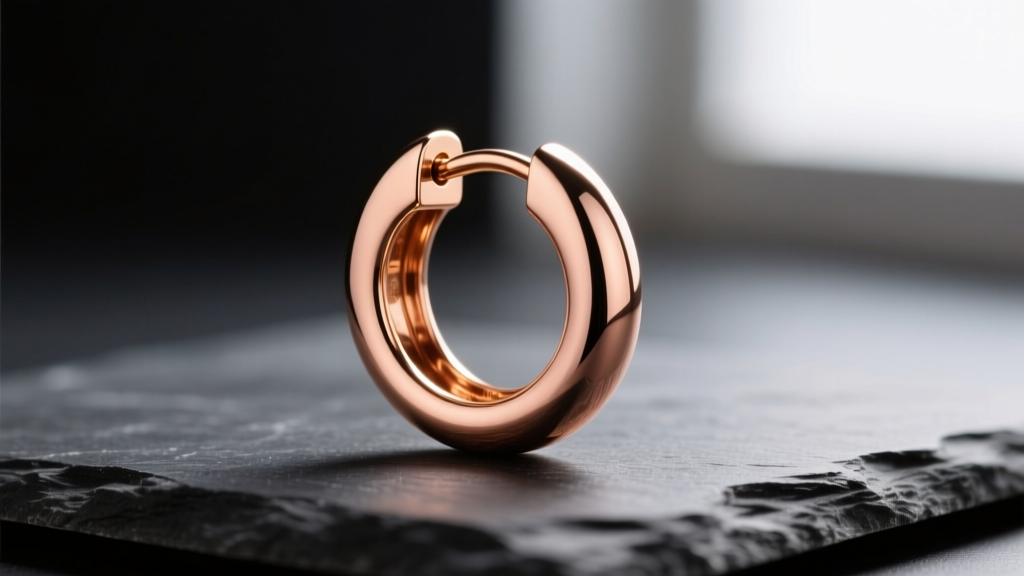
| Earring Style | Recommended Karat | Technical Rationale |
|---|---|---|
| Stud Earrings | 18k Gold | Posts are short and supported by the earlobe. The softer metal is less likely to snap under shear stress compared to brittle lower-karat alloys. |
| Huggies | 18k Gold | Cast with thick cross-sections. The weight and rigidity of a thick 18k casting provide ample structural integrity without relying on high tensile strength. |
| Thin Wire Hoops | 14k Gold | Thin 18k wire will easily ovalize and warp when pulled through the piercing. 14k gold's higher copper/zinc content provides necessary spring-back memory. |
| Tension Settings | 14k or Platinum | 18k gold lacks the elastic modulus required to maintain high-tension pressure on a diamond without gradual stretching and stone loss. |
The Hypoallergenic Reality: Nickel, Palladium, and Rhodium
A common misconception is that all 18k gold earrings are inherently hypoallergenic. While pure gold is entirely biocompatible, the 25% alloy matrix can trigger severe contact dermatitis. This is most prevalent in 18k white gold.
Under the EU Nickel Directive 94/27/EC, jewelry intended for prolonged skin contact must not release nickel at a rate greater than 0.5 µg/cm²/week. Many mass-market 18k white gold earrings fail this standard once their rhodium plating wears away.
If you have sensitive skin or a known nickel allergy, you must specifically seek out palladium-alloyed 18k white gold. Palladium is a platinum-group metal that is naturally white and completely hypoallergenic. While palladium-white gold commands a 20% to 30% price premium over nickel-white gold due to the density and cost of palladium, it eliminates the risk of allergic reactions and requires less frequent rhodium re-plating.
Gauge Sizing and Post Thickness Specifications
The structural softness of 18k gold necessitates a divergence in standard gauge sizing. A standard lobe piercing is typically 20-gauge (0.81mm) or 18-gauge (1.02mm). When manufacturing 14k gold earrings, a 20-gauge post offers sufficient rigidity. However, an 18k gold post at 20-gauge is highly susceptible to bending during insertion or while sleeping.
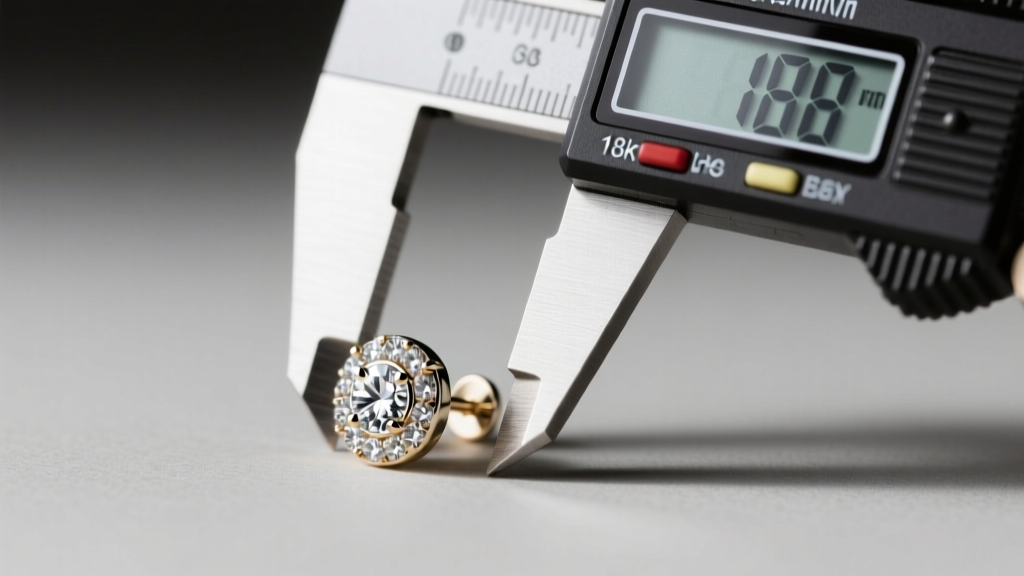
To compensate for the lower Vickers hardness, expert bench jewelers and high-end manufacturers routinely cast 18k gold earring posts at 18-gauge (1.02mm) or even 17-gauge (1.14mm). This slight increase in cross-sectional diameter exponentially increases the moment of inertia, making the 18k post as resistant to bending as a thinner 14k post. When purchasing 18k gold studs, always verify the post gauge; if a brand is selling 20-gauge 18k posts, they are prioritizing gold weight savings over long-term structural durability.
Pricing Mechanics and Market Valuation
Understanding the pricing architecture of 18k gold earrings protects consumers from inflated retail markups. The base material cost is directly tethered to the spot price of gold. For example, if the spot price of gold is $2,000 per troy ounce (approx. $64.30 per gram), the raw melt value of the gold in a 5-gram pair of 18k earrings is calculated as follows:
5 grams × 0.75 (purity) × $64.30 = $241.12 in raw gold value.
However, the final retail price incorporates the 'craftsmanship multiplier.' For basic cast studs, this multiplier is typically 2.5x to 4x the melt value. For hand-fabricated, micro-pave, or artisan-crafted 18k gold earrings, the multiplier can easily exceed 10x. Always weigh the intrinsic metal value against the design complexity to determine if the retail premium is justified.
Expert Maintenance: Preventing Alloy Degradation
Maintaining 18k gold earrings requires specific protocols tailored to their alloy composition. Avoid using harsh chemical dips or ultrasonic cleaners on 18k rose gold; the high copper content can oxidize and darken if exposed to aggressive ammonia-based solutions. Instead, use a mild, phosphate-free dish soap and a soft-bristled brush.
For 18k white gold earrings, monitor the high-friction zones (such as the post and the butterfly backing) for signs of yellowing. This indicates that the rhodium plating has worn through to the underlying pale-yellow alloy. Depending on your skin's pH and wear frequency, expect to send 18k white gold earrings to a jeweler for electroplating every 12 to 18 months to maintain their optical brilliance.


