Why the 4mm Earring Size Dominates 2026 Ear Styles
Discover why the 4mm earring size is the ultimate 2026 trend for curated ear stacks. Explore placement guides, material grades, and styling frameworks.

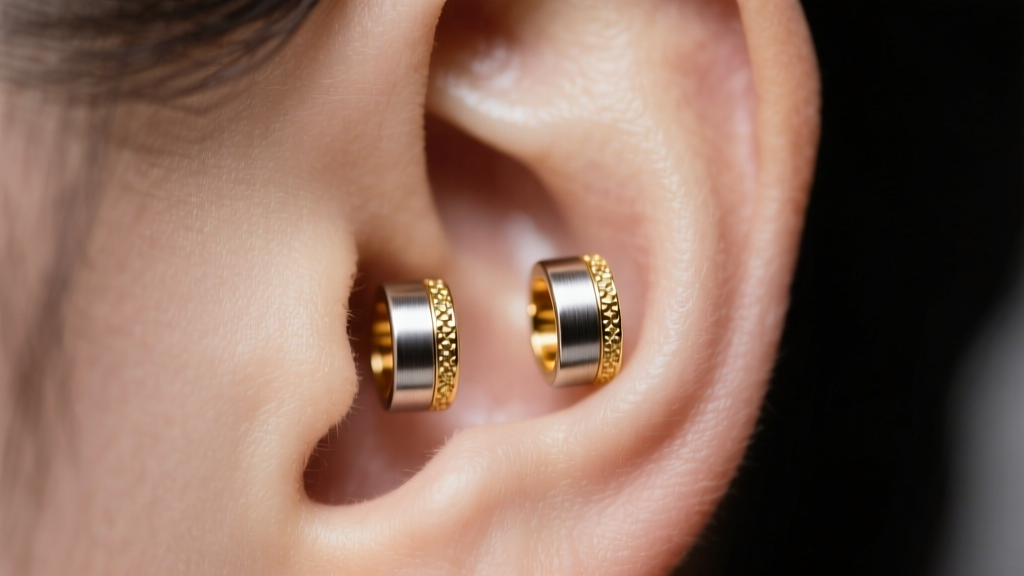
In the evolving landscape of fine jewelry and body modification, the shift toward "quiet luxury" and hyper-curated ear stacks has cemented a new industry standard. As we navigate the style landscape of 2026, the 4mm earring size has emerged as the undisputed goldilocks dimension for modern piercings. Neither too loud nor too subtle, this specific millimeter measurement bridges the gap between delicate micro-jewelry and statement pieces, offering unparalleled versatility across diverse anatomical placements.
Whether you are evaluating a 4mm round brilliant diamond for a primary lobe piercing, selecting a 4mm opal cabochon for a threadless flat piercing, or opting for a 4mm thick huggie hoop, understanding the spatial dynamics of this size is crucial for achieving a balanced, aesthetically pleasing ear curation. This comprehensive trend analysis breaks down the gemological, anatomical, and material science behind the 4mm earring size phenomenon.
The Rise of the 4mm Earring Size in Modern Curation
Over the past decade, the jewelry industry saw a bifurcation in sizing trends: the ultra-micro 2mm studs favored for constellation clusters, and the bold 6mm+ statement pieces designed for standalone wear. However, 2026 style forecasts highlight a definitive consolidation around the 4mm earring size. This shift is largely driven by the maturation of the "curated ear" trend, where collectors prioritize cohesive, harmonious stacks over mismatched, chaotic assortments.
A 4mm end or stone provides enough surface area to catch the light and showcase intricate faceting or enamel work, yet remains compact enough to sit flush against the ear's complex topography without snagging on hair or clothing. According to insights from the Association of Professional Piercers (APP), jewelry that sits flush and minimizes friction is not only an aesthetic triumph but a functional necessity for long-term piercing health, particularly in high-mobility areas like the helix and tragus.
Dimensional Breakdown: What 4mm Actually Looks Like
To truly master the 4mm earring size, one must understand how this measurement translates across different jewelry categories. The visual weight of a 4mm object changes drastically depending on its shape, setting, and material.
Studs and Gemstones (The 0.25ct to 0.30ct Sweet Spot)
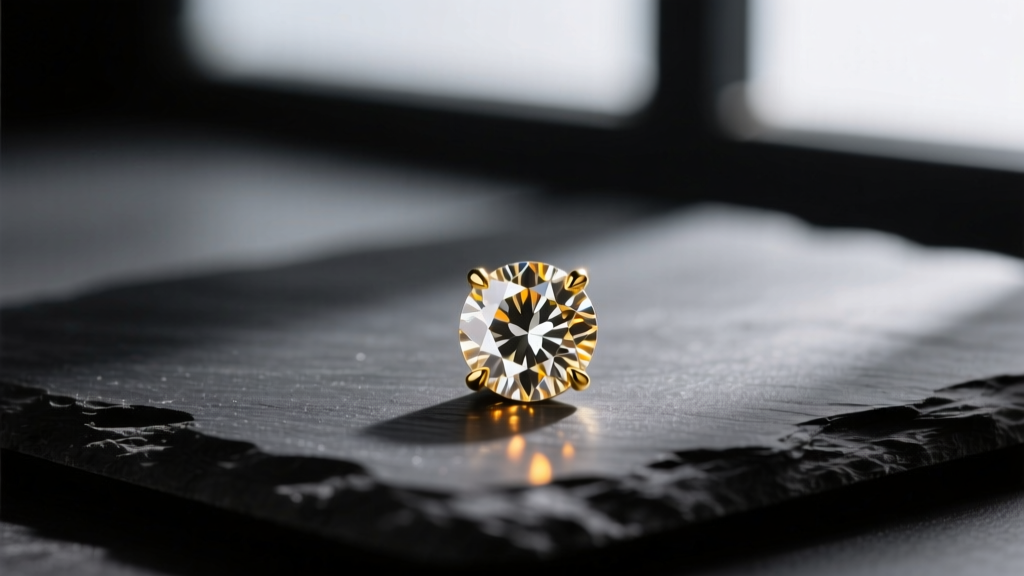
In gemology, a 4mm round brilliant diamond or moissanite equates to approximately 0.25 to 0.30 carats, depending on the depth of the cut. According to the Gemological Institute of America (GIA), a well-proportioned 4mm round brilliant offers exceptional light return (scintillation) without the steep price-per-carat premium associated with the 0.50ct (approx. 5.1mm) threshold. For colored gemstones like sapphires or emeralds, a 4mm cushion or oval cut provides a rich, saturated window of color that anchors an ear stack without overwhelming adjacent piercings.
Threadless Ends and Ball Closures
When discussing threadless ends or ball closures for flat-back labrets, a 4mm sphere or decorative end is the standard baseline for 18-gauge and 16-gauge body jewelry. A 4mm ball provides enough grip for a piercer or wearer to manipulate during insertion, while maintaining a low profile that prevents the "helmet head" effect often caused by 5mm or 6mm ends in close-proximity piercings like the rook or daith.
Anatomical Placement: Where 4mm Shines Brightest
The success of any earring relies heavily on its interaction with ear anatomy. The 4mm earring size is uniquely suited for specific piercing placements where spatial real estate is limited.
| Piercing Placement | 4mm Suitability | Anatomical Rationale |
|---|---|---|
| Tragus | Optimal | The tragus is a small, thick cartilage flap. A 4mm end sits perfectly within the boundaries without rubbing against the ear canal or headphone ear cups. |
| Helix / Flat | Highly Recommended | Allows for multi-piercing stacks (e.g., a flat, mid-helix, and upper helix) without the jewelry overlapping or tangling in hair. |
| Inner Conch | Conditional | While a 4mm stud works beautifully for a minimalist conch, many opt for 5mm-8mm here to fill the larger cartilage bowl. 4mm is best for secondary conch placements. |
| Standard Lobe | Versatile | Serves as an excellent secondary or tertiary lobe piece, or a subtle, elegant primary stud for professional environments. |
Material Grades and Pricing Tiers for 4mm Ends
When investing in the 4mm earring size, material integrity is non-negotiable. The proximity of the jewelry to the piercing channel demands biocompatible metals that resist oxidation and minimize allergic contact dermatitis.
- Implant-Grade Titanium (ASTM F-136): The undisputed champion for fresh piercings and sensitive skin. A 4mm titanium threadless end with a synthetic stone typically ranges from $35 to $65. Brands like NeoMetal and BVLA dominate this space with precision-machined 4mm ends that guarantee a secure tension fit.
- Solid 14k and 18k Gold: For healed piercings, nickel-free 14k or 18k gold offers heirloom longevity. A 4mm solid gold bezel-set end will generally cost between $150 and $350, depending on the karat weight and whether the stone is natural or lab-grown.
- Lab-Grown vs. Natural Diamonds: A 4mm (0.25ct) natural diamond stud in a 14k gold martini setting can range from $400 to $900 based on the 4Cs. Conversely, a lab-grown diamond of the exact same 4mm dimensions and high clarity/color grading will typically cost $150 to $250, offering identical optical properties at a fraction of the environmental and financial cost.
Styling Framework: Building a 4mm-Centric Ear Stack
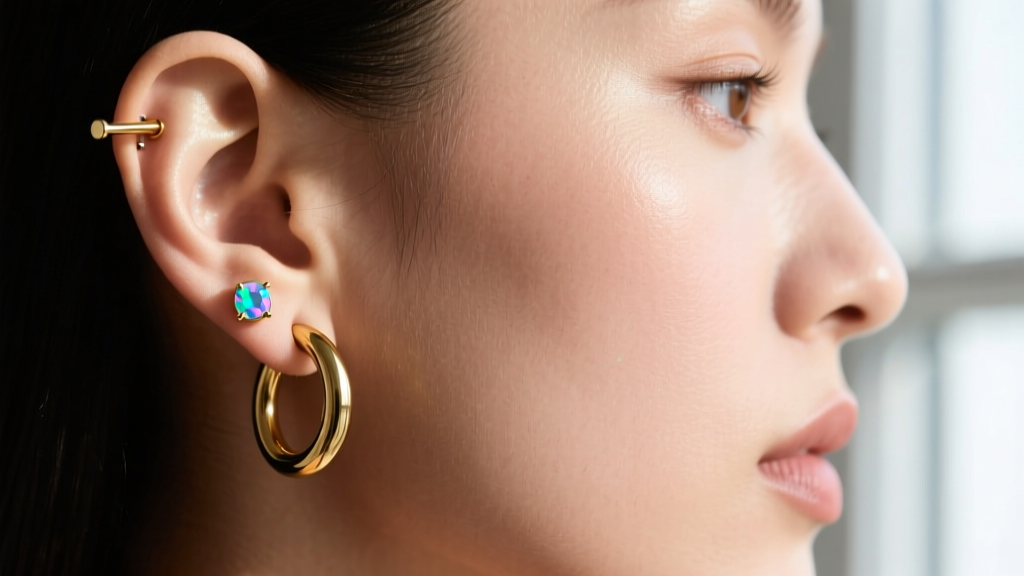
Creating a cohesive ear stack requires a deliberate distribution of visual weight. The 4mm earring size acts as the "anchor" or the "bridge" in a well-planned curation. Here is a professional framework for integrating 4mm pieces into your layout:
"In 2026, the most sophisticated ear stacks rely on a rhythm of repetition. By anchoring your stack with two or three 4mm elements—perhaps a 4mm sapphire in the flat, a 4mm gold bead in the upper helix, and a 4mm diamond in the second lobe hole—you create a subconscious visual harmony that makes the entire ear look intentionally designed rather than randomly accumulated." — Contemporary Piercing & Curation Guidelines
The Gradient Technique: If you have three lobe piercings, use a 5mm or 6mm stud in the primary (lowest) lobe, step down to a 4mm earring size in the second lobe, and finish with a 3mm or 2.5mm micro-stud in the third lobe. This upward gradient draws the eye elegantly toward the upper ear cartilage.
Common Sizing Mistakes and How to Avoid Them
Despite its versatility, styling with the 4mm earring size comes with specific pitfalls that can compromise both aesthetics and comfort.
Confusing Diameter with Gauge
A frequent error among jewelry novices is confusing the decorative end size (4mm diameter) with the post thickness (gauge). A 4mm ball end can be attached to a 1.2mm (16g) or 1.0mm (18g) post. Always verify your piercing's gauge before purchasing threadless or threaded ends, as a 16g pin will not fit securely into an 18g post without professional modification.
Ignoring the Setting Profile
A 4mm stone in a low-profile bezel setting will sit entirely differently than a 4mm stone in a high-prong martini setting. For cartilage piercings like the helix or forward helix, always opt for bezel or low-profile prong settings. High prongs increase the overall height of the jewelry, creating a snag hazard that can lead to irritation bumps and delayed healing.
Overlooking Pin Tension in Threadless Jewelry
When using a 4mm threadless end, the security relies entirely on the bent pin inside the hollow post. For a 4mm end, which carries moderate weight, the pin must be bent at a precise 10 to 15-degree angle before insertion. If the pin is left straight, the 4mm end will easily fall out, resulting in the loss of your jewelry.
Final Thoughts on the 4mm Standard
The dominance of the 4mm earring size in 2026 is not a fleeting fad; it is a functional evolution of body jewelry design. By perfectly balancing visual impact with anatomical ergonomics, 4mm studs, ends, and hoops provide the foundation for sophisticated, comfortable, and timeless ear curations. Whether you are investing in implant-grade titanium for a fresh tragus piercing or selecting a lab-grown diamond for a timeless lobe stud, embracing the 4mm standard ensures your jewelry collection remains both relevant and resilient against shifting micro-trends.


