Barbed Wire Hoop Earrings: Ultimate Cleaning & Care Guide
Learn how to safely clean, polish, and maintain barbed wire hoop earrings. Expert tips to remove tarnish from crevices and prevent snagging.

The Unique Maintenance Challenges of Barbed Wire Designs
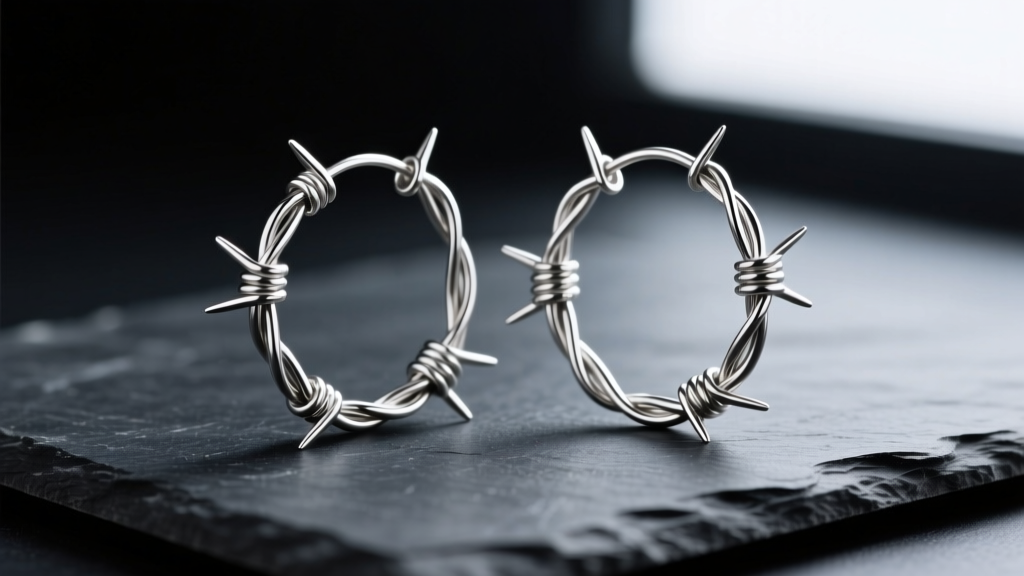
Barbed wire hoop earrings have surged in popularity, blending alternative edge with high-fashion aesthetics. However, their distinct geometry—characterized by twisted wire segments and protruding "barbs" (often created via soldered jump rings, pinched wire, or cast spikes)—creates a maintenance nightmare if left unaddressed. Unlike smooth, continuous hoops, the micro-crevices in barbed wire designs act as magnets for sebum, dead skin cells, keratin, and cosmetic residue.
When this organic matter mixes with environmental sulfur, it accelerates tarnishing, particularly in the deep undercuts of the twists. Furthermore, the sharp points of the barbs pose a structural risk, easily catching on textiles and hair, which can bend the wire or damage the clasp mechanism. Proper care for barbed wire hoop earrings requires a targeted approach that goes beyond a simple wipe-down, focusing on deep crevice cleaning, material-specific polishing, and strategic storage to preserve both the metal and your earlobes.
Essential Cleaning Supplies for Textured Hoops
Before you begin, gather the right tools. Using abrasive materials or harsh chemicals can strip plating or scratch high-polish finishes. According to the Gemological Institute of America (GIA), mild, pH-neutral solutions are always the safest starting point for textured metal jewelry.
- pH-Neutral Dish Soap: A gentle degreaser like Dawn is ideal for breaking down sebum and body oils without reacting with precious metals.
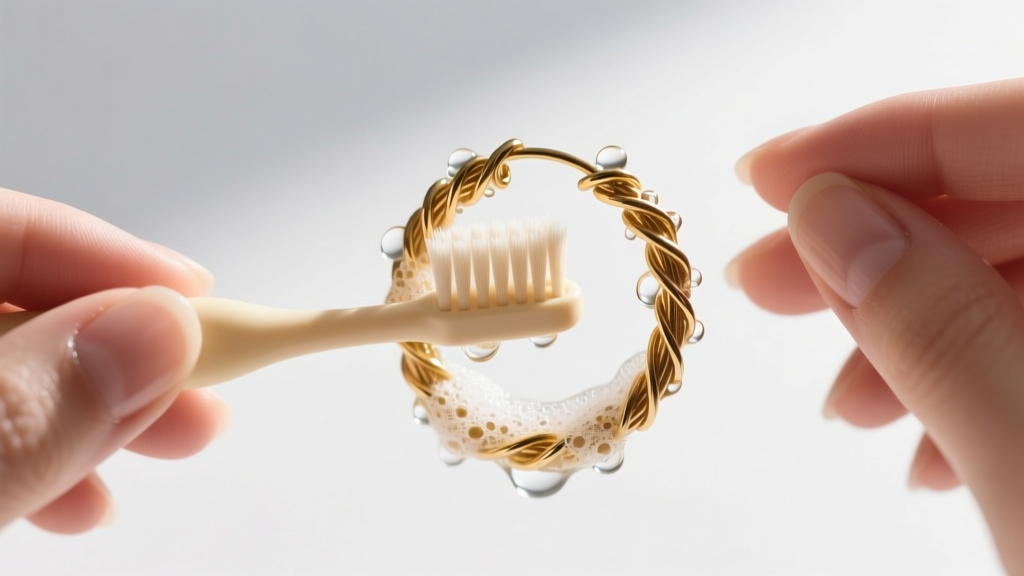
- Extra-Soft Baby Toothbrush: Standard toothbrush bristles are too stiff and can scratch gold vermeil or silver. A baby toothbrush allows you to agitate the crevices safely.
- Distilled Water: Tap water contains minerals that can leave hard water spots in the deep twists of the barbed wire design. Always use distilled water for the final rinse.
- Lint-Free Microfiber Cloths: Standard cotton towels will snag on the barbs and leave behind fibers that are nearly impossible to remove from the wire twists.
- Impregnated Polishing Cloth: A Sunshine cloth or similar jeweler's cloth is essential for removing surface tarnish from the exposed, smooth sections of the hoop.
Step-by-Step Cleaning Routine
Follow this meticulous routine every 3 to 4 weeks, or more frequently if you wear your barbed wire hoop earrings daily or live in a high-humidity environment.
Step 1: The Pre-Soak
Fill a small glass bowl with warm (not hot) distilled water and add two drops of pH-neutral dish soap. Submerge the earrings and let them soak for 5 to 10 minutes. This crucial step softens the compacted sebum and cosmetic sludge trapped beneath the barbs and inside the twisted wire segments. Do not exceed 15 minutes, especially if your earrings feature a hinged clicker clasp, as prolonged soaking can degrade the internal lubricants of the hinge.
Step 2: Agitation and Detail Work
Remove the earrings from the soak. Using your extra-soft baby toothbrush, gently scrub the metal. The technique here is vital: do not brush in a circular motion. Instead, brush at a 45-degree angle, following the direction of the wire twist. This pushes the debris out of the crevices rather than packing it deeper. Pay special attention to the base of each "barb," where the wire meets the main hoop body, as this is the primary trap for dead skin.
Step 3: Rinsing and Drying
Rinse the earrings thoroughly under a gentle stream of distilled water. Immediately pat them dry with a lint-free microfiber cloth. To ensure no moisture remains in the clasp mechanism or deep wire undercuts, use a hairdryer on the "cool" setting for 30 seconds. Trapped moisture in a hinged clasp can lead to internal corrosion and a stiff, squeaky hinge.
Material-Specific Care: Silver vs. Vermeil vs. PVD Titanium
Not all barbed wire hoop earrings are created equal. The base metal and finish dictate what polishing methods you can safely use. The Federal Trade Commission (FTC) strictly defines jewelry plating thicknesses, which directly impacts how aggressively you can clean them.
| Material | Tarnish Risk | Ultrasonic Safe? | Recommended Polishing Method |
|---|---|---|---|
| Sterling Silver (925) | High | Yes (if no gems) | Silver dip for crevices; polishing cloth for barbs. |
| Gold Vermeil | Low (Base metal can tarnish if exposed) | No | Mild soap only. Never use silver dip or abrasive cloths. |
| PVD Titanium / Steel | None | Yes | Microfiber cloth. Highly resistant to chemicals. |
| Solid 14k/18k Gold | Very Low | Yes | Soap soak and soft brush. Polishing cloth for high shine. |
A Note on Ultrasonic Cleaners: While ultrasonic cleaners use high-frequency cavitation to blast debris out of microscopic crevices—making them seemingly perfect for barbed wire twists—they are highly destructive to gold vermeil. The acoustic waves can cause the micron-thick gold layer to delaminate from the sterling silver base. Reserve ultrasonic cleaning strictly for solid gold, PVD titanium, or ungemmed sterling silver pieces.
Preventing Snags and Structural Damage
The most common failure mode for barbed wire hoop earrings is not tarnish, but structural deformation caused by snagging. The protruding barbs easily catch on cashmere, silk, knits, and even fine hair. When a hoop snags, the kinetic force is transferred directly to the wire post or the soldered hinge.
Gauge Thickness Matters: When purchasing or evaluating your hoops, check the wire gauge. Many fashion brands use 18-gauge (1.0mm) wire to keep costs down, but this thickness lacks the Vickers hardness to withstand a sudden snag. If an 18G wire hoop catches on a sweater, the wire will likely bend, and the post may warp, ruining the alignment of the clasp. For daily wear, seek out barbed wire hoops crafted in 16-gauge (1.2mm) or 14-gauge (1.6mm) wire, which offer significantly higher structural integrity.
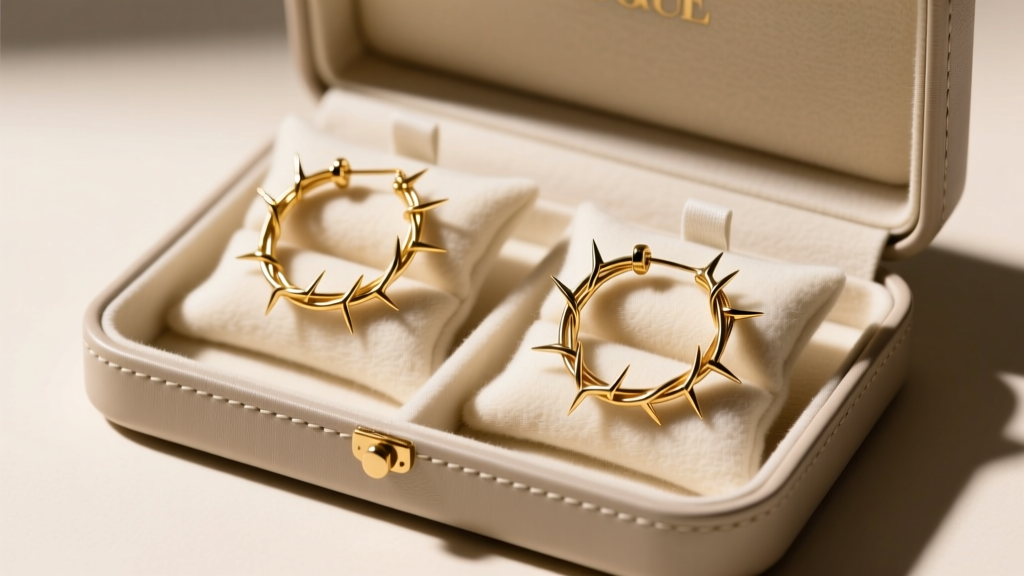
Strategic Storage: Never toss barbed wire hoops into a communal jewelry box. The barbs will inevitably tangle with chains and other hoops, resulting in a frustrating and potentially damaging "snag cascade." Store each hoop individually in a soft felt pouch or a dedicated compartment in a hard-shell jewelry box. If the earrings have a hinged clicker clasp, always store them in the closed position to protect the delicate locking pin.
When to See a Professional Jeweler
While routine cleaning and careful storage will handle 90% of maintenance issues, the complex construction of barbed wire designs sometimes requires professional intervention. If your earrings feature soldered barbs (small wire pieces or beads soldered onto the main hoop), repeated stress from minor snags can cause micro-fractures in the solder joints.
"If you notice a 'clicking' sound when you gently tap the barbs of your hoop, or if a barb feels loose to the touch, stop wearing the earring immediately. A loose barb can easily catch on clothing and tear completely off, taking a chunk of the base wire with it. A bench jeweler can re-flow the solder in minutes for a minimal fee, saving the structural integrity of the piece." — Master Bench Jeweler Insights
Additionally, if your sterling silver barbed wire hoops have developed deep, black sulfur tarnish inside the tightest twists that a soft brush cannot reach, a jeweler can perform a professional electrolytic cleaning or use a specialized magnetic tumbler to polish the undercuts without removing any base metal. By understanding the unique geometry and material science behind barbed wire hoop earrings, you can keep their edgy aesthetic sharp, clean, and structurally sound for years to come. For more insights on precious metal longevity, refer to the UK Assay Office's guidelines on precious metal care.


