Aka Earrings: Coral Material Properties & Imitation Guide
Explore the gemological properties of genuine Aka coral earrings. Compare oxblood grades, identify imitations, and learn expert care for organic gems.

The Gemological Profile of Genuine Aka Coral
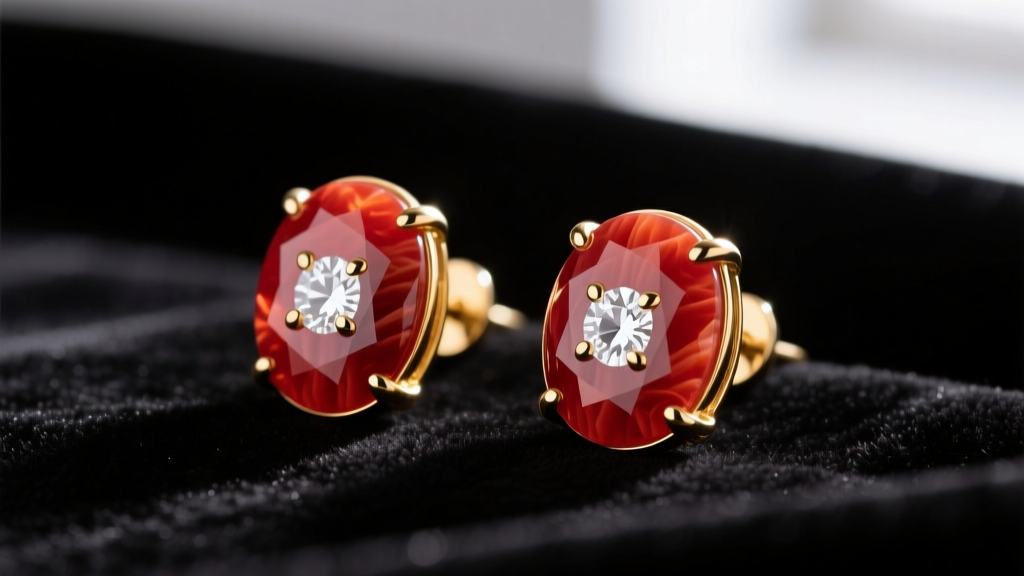
When evaluating high-end organic jewelry, Aka earrings represent the pinnacle of deep-sea red coral craftsmanship. Sourced primarily from the Pacific waters off the coasts of Japan and the Philippines, genuine Aka coral (Pleurocorallium elatius) is an organic gemstone formed by the calcium carbonate skeletons of marine polyps. Unlike mineral-based gemstones, its properties are dictated by its biological matrix, which consists of roughly 85% calcium carbonate (mostly calcite, with some aragonite), 10% water, and 5% conchiolin (an organic protein).
From a gemological standpoint, Aka coral registers between 3.5 and 4.0 on the Mohs hardness scale, making it significantly softer than quartz or beryl. Its specific gravity ranges from 2.60 to 2.70, and it exhibits a refractive index of approximately 1.48 to 1.65. Because it is opaque and heavily included with natural growth bands, it is never faceted; instead, it is cut en cabochon or carved to maximize its rich color saturation. According to the Gemological Institute of America (GIA), the presence of a distinct white core or "heart" is a hallmark of genuine Aka coral branches, often visible on the reverse side of larger cabochons or in cross-sectional carvings.
Grading the Red Spectrum: What Makes "Oxblood" Premium?
The value of Aka earrings is inextricably linked to color grading. The market categorizes Aka coral into several tiers, but "Oxblood" (or Aka Momo in some regional trading contexts, though strictly Oxblood refers to the deepest red) commands the highest premiums.
- Oxblood (Top Grade): A deep, saturated, dark crimson red. Under strong transmitted light, it appears almost blackish-red. Prices for a matched pair of 8mm Oxblood cabochon studs typically range from $800 to $2,500+.
- Deep Red (Mid-High Grade): Vivid red with slight orange or brownish undertones. Lacks the intense darkness of Oxblood. Pairs usually price between $300 and $700.
- Light Red / Pinkish-Red (Commercial Grade): Noticeably lighter, often with visible white mottling or chalky patches. Pairs generally sell for $100 to $250.
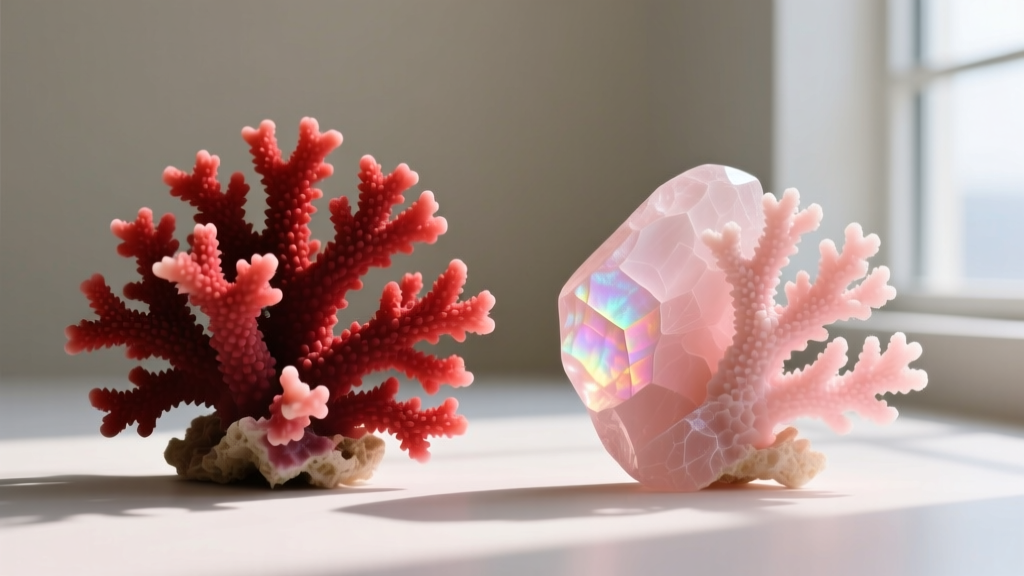
When shopping for Aka earrings, always examine the color under both natural daylight and warm incandescent light. Some lower-grade corals are chemically enhanced or oiled to mimic the wet, glossy look of premium Oxblood, but this treatment degrades rapidly with wear.
Material Comparison: Genuine Aka vs. Market Substitutes
Because genuine Aka coral is rare and heavily regulated, the market is saturated with imitations. Understanding the physical properties of these substitutes is critical for authentication.
| Material | Mohs Hardness | Specific Gravity | UV Fluorescence | Price Range (Stud Pair) |
|---|---|---|---|---|
| Genuine Aka Coral | 3.5 - 4.0 | 2.60 - 2.70 | Inert to faint red | $300 - $2,500+ |
| Dyed Bamboo Coral | 3.0 - 3.5 | 2.50 - 2.60 | Inert (dye may glow) | $15 - $45 |
| Dyed Howlite | 3.5 | 2.53 - 2.59 | Inert | $10 - $30 |
| Gilson (Synthetic) | 3.5 - 4.0 | 2.44 | Inert | $40 - $80 |
| Red Glass | 5.0 - 6.0 | 2.80 - 3.20 | Variable | $5 - $20 |
The most common deception is dyed bamboo coral. Under 10x magnification, bamboo coral reveals a distinct "spiderweb" or dendritic growth pattern that differs entirely from the concentric rings and longitudinal striations of genuine Aka coral. Furthermore, dye tends to concentrate in the natural pores and fractures of bamboo coral, creating dark, spotty concentrations visible with a loupe.
Structural Integrity and Earring Construction
Designing and setting Aka earrings requires specialized lapidary and metalsmithing techniques to account for the material's fragility and porosity.
Setting Techniques: Bezel vs. Prong
Genuine Aka coral should almost exclusively be set in bezel settings. A full or partial bezel of 14k or 18k gold wraps around the girdle of the cabochon, protecting the vulnerable edges from chipping. Prong settings are a massive red flag; they concentrate mechanical stress on small points of a Mohs 3.5 material, inevitably leading to edge fractures or the stone popping out upon minor impact.
Post Gauges and Backing
Because high-grade Aka coral is dense, larger cabochons (9mm and above) or carved drops can be surprisingly heavy. Standard 20-gauge (0.8mm) earring posts may bend under the weight, causing the earring to droop forward on the lobe. Expert jewelers will utilize 18-gauge (1.0mm) or 16-gauge (1.2mm) posts paired with heavy-duty friction backs or screw-backs to maintain structural alignment. Additionally, because the back of a coral cabochon is often uneven or features the natural white core, lapidaries frequently back the stone with a thin layer of black epoxy or mother-of-pearl to create a flat surface for the earring cup, preventing the coral from cracking when the setting is tightened.
Care, Degradation, and Chemical Sensitivities
Organic gems are highly reactive. The calcium carbonate matrix of Aka coral is exceptionally vulnerable to acidic compounds. The GIA Care and Cleaning Guide explicitly warns against exposing porous organic gems to harsh chemicals.
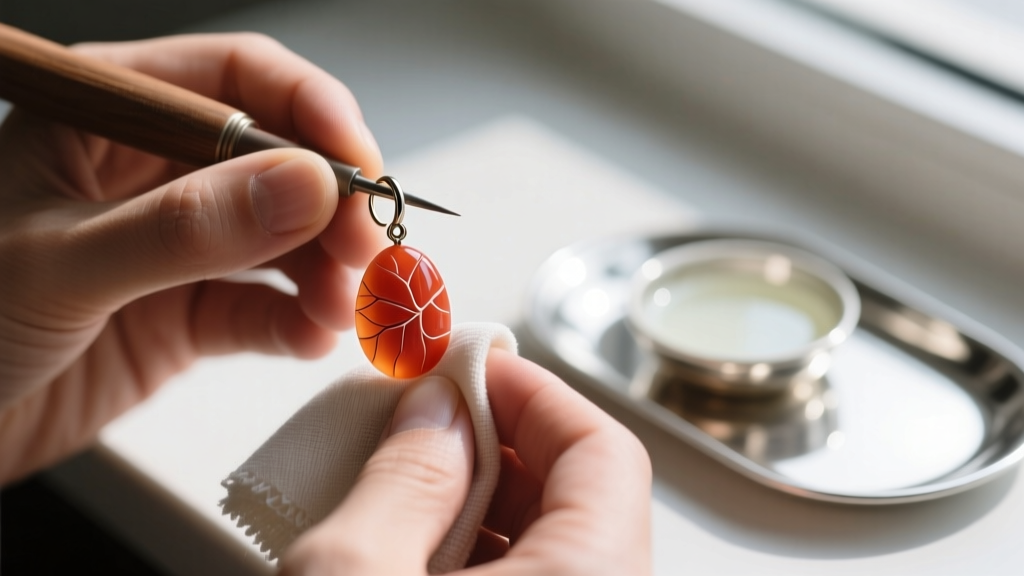
Expert Warning: Never use ultrasonic or steam cleaners on Aka earrings. The high-frequency vibrations can shatter internal stress fractures, and the heat can dehydrate the conchiolin matrix, leading to irreversible crazing (surface cracking).
Common Failure Modes & Prevention:
- Surface Etching: Lactic acid from sweat and citric acid from perfumes will slowly dissolve the polished surface of the coral, leaving it dull and chalky. Prevention: Always put Aka earrings on after applying cosmetics and perfumes. Wipe them with a damp, soft cloth immediately after removal.
- Adhesive Failure: If the coral is epoxy-backed or glued into a flat pad setting, exposure to heat (like leaving them in a hot car) or acetone (nail polish remover) will dissolve the adhesive, causing the stone to detach. Prevention: Store in a climate-controlled environment and avoid contact with solvents.
- Dehydration Cracking: Coral contains trace amounts of water. Storing them in airtight plastic bags or extremely dry environments (like a safety deposit box without a humidity buffer) can cause the material to dry out and split. Prevention: Store in a soft cloth pouch in a standard room-humidity environment.
Ethical Sourcing and CITES Compliance
Due to overharvesting and ocean acidification, deep-sea coral populations are under severe ecological stress. Certain species of Corallium are listed under CITES (Convention on International Trade in Endangered Species) Appendix III, requiring strict export permits and documentation. When investing in premium Aka earrings, always request a certificate of origin or CITES documentation from the vendor. Reputable dealers will provide gemological lab reports that not only authenticate the material as natural, untreated coral but also verify that it was harvested in compliance with international marine conservation treaties. Buying undocumented coral not only risks confiscation at international borders but also fuels the depletion of fragile deep-sea reef ecosystems.


