Choosing Materials for Graduated Front Back Earrings
Discover the best metals and gemstones for graduated front back earrings. We compare tensile strength, weight, and hypoallergenic properties.

The Structural Physics of Graduated Front Back Earrings
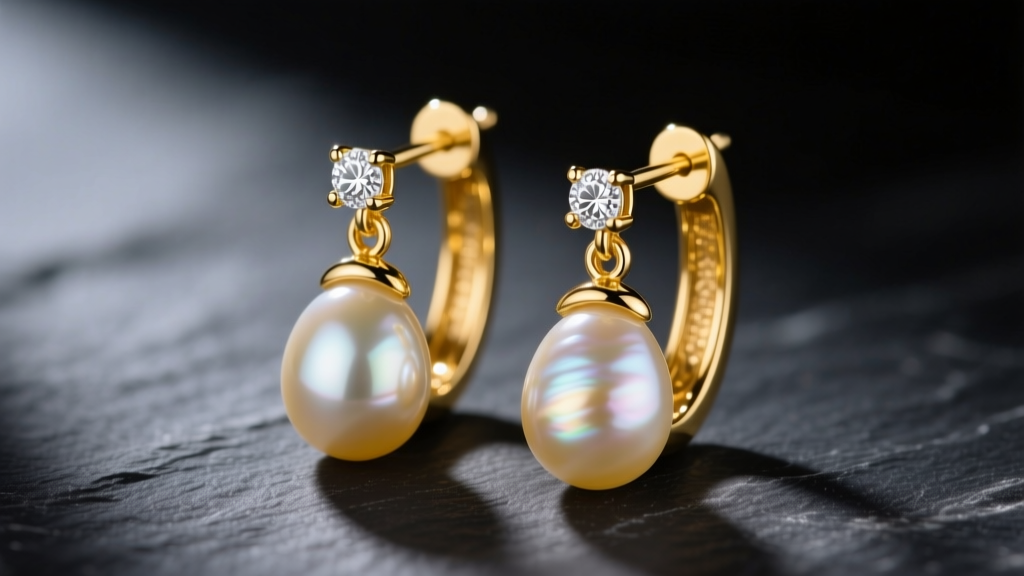
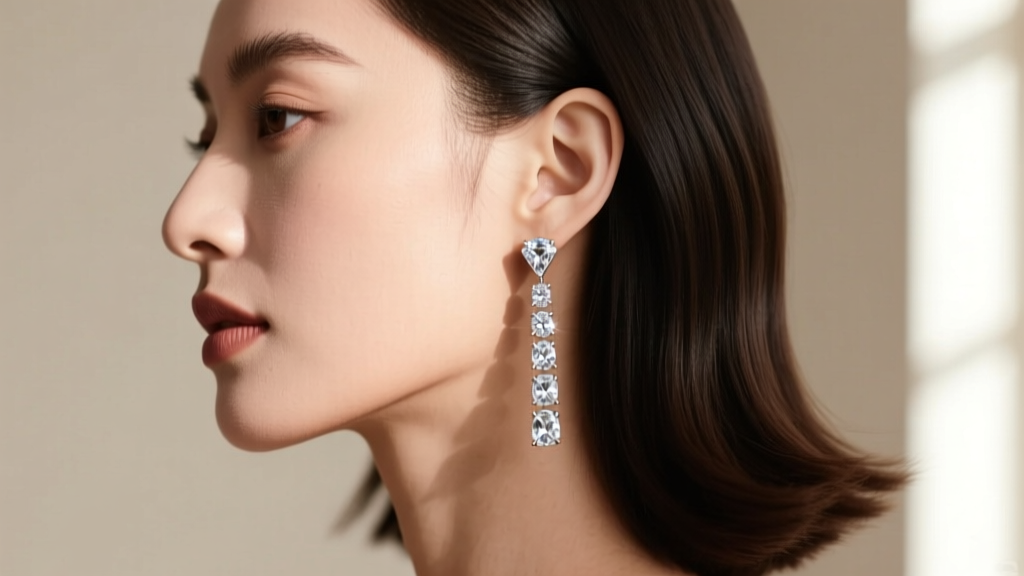
Graduated front back earrings represent a unique intersection of aesthetic elegance and structural engineering. Unlike standard studs, these designs feature a smaller front element (often a diamond or pearl stud) and a larger, descending back element that hangs below the earlobe. This "front-back" or "jacket" configuration creates a cantilever effect, where the earlobe acts as a fulcrum. The heavy graduated back pulls downward, while the front element pulls upward against the skin.
As jewelry trends evolve in 2026, designers are pushing the boundaries of scale, making material selection more critical than ever. If the metal alloy lacks sufficient yield strength, the earring post will permanently bend. If the gemstone material on the back element is too dense, it will cause "post droop," forcing the front stud to tilt awkwardly outward. Understanding the material properties of both the hardware and the decorative elements is essential for both jewelers and consumers.
Hardware Alloys: Tensile Strength and Post Gauge
The most common failure mode for graduated front back earrings is post deformation. Standard earring posts are typically 20-gauge (0.81mm), which is perfectly adequate for lightweight solitaire studs. However, when supporting a graduated back piece weighing more than 4 grams, a 20-gauge post will eventually warp under the cantilevered stress.
For front-back designs, we strongly recommend an 18-gauge (1.02mm) or even 16-gauge (1.29mm) post. The choice of metal alloy dictates how well that thicker gauge will perform over years of daily wear.
| Metal Alloy | Density (g/cm³) | Yield Strength (MPa) | Best Application in Front-Back Designs |
|---|---|---|---|
| Platinum (950/50) | 21.45 | ~125 - 250 | Heirloom pieces; malleable but highly durable, resists snapping. |
| 14k White/Yellow Gold | 13.5 - 15.6 | ~250 - 450 | Everyday wear; excellent balance of rigidity and precious metal value. |
| 18k Yellow Gold | 15.5 - 17.5 | ~200 - 300 | High-end luxury; slightly softer than 14k, requires thicker 16G posts. |
| Titanium (ASTM F136) | 4.43 | ~830 - 900 | Hypoallergenic & lightweight; supreme strength-to-weight ratio. |
| 316L Surgical Steel | 8.00 | ~215 - 300 | Budget-friendly fashion jewelry; high nickel release risk for sensitive skin. |
According to the Jewelers of America, platinum is often favored for high-end settings because its malleability means it will bend rather than snap under extreme stress. However, for the post itself, ASTM F136 Titanium (Ti-6Al-4V ELI) is the undisputed champion for structural integrity. Its yield strength of over 800 MPa ensures the post will never bend, even when supporting massive graduated South Sea pearl drops.
The Critical Role of the Clutch Mechanism
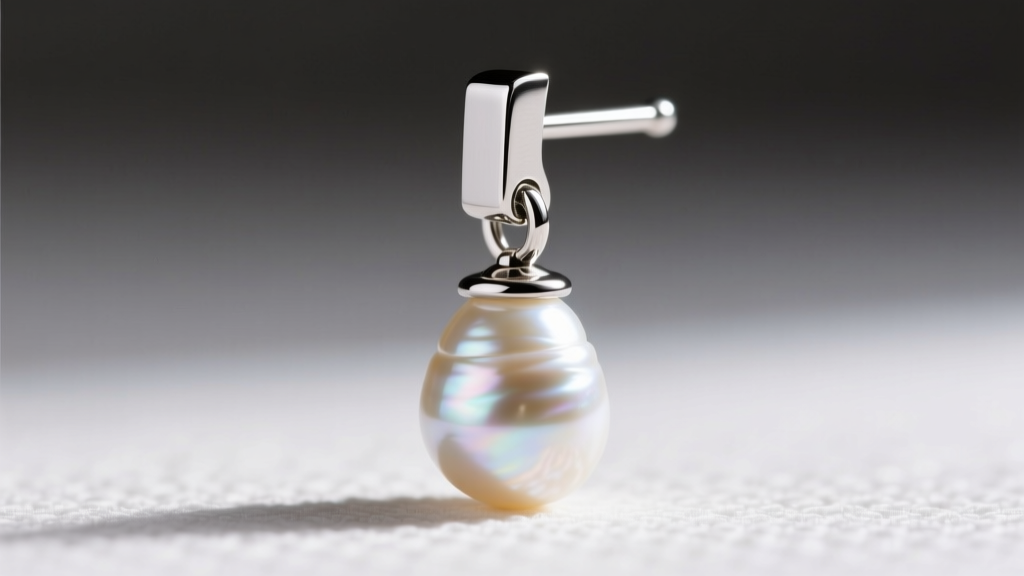
The material of the post is only half the battle; the friction clutch must also be engineered for heavy loads. Standard butterfly clutches rely on simple metal tension, which easily loosens when subjected to the pendulum-like swinging of a graduated back element.
- Silicone Discs: Excellent for increasing surface area against the earlobe, distributing the weight of the heavy back piece and preventing the earring from tearing through the piercing.
- La Pousette Locking Backs: Utilizing a tiny internal spring mechanism, these lock onto the post grooves. They are mandatory for graduated diamond jackets weighing over 8 grams.
- Jumbo Metal Clutches: Often plated in rhodium to match white gold, but ensure the internal tension wire is made of a beryllium-copper alloy to maintain grip over time.
Material Properties of the Graduated Elements
The "graduated" aspect of these earrings usually involves a descending line of gemstones or a single, dramatically larger back element. The specific gravity (SG) of the chosen gemstone directly impacts the wearable comfort and structural balance of the earring.
Gemstone Density and the "Droop" Factor
When selecting stones for the elongated back element, jewelers must account for density. A material with a high specific gravity will pull the earlobe down uncomfortably.
- Diamond (SG 3.52): The ideal standard. Relatively lightweight for its visual size, allowing for dramatic graduated diamond drops without excessive strain.
- Cubic Zirconia (SG 5.6 - 6.0): Nearly twice as dense as diamond. A graduated CZ back piece will feel remarkably heavy, accelerate post droop, and fatigue the earlobe piercing over a standard 8-hour workday.
- Sapphire/Ruby (SG 3.98 - 4.05): Slightly heavier than diamond but structurally excellent due to a Mohs hardness of 9, making them resistant to chipping on the exposed bottom edges of the back element.
Pearl Varieties: Nacre Thickness and Weight
Pearl front-back earrings are a massive trend, often featuring a 4mm Akoya pearl on the front and a 12mm pearl on the back. According to the Gemological Institute of America (GIA), the composition of the pearl affects its weight and durability.
South Sea Pearls are large and heavy due to their thick nacre and large nucleus, making them luxurious but demanding of a robust 18k gold or platinum 18-gauge post. Freshwater Pearls, being solid nacre, have a slightly different weight distribution and are generally more impact-resistant if the heavy back element accidentally strikes the jawline or neck.
Hypoallergenic Considerations for Skin Contact
Unlike standard studs where only the post touches the skin, the back element of a front-back earring rests directly against the sensitive skin of the neck and jawline. This prolonged contact, combined with friction from head movement and trapped perspiration, creates a high-risk environment for contact dermatitis.
The EU Nickel Directive (2014) strictly limits nickel release to 0.5 µg/cm²/week for prolonged skin contact. However, many overseas manufacturers of budget "graduated jacket earrings" use cheap brass alloys plated with a micro-layer of silver or gold. Once this plating wears off on the back element's friction points, the underlying nickel-heavy brass is exposed to the skin.
Actionable Advice: If you have sensitive skin, mandate that the back element be crafted from solid 14k/18k gold, platinum, or niobium. Avoid "gold-plated" or "vermeil" back elements for daily wear, as the friction against the neck will strip the plating within months, exposing reactive base metals.
Maintenance and Care by Material
The dual-nature of front-back earrings means they require specific maintenance routines to preserve both the hardware and the graduated decorative elements.
- Ultrasonic Cleaning Warnings: Never place graduated earrings featuring fracture-filled diamonds, emeralds, or treated pearls in an ultrasonic cleaner. The high-frequency vibrations can shatter the delicate drill holes where the post connects to the back element.
- Thread Inspection: If your graduated back element utilizes a threaded screw-on mechanism rather than a friction post, inspect the threads monthly. Use a 10x jeweler's loupe to check for stripped threading caused by cross-threading the heavy back piece.
- Rhodium Replating: For white gold graduated earrings, the back element will rub against the neck and hair, accelerating the wear of the rhodium plating. Plan for professional replating every 12 to 18 months to maintain the bright white luster and prevent the yellowish underlying gold alloy from showing.
Final Verdict: Engineering the Perfect Pair
Selecting the right materials for graduated front back earrings requires looking past the sparkle and evaluating the structural physics. For the ultimate balance of luxury, durability, and comfort, pair an 18-gauge 14k white gold post with a La Pousette locking clutch, utilizing natural diamonds or lightweight South Sea pearls for the graduated drop. By respecting the yield strengths of metals and the specific gravity of gemstones, you ensure your earrings remain as structurally sound as they are visually striking.


