How Many Earrings Can You Have In One Ear? Anatomy & Healing Guide
Discover exactly how many earrings you can have in one ear. Learn anatomical limits, spacing rules, and troubleshooting tips for multi-pierced ears.

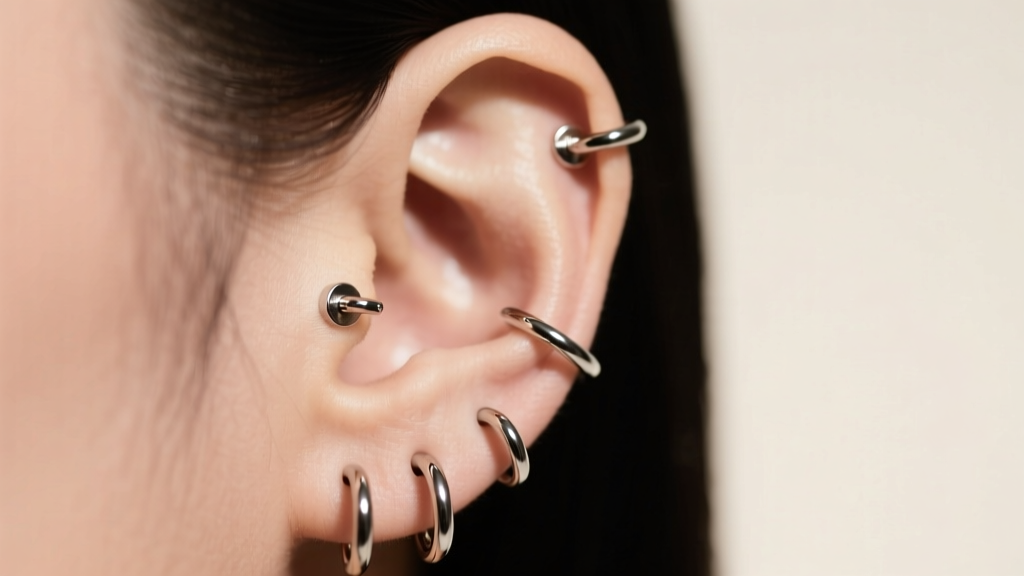
The Anatomical Limit: How Many Earrings Can You Have in One Ear?
When curating a multi-pierced ear, the most common question enthusiasts ask is: how many earrings can you have in one ear? The short answer is that human anatomy typically supports between 15 and 19 distinct piercing sites on a single ear. However, the practical, healthy limit for a fully healed, complication-free ear is usually between 8 and 12 piercings. Pushing beyond this threshold often leads to severe spacing issues, compromised lymphatic drainage, and chronic cartilage inflammation.
As a domain expert in ear curation and piercing troubleshooting, I see countless clients suffer from "Project Ear" syndrome—the desire to max out their ear real estate in a single sitting. This guide breaks down the anatomical blueprint, the mathematics of jewelry spacing, and the troubleshooting protocols required to maintain a heavily pierced ear without triggering migration or hypertrophic scarring.
Standard Piercing Zones and Maximum Capacities
To understand your ear's capacity, we must divide the auricle into distinct anatomical zones. Each zone has a maximum hole limit dictated by the surface area of the tissue and the underlying cartilage structure. Below is a clinical breakdown of ear real estate.
| Anatomical Zone | Max Capacity | Standard Gauge | Average Healing Time |
|---|---|---|---|
| Standard Lobe | 3 - 5 | 18g - 14g | 6 - 8 Weeks |
| Upper Lobe | 1 - 2 | 16g - 14g | 8 - 12 Weeks |
| Helix (Outer Rim) | 3 - 5 | 16g | 6 - 12 Months |
| Conch (Inner Cup) | 1 - 2 | 16g - 14g | 6 - 12 Months |
| Tragus | 1 | 16g | 4 - 8 Months |
| Anti-Tragus | 1 | 16g | 6 - 12 Months |
| Daith | 1 | 16g | 6 - 12 Months |
| Rook | 1 | 16g | 6 - 12 Months |
| Industrial | 1 (2 holes) | 14g | 12+ Months |
While the math suggests you could theoretically fit 19 pieces of jewelry, doing so ignores the physical footprint of the jewelry itself. A standard 4mm gemstone stud requires at least 6mm of surface space to prevent overlapping with adjacent pieces.
Troubleshooting Spacing and Migration Issues
The most frequent complication in heavily pierced ears is migration—the body's immune response slowly pushing the jewelry out of the skin due to chronic pressure or lack of blood flow. When you ask how many earrings you can have in one ear, you are really asking how much trauma the local vascular network can sustain.
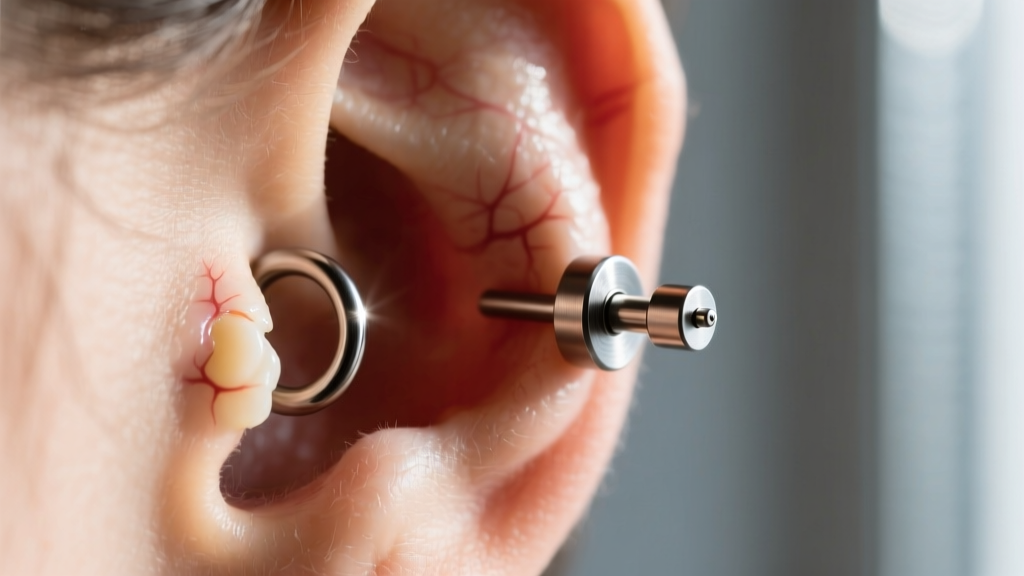
The 6-Millimeter Rule for Cartilage
Professional piercers adhere to a strict minimum spacing rule: 6 millimeters (approx. 1/4 inch) between piercing channels. This gap is non-negotiable for cartilage. Cartilage is avascular, meaning it lacks its own blood supply and relies on the surrounding perichondrium for nutrients and immune cells. If two piercings are placed too closely, the swelling from one will compress the blood vessels feeding the other, leading to tissue necrosis or severe hypertrophic bumps (often misidentified as keloids).
Dealing with the "Cheese Cutter" Effect
If you have multiple heavy hoops in your helix or lower lobes, the cumulative weight can cause the "cheese cutter" effect, where the jewelry slowly slices through the tissue.
- Troubleshooting Step 1: Swap standard 20g (0.8mm) lobe wires for thicker 16g (1.2mm) or 14g (1.6mm) flat-back labrets or seamless rings to distribute the weight over a wider surface area.
- Troubleshooting Step 2: Avoid sleeping on the pierced side. Use a U-shaped travel pillow to keep the ear suspended in the center hole, preventing nocturnal compression that forces jewelry into adjacent healing channels.
The Danger of "Project Ears": Healing Too Many at Once
A critical error in ear curation is getting more than three piercings in a single session. The human immune system has a finite bandwidth for wound healing. When you breach the skin barrier in four or five locations simultaneously, the local lymphatic system becomes overwhelmed.
"Healing multiple cartilage piercings at once forces the body to triage its immune response. This often results in prolonged swelling, excessive lymph fluid secretion, and a dramatically higher risk of bacterial infections like perichondritis." — Association of Professional Piercers (APP)
The Golden Ratio of Healing: Never heal more than one lobe piercing and two cartilage piercings on the same ear simultaneously. Always leave the opposite ear completely untouched so you have a side to sleep on. Expect to space out your curation appointments by a minimum of 3 to 4 months to allow the initial inflammatory phase to subside before introducing new trauma to the auricle.
Material Science: Preventing Complications in Crowded Ears
When your ear is densely populated with jewelry, the risk of contact dermatitis and galvanic reactions skyrockets. Cheap alloys containing nickel or cadmium will cause immediate flare-ups in a crowded ear environment where sweat and sebum get trapped between closely spaced jewelry heads.
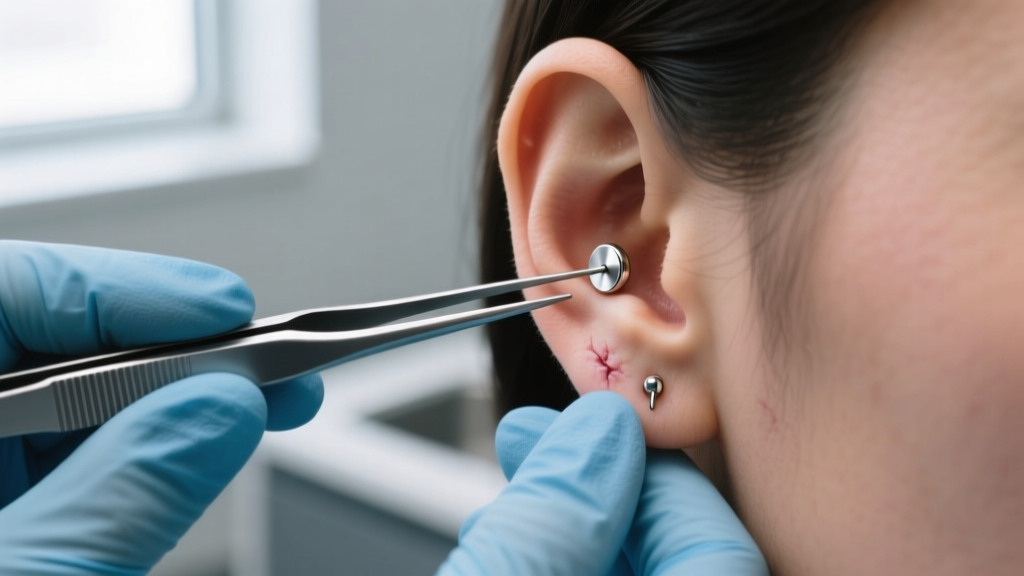
To safeguard your ear's real estate, you must strictly adhere to biocompatible materials. According to dermatological guidelines on body art complications published in the NCBI Bookshelf, only specific material grades should be worn in healing or densely pierced ears:
- ASTM F-136 Implant-Grade Titanium: The absolute gold standard. It is entirely nickel-free, highly polished, and biologically inert. Essential for cartilage zones where swelling is unpredictable.
- Niobium (99.99% Pure): An excellent alternative for those who prefer a darker, gunmetal aesthetic or need flexible rings for daith or rook piercings.
- 14k or 18k Solid Gold (Nickel-Free): Only suitable for fully healed piercings. Gold is a softer metal and can harbor bacteria in microscopic scratches if worn during the initial healing phase.
Space-Saving Hacks for Limited Real Estate
What happens if you have maxed out your anatomical limits but still crave a denser aesthetic? If you have reached the absolute ceiling of how many earrings you can have in one ear, you must pivot to non-pierced alternatives and spatial illusions.
1. The Transverse Lobe
Instead of stacking three vertical holes in your lobe, opt for a transverse lobe piercing. This horizontal barbell passes straight through the lower earlobe, giving the illusion of two piercings while only utilizing a single fistula (healing channel). This preserves the upper lobe tissue for future placements.
2. High-Quality Ear Cuffs and Clip-Ons
Modern ear cuffs have evolved far beyond the painful, spring-loaded clip-ons of the past. Tension-based cuffs crafted from solid sterling silver or gold vermeil can securely grip the helix or conch ridge without piercing. They allow you to experiment with the "fully stacked" look for events, while giving your cartilage a necessary rest period at night.
3. Threadless Cluster Ends
If you have limited space but want maximum sparkle, utilize threadless (press-fit) jewelry systems. Brands like BVLA or Maria Tasha offer intricate cluster ends (e.g., a floral arrangement of three tiny bezel-set gems) that fit onto a single 16g flat-back post. This provides the visual density of three earrings while only requiring one anatomical hole.
Final Thoughts on Ear Real Estate
Ultimately, the answer to how many earrings you can have in one ear is dictated by your unique anatomy, your patience, and your commitment to proper aftercare. A beautifully curated ear is not about reaching a numerical maximum; it is about achieving a harmonious balance that complements the natural folds of your auricle. Respect the 6mm spacing rule, invest exclusively in ASTM F-136 titanium, and allow your immune system the time it needs to heal each new addition. By treating your ear as a long-term canvas rather than a quick fix, you will build a stunning, complication-free collection that lasts a lifetime.


