Seed Pearl Earrings: A Technical Guide to Sizing, Grading & Settings
Master the technical details of seed pearl earrings. Explore exact mm sizing, AAA grading metrics, setting types, and metal pairings for fine jewelry.

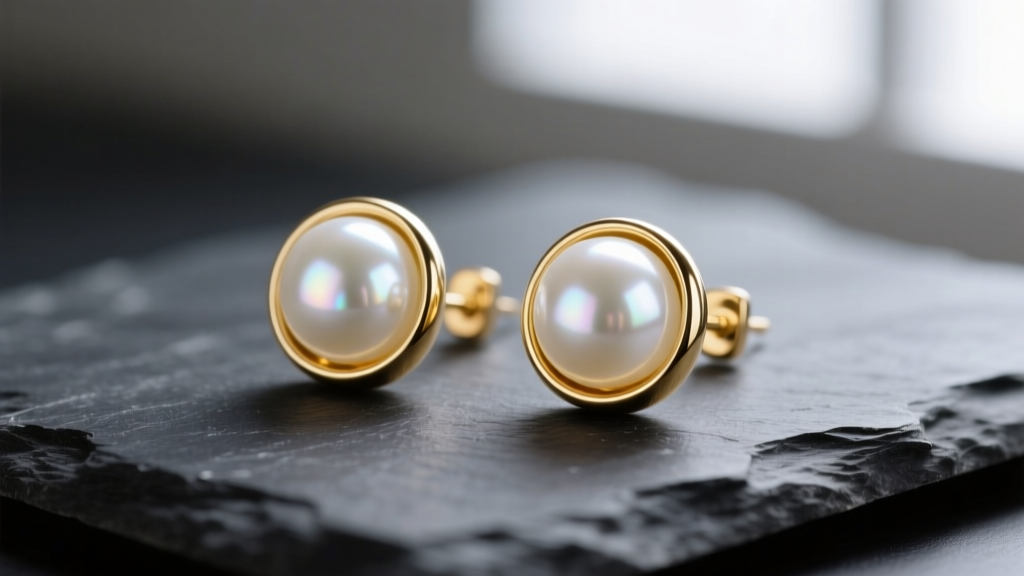
When discussing fine jewelry, the term "seed pearl" is often thrown around loosely by retail marketers. However, in the 2026 gemological market, seed pearl earrings represent a highly specialized category of micro-jewelry that demands exact precision in sizing, setting, and metallurgy. Unlike standard 6mm to 8mm Akoya or Freshwater studs, seed pearls—strictly defined by gemologists as measuring under 3.0mm in diameter—present unique challenges for jewelers, appraisers, and piercing professionals alike.
Whether you are sourcing micro-pearls for a custom cartilage cluster or evaluating a vintage Art Deco piece, understanding the technical specifications is non-negotiable. This expert deep dive explores the exact millimeter metrics, gemological grading standards, and setting mechanics required to evaluate, purchase, and wear high-end seed pearl earrings.
Defining the Seed Pearl: Millimeter Metrics and Nacre Depth
According to the Gemological Institute of America (GIA), there is no strict universal cutoff for seed pearls, but the international trade standard categorizes any pearl under 3.0mm as a seed. In modern micro-pave and cluster earring designs, the size variations are measured in fractions of a millimeter. These microscopic differences drastically affect the pricing, visual density, and structural integrity of the piece.
As of 2026, advanced nucleation techniques in freshwater pearl farming have yielded near-perfect spherical shapes in sub-2mm sizes, a feat that was nearly impossible a decade ago. However, the smaller the pearl, the thinner the nacre layer, making the cultivation process a high-stakes balancing act between size and durability.
| Size Category | Diameter (mm) | Primary Use in Earrings | Market Price Multiplier |
|---|---|---|---|
| Micro Seed | 1.0mm - 1.5mm | Halo accents, cartilage clusters, threaders | 3.5x (Base per gram) |
| Standard Seed | 1.6mm - 2.2mm | Minimalist lobe studs, multi-drop dangles | 2.0x (Base per gram) |
| Transitional | 2.3mm - 2.9mm | Solitaire studs, geometric drops, huggies | 1.2x (Base per gram) |
Gemological Grading: What Makes an AAA Seed Pearl?
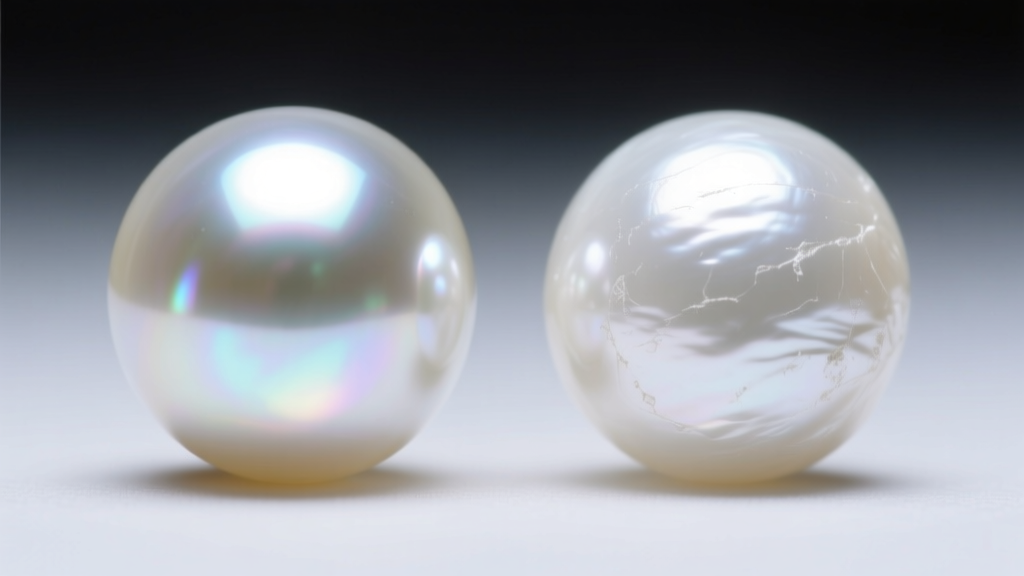
Evaluating the quality of a sub-2mm pearl requires a 10x jeweler's loupe and an understanding of how light interacts with ultra-thin nacre. The GemSelect Pearl Quality Guide notes that luster is the paramount value factor for any pearl, but for seed pearls, surface cleanliness and shape symmetry become exponentially more critical due to the limited surface area available for setting.
The Luster and Nacre Correlation
In seed pearls, high luster is directly tied to the density of the aragonite platelets rather than just nacre thickness. A 1.5mm pearl cannot possess the thick nacre of an 8mm bead-nucleated Akoya. Therefore, gemologists look for a "sharp" or "mirror-like" reflection. If the luster appears milky or chalky, it indicates poor crystallization or premature harvesting, rendering the pearl structurally fragile for earring settings.
Shape and Symmetry Tolerances
For seed pearl earrings, particularly those used in matched pairs or continuous hoop designs, the tolerance for off-round shapes is virtually zero. A variation of just 0.2mm between the left and right earring is visibly jarring to the human eye. Top-tier AAA seed pearls must measure within 0.05mm of perfect sphericity when tested with digital calipers.
Setting Mechanics: Cup, Prong, and Wire-Wrap Techniques
The physical mounting of a seed pearl is where many commercial jewelers fail. Because sub-2mm pearls are incredibly small, traditional prong settings are often impossible without obscuring the pearl or risking it falling out. Jewelers must rely on precision-milled cup settings and specialized adhesives.
- Precision Cup Milling: The gold or platinum cup must be milled to the exact millimeter of the pearl. If a 1.8mm pearl is placed in a 2.0mm cup, the jeweler must use excessive adhesive, which can seep out and permanently cloud the pearl's nacre.
- Adhesive Selection: Professional bench jewelers avoid standard cyanoacrylate (Super Glue) due to its brittleness and tendency to "frost" the pearl. Instead, G-S Hypo Cement is the industry standard for its precision needle applicator and flexible, non-yellowing cure. For high-stress cartilage earrings, a two-part jeweler's epoxy is preferred for its superior shear strength.
- Half-Drilled vs. Fully Drilled: Seed pearl earrings almost exclusively utilize half-drilled pearls mounted on a textured metal peg. The texture of the peg (often created with a burr tool) increases the surface area for the adhesive to grip, preventing the pearl from spinning or snapping off under lateral pressure.
Never subject seed pearls to ultrasonic cleaning. The high-frequency cavitation bubbles will implode against the thin nacre layers of sub-2mm pearls, causing microscopic fracturing and irreversible chalkiness.
Cartilage vs. Lobe: Gauge and Post Length Specifications
The anatomical placement of seed pearl earrings dictates the required metallurgy and post dimensions. Cartilage piercings are highly sensitive to pressure and require specific jewelry architecture to prevent rejection or embedding.
Standard Lobe Configurations
For standard earlobe piercings, seed pearl studs are typically mounted on 20-gauge (0.8mm) or 18-gauge (1.0mm) posts. Because the pearl itself is so small (e.g., 2.0mm), a standard butterfly backing can easily swallow the pearl, pressing it uncomfortably against the skin. Expert jewelers recommend La Pousette lock backs or ultra-low-profile silicone discs to maintain a 2mm clearance between the pearl and the earlobe.
Helix and Flat Cartilage Configurations
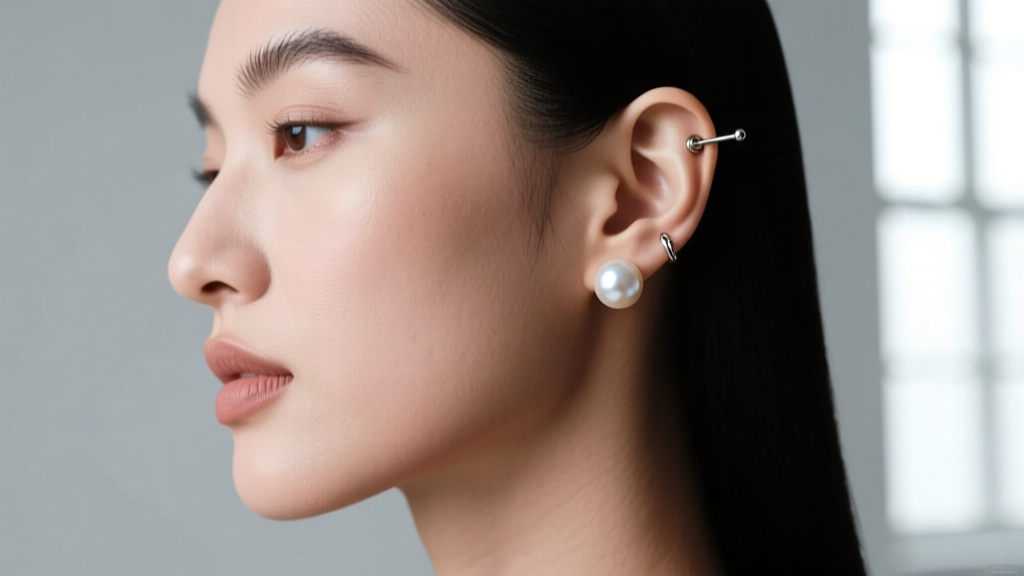
When designing seed pearl earrings for the helix, conch, or flat cartilage, the post must be thicker and longer to accommodate tissue swelling and the angle of the piercing channel.
- Gauge: 16-gauge (1.2mm) or 14-gauge (1.6mm) is mandatory. An 18-gauge post supporting a heavy gold cup and pearl can act like a "cheese wire," slowly migrating through the cartilage over time.
- Post Length: Standard cartilage posts range from 6mm to 8mm. For initial piercings or thicker helix folds, an 8mm labret-style flat back is required.
- Backing Type: Flat-back titanium labrets are the only safe option for cartilage. Butterfly backs will trap bacteria against the rear of the ear and cause severe irritation bumps.
Metallurgy and Chemical Vulnerabilities
The metal chosen for seed pearl earrings must complement the organic nature of the gem. 18k yellow gold and platinum are the premier choices. Sterling silver (925) is highly discouraged for glued seed pearl settings; silver oxidizes over time, and the resulting silver sulfide tarnish can chemically react with the adhesive, breaking the bond and causing the pearl to detach.
Furthermore, pearls are highly porous and rank a mere 2.5 to 3.0 on the Mohs hardness scale. They are acutely vulnerable to the acidic pH of human sweat, hairspray, and perfume. To maintain the sharp luster of AAA seed pearl earrings, they must be wiped with a damp, lint-free microfiber cloth after every wear and stored in a breathable linen pouch—never in an airtight plastic bag, which will dehydrate the nacre and cause structural peeling.


