Labradorite Earrings Gold: 2026 Style Trend Guide
Explore the 2026 trend analysis for labradorite earrings gold. Discover styling tips, karat comparisons, setting durability, and pricing guides.

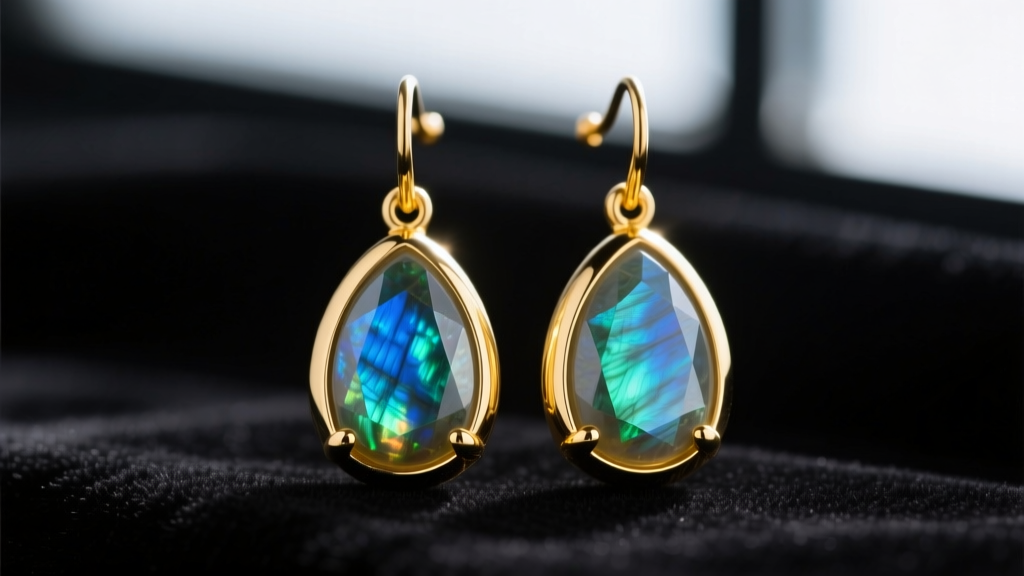
The 2026 Resurgence of Labradorite in Fine Jewelry
The jewelry landscape of 2026 has decisively pivoted away from the ultra-minimalist, diamond-heavy aesthetics of the early 2020s, embracing what industry analysts call "Mystic Minimalism." At the forefront of this movement are labradorite earrings gold settings, which perfectly bridge the gap between organic earthiness and refined luxury. Once relegated to bohemian craft fairs and wire-wrapped pendants, labradorite has been elevated by contemporary fine jewelers who recognize its unique optical properties. When paired with the warm, reflective surface of gold, the stone's internal fire is amplified, creating a striking visual contrast that dominates current ear styling trends.
Unlike the uniform sparkle of faceted diamonds or sapphires, labradorite offers a dynamic, moody play of color known as labradorescence. This phenomenon ensures that no two pairs of earrings are visually identical, catering to the 2026 consumer demand for bespoke, one-of-a-kind personal adornment. According to trend forecasts by JCK Online, colored gemstones with optical phenomena are seeing a 34% year-over-year increase in fine jewelry searches, with labradorite leading the charge in the semi-precious category.
Decoding the Schiller: Why Gold is the Ultimate Pairing
To understand why labradorite earrings gold combinations are trending, one must look at color theory and gemology. Labradorite is a feldspar mineral characterized by its dark, often grey-to-black base color. The "schiller" or flash of color—typically electric blue, vibrant green, and occasionally peacock or gold—occurs when light hits the internal twinning lamellae of the crystal structure, as detailed by the Gemological Institute of America (GIA).
Gold acts as the perfect metallurgical canvas for this optical effect. While silver or white gold can sometimes wash out the cooler blue flashes, yellow and rose gold provide a warm, high-contrast border that frames the stone and makes the internal blue and green hues appear more saturated. In 2026, we are seeing a massive spike in "champagne gold" alloys—a slightly muted, lower-karat yellow gold that offers a vintage, softened glow, preventing the metal from competing with the stone's natural iridescence.
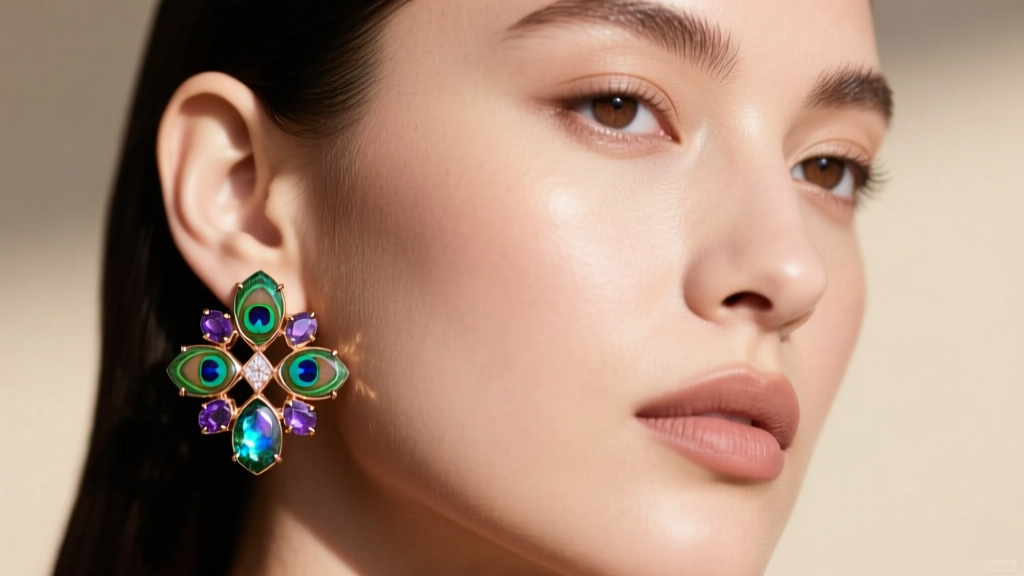
Structural Integrity: Bezel vs. Prong Settings
From a master jeweler's perspective, the most critical aspect of designing labradorite earrings gold settings is accounting for the stone's physical vulnerabilities. Labradorite ranks between 6 and 6.5 on the Mohs scale of hardness. More importantly, it possesses two directions of perfect cleavage, meaning it can easily split or chip if struck at the wrong angle.
This gemological reality dictates a major design trend for 2026: the death of the prong setting for daily-wear labradorite and the rise of the heavy bezel. Prong settings leave the corners and edges of the cabochon exposed to catastrophic failure modes, such as chipping when the earring is set down on a hard surface or caught in hair. Modern jewelers are utilizing flush and full-bezel settings, where a continuous rim of gold securely wraps the stone's perimeter.
Setting Types & Failure Modes for Labradorite
| Setting Style | Durability Rating | Primary Failure Mode | 2026 Trend Status |
|---|---|---|---|
| Full Bezel | Excellent | Metal wear over decades; stone remains protected. | Highly Popular (Standard for Drops) |
| Half-Bezel | Moderate | Exposed lateral edges prone to chipping upon impact. | Trending for Huggies |
| Prong (4 or 6) | Poor | Cleavage plane splitting; corner chipping. | Declining (Avoid for Daily Wear) |
| Tension | Very Poor | Constant pressure causes internal fracturing. | Obsolete for Feldspars |
Karat Weight & Color Theory: 14k vs. 18k Gold
When investing in labradorite earrings gold configurations, the karat weight of the metal fundamentally alters both the aesthetic and the structural integrity of the piece. Pure 24k gold is far too soft to securely hold a bezel edge tight against a cabochon, making 14k and 18k the industry standards.
- 14k Gold (58.5% Pure Gold): Alloyed with copper, silver, and zinc, 14k gold offers superior tensile strength. It is the preferred choice for ear cuffs, huggies, and cartilage jewelry where the metal must maintain a rigid grip. The slightly paler yellow hue of 14k gold provides a subtle, modern backdrop that lets the stone's blue flash dominate.
- 18k Gold (75% Pure Gold): Richer, deeper, and more buttery in color, 18k gold is the hallmark of luxury fine jewelry. The intense yellow warmth of 18k gold creates a breathtaking complementary contrast with the cool, electric blue schiller of high-grade labradorite. However, the bezel walls must be milled slightly thicker to compensate for the metal's softer nature.
2026 Silhouette Trends: From Ear Cuffs to Heavy Drops
The silhouettes dominating the 2026 ear curation scene leverage the unique weight and visual density of labradorite. Because the stone is typically cut en cabochon (smooth and domed) rather than faceted, it carries more physical weight per carat than a diamond of the same dimensions. This influences the engineering of the earring posts and ear wires.
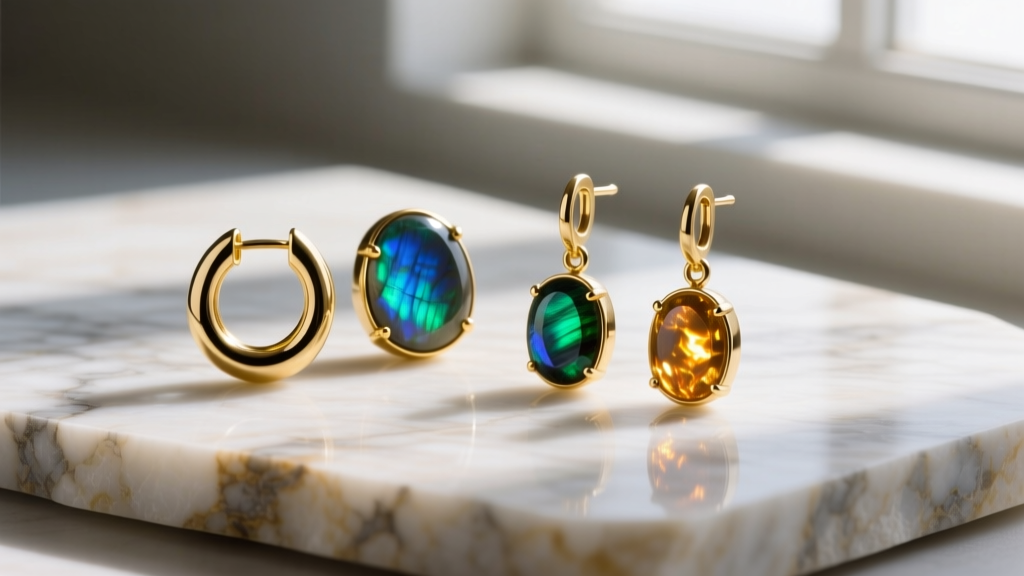
Top 3 Trending Silhouettes
- The Heavy Drop with Omega Backs: Large, elongated teardrop labradorite stones set in 18k gold. To prevent the earring from drooping forward due to the stone's weight, designers are utilizing omega-back closures or adding hidden silicone discs behind the post for structural support.
- Asymmetrical Ear Cuffs: Capitalizing on the non-pierced trend, raw, unpolished slices of labradorite are being wrapped in 14k rose gold wire to form ear cuffs that climb the helix. This embraces the "imperfect perfection" trend, showcasing the stone's natural, unrefined inclusions.
- The North-South Huggie: Instead of hanging straight down, elongated labradorite baguettes are being set horizontally (north-south) along the curve of a gold huggie hoop, creating a sleek, architectural look perfect for the lobe or tragus.
Investment & Pricing Guide
Understanding the pricing architecture of labradorite earrings gold settings requires separating the cost of the metallurgy from the gemological value of the stone. Unlike precious gems, labradorite is relatively abundant, meaning you are primarily paying for the gold weight, the artisan craftsmanship, and the specific quality of the stone's "flash."
| Tier | Gold Type | Stone Quality | Estimated Price Range (Per Pair) |
|---|---|---|---|
| Fashion / Accessible | 10k or 14k Gold Vermeil | Opaque, minimal flash, heavy matrix | $45 - $120 |
| Bridge / Contemporary | Solid 14k Yellow or Rose Gold | Strong blue/green flash, clean base | $180 - $450 |
| Fine / Luxury Designer | Solid 18k Gold, Diamond Accents | Full-spectrum "peacock" flash, custom cut | $600 - $1,800+ |
When shopping, always inspect the stone in natural, diffused lighting. Retail display cases often use harsh, directional LED spotlights that artificially enhance the schiller. A high-quality 2026 investment piece will display a vibrant, rolling flash even in ambient daylight.
Final Styling & Maintenance Insights
To maintain the structural integrity and optical brilliance of your labradorite earrings gold settings, strict adherence to proper care is non-negotiable. Never use ultrasonic cleaners; the high-frequency vibrations can exploit the stone's cleavage planes and cause internal fracturing. Similarly, avoid steam cleaners, as sudden thermal shock can cloud the stone's internal lattice. Instead, clean your earrings using a soft, lint-free microfiber cloth and a mild solution of warm water and pH-neutral dish soap, gently wiping the gold bezel to remove skin oils that can dull the metal's reflective properties.
As we navigate the 2026 jewelry landscape, labradorite set in gold remains a masterclass in balancing organic mystery with refined metallurgy. By prioritizing structural bezel settings, selecting the appropriate karat weight for your lifestyle, and understanding the gemological nuances of the schiller effect, you can curate an ear styling repertoire that is both deeply personal and structurally enduring.


