When Can You Change Your Earrings? Healing Times & 2026 Trends
Discover exactly when can you change your earrings based on placement, plus 2026 styling trends and material guides for lobes and cartilage.

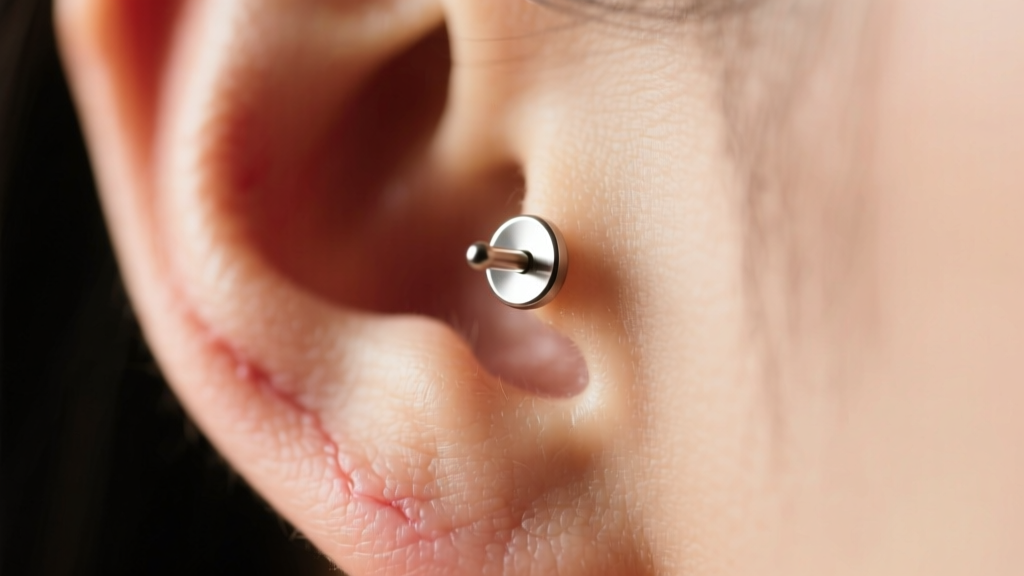
The Biology of the Switch: Why Timing Dictates Your Style
The question of when can you change your earrings is one of the most common dilemmas in body modification and jewelry styling. While the desire to swap out initial studs for trendy hoops or statement dangles is entirely understandable, premature changes can lead to catastrophic failure modes, including irritation bumps, delayed healing, and fistula tearing. In 2026, the intersection of dermatological science and high-end jewelry design means that understanding your body's biological timeline is the first step in curating a flawless ear aesthetic.
A piercing is essentially a controlled puncture wound. The body responds by forming a fistula—a tube of new tissue that lines the piercing channel. Until this fistula is fully matured and stabilized, introducing new jewelry introduces bacteria, friction, and mechanical trauma. According to the Association of Professional Piercers (APP), healing times vary drastically depending on the vascularity of the tissue, the gauge of the needle used, and the specific anatomical placement.
Earlobe Piercings: The 6-to-8 Week Transition Window
Standard earlobe piercings are the most forgiving due to the high concentration of blood vessels in the soft tissue, which accelerates the immune response and tissue regeneration. For most adults, the initial healing phase concludes between 6 and 8 weeks. However, 'healed' at 8 weeks does not mean 'indestructible.' The fistula is still delicate and prone to stretching or tearing if heavy jewelry is introduced too early.
Styling the Freshly Healed Lobe
When you reach the 8-week mark, your first style change should prioritize lightweight, seamless options. Avoid heavy statement dangles or thick-gauge hoops that can drag on the new tissue. Instead, opt for 18-gauge or 16-gauge continuous segment rings (CSRs) or lightweight huggies. If you prefer studs, transition from the initial flat-back labret to a standard butterfly-back or push-in stud, ensuring the post is no longer than 6mm to prevent snagging on hair and clothing.
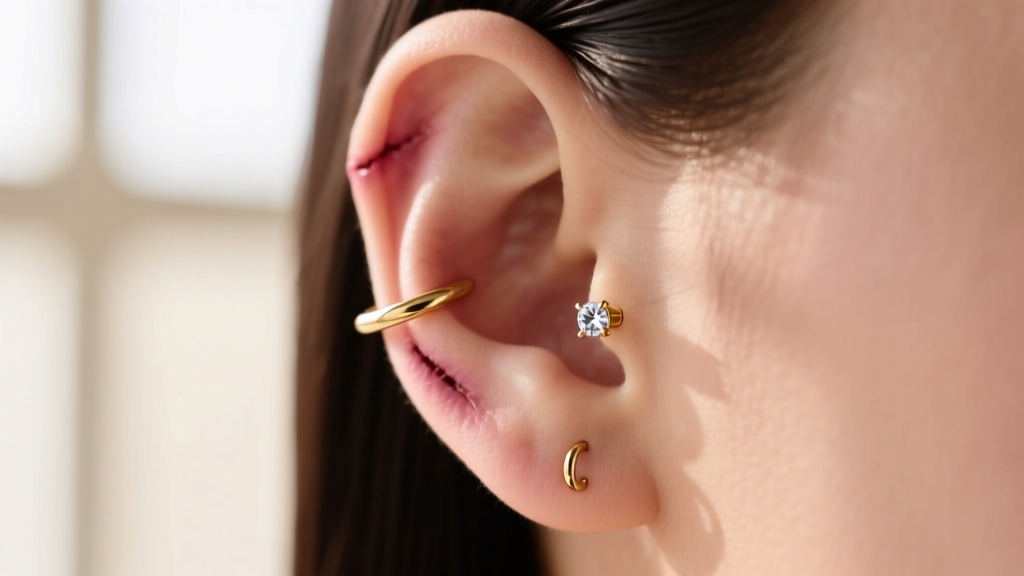
Cartilage & Complex Placements: The 6-to-12 Month Reality
Cartilage lacks the direct blood supply of the earlobe, relying on surrounding tissue for nutrients and immune cells. This biological reality means cartilage piercings—helix, conch, tragus, daith, and rook—require immense patience. The general consensus among dermatologists and master piercers is a minimum of 6 months for basic cartilage, and up to 12 months (or more) for complex angles like the industrial or rook.
The American Academy of Dermatology (AAD) notes that cartilage is highly susceptible to perichondritis (inflammation of the cartilage tissue) if subjected to early trauma. Changing a helix hoop at week 8 is a guaranteed recipe for an irritation bump.
| Piercing Placement | Standard Gauge | Minimum Healing Time | First Safe Style Change |
|---|---|---|---|
| Standard Lobe | 18G - 16G | 6 - 8 Weeks | Lightweight Huggies / Small Studs |
| Helix / Forward Helix | 16G - 14G | 6 - 9 Months | Flat-Back Gems / Seamless Hoops |
| Conch | 16G - 14G | 8 - 12 Months | Large Flat-Back Studs |
| Tragus | 16G | 6 - 9 Months | Small Flat-Back Bezel Gems |
| Daith | 16G - 14G | 9 - 12 Months | Clicker Segment Rings |
| Industrial | 14G | 12+ Months | Custom Contoured Bars |
The 'Downsizing' Milestone: A Crucial Style & Health Step
Before you even think about changing the style of your jewelry, you must address the fit. When a piercer initially pierces you, they use a post that is significantly longer than necessary (often 8mm to 10mm for lobes, and 10mm to 12mm for cartilage) to accommodate the inevitable swelling that occurs in the first two weeks.
'Leaving a long post in after the swelling has subsided is the leading cause of irritation bumps. The excess metal acts as a lever, catching on towels and hair, which translates into mechanical trauma at the fistula entrance.' — Master Piercer Consensus
Between weeks 3 and 6, you must return to your piercer for a 'downsize.' This involves swapping the long post for a shorter one (typically 5mm or 6mm). This is not just a health imperative; it is a styling one. A flush-fitting flat-back labret sits elegantly against the ear, providing the sleek, modern silhouette that defines contemporary ear curation.
2026 Trend Alert: Styling Your Healed Piercings
As we navigate the style landscape of 2026, the 'maximalist curated ear' of the early 2020s has evolved into 'quiet luxury ear curation.' The focus has shifted from covering every inch of the ear with mismatched charms to intentional, high-impact placements featuring premium materials and precision engineering.
The Rise of Threadless Jewelry
Threadless (or press-fit) jewelry has completely dominated the high-end piercing market. Unlike internally threaded jewelry, which can harbor bacteria in the screw grooves, threadless ends feature a slightly bent pin that slides into a hollow post, held in place by tension. This allows for infinite styling combinations without ever removing the post from a healed piercing. You can swap a simple titanium ball end for a 14-karat gold floating diamond end in seconds, making it the ultimate solution for those wondering when and how they can safely change their earring aesthetics without irritating the channel.
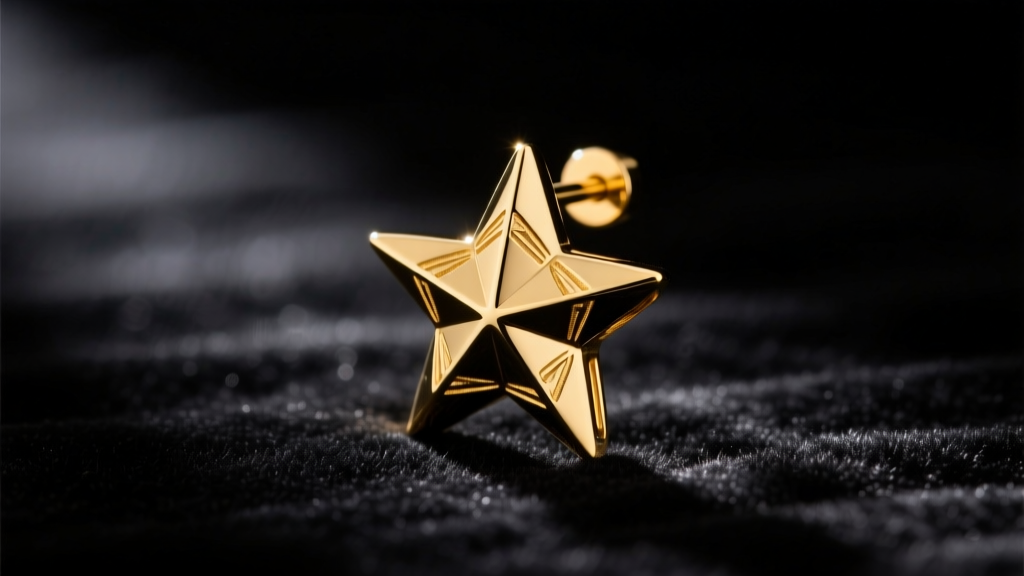
Huggies and Ear Cuffs for the Uncommitted
For those who want to experiment with the cartilage trend but are not ready for the 12-month healing commitment, 2026 has seen a massive surge in architectural ear cuffs and tension-fit huggies. These pieces wrap around the helix or conch ridge, mimicking the look of a pierced ear without breaking the skin. Look for cuffs cast in solid 14k gold or rhodium-plated sterling silver to prevent oxidation and skin discoloration.
Material Grades: What to Wear When You Finally Switch
When the time finally comes to change your earrings, the material you choose is just as critical as the timing. The jewelry market is flooded with misleading terms like 'surgical steel' or 'hypoallergenic,' which often mask the presence of nickel—a primary contact allergen.
- Implant-Grade Titanium (ASTM F-136): The gold standard for fresh piercings and the first style change. It is entirely nickel-free, highly polished, and biocompatible.
- Niobium: An excellent, lightweight alternative to titanium that can be anodized into a spectrum of vibrant colors without the use of toxic dyes or plating.
- Solid 14k or 18k Gold: Safe for healed piercings, provided it is nickel-free and alloyed with biocompatible metals like silver or palladium. Avoid gold-plated or gold-filled jewelry for initial changes, as the thin layer of gold can wear away, exposing reactive base metals to the fistula.
- Avoid 'Surgical Steel': Often a marketing term for 316L stainless steel, which contains up to 12% nickel. While fine for fully matured lobes in some individuals, it is a major risk factor for cartilage irritation.
Troubleshooting: What If It Hurts When You Change Them?
If you attempt to change your earrings and experience sharp pain, resistance, or immediate swelling, stop immediately. Forcing jewelry through a semi-healed fistula can cause micro-tears, resetting your healing clock to day zero. If the original jewelry will not slide back in, do not leave the hole empty; the body will begin closing the fistula within minutes. Visit a professional piercer who can use a sterile insertion taper to gently guide the jewelry back into place without causing tissue damage. Patience is the ultimate styling tool; respecting the biological timeline ensures your ear canvas remains healthy, pristine, and ready for the finest jewelry 2026 has to offer.


