The Ultimate Gift Guide to Anatomical Heart Earrings
Discover the perfect anatomical heart earrings for med grads, gothic romantics, and anatomy lovers. Expert guide on materials, gauges, and occasions.

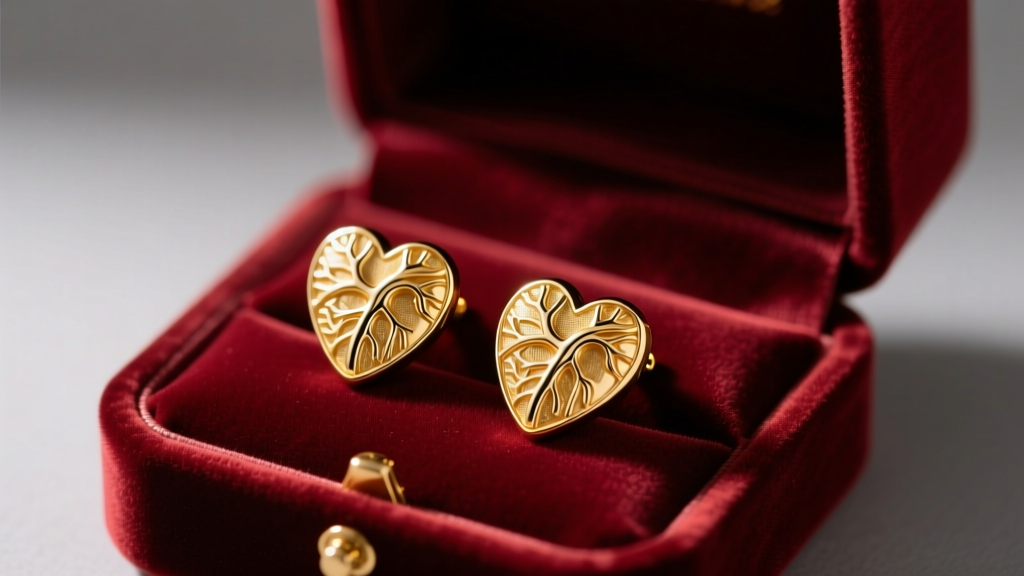
When it comes to gifting jewelry that carries profound personal meaning, few designs strike the perfect balance between scientific fascination, dark romance, and raw emotion quite like anatomical heart earrings. Unlike the simplified, symmetrical 'valentine' heart shape, the true human heart—with its winding aorta, textured ventricles, and intricate coronary sulci—offers a masterclass in organic complexity. As we navigate the jewelry trends of 2026, the surge in 'intellectual jewelry' and dark academia aesthetics has pushed these scientifically accurate designs out of niche gothic shops and into high-end, everyday luxury.
Whether you are shopping for a medical school graduate, an anatomy professor, a gothic bride, or a romantic partner to whom you want to gift a literal representation of 'you hold my real heart,' selecting the right piece requires more than just an eye for design. Because of their deep crevices and often top-heavy structures, anatomical heart earrings present unique challenges regarding metal safety, weight distribution, and piercing health. This comprehensive guide will walk you through the exact specifications, material grades, and occasion-matching strategies needed to choose the perfect pair.
The Symbolism Behind the Science
Gifting an anatomical heart is a bold statement. It strips away the commercialized fluff of traditional romance and replaces it with something visceral, vital, and deeply intimate. For medical professionals, it serves as a talisman of their grueling years of study and their dedication to human life. For alternative fashion enthusiasts, it bridges the gap between macabre art and wearable elegance. Understanding your recipient's connection to this imagery is the first step in selecting the right style, metal, and scale.
Occasion Matching: Who to Gift and When
Anatomical heart earrings are incredibly versatile, but the style and material you choose should heavily depend on the occasion and the recipient's daily lifestyle. Below is a decision framework to help you match the perfect pair to the right milestone.
| Occasion | Recipient Profile | Ideal Style | Recommended Metal | Estimated Budget |
|---|---|---|---|---|
| Med School Graduation | Incoming Resident / Doctor | Small Studs or Threaders | ASTM F136 Titanium or 14k Gold | $80 - $250 |
| Valentine's Day / Anniversary | Romantic Partner | Dangles with Ruby/Enamel Accents | 18k Gold Vermeil or Solid Gold | $120 - $400+ |
| Nurses Week / Retirement | Healthcare Veteran | Medium Huggies or Ear Cuffs | Rhodium-Plated 925 Sterling Silver | $60 - $150 |
| Alternative / Gothic Wedding | Edgy Bride / Groom | Statement Chandeliers / Climbers | Oxidized Silver with Black Diamonds | $150 - $500 |
Material Grades and Hypoallergenic Requirements
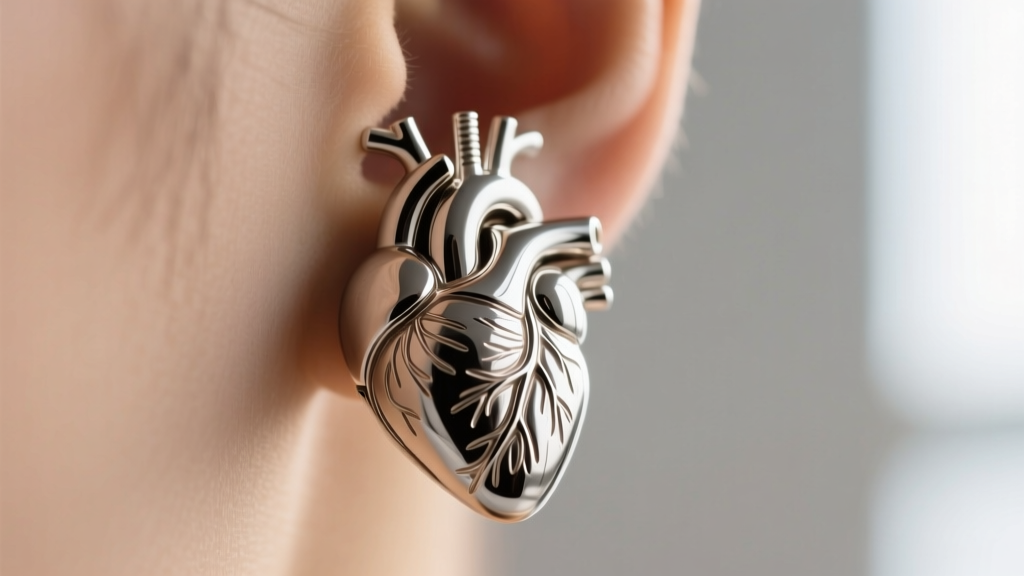
The most critical factor in buying anatomical jewelry is understanding how the design interacts with the skin. The human heart is full of deep grooves, overlapping vessels, and textured surfaces. In jewelry casting, these crevices become traps for sweat, dead skin cells, soap residue, and environmental moisture.
According to the Association of Professional Piercers (APP), prolonged exposure to trapped moisture and low-grade alloys is a primary cause of contact dermatitis in healed piercings. Many mass-produced anatomical heart earrings are made from 316L surgical steel. While often marketed as 'hypoallergenic,' 316L steel contains between 10% and 14% nickel. When sweat pools in the intricate aorta arches of the earring, it can accelerate nickel leaching, leading to itchy, flaky, or infected earlobes.
The Safest Metals for Intricate Designs
- ASTM F136 Implant-Grade Titanium: The absolute gold standard for sensitive ears. It contains zero nickel and is highly resistant to corrosion, making it ideal for the sweat-trapping crevices of an anatomical design.
- Solid 14k or 18k Gold: Excellent for longevity and heirloom gifting. Ensure it is nickel-free (alloyed with palladium or silver instead of copper/nickel).
- 925 Sterling Silver with Rhodium Plating: Bare sterling silver will oxidize and turn black when exposed to the sulfur in human sweat—a process that is nearly impossible to polish out of tiny anatomical grooves. A thick rhodium plating (at least 0.75 microns) creates a barrier that prevents tarnishing.
The Weight and Gauge Dilemma
Because anatomical hearts are asymmetrical and dense, they are inherently heavy. A standard earlobe piercing is typically done at 20-gauge (0.81mm) or 18-gauge (1.02mm). A solid-cast sterling silver anatomical dangle can easily weigh between 8 and 14 grams.
Hanging a 12-gram weight from a 20-gauge wire creates the 'cheese-cutter effect.' Over time, the thin wire will slowly migrate downward through the earlobe tissue, causing irreversible stretching and tearing. If you are gifting dangle earrings, you must look for one of two engineering solutions:
- Hollow-Back CAD Designs: Modern jewelers use ZBrush 3D modeling to hollow out the back of the heart, maintaining the intricate frontal anatomy while reducing the weight to a safe 3 to 5 grams.
- Upgraded Wire Thickness: Look for dangles that feature an 18-gauge (1.02mm) or 16-gauge (1.29mm) ear wire to better distribute the physical load across the fistula.
Design Variations: From Minimalist Studs to Statement Dangles
The market for anatomical heart earrings has expanded dramatically, offering options for every type of piercing and personal style. Here is how to navigate the structural variations.
1. The Anatomical Stud
Best for daily wear and active professionals (like surgeons or nurses who cannot wear dangling jewelry). When buying studs, pay close attention to the post. Avoid externally threaded posts, where the screw-like ridges can tear the delicate fistula lining upon insertion. Instead, seek out internally threaded or threadless push-pin labret posts, which offer a perfectly smooth surface that glides through the piercing without causing micro-trauma.
2. The Threader Earring
Threaders are an ingenious solution for anatomical hearts. By pulling a delicate chain through the earlobe, the weight of the heart is distributed not just on the piercing hole, but across the entire curve of the ear's cartilage and lobe. They offer a ghostly, floating aesthetic that makes the detailed ventricles catch the light with every movement.

3. The Cartilage Cuff and Helix Climber
For the recipient without standard lobe piercings, or for those who love ear curation, anatomical ear cuffs are a phenomenal gift. A cuff that wraps around the helix or tragus, designed to look like a heart clinging to the ear, requires no piercing at all. Ensure the cuff has adjustable tension so it can be gently squeezed to fit the wearer's specific cartilage thickness without slipping off during sleep.
Casting Methods: Lost-Wax vs. CAD
If you are buying from an independent jeweler or a high-end boutique, understanding how the piece was made will tell you a lot about its quality. Traditional lost-wax casting involves a jeweler hand-carving the heart from wax. This method often yields incredibly organic, 'fleshy' textures that look remarkably authentic. Conversely, CAD (Computer-Aided Design) casting is milled or 3D printed. While CAD allows for perfect symmetry and precise stone-setting (like embedding tiny rubies into the pulmonary arteries), cheaper CAD designs can sometimes look rigid or mechanical. For the most lifelike gift, seek out artisans who combine digital precision with hand-finished texturing.
Care and Maintenance for Intricate Crevices
Gifting the earrings is only the first step; ensuring they last a lifetime requires proper maintenance. The deep sulci and arterial arches of an anatomical heart are magnets for lotion buildup and environmental dust.
Expert Care Warning: Never use ultrasonic jewelry cleaners (which operate at 40-45 kHz frequencies) on anatomical heart earrings that feature intentional oxidation (blackened silver for depth) or enamel accents (like red-filled ventricles). The high-frequency vibrations will strip the patina and shatter the enamel.
Instead, the safest cleaning method recommended by the APP for intricate body jewelry is a simple soak in warm water with a few drops of mild, fragrance-free dish soap. Use a brand-new, extra-soft baby toothbrush to gently sweep the bristles through the aorta and vena cava grooves. Rinse thoroughly with distilled water to prevent hard water spots, and dry completely with a microfiber cloth before storing in an anti-tarnish bag.
Final Thoughts on Gifting
Anatomical heart earrings are more than just an accessory; they are a conversation piece, a badge of honor, and a deeply intimate token of affection. By prioritizing biocompatible metals like ASTM F136 titanium, respecting the physics of gauge and weight distribution, and matching the style to the recipient's lifestyle, you can gift a piece of jewelry that is as scientifically brilliant as it is emotionally resonant. Whether it's celebrating a hard-won medical degree or simply telling someone they hold your vital organs in their hands, the right anatomical heart earring is a gift that will beat on for a lifetime.