Styling Hoops: A Beginner Guide For A Guy With Hoop Earrings
Discover the ultimate beginner-friendly style guide for the guy with hoop earrings, covering sizing, materials, placements, and face shapes.


The Modern Renaissance of Men's Hoops
The modern man's jewelry box has evolved significantly, and the guy with hoop earrings is no longer confined to niche subcultures or rebellious archetypes. As we navigate the style landscape of 2026, hoops have cemented their place as a versatile, mainstream staple in menswear. Whether you are stepping into a boardroom, hitting the gym, or heading out for a weekend evening, a well-chosen hoop earring adds an instant layer of intentionality to your look. However, transitioning from a bare earlobe to sporting metallic circles requires a foundational understanding of proportions, metallurgy, and anatomy. This beginner-friendly explainer will dismantle the guesswork, providing you with exact specifications and actionable styling frameworks to ensure your first (or next) hoop purchase is a resounding success.
Sizing and Proportions: Finding Your Perfect Diameter
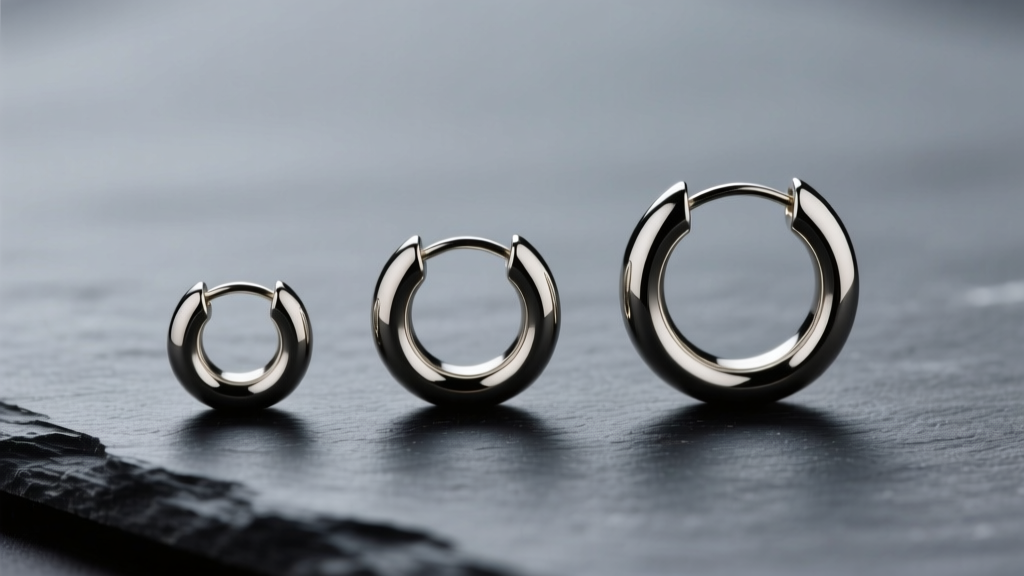
The most common mistake beginners make is purchasing a hoop based solely on how it looks in a product photo, ignoring the inner diameter (ID) measurement. The inner diameter dictates how the hoop interacts with your ear's anatomy. A hoop that is too small will pinch the lobe and cause migration, while one that is too large can easily snag on clothing or towels. For men, the 'sweet spot' typically ranges from 10mm to 15mm for standard lobe piercings, offering a masculine, grounded silhouette without excessive dangling.
| Inner Diameter (ID) | Style Profile | Best Placement |
|---|---|---|
| 8mm - 10mm | Snug / Huggie | Upper Lobe, Helix, Tragus |
| 11mm - 14mm | Classic / Standard | Standard Lobe, Mid-Helix |
| 15mm - 20mm | Statement / Drop | Lower Lobe, Stretched Lobes |
| 22mm+ | Bold / Avant-Garde | Fashion / Runway Styling |
When measuring, always account for the thickness of your earlobe. If your lobe is particularly thick (over 8mm), you must add at least 2-3mm to your desired clearance to ensure the hoop rotates freely without applying pressure to the piercing fistula.
Material Metallurgy: Avoiding the 'Green Ear' Effect
Your skin's reaction to metal is non-negotiable. The Association of Professional Piercers (APP) strictly recommends specific alloys for both fresh and healed piercings to prevent contact dermatitis and nickel allergies. As a beginner, avoid 'fashion metals' like brass, copper, or nickel-heavy white gold, which will oxidize and turn your skin green or cause severe irritation.
Top Tier: Implant Grade & Solid Gold
- ASTM F136 Titanium: The gold standard for sensitive skin. It is completely nickel-free, lightweight, and highly resistant to corrosion. Expect to pay $25-$50 for a high-quality seamless hoop.
- Niobium: Similar to titanium but can be safely anodized into various colors without using paints or plating. Highly biocompatible.
- 14k or 18k Solid Gold: Must be nickel-free and alloyed for body jewelry. Avoid gold-plated or gold-filled options, as the thin outer layer will eventually wear off, exposing the reactive base metal beneath. Prices typically range from $150 to $400+.
Mid Tier: Surgical Steel & Silver
- ASTM F138 Surgical Steel: A reliable, budget-friendly option for fully healed piercings. It contains trace amounts of nickel, so avoid it if you have known metal sensitivities.
- Sterling Silver (925): While aesthetically pleasing, silver tarnishes easily and contains copper. It is generally not recommended for long-term wear in unhealed or easily irritated piercings.
Lobe vs. Cartilage: Placement and Gauge Dynamics
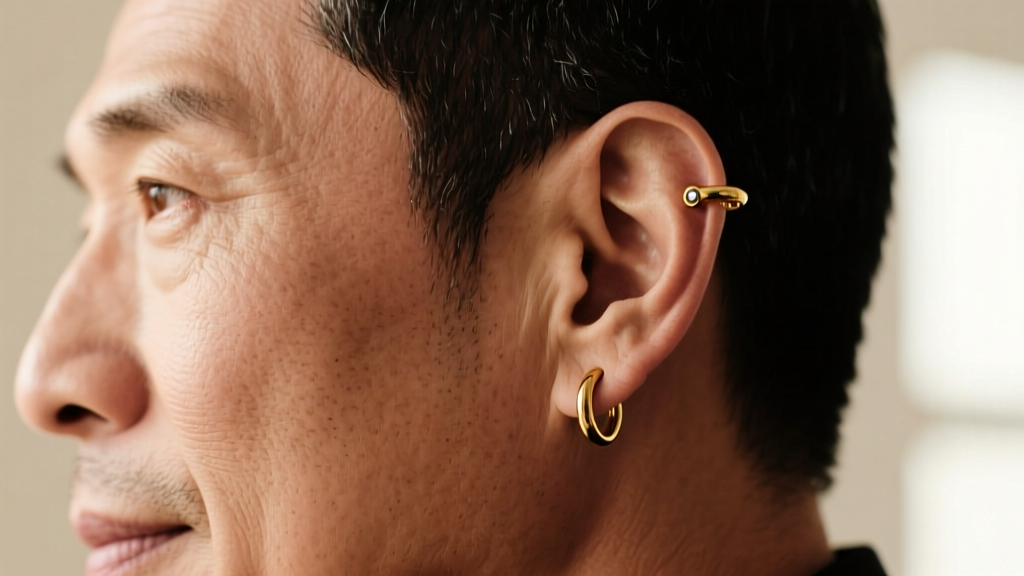
Where you wear your hoop fundamentally changes the hardware you need to buy. Standard lobe piercings are typically done at 18-gauge (1.0mm) or 16-gauge (1.2mm), though many men prefer 14-gauge (1.6mm) hoops for a slightly bolder, more durable profile that resists bending. Cartilage piercings, such as the helix or rook, are almost universally pierced at 16-gauge.
Seamless Hoops vs. Captive Bead Rings (CBR)
Understanding the closure mechanism is critical for daily comfort. A Captive Bead Ring (CBR) uses the tension of the metal ring to hold a small bead in place. While secure, the bead can create a small bump that catches on hair and shirts, and inserting them requires specialized ring-opening pliers. Conversely, Seamless Hoops feature a hidden pin or a precision-machined bevel that snaps flush into the hollow tube of the ring. For a guy with hoop earrings who values a clean, uninterrupted silhouette and easy daily removal, seamless hoops are the superior choice.
Pro-Tip: Never use your bare hands to twist open a thick-gauge (14G or 12G) hoop. You will warp the metal into an oval shape, ruining the tension. Always invest in a pair of jewelry-specific opening and closing pliers.
Face Shape Geometry: Matching Hoops to Jawlines
Just as with sunglasses or haircuts, the geometry of your hoop should complement your facial structure. According to styling principles frequently highlighted in GQ's men's jewelry guides, contrast is your best tool.
- Square Jawlines: If you have a sharp, angular jaw, opt for perfectly round, classic hoops (12mm-15mm). The circular geometry softens the hard angles of your face, creating visual balance.
- Round Face Shapes: Avoid perfectly circular, chunky hoops that mimic your face shape. Instead, look for slightly elongated hoops, oval hoops, or hoops with a subtle geometric pendant attachment to add verticality and structure.
- Oval Faces: The most versatile shape. You can comfortably pull off anything from snug 8mm huggies to bold 20mm statement hoops without disrupting your natural facial proportions.
Common Beginner Mistakes and How to Fix Them
Even with the right jewelry, poor habits can lead to frustration. Here is a troubleshooting checklist for the modern man:
- Sleeping in Hoops: Never sleep in hoops larger than 10mm. The pressure of your head against the pillow will bend the metal, stretch the piercing hole, and cause 'cheese-cutter' migration. Switch to flat-back labret studs for sleeping.
- Ignoring the Snag Zone: When pulling off tight t-shirts or hoodies, always pull the fabric over your head with your arms crossed, keeping the fabric away from your ears. Snagging a seamless hoop can rip the pin out of the tube, permanently damaging the closure.
- Over-Cleaning: For healed piercings, harsh chemicals like rubbing alcohol or hydrogen peroxide will dry out the skin and degrade certain metal finishes. Simply wash your earrings with warm water and a mild, fragrance-free soap during your normal shower routine.
- Wearing in the Gym: Remove your hoops before lifting weights or doing grappling sports. A barbell or a gi lapel can easily catch a hoop, resulting in a torn earlobe—a common injury that requires surgical repair.
Final Thoughts
Becoming a confident guy with hoop earrings is about mastering the micro-details. By prioritizing biocompatible materials like ASTM F136 titanium, selecting the correct inner diameter for your specific anatomy, and respecting the mechanical differences between seamless rings and CBRs, you elevate your style from accidental to intentional. Start with a single, high-quality 12mm or 14mm seamless hoop in your dominant ear, master the maintenance routine, and let the hardware speak for itself.


