From Earrings Drawing to Reality: Custom Jewelry Buying Guide
Learn how to transform your custom earrings drawing into wearable art. Discover technical constraints, material choices, and pricing for bespoke jewelry.

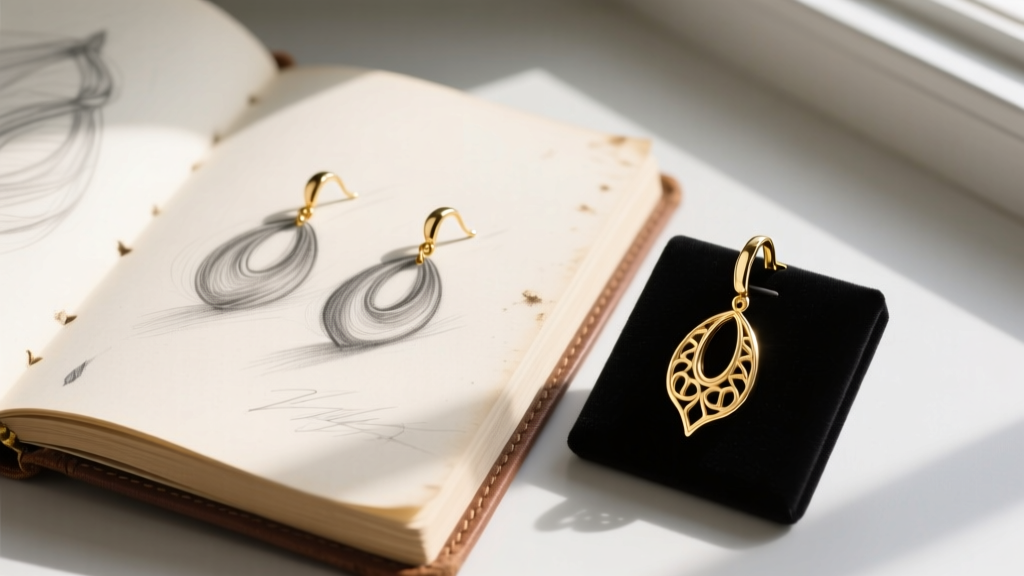
The Journey from Earrings Drawing to Wearable Art
Translating a conceptual earrings drawing into a physical, wearable object is one of the most rewarding experiences in bespoke jewelry. However, the leap from a two-dimensional sketch to a three-dimensional metal alloy involves complex physics, metallurgical constraints, and precise engineering. In 2026, while AI-assisted CAD rendering and 3D resin printing have streamlined the prototyping phase, the fundamental rules of gravity, leverage, and metal shrinkage remain unchanged. Whether you are sketching a delicate ear cuff or a heavy chandelier drop, understanding the technical limitations of your design is critical before you hand your sketch to a bench jeweler. This guide provides the exact specifications, material data, and decision frameworks you need to ensure your custom design is both structurally sound and aesthetically flawless.
Technical Constraints: What Your 2D Sketch Can't Show
A common pitfall when commissioning custom jewelry is treating an earrings drawing as a complete blueprint. A sketch captures silhouette and proportion, but it completely ignores the Z-axis (depth), weight distribution, and structural leverage. Addressing these invisible factors early in the design process will save you from costly revisions and uncomfortable, unwearable jewelry.
The Physics of Gauge and Weight
The most frequent failure point in custom dangle and drop earrings is the post. Standard commercial earring posts are manufactured at 20-gauge (0.81mm) or 18-gauge (1.02mm) thickness. If your drawing features a large, solid gemstone head or a long, multi-tiered chandelier element, the finished piece could easily exceed 10 to 14 grams. Under the leverage of daily movement, a standard 20-gauge post will bend, droop, or snap within weeks.
- Under 4 grams: Standard 20-gauge (0.81mm) post with a standard friction back is sufficient.
- 4 to 8 grams: Upgrade to an 18-gauge (1.02mm) post paired with a jumbo friction back or a silicone secure-grip backing.
- 8 to 15 grams: You must specify a 16-gauge (1.29mm) post, or pivot the design to a heavy-duty leverback or French wire mechanism to distribute the weight across the earlobe's curvature.
- Over 15 grams: Consider an ear cuff integration or a specialized omega-back clip mechanism to anchor the piece to the cartilage, relieving pressure from the lobe piercing.
Z-Axis Depth and Stone Setting
If your sketch features a 15x15mm geometric square, the jeweler needs to know its depth. Is it a flat 1.5mm sheet of metal, or a 6mm domed shell? Flat, angular, and highly geometric designs are best achieved through traditional fabrication—sawing, bending, and soldering sheet metal and wire. Conversely, organic, flowing, or highly sculptural shapes require lost-wax casting. Furthermore, if your drawing includes gemstones, you must decide on the setting style. Bezel settings require a thicker metal wall (at least 0.35mm) to burnish over the stone's girdle, whereas prong settings require less metal but demand precise notch-cutting under a microscope.
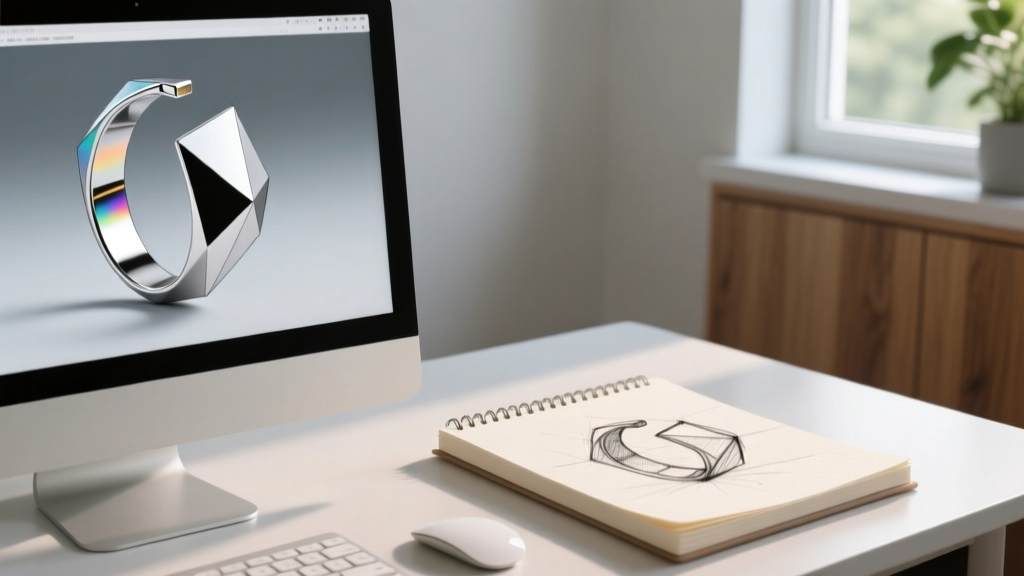
Material Selection and Casting Realities
When moving from an earrings drawing to a 3D CAD model for casting, the choice of metal dictates the engineering tolerances. According to the Gemological Institute of America (GIA), understanding the metallurgical properties of your chosen alloy is essential for predicting how the final piece will behave. Every metal shrinks as it cools from a molten state to a solid, and the CAD designer must scale your digital model to compensate for this shrinkage.
| Metal Alloy | Casting Shrinkage Rate | Minimum Prong Thickness | Best Suited For |
|---|---|---|---|
| 14k Yellow Gold | ~5.5% - 6.0% | 0.25mm | Everyday studs, intricate filigree, budget-conscious custom work. |
| 18k Yellow Gold | ~5.0% - 5.5% | 0.30mm | High-end dangles, rich color contrast with diamonds, heirloom pieces. |
| Platinum 950 | ~1.25% - 1.5% | 0.20mm | Heavy statement pieces, secure diamond settings, hypoallergenic needs. |
| 14k Palladium White | ~5.5% | 0.28mm | Modern geometric designs, no rhodium plating required. |
Expert Insight: If your drawing specifies white gold, be aware that standard nickel-alloy white gold requires rhodium plating to appear bright white. For custom earrings that experience high friction against the hair and neck, this plating will wear off in 6 to 12 months. Specify palladium-based white gold or platinum in your commission to ensure the metal's natural color matches your design intent without requiring annual maintenance.
Vetting a Custom Jeweler in 2026
Not all jewelers are equipped to interpret a custom earrings drawing. A retail sales associate is not a bench jeweler. When seeking a partner to bring your sketch to life, look for credentials from recognized industry bodies like the Jewelers of America or the American Jewelry Design Council. During your consultation, ask the following technical questions to gauge their expertise:
- "Will I receive the STL or 3DM CAD files?" A reputable custom jeweler will provide you with the 3D rendering files before casting. This ensures you own the digital intellectual property of your design and can verify the exact millimeter dimensions.
- "How do you handle porosity in custom casts?" Porosity occurs when gas bubbles are trapped in the molten metal during centrifugal casting, leaving microscopic pits on the surface. An expert will explain their use of a vacuum-assisted casting machine or hot isostatic pressing (HIP) to eliminate internal voids, especially crucial for thin earring posts.
- "Where will the sprue mark be located?" The sprue is the channel through which molten metal enters the mold. The jeweler must plan the sprue placement on a hidden area of the earring (like the back of a bezel or the inside of a hoop) so that cutting and polishing it away does not ruin the visible silhouette of your drawing.
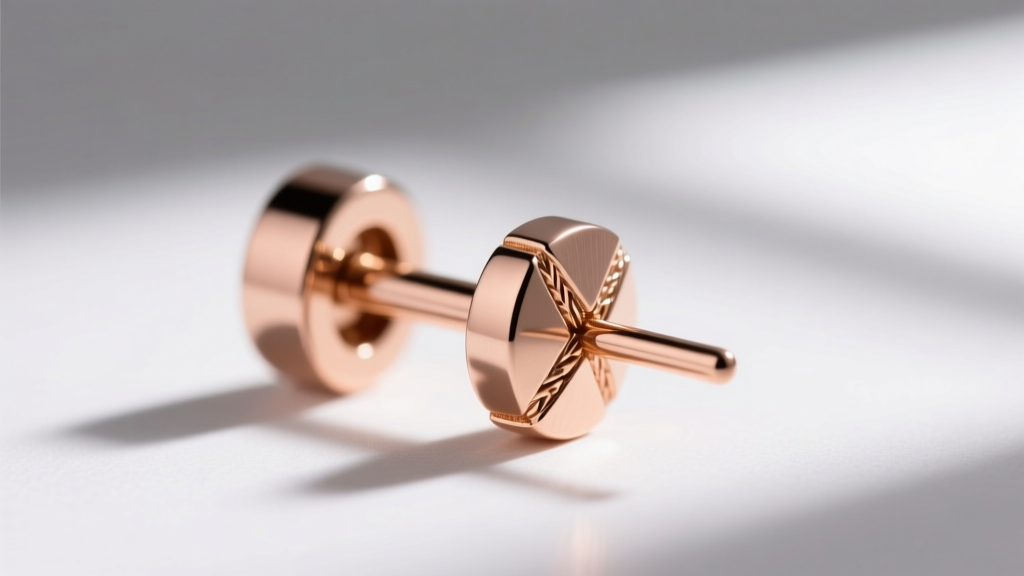
Budgeting: The True Cost of Custom Earrings
Commissioning bespoke jewelry is an investment in labor, technology, and raw materials. While prices fluctuate based on precious metal markets, understanding the breakdown of costs will help you budget accurately for your project. Expect the following pricing tiers for a single pair of custom earrings in 2026:
- Design & CAD Fee ($150 - $450): This covers the translation of your 2D drawing into a precise 3D digital model, including structural adjustments for gauge thickness and stone seats.
- Wax Printing & Casting Setup ($100 - $250): The cost of 3D printing the resin wax model, creating the plaster investment mold, and the labor of the centrifugal cast.
- Metal Weight ($200 - $1,500+): Charged per gram based on the daily market spot price plus the jeweler's alloy markup. A standard pair of 14k gold studs may use 3 grams, while complex hoops can require 15+ grams.
- Stone Setting & Finishing ($25 - $150 per stone): Micro-pave setting requires significantly more time under a microscope than a simple bezel or prong setting. Hand-polishing and rhodium plating add an additional $50 to $120 to the final labor cost.
For a complete pair of custom 14k gold drop earrings with moderate detailing and two 5mm gemstones, expect a total investment ranging from $1,200 to $2,800.
Pre-Commission Checklist
Before you sign a contract and hand over your deposit, ensure your project meets the following criteria:
- [ ] Your earrings drawing includes notes on intended scale (e.g., "35mm total drop length").
- [ ] You have discussed the Z-axis depth and confirmed whether the piece will be cast or fabricated.
- [ ] The post gauge has been upgraded to 18G or 16G if the design exceeds 6 grams.
- [ ] You have selected a metal alloy that aligns with your maintenance preferences (e.g., avoiding rhodium-plated white gold).
- [ ] The jeweler has provided a detailed line-item invoice separating CAD fees, metal weight, and setting labor.
By treating your initial sketch as a starting point rather than a final schematic, and by collaborating with a jeweler who respects the physics of wearable art, you will ensure your custom earrings are as durable and comfortable as they are beautiful.


