Gold Dagger Earrings: A Beginner's Guide to Edgy Style
Discover how to choose, style, and care for gold dagger earrings. Our beginner guide covers metal grades, gauge sizes, and face-shape matching.

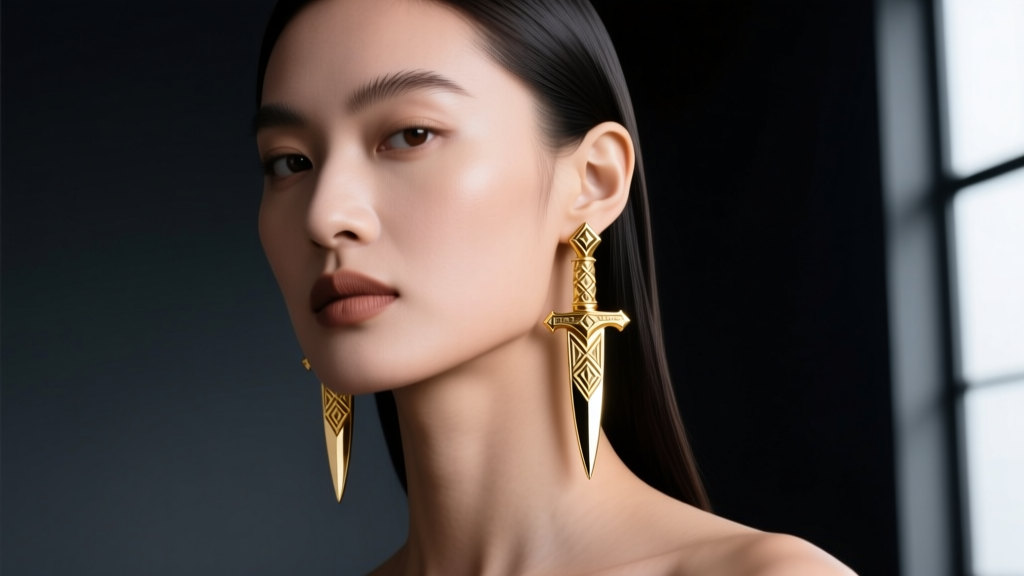
The Appeal of the Dagger Motif in Fine Jewelry
Dagger earrings have successfully transitioned from niche subcultures into mainstream high jewelry and everyday streetwear. The motif represents protection, courage, and a touch of rebellion, making it a deeply personal choice for many wearers. However, as a beginner navigating the intersection of edgy design and fine jewelry materials, the sheer volume of options can be overwhelming. Do you choose a delicate 2-inch drop or a bold, shoulder-grazing statement piece? What metal grade will survive daily wear without bending?
This comprehensive guide breaks down everything you need to know about gold dagger earrings. We will explore the structural anatomy that keeps them from drooping, the metallurgy that dictates their longevity, and the precise gauge sizes required to protect your earlobes from the unique weight distribution of a blade design.
Decoding the Anatomy of a Dagger Earring
Unlike standard teardrop or geometric dangles, a dagger earring is inherently asymmetrical and top-heavy. Understanding its three main components is crucial for selecting a pair that sits flush against your ear.
The Blade and The Tip
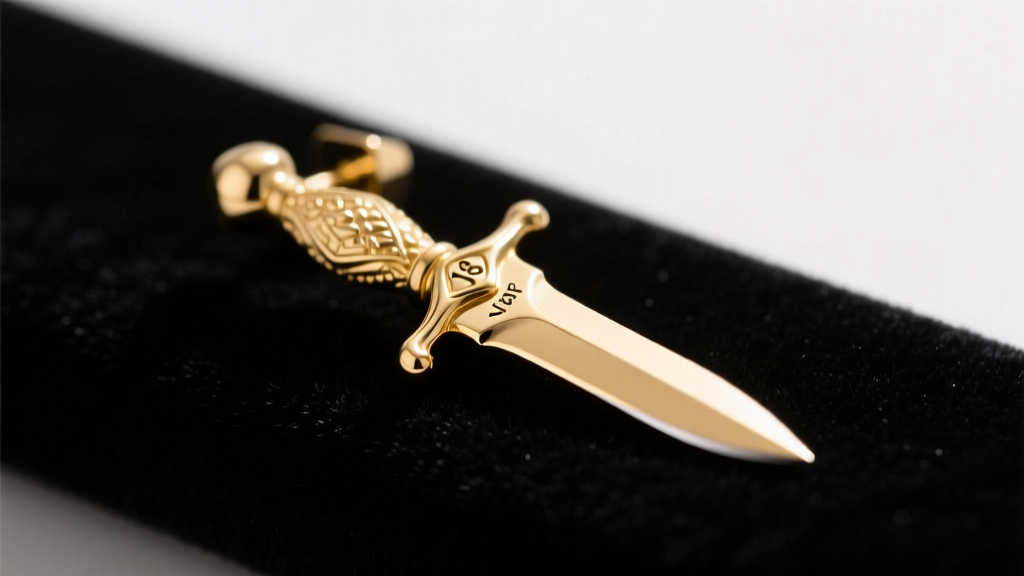
The 'blade' is the primary drop of the earring. In solid gold, even a modest 1.5-inch blade carries significant weight. The tip of the blade is the most vulnerable point; if crafted in high-purity 18k or 22k gold, a sharp tip can easily bend if it snags on a knit sweater. Beginners should look for blades with slightly blunted or reinforced tips for everyday wearability.
The Hilt (Crossguard) and Pommel
The hilt is the horizontal crossguard where the blade meets the earlobe. This is the most critical structural element. A well-designed hilt acts as a visual anchor and, more importantly, a physical counterweight. If the hilt is too narrow, the heavy gold blade will pull the earring forward, causing it to droop or flip upside down. Look for hilts that are at least 40% the width of the blade's top section to ensure proper weight distribution.
The Post vs. The Hook
For dagger earrings, a sturdy friction post with a secure butterfly back or a custom-fitted screw back is vastly superior to a standard fishhook wire. Hooks allow the earring too much rotational freedom, increasing the likelihood of the dagger flipping upside down throughout the day.
Metal Grades: Not All 'Gold' is Created Equal
When shopping for gold dagger earrings, the terminology can be deceptive. Because the dagger shape requires structural integrity, the metal composition dictates not just the color, but the physical durability of the piece. According to the Gemological Institute of America (GIA), the alloy mix in gold jewelry fundamentally changes its hardness and scratch resistance.
| Material Type | Gold Purity / Composition | Durability & Structure | Estimated Price Range |
|---|---|---|---|
| 14k Solid Gold | 58.5% Pure Gold | Excellent. Rigid enough to hold a sharp blade shape without bending. | $150 - $400+ |
| 18k Solid Gold | 75.0% Pure Gold | Good. Richer yellow hue but softer; longer blades may warp over time. | $250 - $600+ |
| Gold Vermeil | Min. 2.5µm Gold over Sterling Silver | Moderate. Silver core provides good rigidity, but gold layer can wear off. | $60 - $120 |
| Gold Plated | 0.05µm Gold over Brass/Copper | Low. Base metal is stiff, but plating flakes quickly with friction. | $20 - $50 |
For a beginner investing in their first fine jewelry piece, 14k solid gold is the undisputed champion. It offers the perfect balance of a warm gold color and the tensile strength required to support a dangling blade without warping. If you are on a budget, opt for heavy gold vermeil over brass-plated alternatives, as the sterling silver base is naturally hypoallergenic and less likely to turn your earlobes green.
Piercing Placement & Gauge Sizes for Daggers
The weight of a gold dagger earring demands specific attention to your piercing's gauge (thickness) and placement. Standard fashion earrings typically use a 20-gauge (0.81mm) post. However, a solid gold dagger can easily weigh between 3 to 6 grams per earring.
The Association of Professional Piercers (APP) notes that heavier jewelry requires adequate tissue support to prevent migration or tearing. For gold dagger earrings, you should actively seek out 18-gauge (1.02mm) posts. The slightly thicker wire provides the necessary structural rigidity to support the hilt and prevents the post from bending under the leverage of the blade. If you are wearing a dagger in a cartilage piercing (such as the helix or conch), ensure the piece is specifically designed for cartilage with a flat-back labret post, as standard butterfly backs will irritate the rear of the ear.
Face Shape Matching: Balancing the Edge
Dagger earrings are inherently striking, meaning they will draw the eye directly to your jawline and neck. Matching the proportions of the blade to your face shape ensures the look is harmonious rather than overwhelming.
- Round Faces: Opt for long, slender dagger drops (2 inches or longer). The sharp, vertical lines create an optical illusion that elongates the face and draws the eye downward, softening the width of the cheeks.
- Square Faces: Choose medium-length daggers (1 to 1.5 inches) featuring curved hilts or small gemstone accents at the crossguard. The curves help offset the strong, angular jawline.
- Heart-Shaped Faces: Avoid excessively long, heavy drops that emphasize a narrow chin. Instead, look for dagger studs or short, wide-blade designs that sit close to the earlobe, adding volume exactly where you need it.
- Oval Faces: The universal face shape. You can effortlessly pull off oversized shoulder-duster daggers or minimalist micro-dagger studs with equal success.
Care and Maintenance: Keeping the Blade Sharp
Because of their intricate hilts and sharp angles, dagger earrings trap more oils, perfumes, and environmental debris than simple hoop earrings. Proper maintenance is non-negotiable, especially for vermeil and lower-karat pieces.
The Daily Wipe-Down
After wearing your gold daggers, gently wipe them with a dry, lint-free microfiber cloth. This removes the acidic residue from sweat and skin oils, which is the primary catalyst for tarnishing the alloy metals mixed into 14k and 18k gold.
Deep Cleaning Protocol
Once a month, give your earrings a deeper clean. Mix a few drops of mild, phosphate-free dish soap (like Dawn) into a bowl of lukewarm water. Use a soft-bristled baby toothbrush to gently scrub the crevices of the hilt and the back of the post. Never use ultrasonic cleaners on gold vermeil or plated dagger earrings, as the high-frequency vibrations will strip the gold layer right off the base metal. Ultrasonic cleaners are only safe for solid 14k or 18k gold without fragile gemstone inlays.
Storage and Snag Prevention
Never toss gold dagger earrings loosely into a jewelry box. The sharp tips will inevitably scratch softer pieces, and the posts can bend. Store them upright in a dedicated compartment or hang them from a jewelry stand. If traveling, use a hard-shell travel case and secure the butterfly backs tightly to prevent the blades from shifting and bending during transit.
Final Thoughts for the Beginner
Gold dagger earrings are more than just a passing trend; they are a modern heirloom that blends historical symbolism with contemporary fashion. By prioritizing 14k solid gold, insisting on an 18-gauge post for structural support, and paying attention to the counterweight of the hilt, you will secure a pair of daggers that sit perfectly and last a lifetime. Start with a versatile, medium-length silhouette, and let the sharp elegance of the gold do the talking.


