How to Clean and Restore Textured Gold Hoop Earrings
Discover expert troubleshooting for textured gold hoop earrings. Learn how to deep-clean crevices, fix snagging, and prevent earlobe sagging.

The Hidden Maintenance of Textured Finishes
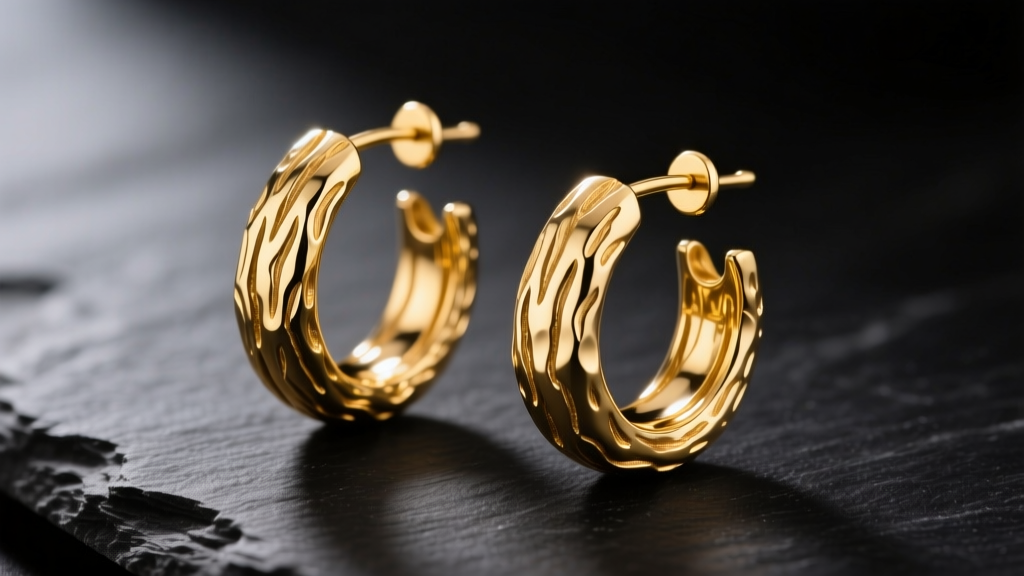
In 2026, the trend toward organic, raw-finish metals has made textured gold hoop earrings a staple in modern jewelry wardrobes. Whether featuring a hammered, bark, fluted, or diamond-cut surface, these intricate topographies offer incredible light play and artisanal appeal. However, from a bench jeweler's perspective, these designs introduce unique structural and hygienic challenges that smooth, high-polish hoops simply do not have. The surface area of a heavily hammered 25mm hoop can be up to three times greater than its smooth counterpart, creating microscopic valleys that trap sebum, environmental dust, and cosmetic residues.
If you own a pair of textured hoops that have lost their luster, begun snagging on your hair, or are causing your earlobes to sag, you are dealing with common structural and maintenance issues inherent to this specific style. This comprehensive troubleshooting guide will walk you through the exact protocols for restoring, cleaning, and structurally supporting your textured gold hoop earrings without damaging their delicate artisanal finishes.
Deep Cleaning: Extracting Sebum and Oxidation
The most frequent complaint regarding textured gold hoop earrings is the accumulation of a dull, grayish film deep within the crevices. This is not the gold tarnishing—pure gold does not tarnish—but rather a hardened matrix of skin oils, dead cells, and lotion trapped in the texture. According to the Jewelers of America, porous or heavily textured surfaces require mechanical agitation rather than just chemical soaking to break down this biofilm.
The Step-by-Step Agitation Method
Do not use harsh chemical dips or abrasive polishing pastes, which will strip the intentional oxidation or matte finish often applied to textured gold to enhance its contrast. Instead, use the following bench-approved method:
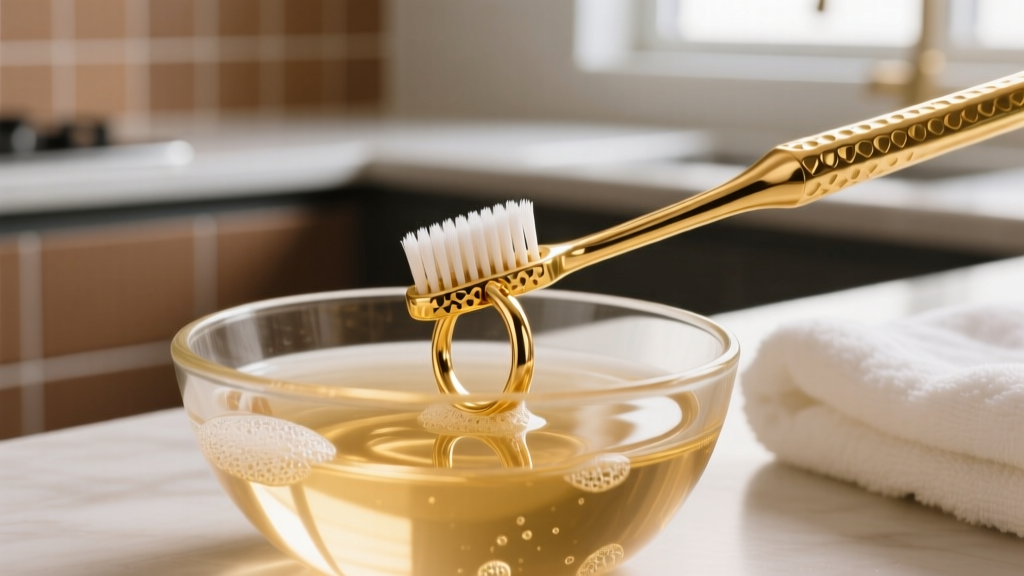
- The Solution: Mix three drops of mild, phosphate-free dish soap (like Dawn Platinum) into a bowl of warm (not hot) distilled water. Hot water can expand trapped residues deeper into micro-fissures.
- The Tool: Use an extra-soft baby toothbrush or a specialized jewelry cleaning brush with natural bristles. Synthetic bristles can sometimes leave micro-scratches on softer 18k or 22k gold alloys.
- The Technique: Soak the hoops for exactly 10 minutes. Then, using the brush, agitate in a circular motion, pressing gently into the hammered divots. Rinse under a gentle stream of lukewarm distilled water and pat dry with a lint-free microfiber cloth. Avoid cotton balls, as the fibers will catch and shred on the texture.
The Ultrasonic and Steam Cleaner Debate
While ultrasonic cleaners are excellent for diamond rings, they pose a severe risk to certain textured gold hoop earrings. If your hoops are hollow or semi-hollow (constructed from two soldered sheets of gold to reduce weight), the high-frequency vibrations can compromise the microscopic solder seams. Water can become trapped inside the hollow chamber, leading to internal corrosion or a 'sweating' effect where dirty water seeps out later when heated by your body temperature. Furthermore, if your textured hoops feature any pave or bezel-set accent stones, ultrasonic waves can easily vibrate them loose. A professional jewelry steam cleaner is a much safer alternative for blasting debris out of deep bark textures without the risk of structural vibration damage.
Troubleshooting Snagging and Wire Fatigue
Artisanal textures, particularly 'raw' or 'bark' finishes, are often created by repeatedly striking the gold with a texturing hammer. This process can leave microscopic, sharp burrs along the inner and outer edges of the hoop. These burrs act like tiny hooks, catching on silk clothing, knitwear, and hair.
Fixing the 'Hair Snag' Problem
You do not need to sand away the beautiful texture to stop the snagging. The solution lies in edge-burnishing. Take a high-quality jeweler's polishing cloth (impregnated with rouge) and run it strictly along the inner wire and the outermost rim of the hoop. Do not rub the front-facing textured surface. This smooths the functional edges that interact with your hair and clothing while leaving the visual texture completely intact. If the snagging is severe, a bench jeweler can perform a light 'tumble' in a magnetic finishing machine using stainless steel pins, which will deburr the edges in minutes without altering the hammered aesthetic.
Structural Support: Gauges, Weight, and Earlobe Sagging
Textured gold hoop earrings are inherently heavier than smooth hoops of the same dimensions due to the displacement of metal and the common use of solid, thicker wire to provide a canvas for the hammering. A standard 25mm smooth hoop might weigh 4 grams, while a heavily textured, solid 14k gold version of the same size can easily weigh 12 to 18 grams. This concentrated weight on a standard earlobe piercing leads to stretching, migration, and the dreaded 'drooping' effect where the hoop pulls the earlobe down and tilts forward.
Wire Gauge vs. Weight Matrix
The standard earring post or hoop wire is usually 20-gauge (0.81mm). This is entirely insufficient for heavy textured hoops, leading to wire fatigue, bending, and eventual snapping at the stress point near the hinge or post. Below is a troubleshooting matrix to determine if your earring wire is structurally sound for your specific hoops.
| Wire Gauge | Thickness (mm) | Maximum Safe Hoop Weight | Best Use Case for Textured Hoops |
|---|---|---|---|
| 20-Gauge | 0.81mm | Up to 8 grams | Lightweight, hollow, or small huggie textures (under 15mm) |
| 18-Gauge | 1.02mm | Up to 14 grams | Medium solid hammered hoops (20mm - 30mm) |
| 16-Gauge | 1.29mm | Up to 22 grams | Heavy, thick 'bark' finish statement hoops (35mm+) |
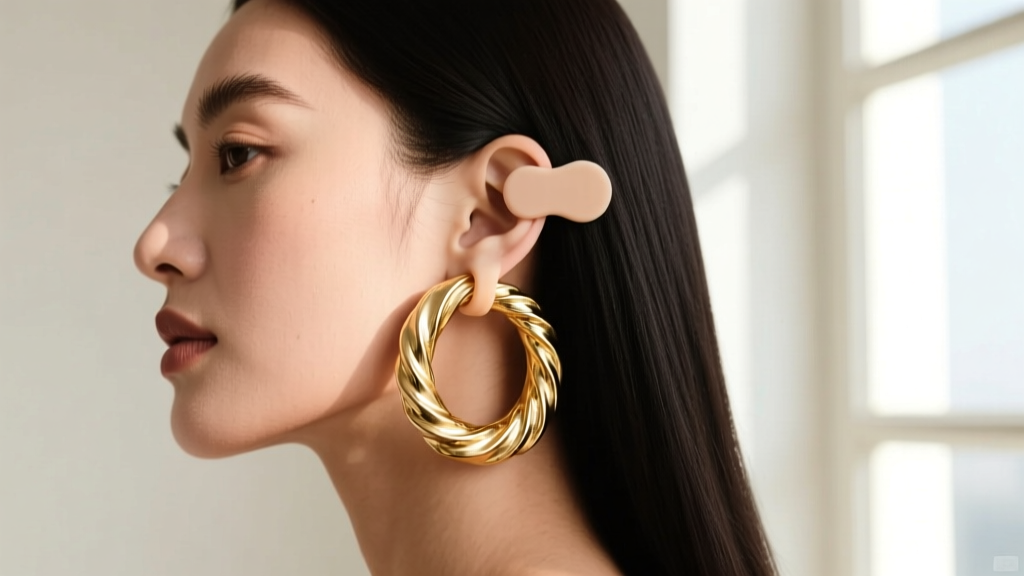
The Fix: If your heavy textured hoops are on 20-gauge wire and causing pain or drooping, take them to a jeweler to have the wires upgraded to 16-gauge or 14-gauge. The cost is minimal, but it will save your earlobes from permanent stretching. Additionally, utilize clear silicone earring lifters or 'O-rings' on the back of the post. These act as a shock absorber and distribute the weight across a wider surface area of the earlobe, keeping the textured hoop perfectly perpendicular to your face.
Alloy Hardness: 14k vs. 18k Texture Longevity
When troubleshooting the premature wearing-down of your earring's texture, you must consider the metallurgy of the gold alloy. According to the Gemological Institute of America (GIA), the karatage of gold dictates its hardness and durability, which directly impacts how long a textured finish will survive daily wear.
Expert Metallurgy Insight: 14k gold (58.5% pure gold) is alloyed with higher percentages of copper, silver, and zinc. This makes it significantly harder and more resistant to abrasion. A diamond-cut or deeply hammered texture in 14k gold will retain its sharp, crisp valleys for decades. Conversely, 18k gold (75% pure gold) is much softer. The high points of an 18k textured hoop will naturally burnish, smooth out, and develop a 'patina' over years of friction against hair and skin. This is not a defect, but a natural characteristic of high-karat gold.
If you notice the high points of your 18k textured hoops becoming shiny and smooth while the crevices remain matte, do not attempt to re-sand them at home. You risk removing too much metal. A professional jeweler can use a specialized matte-finishing brush or a light sandblasting technique with glass beads to restore the uniform, frosty texture across the entire surface of the hoop without compromising its structural integrity.
Preventing Stress Corrosion Cracking
The final, and most destructive, issue that plagues textured gold hoop earrings is stress corrosion cracking (SCC). Because textured hoops are often work-hardened during the hammering process, they carry internal physical tension. When this tension is exposed to chlorine (found in swimming pools, hot tubs, and harsh household bleach cleaners), a chemical reaction occurs that literally breaks the molecular bonds of the gold alloy. This usually manifests as a sudden, clean snap at the hinge or the base of the post.
To prevent this catastrophic failure, you must remove your textured gold hoops before swimming or cleaning. If the hoops have been exposed to chlorine, immediately soak them in a solution of warm water and a few drops of ammonia-neutralizing soap to halt the chemical reaction, then have the stress points inspected by a professional jeweler under a loupe for micro-fractures. By understanding the unique physical and chemical vulnerabilities of textured finishes, you can ensure your artisanal hoops remain a lifelong staple in your collection.


