Nepali Earrings: A Complete Material & Metal Properties Guide
Discover the unique metals and stones in authentic Nepali earrings. Compare silver, copper, yak bone, and turquoise properties for durability and style.

The Metallurgy of the Himalayas: Decoding Nepali Earrings
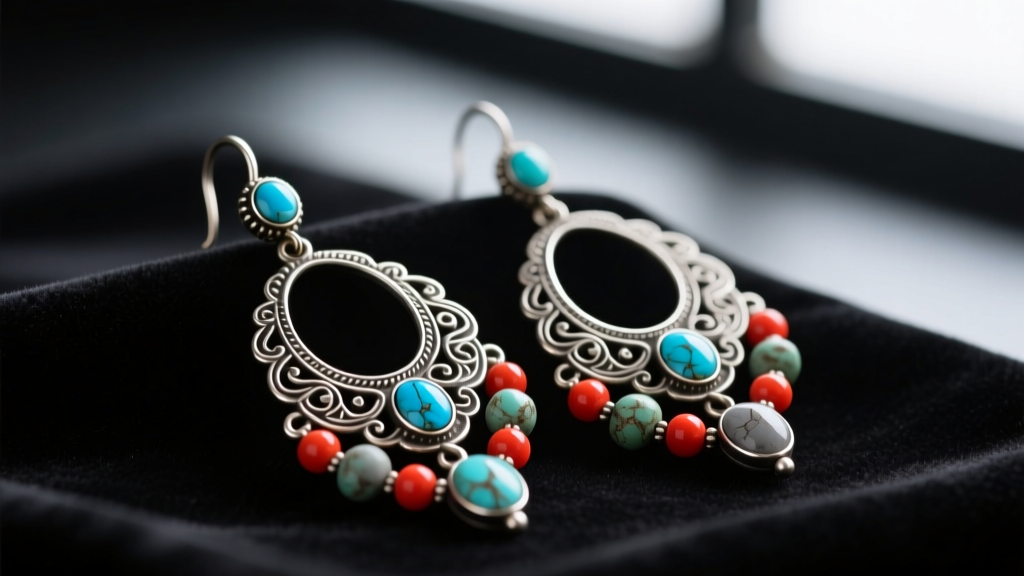
Authentic Nepali earrings are far more than simple accessories; they are wearable artifacts of Newari craftsmanship and Himalayan trade routes. Originating primarily from the Kathmandu Valley and the high-altitude regions bordering Tibet, these pieces are defined by their intricate repoussé metalwork, heavy stone inlays, and distinct antique finishes. However, as global demand for bohemian and artisanal jewelry has surged, the market has been flooded with mass-produced imitations. For the discerning collector or everyday wearer, understanding the exact material properties, metal alloys, and gemological realities of Nepali earrings is essential for evaluating quality, ensuring skin safety, and preserving the longevity of the piece.
In this comprehensive guide, we break down the core metals, organic elements, and structural hardware used in traditional and contemporary Nepali earrings, providing a scientific and practical framework for your next purchase.
The Core Metals: Sterling Silver vs. Base Alloys
The foundation of any high-quality Nepali earring is its metalwork. Traditional artisans rely on a few specific metals, each with distinct chemical properties, oxidation rates, and skin interactions.
925 Sterling Silver and Coin Silver
Genuine high-end Nepali earrings are typically forged from 925 sterling silver (92.5% pure silver, 7.5% copper). The copper addition is crucial; pure silver is too malleable to hold the intricate prongs required for heavy turquoise or coral cabochons. Some vintage or rural pieces may use "coin silver" (often 90% silver, 10% copper), which yields a slightly warmer tone and a deeper, richer oxidation (patina) over time. According to The London Assay Office, verifying the 925 hallmark is the only way to guarantee the precious metal content, though many traditional Nepali pieces rely on the artisan's reputation rather than stamped hallmarks.
The "Tibetan Silver" Trap
Beware of the term "Tibetan Silver" or "Nepali Silver" when no purity percentage is listed. In the modern jewelry trade, this is frequently a misnomer for a base metal alloy composed primarily of copper, zinc, and often nickel or lead. While it mimics the dark, antiqued look of oxidized sterling silver, it lacks the intrinsic value and hypoallergenic properties of true silver. The American Academy of Dermatology notes that nickel is the leading cause of contact dermatitis in jewelry wearers. If a pair of heavy, dark metal Nepali drops causes your earlobes to itch or turn green within hours, you are likely reacting to the copper and nickel in a base alloy, not genuine silver.
Copper and Brass: The Traditional Alternatives
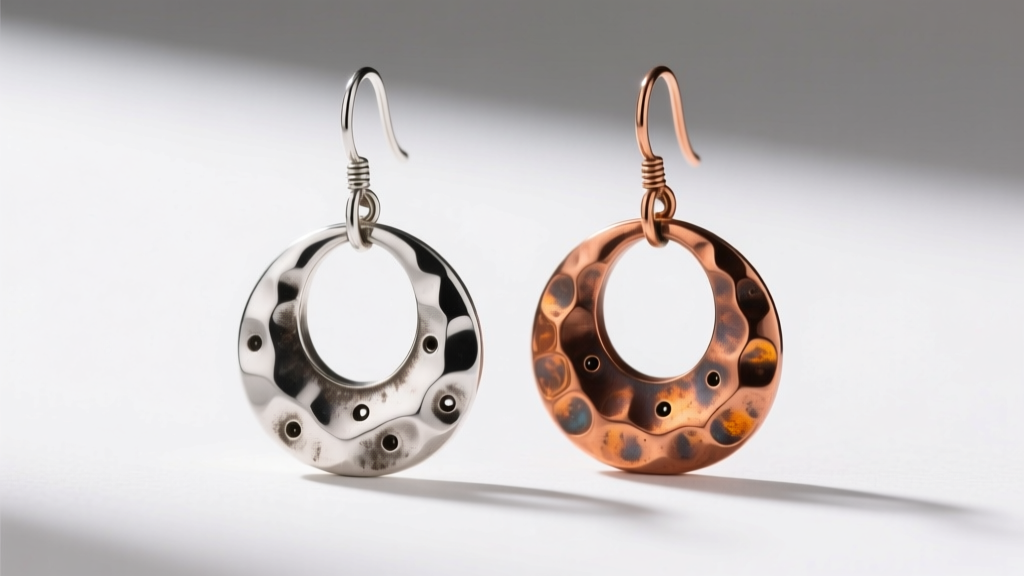
For everyday, lightweight Nepali hoops and huggies, copper and brass (an alloy of copper and zinc) are historically accurate and widely used. Copper possesses natural antimicrobial properties and develops a beautiful, earthy verdigris patina when exposed to the oils and acids of human skin. However, this same chemical reaction is what causes the infamous "green skin" effect. To mitigate this, many modern artisans apply a micro-thin layer of clear resin or wax to the ear wires, though this coating eventually wears off with friction.
Organic and Earth Elements: Turquoise, Coral, and Yak Bone
The soul of Nepali earrings lies in the vibrant contrast between dark, oxidized metals and bright, natural inlays. Understanding the lapidary and organic properties of these materials is critical for assessing value and durability.
Turquoise: Natural vs. Stabilized vs. Imitation
Turquoise is a hydrous phosphate of copper and aluminum, ranking between 5 and 6 on the Mohs hardness scale. Authentic Himalayan and Nepali turquoise often features a striking brown or black matrix (remnants of the host rock, usually limonite or iron pyrite). Because natural turquoise is highly porous, it can absorb skin oils, cosmetics, and water, which may alter its color over time (a process some collectors prize as "wearing in" the stone).
Due to the scarcity of high-grade natural turquoise, much of the material used in mid-tier Nepali earrings is "stabilized"—treated with a clear epoxy resin under pressure to harden the stone and lock in its color. The Gemological Institute of America (GIA) emphasizes that stabilization is an accepted industry practice, provided it is disclosed. However, buyers must watch out for dyed howlite or magnesite, which are frequently passed off as turquoise in tourist markets. Dyed howlite will show concentrated color pooling in the cracks under magnification, whereas natural turquoise matrix lines are distinct and structurally integrated.
Red Coral and Sponge Coral
Precious red coral (Corallium rubrum) is a calcium carbonate organic gemstone highly prized in Himalayan culture. Genuine precious coral is dense, takes a high polish, and is incredibly expensive. Most affordable Nepali earrings today utilize "sponge coral," a naturally porous variety that is dyed red and stabilized with resin to create smooth, uniform cabochons. While less valuable than precious coral, stabilized sponge coral is highly durable and resistant to chipping, making it ideal for heavy, everyday dangle earrings.
Yak Bone: The Ethical Organic
Carved yak bone is a staple in rustic Nepali and Tibetan-style earrings. Chemically composed of calcium phosphate and collagen, bone is relatively soft (Mohs 5) but highly shock-resistant. It is lightweight, making it an excellent backing material for large, statement-making drop earrings that would be unbearably heavy if carved from stone. Ethical sourcing is paramount here; reputable artisans source bone only from yaks that have died of natural causes or were processed for the food industry, utilizing the entire animal in accordance with high-altitude survival traditions.
Material Properties & Wearability Matrix
Use the following matrix to evaluate the practical wearability of common Nepali earring materials based on your lifestyle and skin sensitivity.
| Material | Mohs Hardness / Durability | Allergy Risk | Maintenance Level | Average Price Range (USD) |
|---|---|---|---|---|
| 925 Sterling Silver | 2.5 - 3 (Metal) | Low (if nickel-free) | Medium (requires polishing) | $45 - $150+ |
| "Tibetan" Base Alloy | Variable (Hard) | High (Nickel/Copper) | Low (Cannot be polished) | $10 - $30 |
| Natural Turquoise | 5 - 6 (Porous) | None | High (Avoid chemicals) | $60 - $200+ |
| Stabilized Sponge Coral | 3.5 (Resin-treated) | None | Low (Wipe clean) | $25 - $75 |
| Carved Yak Bone | 5 (Shock-resistant) | None | Medium (Oil occasionally) | $15 - $50 |
Sizing, Gauges, and Hardware Realities
One of the most overlooked aspects of buying authentic Nepali drop earrings is the physical hardware. Because traditional designs feature heavy stone clusters and solid metal repoussé work, the ear wire must bear significant tensile stress.
The Physics of the Fishhook
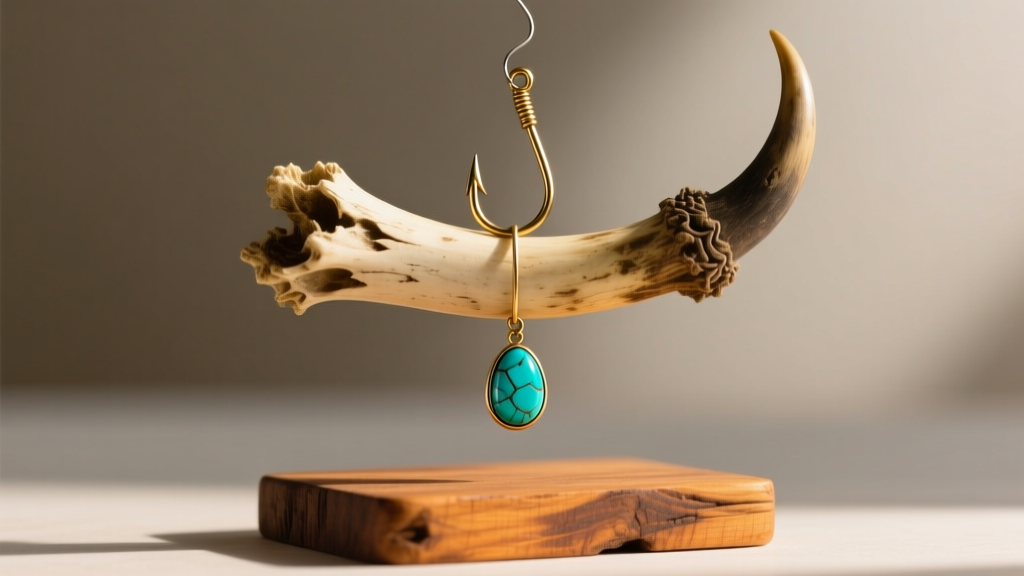
Standard commercial earrings typically use 20-gauge (0.81mm) or 22-gauge (0.64mm) wire. However, a heavy Nepali turquoise and silver drop earring can easily weigh between 15 and 25 grams per ear. If suspended on a thin 22-gauge wire, the metal will slowly stretch your earlobe piercing, leading to discomfort, micro-tears, and eventual sagging.
Authentic, high-quality Nepali earrings are engineered with thicker hardware. Look for 18-gauge (1.02mm) or 16-gauge (1.29mm) ear wires. While 16-gauge wire can feel slightly thick when first inserting it into a standard piercing, it provides the necessary structural integrity to support the weight of the stone without bending open or slicing through the earlobe over time. If you have sensitive or tight piercings, gently taper your lobes with a lubricated 16-gauge taper before wearing heavy artisanal drops for extended periods.
Care and Patina Management
Preserving the aesthetic integrity of Nepali earrings requires a departure from standard jewelry cleaning methods. The dark, moody contrast between the blackened metal crevices and the bright silver high-polishes is achieved through intentional oxidation (often using liver of sulfur).
Expert Warning: Never use commercial liquid silver dips or ultrasonic cleaners on traditional Nepali earrings. These harsh chemical baths will strip the intentional antiquing from the recessed areas of the repoussé work, leaving the piece looking flat, washed-out, and unnaturally bright.
Instead, maintain your earrings using a dry, treated silver polishing cloth. Gently rub only the raised, high-friction areas of the metal to restore the shine, deliberately avoiding the deep grooves and stone settings. For turquoise and coral inlays, avoid all chemical exposure, including perfumes, hairsprays, and lotions, as the porous nature of these stones will absorb the chemicals, leading to irreversible discoloration and structural degradation. Store your pieces in a low-humidity environment with anti-tarnish strips to slow the natural oxidation process of the silver and copper alloys.


