How to Style and Maintain Gold Flower Hoop Earrings
Learn how to choose, style, and clean gold flower hoop earrings. Expert guide on gauges, gold purity, and maintaining intricate petal details.

The Enduring Appeal of Floral Hoops
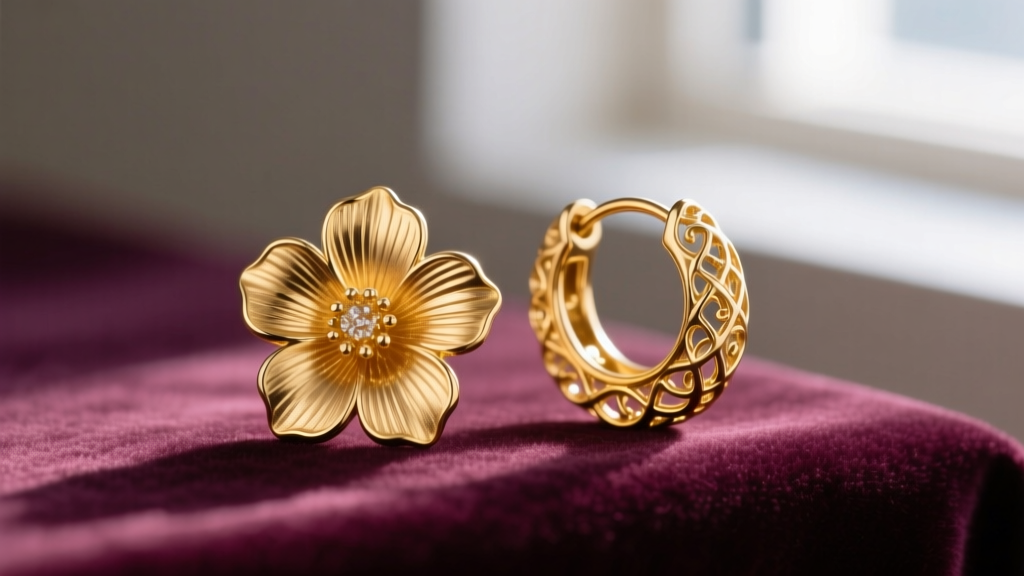
Floral motifs have cycled through jewelry trends for centuries, but the modern iteration of gold flower hoop earrings represents a unique intersection of romantic aesthetics and everyday wearability. Unlike flat, stamped floral studs, three-dimensional flower hoops introduce complex topography to your ear stack. The overlapping petals, textured stamen centers, and curved silhouettes catch the light beautifully, but they also present specific challenges regarding weight distribution, piercing gauge compatibility, and long-term maintenance.
As we navigate the jewelry landscape in 2026, consumers are increasingly prioritizing longevity and metallurgical transparency over fast-fashion accessories. Whether you are investing in a pair of solid 14k gold daisy hoops or a set of vermeil rosebud huggies, understanding the mechanics of these intricate pieces is essential. This comprehensive guide will walk you through selecting the right alloy, matching the gauge to your specific piercing placement, and executing a meticulous cleaning routine to keep those delicate crevices free of debris.
Step 1: Decoding Gold Purity and Alloy Strength
The first step in choosing gold flower hoop earrings is understanding how gold purity affects the structural integrity of delicate floral designs. Pure 24k gold is far too malleable for jewelry; it must be alloyed with metals like copper, silver, and zinc to achieve durability. According to the Gemological Institute of America (GIA), the karatage directly dictates both the color and the tensile strength of the piece.
14k vs. 18k Gold for Intricate Petals
For gold flower hoops, 14k gold (58.5% pure gold) is generally the superior choice for the structural components, such as the hoop wire and the hinge mechanism. The higher alloy content provides the necessary rigidity to prevent the hoop from warping when taken on and off. However, 18k gold (75% pure gold) offers a richer, warmer yellow hue that is highly desirable for the stamped or cast floral elements. Many high-end jewelers now utilize a hybrid approach: casting the intricate flower charm in 18k gold for optimal color, while forging the structural hoop and post in 14k gold for durability.
The Vermeil Standard
If solid gold is outside your budget, gold vermeil is the next best alternative. The Federal Trade Commission (FTC) mandates that for a piece to be legally marketed as vermeil, it must have a sterling silver base and a gold plating of at least 2.5 microns thick. Avoid standard "gold-plated" brass or copper flower hoops, as the thin flash plating (often less than 0.5 microns) will quickly wear away in the high-friction crevices of the floral design, leading to irreversible tarnishing and potential skin irritation.
| Material Grade | Composition | Durability for Petals | 2026 Price Range (15mm Hoops) |
|---|---|---|---|
| Solid 14k Gold | 58.5% Gold, 41.5% Alloy | Excellent (High rigidity) | $180 - $350 |
| Solid 18k Gold | 75.0% Gold, 25.0% Alloy | Good (Prone to bending) | $280 - $550 |
| Gold Vermeil | Sterling Silver + 2.5μm Gold | Moderate (Base is soft) | $65 - $140 |
| Gold Plated | Brass/Copper + Flash Gold | Poor (Plating flakes off) | $20 - $50 |
Step 2: Sizing and Gauge Selection for Piercing Placements
Floral hoops are versatile, but their weight and hinge mechanics dictate where they can be safely worn. The gauge (thickness of the wire) and the inner diameter of the hoop must align perfectly with your piercing's anatomy to avoid migration, tearing, or the dreaded "cheese-cutter effect."
Lobe Piercings: The Standard Canvas
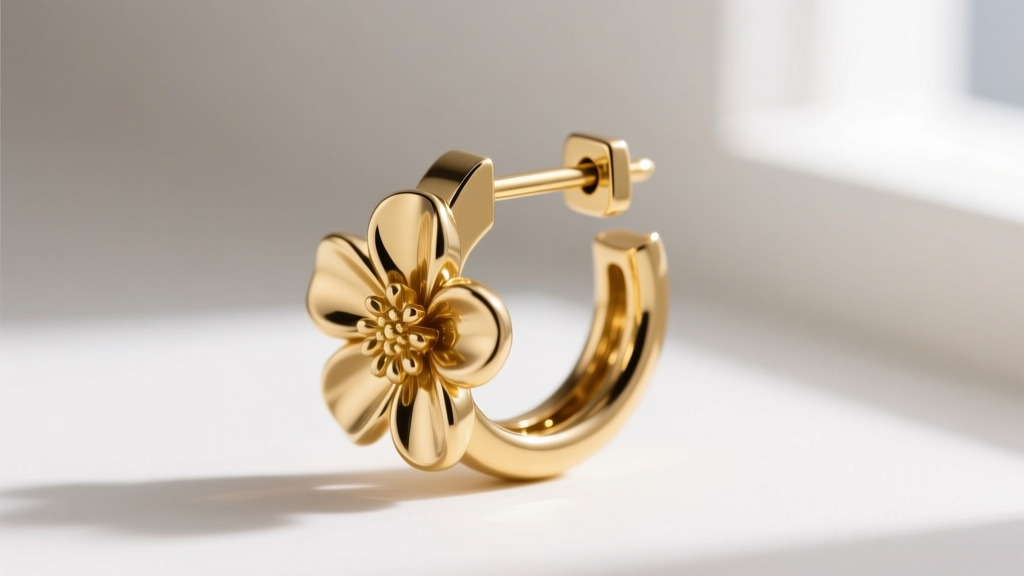
Standard lobe piercings are typically done at 20-gauge (0.81mm) or 18-gauge (1.02mm). For lobe placements, you have the freedom to wear larger gold flower hoops ranging from 20mm to 35mm in diameter. Because the lobe tissue is soft and fleshy, it can accommodate the slight weight variance of a heavier, solid gold floral charm dangling from the bottom of the hoop. Ensure the earring utilizes a secure saddle hinge or a thick post with a sturdy butterfly backing to prevent the flower from pulling the piercing downward at an awkward angle.
Cartilage and Helix Piercings: The Huggie Approach
Cartilage piercings require stricter parameters. Most helix or forward helix piercings are pierced at 16-gauge (1.29mm) to promote stability. If you wish to wear a gold flower hoop in a cartilage piercing, you must opt for a 16-gauge huggie style with a small inner diameter (typically 8mm to 11mm). The floral element should be a flush, integrated part of the huggie's circumference rather than a dangling charm, which would swing and irritate the rigid cartilage tissue. Always look for a "clicker" hinge mechanism, which snaps securely into place and eliminates the need for a flimsy post that can easily bend and snag in your hair.
Step 3: Styling Gold Flower Hoops for Your Face Shape
The visual weight of a floral hoop can dramatically alter the perceived proportions of your face. Here is a strategic framework for matching the silhouette of your gold flower hoops to your underlying bone structure:
- Round Faces: Avoid perfectly circular, wide hoops with bulky floral clusters at the sides, as this adds horizontal width. Instead, opt for elongated, oval-shaped drop hoops where the gold flower detail is concentrated at the bottom. This draws the eye downward, creating a lengthening illusion.
- Square Faces: Angular jawlines benefit from softening curves. Medium-sized (25mm) circular gold flower hoops with rounded, puffy petal designs (like a peony or rose motif) will soften sharp angles and add a touch of organic fluidity to your profile.
- Heart-Shaped Faces: With a wider forehead and a narrow chin, the goal is to add volume at the lower half of the face. Teardrop-shaped floral hoops or dangle hoops featuring a cascading gold vine and flower arrangement will beautifully balance your proportions.
- Oval Faces: The universal shape. You can confidently pull off any style, from tight, minimalist 12mm daisy huggies to dramatic 40mm orchid statement hoops. Experiment with asymmetrical stacking, wearing a larger floral hoop in the primary lobe piercing and a smaller, matching bud in the secondary lobe.
Step 4: The Step-by-Step Cleaning Routine for Intricate Petals
The most significant maintenance challenge with gold flower hoop earrings is the accumulation of sebum, dead skin cells, and environmental dust within the deep crevices of the stamped petals. Neglecting this will dull the gold's brilliance and can lead to contact dermatitis. Follow this precise, jeweler-approved cleaning protocol every two weeks.
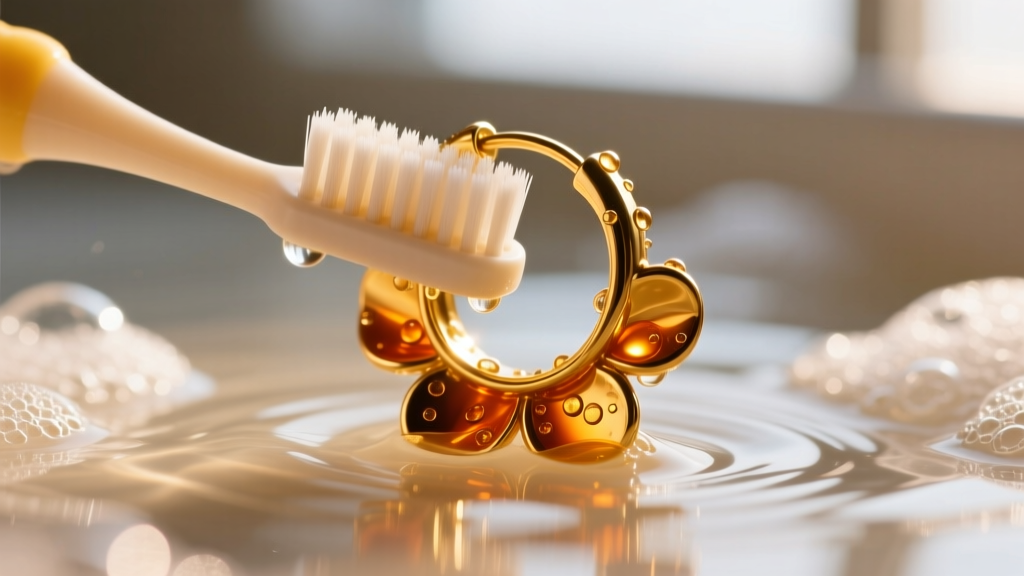
- Prepare the Solution: Fill a small ceramic bowl with lukewarm water and add three drops of mild, phosphate-free dish soap (such as Dawn). Avoid hot water, which can expand the metal and loosen any micro-pavé gemstones set in the flower's center.
- The Soak: Submerge the earrings for exactly 5 to 7 minutes. This is sufficient time to soften oils without compromising the structural integrity of any enamel accents that might be present on the petals.
- Agitation: Using a brand-new, ultra-soft baby toothbrush, gently brush the crevices of the flower. Use short, circular motions, paying special attention to the underside of the petals and the hinge mechanism. Never use a standard adult toothbrush, as the stiffer bristles can leave micro-scratches on high-polish gold.
- The Rinse: Rinse the earrings under a gentle stream of lukewarm distilled water. Tap water contains minerals and chlorine that can leave a cloudy film on the gold alloy.
- Drying: Pat dry with a lint-free microfiber cloth. Use a wooden toothpick or a clean, dry makeup brush to wick away any trapped moisture from the deepest petal folds before storing.
Crucial Warning: Never place gold flower hoops with soft gemstone centers (such as opals, pearls, or turquoise) into an ultrasonic cleaner. The 40,000 Hz vibrations will cause internal fracturing in these porous stones.
Troubleshooting: Hinge Tension and Snagging
Because floral hoops often feature textured exteriors, they are prone to snagging on knitwear and hair. If your hoop frequently catches, inspect the closure mechanism. For post-and-clutch styles, ensure the butterfly back is pushed flush against the groove of the post, leaving no exposed, sharp metal tips. For hinged clickers, if the closure feels loose or fails to "click" audibly, the tension wire inside the female end of the hinge may be compromised. Do not attempt to bend the hinge back into place with pliers, as this will snap the solder joint. Instead, take the piece to a professional bench jeweler who can re-tension the hinge or replace the internal spring mechanism for a nominal fee.
Final Thoughts on Floral Ear Styling
Gold flower hoop earrings are more than just a passing seasonal trend; they are a celebration of organic forms rendered in enduring precious metals. By prioritizing structural integrity through smart alloy selection, respecting the anatomical limits of your piercings, and committing to a rigorous, crevice-focused cleaning routine, your floral hoops will remain a luminous staple in your jewelry rotation for decades to come. Treat the intricate details with the care they demand, and they will continually reward you with their intricate, light-catching beauty.


