Care Tips for Awesome Earrings for Guys: Clean & Shine
Discover expert cleaning and maintenance tips to keep your awesome earrings for guys looking sharp. Learn material-specific care and deep-cleaning routines.

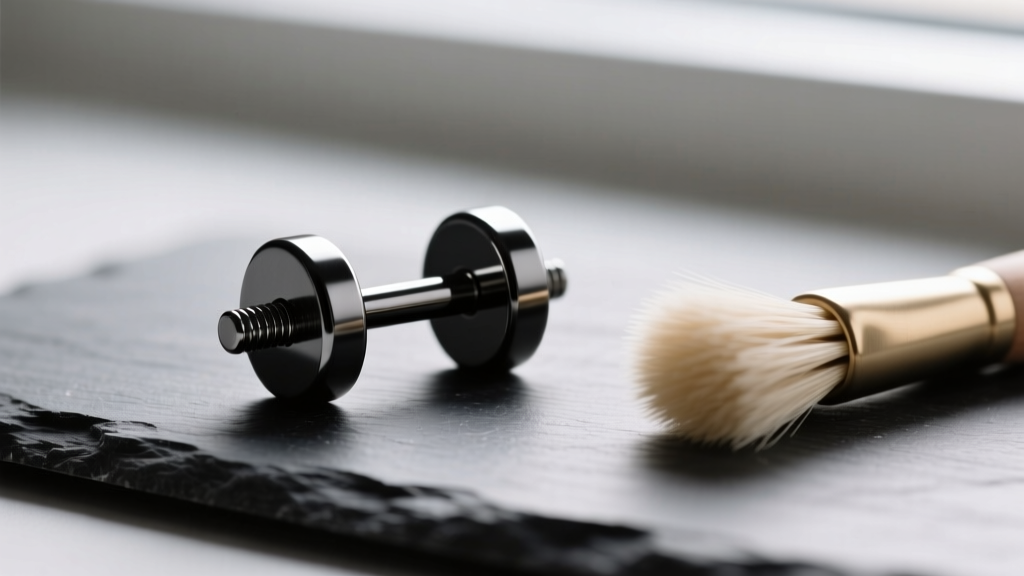
The Unique Environmental Stressors on Men's Jewelry
When curating a collection of awesome earrings for guys, the focus often lands entirely on aesthetics, gauge sizes, and material grades. However, men's earrings face a uniquely hostile micro-environment compared to other jewelry categories. Daily exposure to highly acidic sweat (average pH 4.5 to 7.0), sebum buildup, gym chalk, and harsh chemical sunscreens creates a perfect storm for material degradation and skin irritation. Unlike rings or necklaces, earrings sit directly inside a fistula—a healed tunnel of skin tissue that is highly sensitive to bacterial biofilms and microscopic debris.
Proper maintenance is not just about keeping the metal polished; it is a critical hygiene practice. A neglected 14k gold hoop or a 316L stainless steel barbell can harbor staphylococcus bacteria, leading to contact dermatitis or localized infections. According to the Association of Professional Piercers (APP), the longevity and biocompatibility of body jewelry are heavily dependent on consistent, appropriate cleaning protocols that respect the specific metallurgical properties of the piece.
Material Breakdown and Chemical Compatibility
Not all metals react the same way to commercial jewelry cleaners. Using the wrong chemical agent can strip anodized coatings, pit porous stones, or cause severe allergic reactions by leaching nickel from lower-grade alloys. Below is a technical breakdown of the most common materials used in high-end men's earrings and their specific care requirements.
| Material Grade | Best Cleaning Agent | What to Avoid | Durability & Notes |
|---|---|---|---|
| Implant Grade Titanium (ASTM F136) | Warm water, mild unscented soap | Ultrasonic cleaners (if anodized), bleach | Hypoallergenic. Anodized colors are a surface oxide layer and can scratch or fade with abrasive polishing. |
| 316L Surgical Steel | Ultrasonic cleaner, mild dish soap | Prolonged chlorine exposure, harsh acids | Contains trace nickel. Excellent for healed lobes, but requires thorough drying to prevent water spotting. |
| 14k / 18k Yellow Gold | Warm soapy water, soft microfiber | Chlorine, toothpaste, baking soda | Alloyed with copper and silver. Chlorine causes irreversible structural weakening and stress cracking. |
| Tungsten Carbide | Any standard jewelry cleaner | Hard impacts (dropping on tile) | Virtually scratch-proof (9 on Mohs scale), but highly brittle. Will shatter if crushed or dropped. |
The 5-Minute Deep Clean Protocol
For a thorough, hygienic clean that removes dead skin cells and sebum from the intricate threading or hinges of your earrings, follow this professional-grade protocol. This method is especially critical for complex designs like ball-captive rings (BCRs), segment rings, or huggies with micro-pave gemstones.
Step 1: The Ultrasonic Bath (For Solid Metals Only)
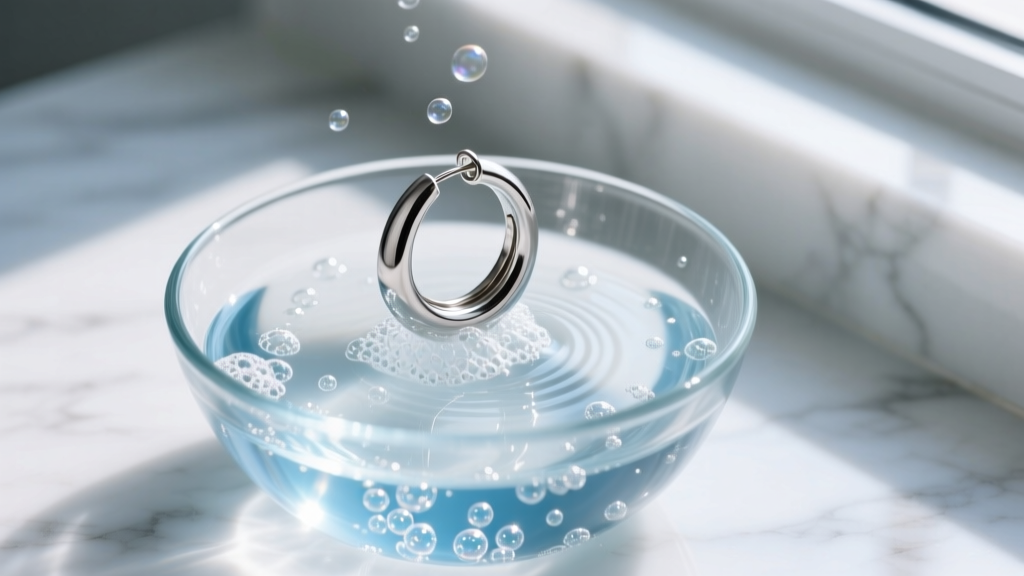
If your earrings are made of solid 316L steel, 14k gold, or tungsten (and do not feature glued-in gemstones or soft porous stones like turquoise), an ultrasonic cleaner is your best investment. Fill the tank with warm water and a single drop of degreasing dish soap. The 40kHz high-frequency sound waves create microscopic cavitation bubbles that implode against the metal, blasting away debris from internally threaded grooves and hinge mechanisms. Run the cycle for exactly 180 seconds.
Step 2: Manual Agitation
Remove the earrings and use a dedicated, extra-soft baby toothbrush to gently agitate any remaining buildup around the O-rings, threading, or gemstone prongs. Never use stiff-bristled brushes, as they will leave micro-scratches on high-polish finishes, which in turn creates more surface area for future bacteria to hide.
Step 3: The Rinse and Dry
Rinse thoroughly under distilled water. Tap water contains dissolved minerals like calcium and magnesium that leave hard water spots on polished metals. Dry immediately with a lint-free microfiber cloth, and use a hairdryer on the 'cool' setting to blast moisture out of tight crevices and hinge joints.
Maintenance for Stretched Lobes and Heavy Gauge Hardware
Men wearing stretched lobes (typically ranging from 8g up to 00g and beyond) require a completely different maintenance approach. Heavy gauge hardware, such as saddle plugs, tunnels, and eyelets, places significant mechanical stress on the earlobe tissue. Furthermore, the elastomeric O-rings used to secure these pieces degrade rapidly when exposed to UV light, sweat, and skin oils.
- O-Ring Replacement: Standard silicone O-rings (usually rated at 40-50 Shore A durometer for flexibility) should be replaced every 3 to 6 months. As they degrade, they become brittle, snap unexpectedly, and harbor foul-smelling bacterial biofilms. Keep a stock of replacement EPDM or silicone O-rings in your maintenance kit.
- Tissue Hydration: The earlobe itself requires maintenance. Massage the tissue daily with pure, unrefined jojoba oil or a dedicated ear balm containing vitamin E. This maintains the skin's elasticity and prevents the dreaded 'ear cheese'—a mixture of dead skin and sebum that accumulates against the metal flange.
- Thread Care: For internally threaded plugs, apply a microscopic amount of jojoba oil to the threads before screwing the cap back on. This prevents cross-threading and ensures a smooth, secure fit without stripping the delicate metal grooves.

Troubleshooting Common Hardware Failures
Even the most awesome earrings for guys can suffer from mechanical wear and tear. Here is how to troubleshoot the most common issues without damaging the jewelry or your piercing.
Stuck Ball-Captive Rings (BCRs)
The tension of the metal ring holding the captive ball in place can make removal incredibly difficult, especially if sweat and dead skin have calcified around the contact points. Never use pliers, as they will mar the metal and potentially crush the ring out of its perfect circular geometry. Instead, put on a pair of nitrile or latex gloves. The rubber provides immense friction, allowing you to grip the ball and gently twist it out of the ring's tension gap.
Stripped or Cross-Threaded Barbells
If you force the ball end of a barbell at the wrong angle, you risk cross-threading the screw. If this happens, do not continue to force it, as you will permanently strip the threads. Back it out carefully. If the threads are already stripped, the piece is compromised and should be replaced. To prevent this, always ensure the ball is rotating freely before applying downward pressure to engage the threads. Upgrading to threadless (press-fit) jewelry eliminates this mechanical failure point entirely.
Proper Storage to Prevent Micro-Scratches and Tarnish
How you store your earrings when they are not in your ears is just as important as how you clean them. Tossing multiple pieces into a single drawer or generic plastic bin guarantees micro-scratches, especially when harder metals like tungsten or titanium rub against softer metals like gold.
Invest in a multi-compartment jewelry organizer with individual, soft-lined slots. For silver or lower-karat gold pieces that are prone to oxidation, store them in airtight ziplock bags with anti-tarnish silica gel packets or 3M anti-tarnish strips. According to the Gemological Institute of America (GIA), minimizing exposure to ambient humidity and airborne sulfur compounds is the most effective way to prevent the chemical reactions that cause gold alloys and silver to dull and tarnish over time.
Expert Takeaway: High-quality men's earrings are an investment in both style and body modification. By matching your cleaning chemistry to the specific metallurgical grade of your jewelry, and maintaining the biological health of the surrounding tissue, you ensure your hardware remains sharp, hygienic, and structurally sound for years to come.


