Expert Guide to 0.3 ct Diamond Earrings: Cut, Clarity & Settings
Master the technical specs of 0.3 ct diamond earrings. Discover expert insights on cut grades, martini vs. basket settings, and precise pricing tiers.

The Nomenclature Trap: Carat Total Weight vs. Per Ear
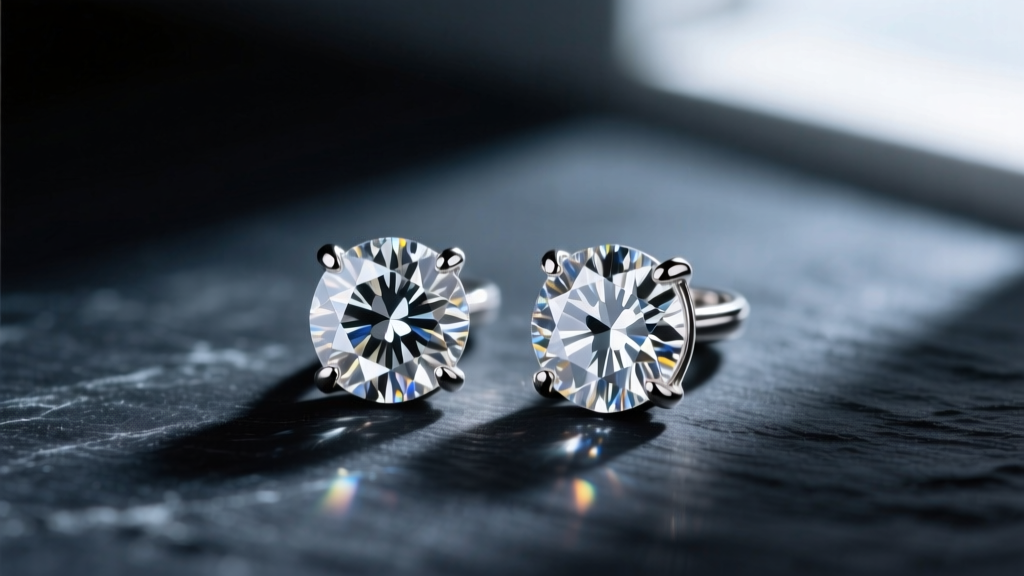
When navigating the market for 0.3 ct diamond earrings, the most critical technical distinction a buyer must make is the difference between Carat Total Weight (CTW) and carat weight per ear. This single metric dictates not only the physical diameter of the diamonds but also their optical footprint and structural requirements. In the jewelry industry, a listing for "0.30 CTW" means the combined weight of both earrings is 0.30 carats, resulting in two 0.15-carat stones. Conversely, "0.30 carat each" (often listed as 0.60 CTW) means each individual ear wears a 0.30-carat stone.
A 0.15-carat round brilliant diamond typically measures approximately 3.4mm in diameter. A 0.30-carat stone measures roughly 4.3mm. While a 0.9mm difference seems negligible on paper, it represents a 30% increase in the diamond's face-up surface area. This distinction fundamentally alters how the diamond interacts with light, how it sits on the earlobe, and the type of setting architecture required to secure it without obscuring its brilliance.
The Physics of Light Performance in Sub-Half-Carat Stones
In diamonds under the 0.50-carat threshold, light return is the paramount driver of visual beauty. Because these stones lack the physical depth to produce the massive, slow flash of larger gems, they rely entirely on high-frequency scintillation and optimal brilliance. According to gemological research published by the Gemological Institute of America (GIA), the precision of the facet alignment and the exactness of the crown and pavilion angles are vastly more important than top-tier color or clarity grades in this size category.
Ideal Proportions for 3.4mm to 4.3mm Diamonds
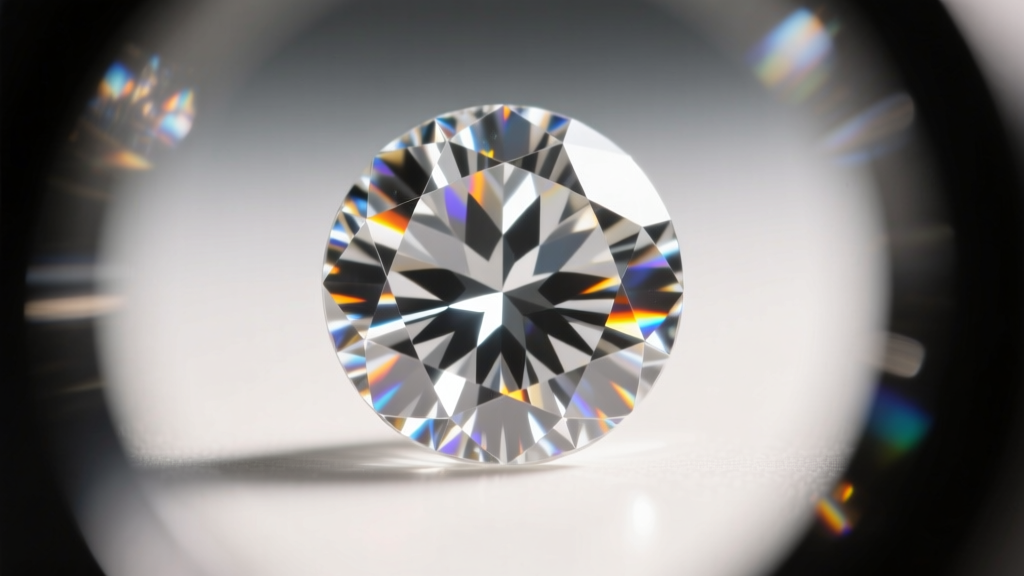
To maximize the fire and brilliance of your 0.3 ct diamond earrings, you must look beyond the basic "Excellent" or "Very Good" cut grades on a grading report. You need to analyze the specific proportions. Based on optical symmetry modeling data from PriceScope, the ideal parameter window for round brilliants in this size range is highly specific:
- Table Percentage: 54% to 57% (Ensures a balanced crown that disperses light effectively without creating a "fish-eye" effect).
- Depth Percentage: 61.0% to 62.5% (Prevents light leakage through the pavilion, which makes the stone look dark or glassy).
- Crown Angle: 34.0° to 35.0° (Optimizes the refraction of white light entering the stone).
- Pavilion Angle: 40.6° to 40.9° (The critical mirror angle that bounces light back to the observer's eye).
Clarity and Color: Where to Compromise
Because 3.4mm to 4.3mm diamonds have such a small table, internal inclusions are incredibly difficult to resolve with the naked eye. Paying a premium for VVS (Very Very Slightly Included) or IF (Internally Flawless) clarity is a poor allocation of capital. An SI1 (Slightly Included 1) grade is virtually guaranteed to be eye-clean in this carat weight, provided the inclusions are not concentrated directly under the table facet. Similarly, for white gold or platinum settings, a G or H color grade will face up completely colorless to the human eye, allowing you to redirect your budget toward superior cut quality.
Setting Architecture and Metallurgical Considerations
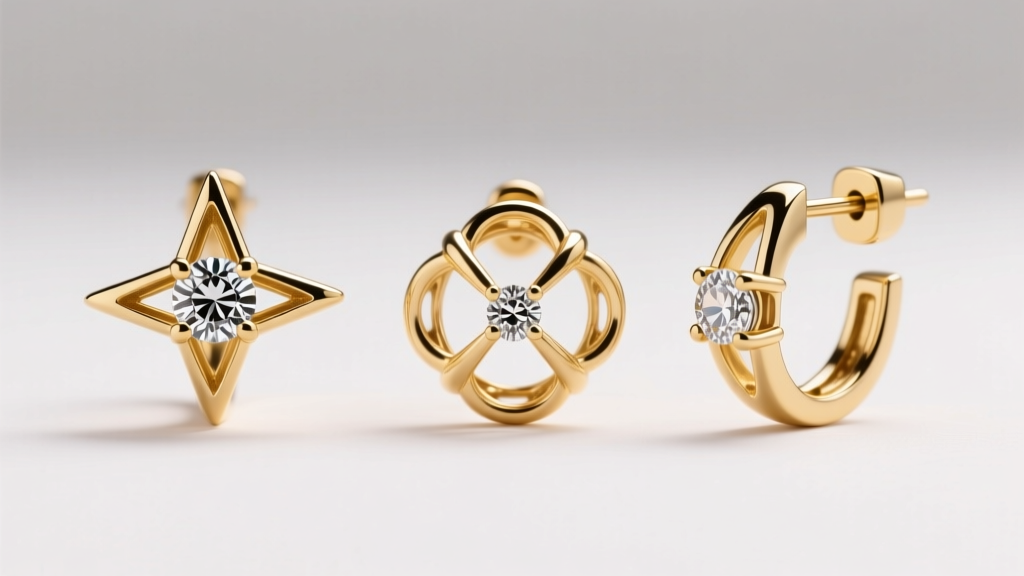
The setting of a diamond earring is not merely decorative; it is a functional mechanism that dictates both security and light performance. For 0.3 ct diamond earrings, the choice between a martini, basket, or tension setting will drastically alter the visual weight and optical behavior of the jewelry.
| Setting Type | Prong Count | Light Return | Security | Best Application |
|---|---|---|---|---|
| Martini | 3 | Excellent | Moderate | Maximizing brilliance in 3.4mm stones |
| Basket | 4 | Good | High | Active lifestyles, 4.3mm stones |
| Tension | 0 | Superior | Low | Modern aesthetics, occasional wear |
The Engineering of the Earring Post
An often-overlooked technical detail is the gauge (thickness) of the earring post. Standard commercial earrings use a 20-gauge post (0.81mm). However, for a 3-prong martini setting, a 20-gauge post lacks the structural rigidity to support the weight of the diamond head, leading to a common issue known as "droop," where the diamond tilts forward on the earlobe. For optimal structural integrity and to ensure the diamond sits flush and parallel to the ear, insist on an 18-gauge (1.02mm) or even a 16-gauge (1.29mm) post, particularly if you are utilizing a heavier platinum setting.
Metallurgy: Platinum vs. White Gold Alloys
The metal chosen for the setting impacts both the longevity of the prongs and the maintenance required over the lifespan of the earrings. Platinum (95% Pt, 5% Ru or Ir) is the premier choice for diamond settings. Its high density and tensile strength mean that platinum prongs will bend rather than snap if subjected to impact, and it does not require rhodium plating. Furthermore, platinum's naturally white-gray hue does not reflect any yellow tint into the diamond, preserving the stone's perceived color grade.
14k and 18k White Gold are excellent, more affordable alternatives, but they come with metallurgical caveats. White gold is an alloy of yellow gold and bleaching metals like nickel, palladium, or silver. Because it never achieves a true white color naturally, it must be electroplated with rhodium. Over time, the friction of putting on and taking off the earrings will wear this plating away, revealing the slightly yellowish underlying alloy. If you choose white gold, 18k is generally preferred for its higher gold content and hypoallergenic properties (if alloyed with palladium), but 14k offers superior prong stiffness due to the higher proportion of hardening alloys.
2026 Pricing Framework and Market Realities
The pricing landscape for diamond earrings has shifted dramatically with the maturation of the lab-grown diamond market. Understanding the current pricing tiers ensures you do not overpay for natural stones or fall for inflated lab-grown markups.
- 0.30 CTW (0.15 per ear) Natural: $450 – $750 (Highly dependent on cut precision and brand retail markup).
- 0.30 CTW (0.15 per ear) Lab-Grown: $150 – $280 (Prices have stabilized; avoid paying over $300 for this size).
- 0.60 CTW (0.30 per ear) Natural: $1,100 – $1,800 (Look for GIA or AGS graded stones to ensure accurate color/clarity reporting).
- 0.60 CTW (0.30 per ear) Lab-Grown: $350 – $600 (Ensure the stones are certified by IGI or GIA to verify they are Type IIa and free from post-growth strain).
Final Technical Recommendations for the Buyer
When procuring 0.3 ct diamond earrings, prioritize the cut above all other metrics. A perfectly proportioned 0.15-carat SI1 diamond will outshine a poorly cut 0.20-carat VS1 stone every single time. Request Idealscope or ASET images from your vendor to verify light return before purchasing. Opt for an 18-gauge post in a platinum martini setting to balance maximum light exposure with long-term structural integrity. By focusing on the physics of light and the engineering of the mount rather than arbitrary grading premiums, you will secure a pair of earrings that delivers exceptional optical performance and enduring value.


